










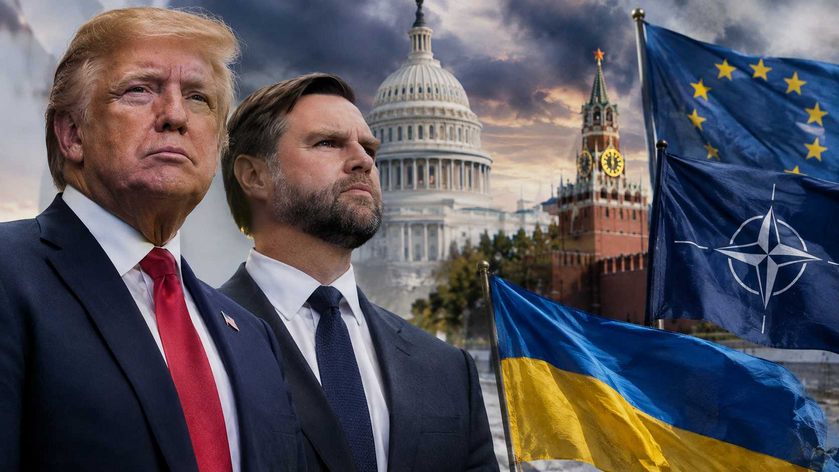
As the Trump administration faces political fallout over Iran, suspected Russian cyberattacks and growing instability across Europe are raising difficult questions about American leadership and national security.
The United States is facing a troubling combination of political division at home and growing security threats abroad. In Europe, cyberattacks, aviation disruptions and continuing unrest are creating new concerns about Russia's campaign against the West, while Washington is struggling with the political consequences of its military operations against Iran.
These developments may appear unrelated, but they reveal a larger problem: Western governments are finding it increasingly difficult to respond decisively to threats that do not fit traditional definitions of warfare. Meanwhile, disagreements within the Trump administration are raising questions about whether American leaders have a coherent strategy for dealing with those threats.
Russia's War Against Europe Is Already Underway
I recently returned from Paris, where demonstrations and confrontations with police have continued to disrupt parts of the city. Although it would be inaccurate to describe Paris as a whole as a war zone, the unrest illustrates the tensions affecting several European countries and the opportunities those divisions create for hostile foreign powers.
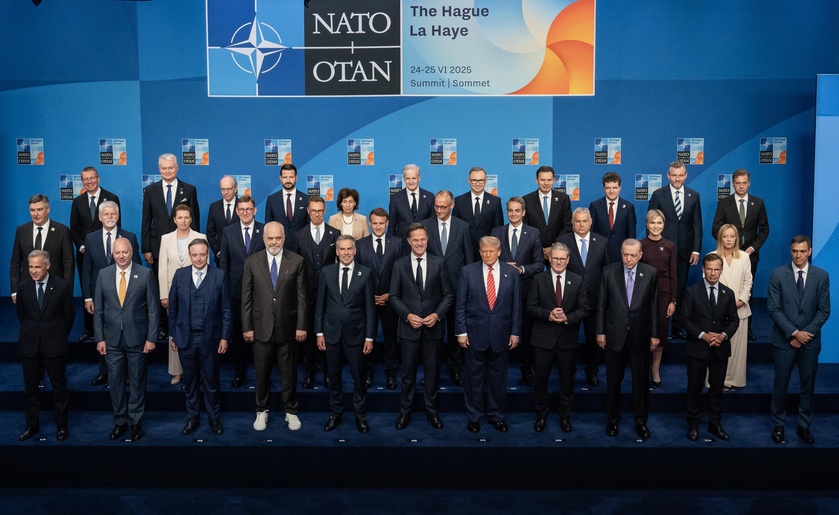
NATO leaders gather for the alliance's summit in The Hague, Netherlands, on June 25, 2025. European governments have increased their focus on collective defense, military readiness and emerging threats to civilian infrastructure.
Photo: Bart Maat / Dutch Ministry of Foreign Affairs, via Wikimedia Commons
I believe Russia is actively exploiting those divisions through a broader campaign of asymmetric warfare, including cyberattacks and other disruptive operations. During my latest broadcast, I discussed reports of refrigerated storage systems being remotely manipulated to temperatures high enough to destroy food supplies, with two Russian hacking groups reportedly claiming responsibility.
The potential consequences of these attacks extend far beyond damaged equipment or financial losses. Destroying refrigerated food supplies through a computer network can produce some of the same economic and humanitarian consequences as physically attacking a distribution center, particularly as European countries prepare for winter.
There have also been reports of widespread aviation disruptions involving bomb threats against aircraft across numerous European countries. According to information discussed during the broadcast, dozens of aircraft had reportedly been affected, with some flights diverted or escorted by military aircraft.
The attribution and full extent of these incidents still require independent confirmation, but the strategic question remains important. If a hostile government can disrupt transportation, destroy essential supplies and destabilize civilian infrastructure without deploying conventional military forces, at what point should those operations be treated as acts of war?
European countries are already conducting military readiness exercises near Russia's borders, including preparations for civilian evacuations and rapid military responses. I do not believe Russia is currently in a position to launch a successful conventional invasion of NATO territory, but that may be precisely why Moscow has an incentive to rely on less conventional methods.
Ukraine and the Contradictions of Russian Diplomacy
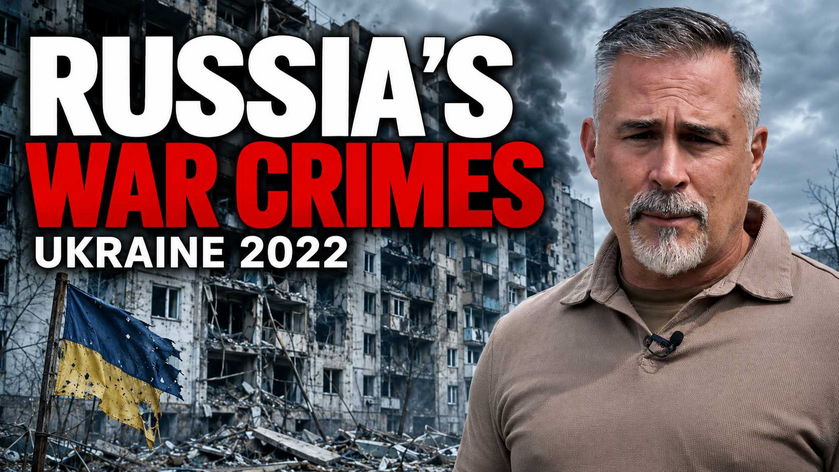
The continuing war in Ukraine provides another example of the gap between Moscow's diplomatic language and its military conduct. During a recent appearance in Washington, Russian envoy Kirill Dmitriev publicly thanked First Lady Melania Trump for her humanitarian efforts involving civilians affected by the conflict.
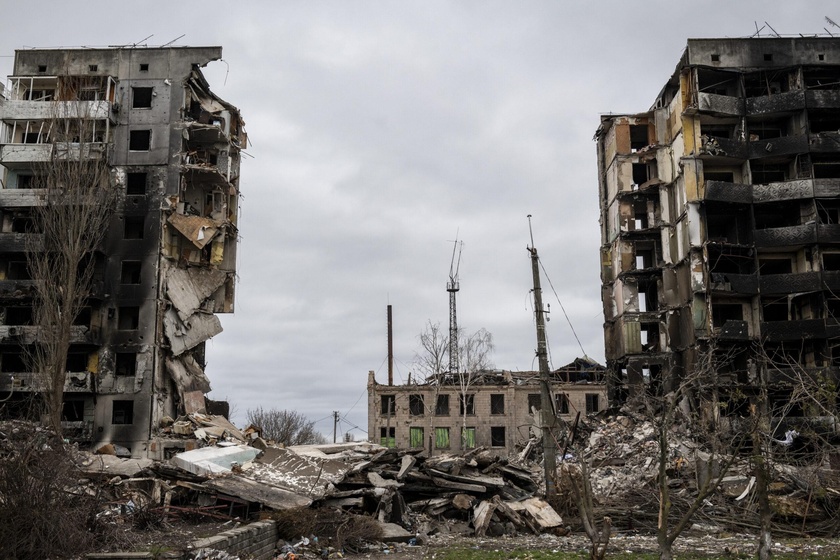
War-damaged residential buildings in Ukraine illustrate the destruction inflicted on civilian communities during Russia's invasion. The continuing attacks remain a central concern as diplomatic efforts seek a negotiated settlement.
Photo: International Humanitarian Law Centre / Diakonia; individual photographer not identified in the available source
I respect Melania Trump's willingness to help people caught in the fighting, but I find it difficult to accept Russia presenting itself as a humanitarian partner while its military continues attacking Ukrainian communities. Diplomatic gestures should not distract from the suffering of civilians or the conditions under which Russia is willing to negotiate.
Ukraine has also continued targeting Russian energy infrastructure, including oil refineries that support the country's economy and military operations. Those strikes are placing additional pressure on Moscow, although predictions that Russia is approaching military collapse should be treated cautiously until supported by stronger evidence.
The fundamental obstacle to peace remains Russia's negotiating position, which continues to demand concessions Ukraine is unlikely to accept. A ceasefire that merely allows Moscow to consolidate its gains without providing Ukraine with meaningful security would do little to resolve the underlying conflict.
Trump's Iran War Creates a Political Divide
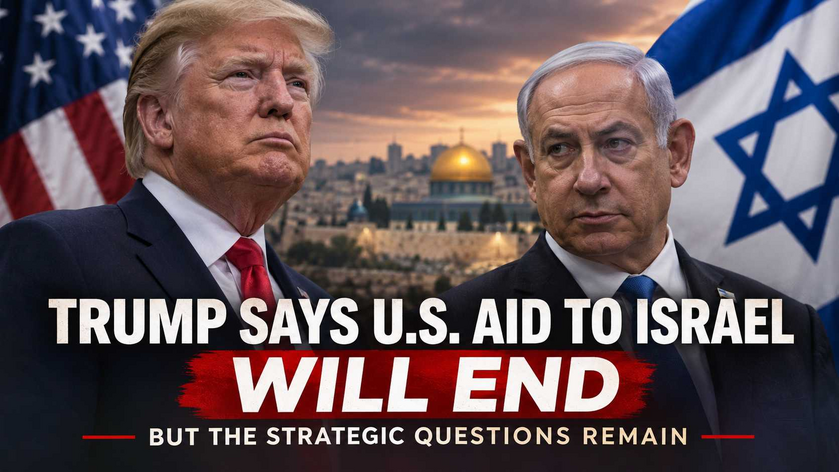
Back in Washington, the political consequences of the conflict with Iran have become increasingly difficult for the administration to ignore. President Trump has acknowledged that higher energy prices associated with the war contributed to Republican electoral losses, while maintaining that confronting Iran was necessary to protect American national security.
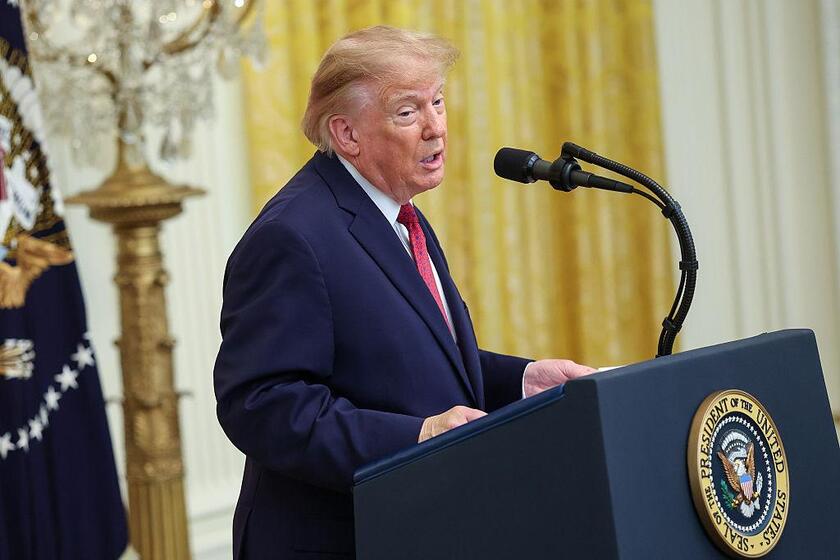
President Donald Trump speaks at the White House in Washington on September 30, 2026. Following Republican losses in the midterm elections, Trump acknowledged the political impact of the war with Iran while defending his decision to confront Tehran.
Photo: Jonathan Ernst / Reuters
Vice President JD Vance has taken a different approach in his public discussion of the election results, emphasizing voter frustration over the war, inflation and the cost of living. His remarks have exposed disagreements over the administration's foreign-policy priorities and the direction Republicans should take in the coming years.
I believe there is an important distinction between questioning the decision to confront Iran and questioning how that confrontation was carried out. If President Trump possessed credible intelligence indicating an urgent nuclear threat, military action may have been justified, but the administration still owes Americans a clear explanation of its objectives and the results achieved.
My concern is that the United States entered a major confrontation without establishing a sufficiently clear path toward a lasting outcome. The Iranian government remains a serious regional security threat, and any diplomatic agreement must be evaluated against the regime's record, its military capabilities and the likelihood that it will honor its commitments.
Secretary of State Marco Rubio has made a compelling argument about the broader consequences of allowing Iran to threaten neighboring countries and international energy infrastructure. His warnings about Tehran's support for armed groups throughout the Middle East are reminders that the issue extends beyond gasoline prices or short-term political calculations.
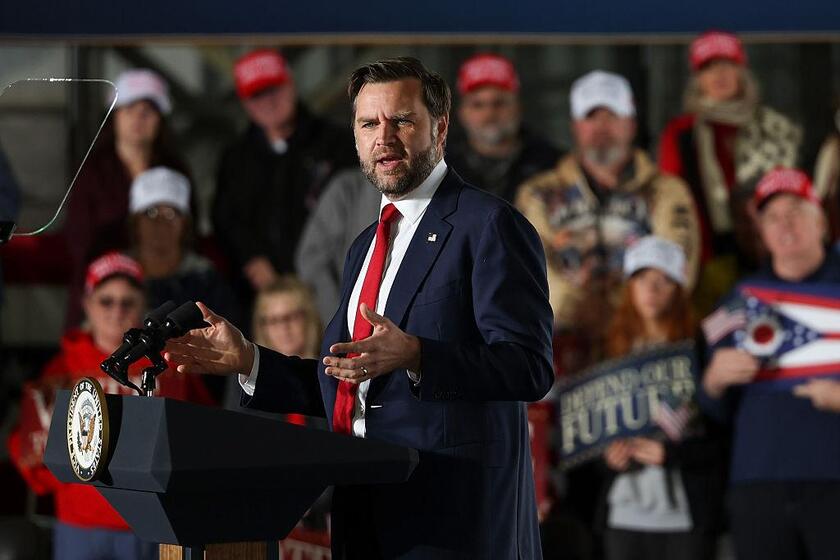
Vice President JD Vance addresses a Republican campaign rally in Swanton, Ohio, on November 2, 2026. Vance's subsequent comments about the Iran war and Republican electoral losses highlighted disagreements within the administration over its foreign-policy priorities.
Photo: Andrew Dolph / USA TODAY Network via Imagn Images
At the same time, political accountability cannot be avoided simply because a president believes his original decision was correct. Trump is ultimately responsible for the administration he assembled, the advisers he appointed and the strategic decisions made under his leadership.
The Danger of Political Distraction
The growing disagreements within the Republican Party come as Congress faces renewed arguments over executive authority, military operations and possible impeachment proceedings involving senior administration officials. Some of these disputes involve legitimate constitutional questions, while others risk becoming political theater that distracts from more immediate national security concerns.
Americans have every right to question the cost of foreign wars, the effectiveness of military operations and the decisions of elected leaders. Those questions should be answered with evidence and a serious examination of America's strategic interests rather than political loyalty or partisan accusations.
What concerns me most is that our adversaries are not waiting for Washington to settle its internal disagreements. Russia continues its campaign against Ukraine and is accused of disruptive operations across Europe, while Iran remains capable of threatening regional stability and international commerce.
We cannot afford to confuse political messaging with military success or diplomatic ceremonies with genuine progress toward peace. The United States needs leaders who recognize the difference, understand the threats we face and are willing to make difficult decisions while remaining accountable for the consequences.
The world is becoming more dangerous, and pretending otherwise will not make those dangers disappear.