







Chuck Holton
Politics • Culture • News
Chuck Holton is an American war correspondent, published author, and motivational speaker.
Interested? Want to learn more about the community?
IDF Still Fighting in Gaza
00:00:14
Interested? Want to learn more about the community?
What else you may like…
Videos
Podcasts
Posts
Articles
Uncertainty Isn't Something You Predict. It's Something You Prepare For

I've spent years reporting from war zones, disaster areas and countries in political and economic chaos. Before that, I spent 10 years as a stockbroker helping clients make big financial decisions. Put those two together and one lesson stands out: uncertainty isn't something you predict. It's something you prepare for.

That's why I believe physical gold has earned a place in a diversified retirement plan. And when people ask me who I trust, I tell them Preserve Gold. They take the time to educate every client and help them make informed decisions about protecting their savings.

Take a minute to watch the video. If it makes sense for you, request their free Wealth Protection Guide. You can get up to $20,000 in free gold and silver with a qualified purchase or rollover.

Preserve Gold also helps keep The Hot Zone on the air, so thank you for checking them out.

— Chuck

VISIT OUR SPONSOR: https://preservegold.com/hotzone/
OR text OFFER to 50505 today and take a stand for your future.
...

00:01:00
New White House Press Secretary Preaches!

Stephen Miller is on fire in this speech. This is exactly what I've been saying about the protests in France, and why it's so important to keep them from happening in the US.

00:04:02
Hegseth Fires Back at Impeachment: "We Have Only Just Begun to Fight"

Secretary of War Pete Hegseth delivers a defiant statement from the steps of the Pentagon, defending two years of sweeping changes at the Department of War and firing back at the Democrats who have filed articles of impeachment against him.

Hegseth lists the "sacred cows" he says the department has torn down: DEI, climate change as a military objective, transgender service, and renaming bases. He defends strikes on narco-terrorists, the military's role in border security and mass deportations, and the war to keep Iran from getting a nuclear weapon, calling it "courageous and historic."

He also calls on the lame-duck Congress to pass a reconciliation bill with at least $350 billion for the military. He dismisses the impeachment effort, led by what he calls "a disgruntled, defeated Congressman," as "the politics of personal destruction," the same tactic he says was used twice against President Trump. His message to the troops: "Don't blink, ignore the noise, never hesitate."

00:05:47
Episode 622 - Field Producer Dennis Azato and Chuck Reminisce

My erstwhile field producer and cameraman Dennis Azato has accompanied me on ten years of adventures across the globe. Today he joins me in Ukraine and we spend some time remembering our many trips together.

Episode 622 - Field Producer Dennis Azato and Chuck Reminisce
Live Q&A this Saturday, plus our Thanksgiving special

This Saturday, November 28, I'm going live with all of you for our monthly Q&A call.

It starts at 12pm ET and runs for an hour.

There's no script and no edits. You ask, and I answer.

What we'll talk about

Ask me anything. The front lines in Ukraine. The cartel story we just released. What it's like to report from places most people are told to stay away from. What I think is coming next.

Nothing is off the table.

How to send your questions

Post your questions in the comments below. You can also bring them live on Saturday.

The ones you send early get answered first, so don't wait until the call starts.

If you're not a member yet

Come join us at chuckholton.locals.com.

For Thanksgiving, The Hot Zone on Locals is $5 a month instead of $9. It's our best promotion of the year.

Members get:

Monthly live Q&A calls with me
Exclusive, uncensored content
A free copy of the documentary
Real footage with no ads

You don't need a promo code. Click this link and the discount is already applied:
...

post photo preview
🔴 DON'T FORGET — we're LIVE with Chuck TOMORROW!

Saturday, Nov 28 · 12–1 PM ET, right here on Locals.
This is your chance to ask Chuck anything: what he's seen on the ground, what's coming next, faith, family, the work. Bring all your questions and he'll answer them live.
Drop your questions in the comments now so we can get to as many as possible. See you tomorrow!

post photo preview

I would become easily discouraged because I didn't understand the different aspects of my salvation in Christ Jesus. Because I still wrestled with old habits and even gave in to temptations, I found it hard to believe that I was a new creation (2 Corinthians 5:17), so I would embrace a defeatist mentality.

However, my perspective changed when I came to understand the clear teaching of Scripture about my new nature: when we first believed the gospel, we received a new, incorruptible spirit (1 Peter 1:23), and our new spiritual nature was created in the very likeness of God in true righteousness and holiness (Ephesians 4:24). Because we are born of God and there is no darkness in Him, our new spiritual nature does not sin (1 John 3:9).

It was then that I was able to get up after I fell and press forward in faith. I could finally embrace my true identity as a saint, a child of God, and His heir (Romans 8:16–17) because I learned to distinguish between the sinful struggles in my unredeemed ...

post photo preview
Join Chuck Holton LIVE Today! | Q&A and World Events
Supporters Only

Join me LIVE NOW

We'll talk about what's happening around the world, discuss some of the latest stories I've been covering, and take your questions. It's a great opportunity to connect, have an open conversation, and dig a little deeper into the issues that matter to you.

Bring your questions, grab a cup of coffee, and join me for an hour of conversation.

📅 TODAY — Saturday, November 28
⏰ 11:00 AM – 12:00 PM Central Time

See you there!

Only for Supporters
To read the rest of this article and access other paid content, you must be a supporter
Read full Article
post photo preview
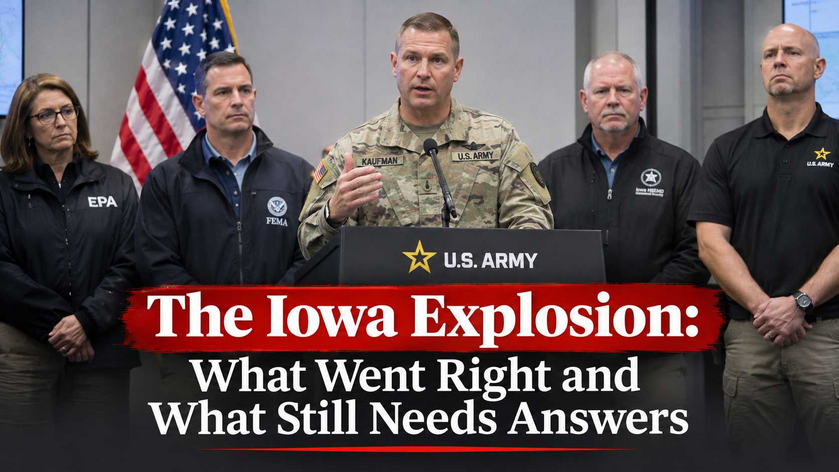
The Iowa Explosion: What Went Right and What Still Needs Answers

The Army's controlled demolition of nearly 10,000 pounds of unstable explosives appears to have gone better than many anticipated, but questions remain about environmental contamination, government accountability and America's military preparedness.

For several days, residents near the Iowa Army Ammunition Plant in Middletown had been preparing for an event that nobody particularly wanted to see happen. The U.S. military was facing the difficult task of disposing of approximately 10,000 pounds of deteriorating lead azide, a highly sensitive explosive used in military detonators, after experts determined that leaving the material in storage presented an unacceptable risk.

We started the Hot Zone broadcast early on Wednesday to watch the controlled detonation live, examine the military's preparations and discuss the potential consequences for surrounding communities. Having spent years in the military and roughly 25 years covering wars and disasters, I was particularly interested in how the Army intended to contain an explosion of this magnitude while minimizing the release of toxic material into the environment.

Fortunately, what we witnessed was considerably less dramatic than many had feared. The initial footage showed relatively small plumes of smoke, suggesting that the military's extensive mitigation efforts may have been effective. However, the apparent success of the operation does not eliminate the need for environmental monitoring or answer the questions surrounding how the material was allowed to deteriorate in the first place.

The Army's Least Dangerous Option

During a briefing ahead of the demolition, military officials explained that the condition of the stored lead azide had deteriorated significantly over the preceding eight months. Experts concluded that attempting to move the material or dispose of it through alternative methods could create an even greater danger to military personnel and the surrounding population.

Officials also addressed reports suggesting that chemical neutralization could have provided an alternative to detonation. According to the Army, that option had been evaluated but was ultimately determined to be unsafe under the existing circumstances.

The government found itself in an unenviable position. Leaving the material untouched carried the risk of an uncontrolled explosion, while deliberately destroying it introduced legitimate concerns about airborne lead contamination.

As I explained during the broadcast, the government was essentially trying to choose the least damaging option available. That does not mean the public should refrain from asking difficult questions, particularly when the consequences of earlier decisions are being borne by people who had absolutely nothing to do with making them.

The military employed extensive protective measures intended to absorb the blast and limit the dispersal of hazardous particles. Officials also coordinated with federal agencies and scientific institutions to evaluate the potential environmental consequences and establish monitoring procedures.

Judging from the initial footage, those preparations appear to have made a considerable difference.

Iowa's Farmers Deserve Answers

One of the most troubling aspects of this situation was listening to local farmers describe the uncertainty they faced in the days leading up to the demolition.

During the broadcast, I shared an interview with an Iowa farmer responsible for approximately 70 cattle. He was attempting to shelter his livestock and protect their feed from possible contamination, despite having no practical way to guarantee that airborne particles would not enter his agricultural buildings.

These farmers were being asked to manage a potentially serious environmental hazard through no fault of their own, while continuing to operate businesses that depend on the health of their animals, soil and water supplies.

Lead exposure is particularly concerning because there is no known safe level of exposure for children. Even if the visible smoke from the explosion was limited, environmental testing will be necessary to determine whether hazardous material escaped the installation and accumulated on surrounding properties.

Environmental Protection Agency personnel were collecting samples before the detonation to establish baseline conditions for subsequent testing. Those results will be considerably more important than speculation circulating on social media or conclusions drawn from distant video footage.

The government owes residents a transparent accounting of those findings, along with appropriate assistance if contamination is discovered.

Giving Credit Where It Is Due

When the explosion finally occurred, the footage was almost underwhelming. Considering the potential consequences, that was precisely the outcome we wanted.

“I wouldn't say this was a nothing burger, but it certainly could have been worse,” I remarked during the broadcast after reviewing additional footage of the detonation.

There is an important distinction between questioning the decisions of government leaders and recognizing the competence of the military professionals tasked with carrying them out. Whatever mistakes may have contributed to the situation in Iowa, the specialists responsible for resolving it deserve recognition for undertaking an extraordinarily difficult assignment.

I am not an expert in the long-term storage or disposal of lead azide, and I have no problem acknowledging that. We have people in the United States military who dedicate their careers to understanding these hazards, and their professional judgment deserves consideration.

The preliminary outcome gives us reason for cautious optimism, although definitive conclusions will depend on environmental assessments and confirmation that the disposal operation was completed successfully.

Russia's Threats Extend Beyond Ukraine

While the Iowa operation occupied much of Wednesday's broadcast, several international developments also deserve attention.

Reports from Britain describe suspected Russian interference with GPS signals, allegedly involving a Russian vessel operating near the United Kingdom. Such interference raises concerns not only for military operations but also for commercial aviation and maritime navigation.

Even more concerning are continuing warnings about Russia's potential development of a nuclear-capable anti-satellite weapon.

Modern civilization has become extraordinarily dependent on satellite infrastructure. Navigation, communications, weather forecasting, financial transactions and countless military and civilian operations rely on systems that most Americans rarely think about until they stop working.

Historical nuclear testing in space demonstrated that radiation can damage orbiting satellites. Given the enormous expansion of satellite-dependent technology since the 1960s, a similar event today could have devastating international consequences.

There is an important difference between intelligence assessments concerning a weapon under development and confirmation that such a weapon has been deployed. Nevertheless, the possibility of Russia acquiring the ability to threaten critical orbital infrastructure represents a serious national security concern that Washington cannot afford to dismiss.

Iran Continues to Disrupt Global Shipping

Meanwhile, Iran continues demonstrating its ability to threaten commercial shipping despite the considerable economic and military pressure imposed by the United States.

Reports discussed during the broadcast indicated additional attacks on vessels in the Strait of Hormuz, while American authorities are reportedly investigating possible Iranian involvement in cyberattacks targeting commercial ships, including oil tankers.

Iran's currency has suffered further deterioration, and its economy remains under considerable strain. However, economic weakness does not necessarily prevent Tehran from conducting asymmetric operations that impose substantial costs on its adversaries.

The United States continues maintaining extensive military operations throughout the region, supported by highly professional service members who are being entrusted with enormous responsibilities.

What remains unclear is how Washington intends to bring the confrontation to a durable conclusion. Commercial vessels cannot continue facing regular threats indefinitely without consequences for international trade, maritime insurance and regional stability.

Military pressure and economic sanctions must ultimately serve a clearly defined strategic objective rather than becoming permanent substitutes for one.

Putin Is Feeling the Pressure

Russian President Vladimir Putin has also expressed frustration over Ukraine's continuing attacks against Russian oil-refining infrastructure, complaining that Kyiv has disregarded President Trump's request to refrain from such operations.

From Ukraine's perspective, however, these attacks are part of its effort to survive a war that Russia initiated. Moscow's energy infrastructure remains an important source of economic resources supporting its military campaign.

Putin could bring an end to Ukrainian attacks against Russia by ending the invasion and withdrawing his forces. The fundamental difference between the two countries' positions remains what I have said repeatedly throughout this war: Russia can end the fighting by going home, while Ukraine risks losing its independence if it simply stops defending itself.

That distinction should remain central to any serious discussion about negotiating an end to the conflict.

Competence, Preparedness and Accountability

The events in Iowa offer an encouraging example of military professionals confronting a dangerous situation with careful planning and technical expertise. They also provide an uncomfortable reminder of what can happen when problems involving critical infrastructure and hazardous materials are allowed to accumulate over time.

Whether we are discussing aging military installations, the security of international shipping or the vulnerability of satellite infrastructure, preparedness is considerably less expensive than dealing with the consequences of a preventable disaster.

I am grateful that Wednesday's explosion appears to have gone as well as it did, and I hope the environmental findings will provide further reassurance to the families and farmers living near the installation.

The men and women responsible for carrying out the operation deserve our appreciation. The American taxpayers and Iowa residents who will bear its consequences deserve transparency, accountability and a commitment to preventing similar situations in the future.

Read full Article
post photo preview
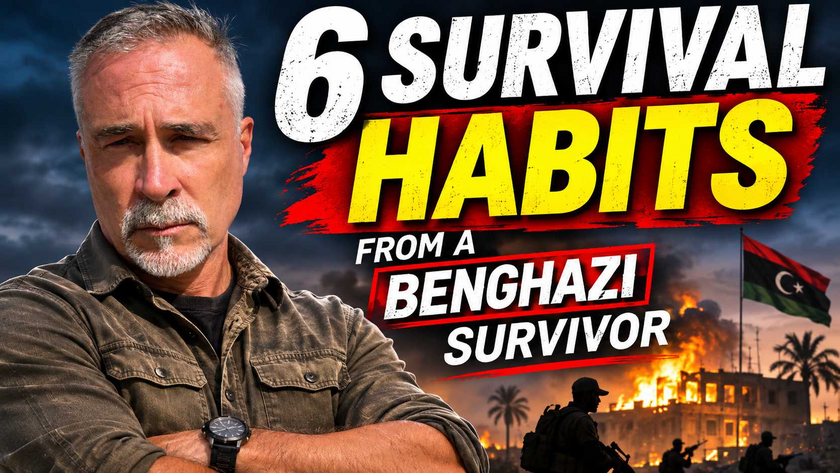
Surviving the Worst: 6 Skills That Actually Save Lives
Early Access Content

Dave "Boon" Benton spent 13 hours fighting off wave after wave of attackers at the CIA annex in Benghazi, Libya on September 11, 2012. They were outnumbered, no cavalry was coming, and they were making life-or-death calls with only a fraction of the information they needed. When a man like that boils down what he knows about staying alive into five words, I pay attention: "Train a little, a lot."

That lines up with everything the Army pounded into my head as a Ranger, and with what I've seen in 25 years of carrying a camera through some of the most dangerous places on the planet. The people who come through a crisis in one piece aren't the ones with $4,000 of gear still in the shrink wrap. They're the ones who practiced something small over and over until it got boring.

Only for Supporters
To read the rest of this article and access other paid content, you must be a supporter
Read full Article
See More
Available on mobile and TV devices
google store google store app store app store
google store google store app tv store app tv store amazon store amazon store roku store roku store
Powered by Locals