Chuck Holton
Politics • Culture • News
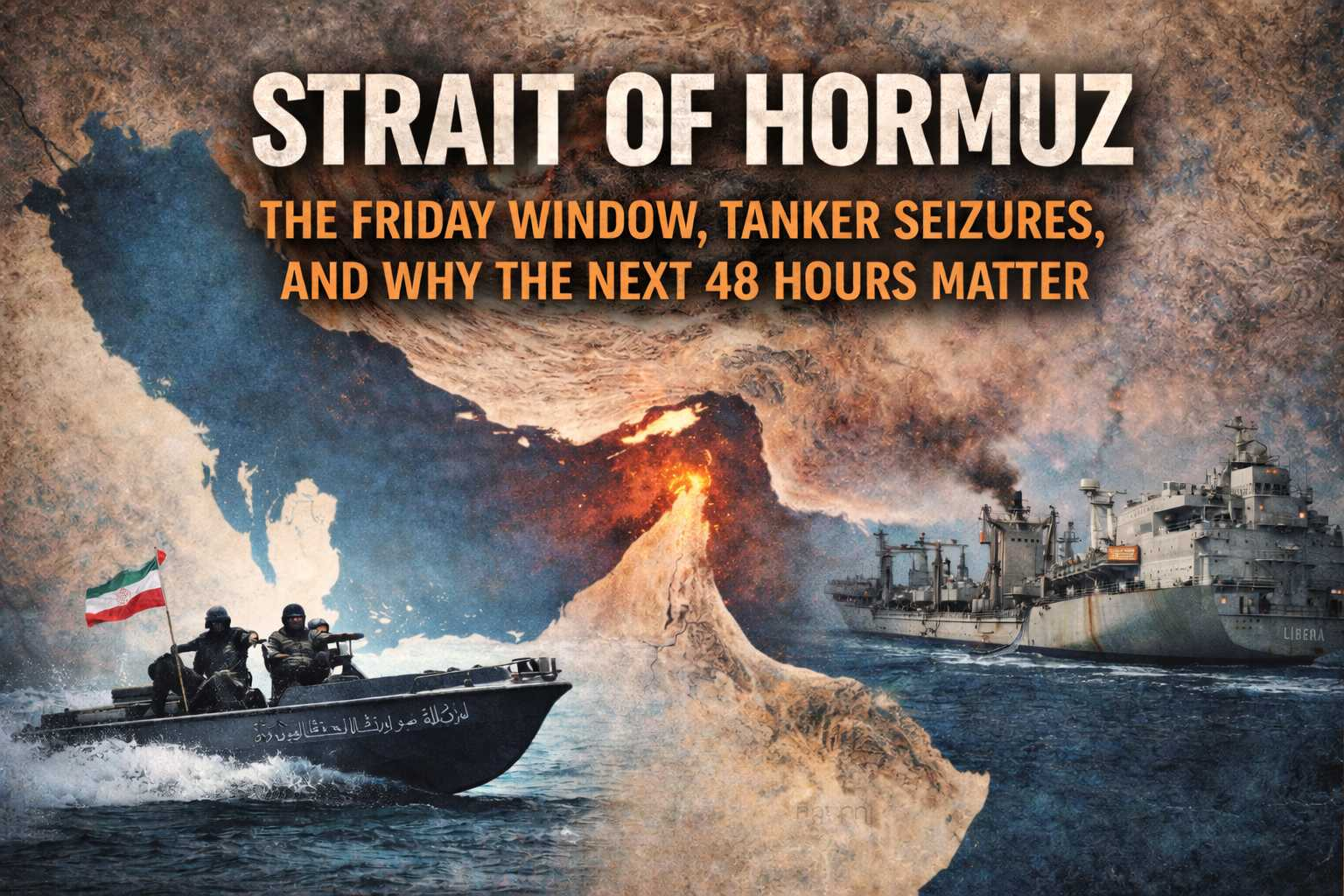
Strait of Hormuz: The Friday Window, Tanker Seizures, and Why the Next 48 Hours Matter
February 06, 2026
post photo preview

As of today, the Persian Gulf and the Strait of Hormuz are the focal point for both tactical maritime friction and strategic decision-making between the United States and the Islamic Republic of Iran.

Between February 3rd and today, we’ve had two major incidents involving tankers in that region:

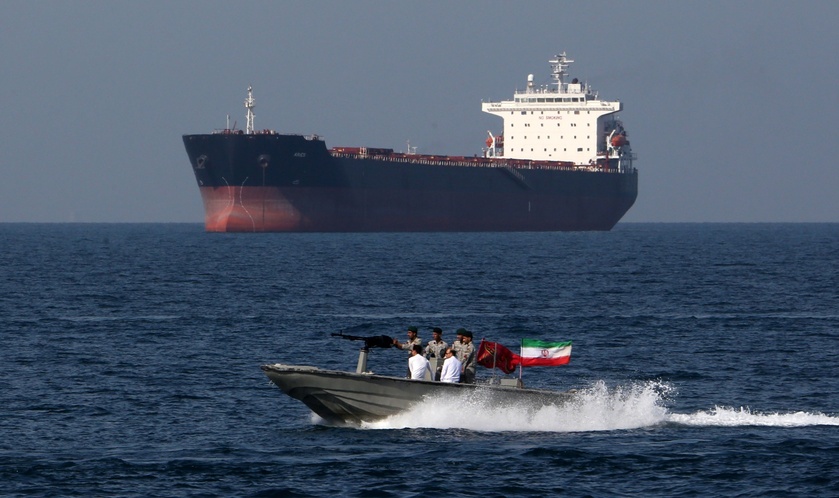
  • Feb 3: Iran attempted to stop and board an American-flagged tanker using fast boats and a drone.

  • Today: Iran seized two tankers near Farsi Island, north of the Strait of Hormuz.

That’s not business as usual. That’s escalation behavior—especially while they’re pretending to negotiate.

The ship they tried to stop on February 3rd wasn’t just “some American-flagged commercial vessel.” It was the MV Stena Impero—part of a U.S. government program called the Tanker Security Program (TSP).

TSP ships are essentially mobile fuel lifelines for the U.S. Navy—specially certified for refueling warships underway. That’s not a small capability. That is how you keep destroyers and carrier groups operating without coming home.

So when Iran sends fast boats with machine guns and launches a drone toward a tanker like that, it isn’t just piracy or harassment. It’s potentially an attempt to cripple U.S. naval sustainment right before a strike window.
And if Iran had successfully taken that tanker? That could’ve kicked off a shooting war on the spot.

The two ships seized today—and why Iran did it now

Now, the two tankers seized today near Farsi Island were different. These were illegally flagged “ghost fleet” style ships, and based on what’s being overlooked in mainstream reporting, they were involved in subsidy arbitrage—buying heavily subsidized Iranian diesel and selling it in neighboring markets for massive profit.

Iran subsidizes fuel so heavily that it can be purchased inside the country for pennies. Across the water, diesel sells at market rates. That markup is insane—more than most illegal drug operations.

So yes—Iran has every right to stop fuel theft.

But here’s the real question: Why do it now?

Only for Supporters
To read the rest of this article and access other paid content, you must be a supporter
12
What else you may like…
Videos
Podcasts
Posts
Articles
Tim Miller on Cultural Decay in America

Check out this great interview Tim Miller did on FOX the other day.

00:04:10
Bringing dignity to imprisoned women

I’m in Cartagena and yesterday we went to the women’s prison here to bring some much-needed necessities to the ladies and give them the gospel of the good news of Jesus Christ. It was a powerful time. I’m very glad I got a chance to do this. Thank you to all of you who donated to help these women. They are truly “the least of these “.

00:00:19
Day 2 Syria
00:01:36
Episode 622 - Field Producer Dennis Azato and Chuck Reminisce

My erstwhile field producer and cameraman Dennis Azato has accompanied me on ten years of adventures across the globe. Today he joins me in Ukraine and we spend some time remembering our many trips together.

Episode 622 - Field Producer Dennis Azato and Chuck Reminisce

Going live at 10 A.M. EST. on CBN about Iran. Tune in here:

Chuck on CBN News
11 hours ago

USA and Israel have made a preemptive hit on Iran

post photo preview
This Changes Everything for US Military Power

The Pentagon has just released a brand-new artificial intelligence strategy memo — and it’s not about chatbots answering trivia.

 Defense Secretary Pete Hegseth signed a directive pushing the U.S. military to become “AI First.” That means: Deploying new AI models within 30 days of public release Embedding AI into military kill chains Using AI for logistics, battlefield analysis, and targeting Removing bureaucratic barriers to rapid deployment Putting advanced AI tools in the hands of 3 million military and civilian personnel The goal?

Speed, dominance, deterrence.

Only for Supporters
To read the rest of this article and access other paid content, you must be a supporter
Read full Article
post photo preview
Live Call TOMORROW
Our live call is this Saturday, February 21st at 12:00 PM Eastern.

Local’s members,

Our live call is this Saturday, February 21st at 12:00 PM Eastern.

Chuck just returned from Colombia and Syria and will be taking your questions—covering everything from ministry work on the ground in Colombia to the evolving geopolitical situation overseas. This is your chance to go deeper and hear directly from him.

He’ll also be sharing more about the upcoming Frontier Forge Institute summer camp, including its mission to train young men (ages 13–17) in Christian leadership, discipline, and responsibility. 

Only for Supporters
To read the rest of this article and access other paid content, you must be a supporter
Read full Article
post photo preview
Mercy on the Ground, War on the Horizon

The conflict between the United States and Iran is doing that strange dance right now. On one hand, you’ve got “negotiations” in Geneva. On the other hand… you’ve got aircraft carriers moving.

Axios reported this morning that we may be closer to striking Iran than most people realize. Not months. Not “someday.” Possibly days. And if you watch the hardware, it tells a clearer story than the press releases.

In just the last 48 hours, reports indicate the U.S. has surged:

  • 48 F-16s

  • 12 F-22s

  • 18 F-35s

  • 6 E-3G Sentry AWACS aircraft

  • Roughly 40 aerial refueling tankers

Meanwhile, the USS Gerald R. Ford carrier strike group has passed the Rock of Gibraltar and entered the Mediterranean.

And here’s what most people don’t understand:

That carrier does not have to sail into the Strait of Hormuz to be useful.

From the eastern Mediterranean—especially with tanker support—U.S. aircraft can strike targets inside Iran. Which means this could kick off before the Ford ever gets to the Gulf.

These “Talks” Aren’t Really Talks

The negotiations happening in Geneva aren’t face-to-face. There’s no American official sitting across a table from the Ayatollah. It’s shuttle diplomacy.

Omani intermediaries walk between rooms—one room with American envoys, another with Iranian representatives—carrying messages back and forth.

The U.S. says:
“You must give up highly enriched uranium and abandon your nuclear ambitions.”

Iran says:
“We’re willing to talk.”

And then quietly:
“Just not about that.”

That’s not negotiation.

And while the delay continues, the Ayatollah is publicly threatening to sink American carriers, calling them “big targets.”

Can Iran Sink a Carrier?

Let’s be serious for a moment. Yes, Iran has hypersonic missiles. Yes, they have thousands of short-range missiles designed to threaten neighbors like Saudi Arabia. Yes, they have speedboats with guns and some small submarines.

But here’s the problem for them:

Only for Supporters
To read the rest of this article and access other paid content, you must be a supporter
Read full Article
See More
Available on mobile and TV devices
google store google store app store app store
google store google store app tv store app tv store amazon store amazon store roku store roku store
Powered by Locals