Just days after Washington announced what was supposed to be the first step toward de-escalation with Iran, the fighting has resumed.
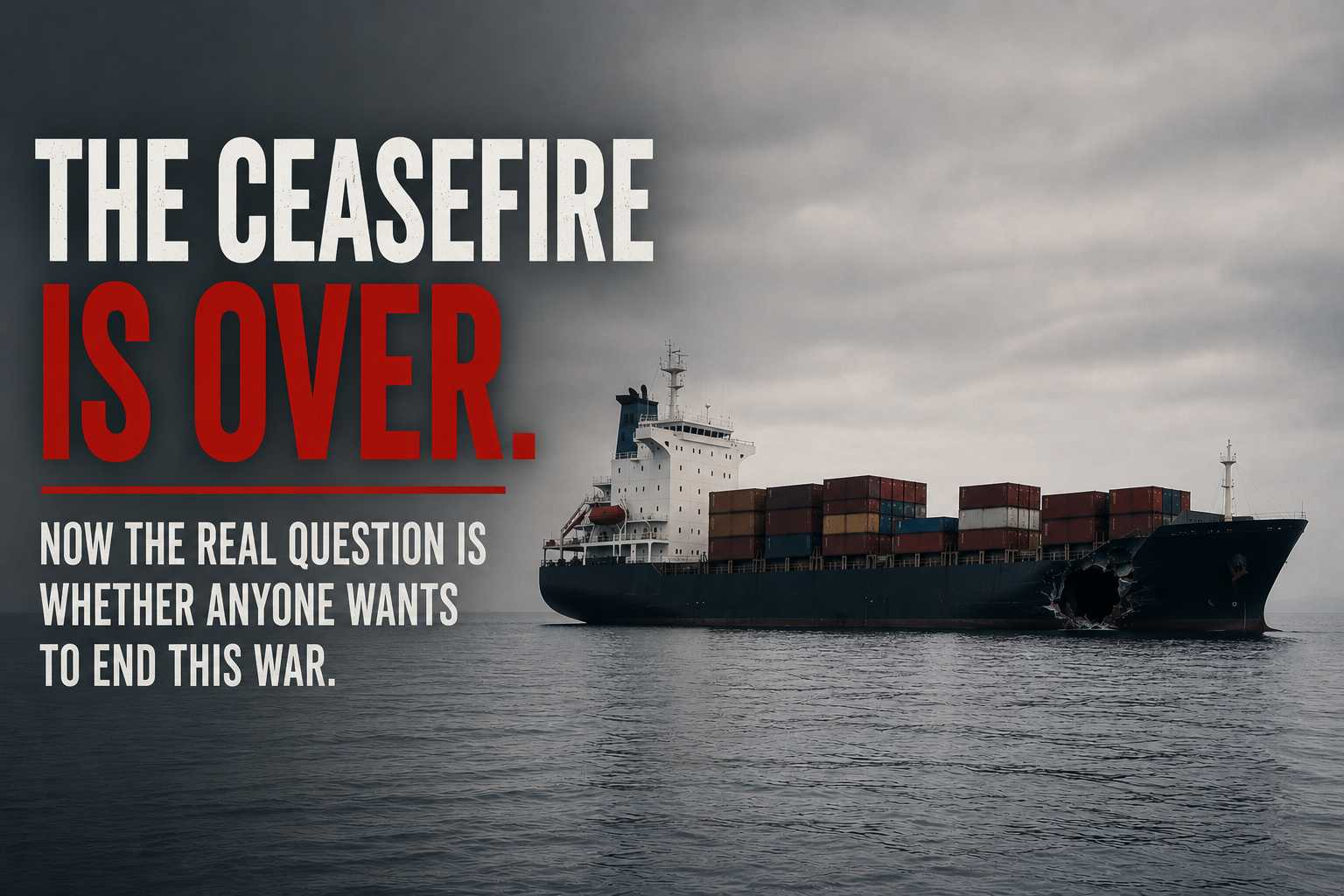
Iran struck the Singapore-flagged cargo vessel MV Ever Lovely in the Strait of Hormuz, reportedly using a one-way attack drone that punched a massive hole through the ship's hull. The United States responded with airstrikes against Iranian missile launch sites, drone storage facilities, radar installations, and command centers along Iran's southern coast.
Predictably, Tehran declared that it had retaliated against American forces in the region, although independent confirmation of those claims has yet to emerge.
For anyone hoping the recent diplomatic breakthrough had ended the crisis, this latest exchange should erase those expectations.
The ceasefire, such as it was, never had much chance of surviving.
It Was Never Really a Ceasefire
One of the biggest misconceptions surrounding the recent agreement is the belief that Iran signed a formal ceasefire.
It didn't.
What was signed was a memorandum of understanding—a preliminary framework expressing a willingness to continue negotiations. It was not a binding peace agreement, nor did it permanently settle the issues that brought both countries to the brink of war.
Almost immediately after the memorandum was announced, Iran attempted to expand its scope by demanding that the United States restrain Israel's military operations against Hezbollah in Lebanon.
Israel was never a party to the agreement.
And while diplomats debated language, Hezbollah continued launching rockets and drones into northern Israel, prompting additional Israeli retaliation.
From the beginning, the diplomatic framework rested on assumptions that simply did not exist on the battlefield.
The Strait of Hormuz Remains the Center of Gravity
The attack on the Ever Lovely was not random.
It reflects Iran's long-standing effort to assert greater control over the Strait of Hormuz, one of the world's most important maritime chokepoints.