Chuck Holton
Politics • Culture • News
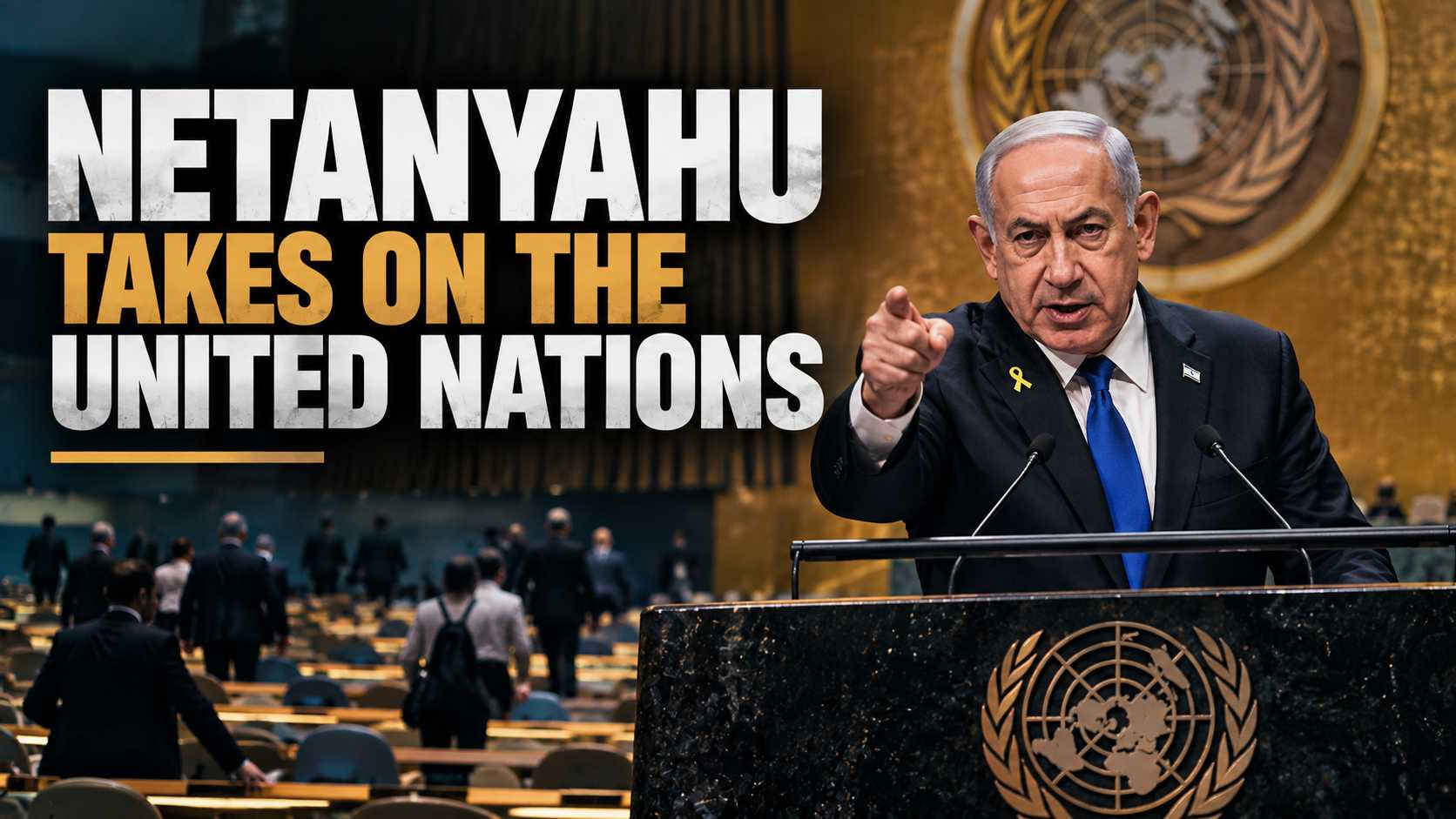
Netanyahu Takes Israel’s Case Directly to a Hostile United Nations
September 26, 2026
post photo preview

After delegates walked out of the General Assembly, Israel’s prime minister stayed at the podium and delivered an unapologetic defense of his country, confronting accusations over Gaza while turning his fire on Qatar, Turkey and Iran.


Benjamin Netanyahu walked into the United Nations General Assembly knowing that a significant number of delegates had no intention of listening to him.

As the Israeli prime minister approached the podium, delegations began leaving the chamber. Netanyahu appeared entirely prepared for the spectacle. Rather than ignoring the walkout, he opened by addressing it directly.

“If there are any other moral cowards who haven’t yet left this hall, please do so now.”

That opening established the tone for everything that followed.

Netanyahu did not come to New York to deliver a conciliatory diplomatic speech. He came to defend Israel’s conduct during nearly three years of war, challenge some of the most serious accusations leveled against his government and confront countries he says have helped create an international campaign against the Jewish state.
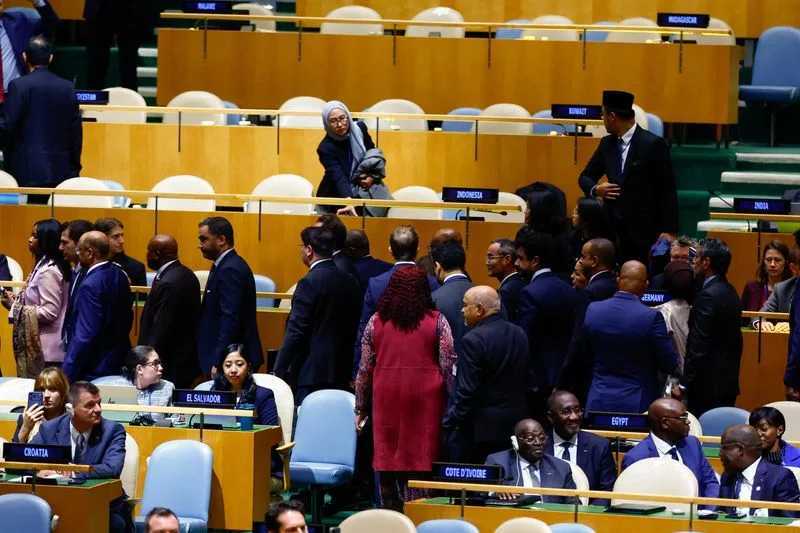
Delegates leave the United Nations General Assembly hall as Israeli Prime Minister Benjamin Netanyahu begins his address on September 24, 2026. Netanyahu responded to the walkout from the podium, calling those leaving the chamber “moral cowards.” Photo: Jeenah Moon/Reuters.


Whatever you think of Netanyahu, it was a remarkable speech to watch. He stood before an institution where Israel has faced sustained criticism and, rather than soften his message for the room, challenged his critics directly.

The result was less a traditional diplomatic address than a prosecution of Israel’s case before a deeply divided international audience.

Netanyahu Confronts the Genocide Accusation

The most consequential portion of Netanyahu’s speech concerned Gaza.

Israel continues to face accusations that its military campaign amounts to genocide, allegations that have become central to the international debate surrounding the war. The International Court of Justice has issued provisional measures in the genocide case brought by South Africa, but those measures are not a final judgment on the merits of the genocide allegation. U.N. Secretary-General António Guterres this week again emphasized the extraordinary scale of death and destruction in Gaza and called for compliance with international law and the court’s orders.

Netanyahu rejected the accusation outright.

“What genocidal regime gives a million polio vaccinations to the enemy’s population? What genocidal regime enables the distribution of 2 million tons of food into Gaza? That’s a ton for every person.”

Then he delivered his conclusion:

“Accusing Israel of genocide is the greatest lie of the century.”

Those are Netanyahu’s claims and his defense of Israel’s conduct. They will certainly not settle the argument internationally, particularly among governments and organizations that have reached dramatically different conclusions about the war.

But his broader argument was clear: Israel was attacked on October 7, 2023, and he believes the international conversation has increasingly separated everything that followed from the event that began this war.

That is something I have struggled to understand throughout this conflict.

There was no war between Israel and Gaza on October 6, 2023. The next morning, Hamas-led terrorists crossed into Israel, murdered civilians and took hostages back into Gaza. Israel responded with overwhelming military force.

You can debate that response. You can scrutinize individual operations, military decisions and Israeli government policy. You should. No government should be beyond scrutiny during wartime.

But Israel’s right to defend its population cannot simply disappear from the discussion.

That was the case Netanyahu was making to a room in which many delegations had already decided they would rather leave than hear him make it.

A Different Kind of War

Netanyahu then widened his argument beyond the battlefield.

Israel, he said, is fighting not only a military war but an information war over how the conflict is understood around the world.

“Our brave soldiers have been valiantly fighting a seven-front war, but there’s an eighth front to this war. It’s the war for truth.”

He singled out Qatar, accusing the Gulf state of spending enormous sums over decades to shape opinion through universities and media organizations, including Al Jazeera.

Qatar strongly disputes the Israeli portrayal of its role. Doha has positioned itself as a mediator in the conflict and says it has worked to secure ceasefires, humanitarian relief and the release of detainees and hostages. Qatar’s own address to the General Assembly this week presented almost the mirror image of Netanyahu’s argument, accusing Israel of devastating Gaza and failing to meet its obligations.

That contrast is worth understanding because it illustrates just how far apart the competing narratives have become.
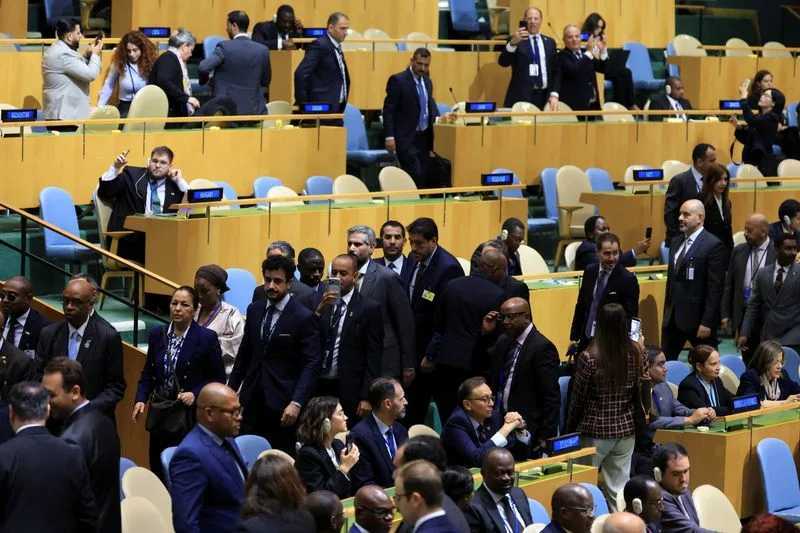
Delegates leave the United Nations General Assembly hall as Israeli Prime Minister Benjamin Netanyahu begins his address on September 24, 2026. Netanyahu responded to the walkout from the podium, calling those leaving the chamber “moral cowards.” Photo: Jeenah Moon/Reuters.


Netanyahu sees Israel fighting a military campaign while simultaneously confronting a global political and information campaign designed to isolate it.

His opponents see Israel as using that argument to deflect criticism of the enormous civilian toll and destruction in Gaza.

Both arguments are now playing out not only on television screens and social media but inside the United Nations itself.

Netanyahu Turns on Erdogan

Netanyahu reserved some of his harshest language for Turkish President Recep Tayyip Erdogan.

Erdogan has become one of Israel’s most outspoken international critics and has used his own appearance at the General Assembly to accuse Israel of genocide and call for greater international pressure on Jerusalem.

Netanyahu answered personally.

“Erdogan is a tyrant. He also hosts the Hamas terror chiefs. He has murdered thousands of Kurdish civilians. He denies the Armenian genocide. He jails journalists and opposition leaders.”

He also accused Turkey of occupying northern Cyprus and threatening Greece before turning to Erdogan’s rhetoric concerning Jerusalem.

“He says he’s going to be the ruler of Jerusalem. No, sir, you won’t. This is our country, our city, our eternal capital.”

This was Netanyahu at his most confrontational. There was virtually none of the careful diplomatic language normally associated with a General Assembly address.

He named his adversaries and attacked them directly.

And then he turned to Iran.

A Starlink Terminal and a Message to Tehran

This was probably the most theatrical moment of the speech.

Netanyahu brought a Starlink terminal with him to the podium while discussing Iran’s restrictions on communications and access to information. He described the device as a means for ordinary people to access information beyond government censorship.

Then he offered it to the Iranian delegation.

“Mr. President, I’m going to leave this device with you so you can give it to the Iranian delegation so when they inevitably defect, they too will be able to freely tell their story on social media.”

It was political theater, obviously.

But it was effective political theater.

Later, according to the account discussed during my broadcast, Israel’s U.N. ambassador attempted to deliver the device to the Iranian delegation. They declined it. Given the history of Israeli intelligence operations involving electronic devices, I cannot say I blame Iranian officials for being somewhat reluctant to accept electronics handed to them by the Israelis.

Netanyahu even invoked that history himself when he produced another prop: a pager, an unmistakable reference to the extraordinary 2024 operation in which communications devices used by Hezbollah members exploded across Lebanon.

The symbolism was impossible to miss.

His message to Iran and its allies was essentially this: Israel has demonstrated that it can reach into organizations and places once believed to be beyond its reach.

The Empty Seats Told Only Part of the Story

One of the most interesting aspects of the speech was the diplomatic choreography surrounding it.

Delegates walked out, but not everyone did. The United Arab Emirates remained, according to the account I reviewed during the live broadcast. Armenia also remained in the chamber. I found Armenia’s decision particularly interesting given the complicated history of relations between Armenia, Israel and Turkey.

Netanyahu argued that some governments publicly condemning Israel have privately benefited from Israeli actions against Iran.

“Israel is also defending many of the countries whose delegates just left this hall.”

He then made an even more striking assertion:

“Many of their leaders even thank us privately for taking out Iran’s nukes.”

That claim cannot be independently confirmed from the speech itself, and Netanyahu did not publicly identify the leaders he said had privately thanked him. But the argument reflects one of the central contradictions in Middle Eastern diplomacy: governments can fiercely criticize Israel in public while sharing serious security concerns about Iran and its regional network.

The public diplomacy and the private security relationships are not always the same thing.

That is one reason I paid particular attention to who stayed in the room as well as who left it.

Netanyahu’s Argument About Christians

Netanyahu also challenged the international community over the treatment of Christians in the Middle East.

“Their numbers are plummeting everywhere in the Middle East where they’re being persecuted and hounded except one place, my country, Israel, where the Christian community is growing, thriving, succeeding.”

He then pointed to Bethlehem, arguing that its Christian share of the population fell dramatically after the city came under Palestinian Authority administration.

The demographic history of Bethlehem is more complicated than a single cause; emigration, economic conditions, conflict and political changes have all contributed to the decline of its Christian population. But Netanyahu’s larger point was directed squarely at governments and activists who regularly condemn Israel while, in his view, devoting considerably less attention to the persecution of religious minorities elsewhere in the region.

It was another example of the structure running through the entire address: Netanyahu was not simply defending Israeli policy. He was accusing Israel’s critics of applying standards to the Jewish state that they do not consistently apply elsewhere.

The United Nations Put on Trial

That may ultimately be the most important thing about this speech.

Netanyahu was ostensibly standing before the United Nations to answer Israel’s critics. Instead, he attempted to reverse the proceeding and put the United Nations itself on trial.

And he was not alone.

Argentine President Javier Milei also used his appearance to deliver a sweeping criticism of the institution, accusing it of failing in its responsibilities on collective security and human rights. The broader General Assembly debate has exposed profound divisions over Gaza, Iran, the role of international institutions and the future of the international order itself.

That is why I think Netanyahu’s speech mattered beyond Israel.

The United Nations was created to provide a place where countries that profoundly disagree can still confront one another with words rather than weapons. There is value in that, even when the institution fails spectacularly to live up to its own ideals.

But there is also something revealing about watching diplomats walk out rather than remain in their seats and hear the leader of a country they condemn.

Netanyahu knew they were going to leave. He came anyway. And when they walked out, he delivered his argument to the empty seats. Whether those delegates agreed with him was never really the point. They obviously did not.

The point was that Israel’s prime minister wanted the world to hear his case directly: that Israel sees itself not as the aggressor portrayed by many of its critics, but as a country fighting enemies on several fronts while simultaneously fighting an international battle over the legitimacy of defending itself.

His critics will reject that characterization. Israel’s supporters will see the speech as an overdue confrontation with an institution they believe has treated the Jewish state unfairly.

But after watching the address, one thing was difficult to miss. Netanyahu did not arrive at the United Nations asking for its approval. He arrived prepared to challenge its judgment.


community logo
Join the Chuck Holton Community
To read more articles like this, sign up and join my community today
4
What else you may like…
Videos
Podcasts
Posts
Articles
Hegseth Fires Back at Impeachment: "We Have Only Just Begun to Fight"

Secretary of War Pete Hegseth delivers a defiant statement from the steps of the Pentagon, defending two years of sweeping changes at the Department of War and firing back at the Democrats who have filed articles of impeachment against him.

Hegseth lists the "sacred cows" he says the department has torn down: DEI, climate change as a military objective, transgender service, and renaming bases. He defends strikes on narco-terrorists, the military's role in border security and mass deportations, and the war to keep Iran from getting a nuclear weapon, calling it "courageous and historic."

He also calls on the lame-duck Congress to pass a reconciliation bill with at least $350 billion for the military. He dismisses the impeachment effort, led by what he calls "a disgruntled, defeated Congressman," as "the politics of personal destruction," the same tactic he says was used twice against President Trump. His message to the troops: "Don't blink, ignore the noise, never hesitate."

00:05:47
The Future of America? I Hope Not!

Dave Rubin made this AI video that paints a pretty bleak future if the DSA wins an election. What do you think?

00:03:00
Paris Parody

This is the funny video I put up at the beginning of today's live.

00:01:18
Episode 622 - Field Producer Dennis Azato and Chuck Reminisce

My erstwhile field producer and cameraman Dennis Azato has accompanied me on ten years of adventures across the globe. Today he joins me in Ukraine and we spend some time remembering our many trips together.

Episode 622 - Field Producer Dennis Azato and Chuck Reminisce

Real life picture of me modding for The Hot Zone 😂🫡

post photo preview

The Need to be Teachable and Correctable

Shame will only be on those who refuse biblical correction and think they know everything already (Proverbs 12:1). Truly, none of us like to be corrected, but the righteous receive rebuke gladly because it directs us into the way of life (Proverbs 10:17).

I used to believe the heresy that a Christian could lose their salvation and that a genuine believer could have a demon in him. When confronted with the scriptural truth, it took some time, but I eventually came to the place of repentance according to God's grace (2 Timothy 2:25).

My friend once shared a helpful illustration: if I was eating a meal every single day for 20 years that I thought was healthy, but someone pointed it out that it was actually very bad for my body, would I keep eating it or would I stop? Bad doctrine is likened to that deceptive diet that brings defilement into our lives (Mark 7:20-23). Without question, God wants what is best for us, but we must be willing to let Him lead us ...

A person exercising faith in the Gospel is not performing a work by which they save themselves as some suggest. The Bible is clear that by works it means works of the law (Romans 4:5, Romans 3:20, Galatians 2:16) and not something that we decide to call a work according to our standards. Undoubtedly, just as every breath we breathe is from God, believing is also enabled by His grace (Hebrews 12:2, Romans 12:3), but that doesn't remove our own volition, for we can resist His Spirit's witness (Acts 7:51) or respond in faith (Ephesians 2:8).

Furthermore, our faith is opposite of the works of the law because we are resting our faith entirely on the One who actually fulfilled the works of the law (Romans 10:4) in His perfectly obedient life (Romans 5:19). Notably, Christ wasn't forced against His will to be condemned for us, but He willingly laid down His life as a sweet-smelling sacrifice (Ephesians 5:2) for our transgressions and was raised from the dead for us to be counted righteous in God's...

post photo preview
Held by Al-Qaeda for 6½ Years: Jeff Woodke's Story of Survival, Faith & Forgiveness
Early Access Content

In October 2016, American humanitarian aid worker Jeff Woodke was attacked in his home in Abalak, Niger, where he'd served nomadic communities for 27 years. His guards were killed, he was beaten, stripped and hauled into the Sahara by Al-Qaeda-linked militants, and he spent the next six and a half years in chains.
▎
▎ In this interview, Jeff describes the night he was taken, daily life as a hostage, two months locked in a four-by-four-foot box, and the moment he hit rock bottom and asked his captors to end his life. He explains why love and prayer kept him going, why he chose to forgive the men who held him, and what the West gets wrong about jihadist groups in Africa. He also talks about the long road back: PTSD, triggers, therapy and learning to live again.
▎
▎ Jeff's book All the Way Home is available wherever books are sold. Learn more at jeffwoodke.com and follow his writing on Substack. Get Jeff's book at https://a.co/d/04GNsckG


Only for Supporters
To read the rest of this article and access other paid content, you must be a supporter
Read full Article
post photo preview
America Divided, Europe Under Attack: The Wars Washington Cannot Ignore

As the Trump administration faces political fallout over Iran, suspected Russian cyberattacks and growing instability across Europe are raising difficult questions about American leadership and national security.

The United States is facing a troubling combination of political division at home and growing security threats abroad. In Europe, cyberattacks, aviation disruptions and continuing unrest are creating new concerns about Russia's campaign against the West, while Washington is struggling with the political consequences of its military operations against Iran.

These developments may appear unrelated, but they reveal a larger problem: Western governments are finding it increasingly difficult to respond decisively to threats that do not fit traditional definitions of warfare. Meanwhile, disagreements within the Trump administration are raising questions about whether American leaders have a coherent strategy for dealing with those threats.

Russia's War Against Europe Is Already Underway

I recently returned from Paris, where demonstrations and confrontations with police have continued to disrupt parts of the city. Although it would be inaccurate to describe Paris as a whole as a war zone, the unrest illustrates the tensions affecting several European countries and the opportunities those divisions create for hostile foreign powers.

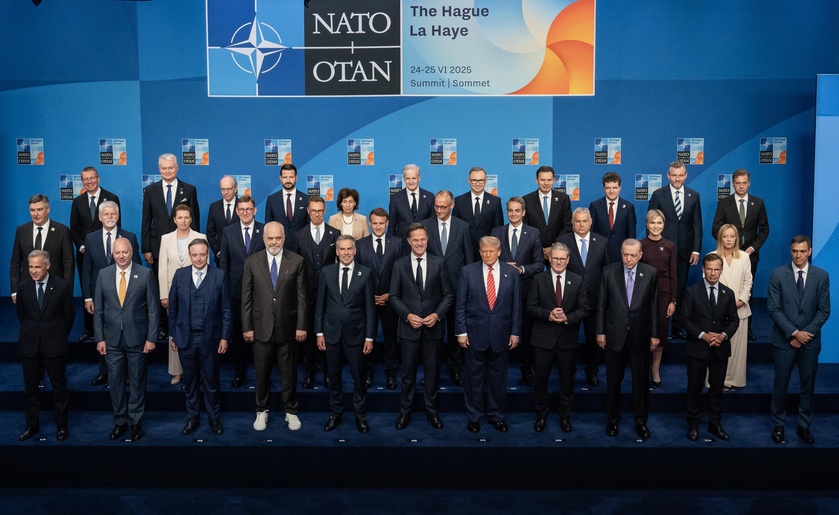
NATO leaders gather for the alliance's summit in The Hague, Netherlands, on June 25, 2025. European governments have increased their focus on collective defense, military readiness and emerging threats to civilian infrastructure.

Photo: Bart Maat / Dutch Ministry of Foreign Affairs, via Wikimedia Commons


I believe Russia is actively exploiting those divisions through a broader campaign of asymmetric warfare, including cyberattacks and other disruptive operations. During my latest broadcast, I discussed reports of refrigerated storage systems being remotely manipulated to temperatures high enough to destroy food supplies, with two Russian hacking groups reportedly claiming responsibility.

The potential consequences of these attacks extend far beyond damaged equipment or financial losses. Destroying refrigerated food supplies through a computer network can produce some of the same economic and humanitarian consequences as physically attacking a distribution center, particularly as European countries prepare for winter.

There have also been reports of widespread aviation disruptions involving bomb threats against aircraft across numerous European countries. According to information discussed during the broadcast, dozens of aircraft had reportedly been affected, with some flights diverted or escorted by military aircraft.

The attribution and full extent of these incidents still require independent confirmation, but the strategic question remains important. If a hostile government can disrupt transportation, destroy essential supplies and destabilize civilian infrastructure without deploying conventional military forces, at what point should those operations be treated as acts of war?

European countries are already conducting military readiness exercises near Russia's borders, including preparations for civilian evacuations and rapid military responses. I do not believe Russia is currently in a position to launch a successful conventional invasion of NATO territory, but that may be precisely why Moscow has an incentive to rely on less conventional methods.

Ukraine and the Contradictions of Russian Diplomacy

The continuing war in Ukraine provides another example of the gap between Moscow's diplomatic language and its military conduct. During a recent appearance in Washington, Russian envoy Kirill Dmitriev publicly thanked First Lady Melania Trump for her humanitarian efforts involving civilians affected by the conflict.

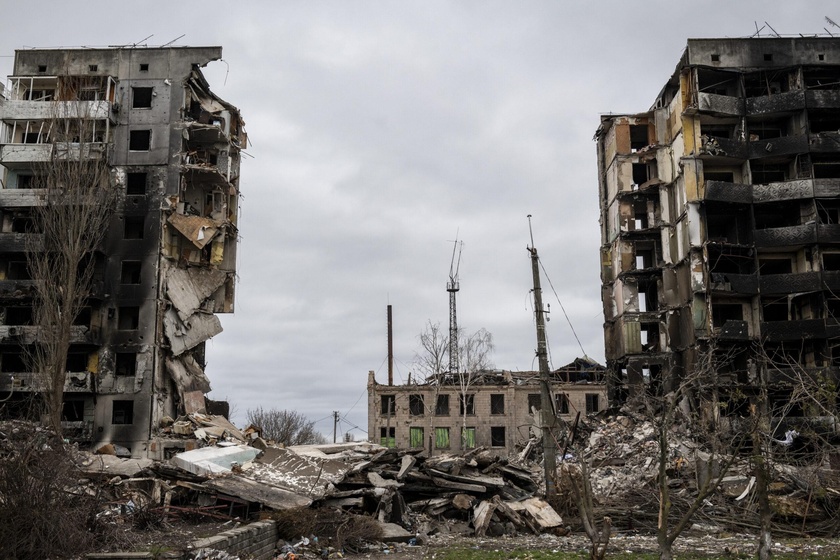
War-damaged residential buildings in Ukraine illustrate the destruction inflicted on civilian communities during Russia's invasion. The continuing attacks remain a central concern as diplomatic efforts seek a negotiated settlement.

Photo: International Humanitarian Law Centre / Diakonia; individual photographer not identified in the available source


I respect Melania Trump's willingness to help people caught in the fighting, but I find it difficult to accept Russia presenting itself as a humanitarian partner while its military continues attacking Ukrainian communities. Diplomatic gestures should not distract from the suffering of civilians or the conditions under which Russia is willing to negotiate.

Ukraine has also continued targeting Russian energy infrastructure, including oil refineries that support the country's economy and military operations. Those strikes are placing additional pressure on Moscow, although predictions that Russia is approaching military collapse should be treated cautiously until supported by stronger evidence.

The fundamental obstacle to peace remains Russia's negotiating position, which continues to demand concessions Ukraine is unlikely to accept. A ceasefire that merely allows Moscow to consolidate its gains without providing Ukraine with meaningful security would do little to resolve the underlying conflict.

Trump's Iran War Creates a Political Divide

Back in Washington, the political consequences of the conflict with Iran have become increasingly difficult for the administration to ignore. President Trump has acknowledged that higher energy prices associated with the war contributed to Republican electoral losses, while maintaining that confronting Iran was necessary to protect American national security.

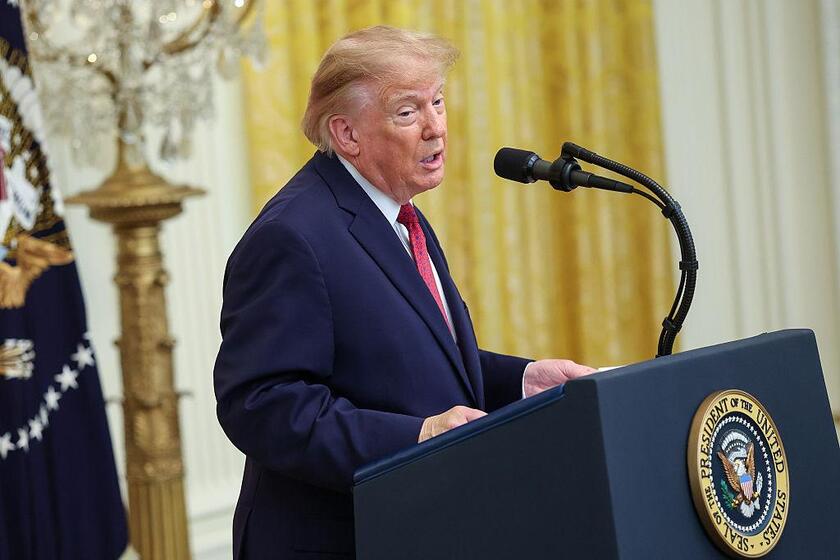
President Donald Trump speaks at the White House in Washington on September 30, 2026. Following Republican losses in the midterm elections, Trump acknowledged the political impact of the war with Iran while defending his decision to confront Tehran.

Photo: Jonathan Ernst / Reuters


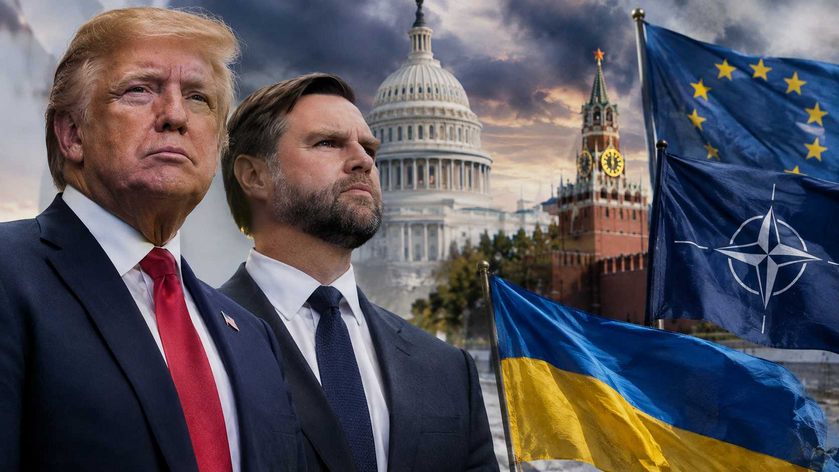
Vice President JD Vance has taken a different approach in his public discussion of the election results, emphasizing voter frustration over the war, inflation and the cost of living. His remarks have exposed disagreements over the administration's foreign-policy priorities and the direction Republicans should take in the coming years.

I believe there is an important distinction between questioning the decision to confront Iran and questioning how that confrontation was carried out. If President Trump possessed credible intelligence indicating an urgent nuclear threat, military action may have been justified, but the administration still owes Americans a clear explanation of its objectives and the results achieved.

My concern is that the United States entered a major confrontation without establishing a sufficiently clear path toward a lasting outcome. The Iranian government remains a serious regional security threat, and any diplomatic agreement must be evaluated against the regime's record, its military capabilities and the likelihood that it will honor its commitments.

Secretary of State Marco Rubio has made a compelling argument about the broader consequences of allowing Iran to threaten neighboring countries and international energy infrastructure. His warnings about Tehran's support for armed groups throughout the Middle East are reminders that the issue extends beyond gasoline prices or short-term political calculations.

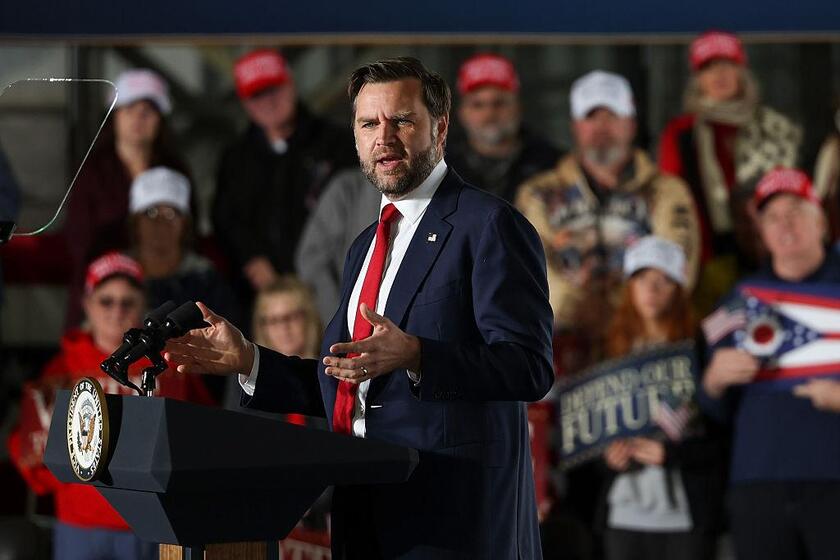
Vice President JD Vance addresses a Republican campaign rally in Swanton, Ohio, on November 2, 2026. Vance's subsequent comments about the Iran war and Republican electoral losses highlighted disagreements within the administration over its foreign-policy priorities.

Photo: Andrew Dolph / USA TODAY Network via Imagn Images


At the same time, political accountability cannot be avoided simply because a president believes his original decision was correct. Trump is ultimately responsible for the administration he assembled, the advisers he appointed and the strategic decisions made under his leadership.

The Danger of Political Distraction

The growing disagreements within the Republican Party come as Congress faces renewed arguments over executive authority, military operations and possible impeachment proceedings involving senior administration officials. Some of these disputes involve legitimate constitutional questions, while others risk becoming political theater that distracts from more immediate national security concerns.

Americans have every right to question the cost of foreign wars, the effectiveness of military operations and the decisions of elected leaders. Those questions should be answered with evidence and a serious examination of America's strategic interests rather than political loyalty or partisan accusations.

What concerns me most is that our adversaries are not waiting for Washington to settle its internal disagreements. Russia continues its campaign against Ukraine and is accused of disruptive operations across Europe, while Iran remains capable of threatening regional stability and international commerce.

We cannot afford to confuse political messaging with military success or diplomatic ceremonies with genuine progress toward peace. The United States needs leaders who recognize the difference, understand the threats we face and are willing to make difficult decisions while remaining accountable for the consequences.

The world is becoming more dangerous, and pretending otherwise will not make those dangers disappear.

Read full Article
post photo preview
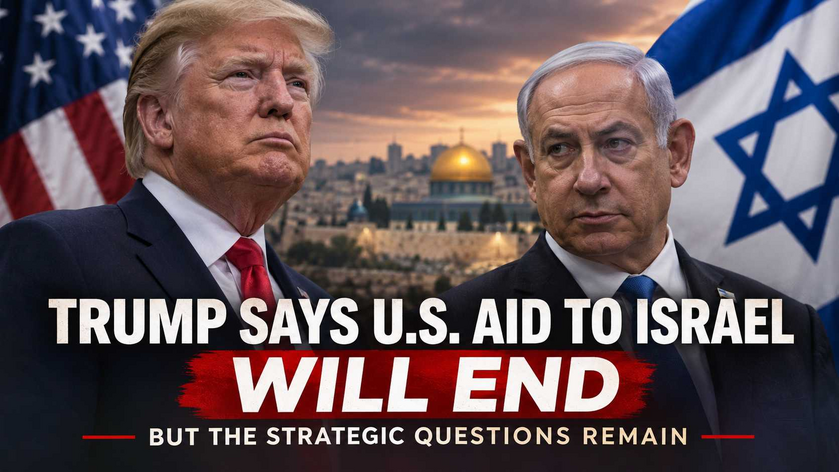
Trump Says U.S. Aid to Israel Will End, but the Strategic Questions Remain

As Washington continues military operations against Iran, a surprising announcement about Israel raises questions about American commitments, regional security and the real value of foreign aid.

President Donald Trump has announced that the United States will stop providing approximately $4 billion in annual assistance to Israel at the end of this year, saying the country is prosperous enough to manage without American support. According to Trump, the decision was discussed with Israeli Prime Minister Benjamin Netanyahu, who reportedly suggested that Israel should begin moving away from its dependence on U.S. assistance.

The announcement deserves serious attention, not simply because Israel is one of America's most important allies, but because the financial relationship between the two countries is considerably more complicated than most people realize. There is also a significant question about how the proposed cutoff would work, given that the existing U.S.-Israel memorandum of understanding extends through 2028.

What America Gets in Return

When Americans hear that their government provides billions of dollars to another country, the understandable reaction is to ask why that money isn't being spent at home. I believe taxpayers have every right to demand accountability, but the more useful question is what the United States receives in exchange for that investment.

Much of the military assistance provided to Israel is used to purchase American-made defense equipment, supporting manufacturers, suppliers and jobs here in the United States. The arrangement also helps sustain a defense-industrial base that America depends upon for its own military readiness, meaning the benefits extend well beyond the equipment delivered to Israel.

There are strategic advantages that are harder to measure in dollars. Israel provides intelligence, military expertise and operational experience in a region where American interests are constantly threatened, while cooperation on missile defense and advanced aircraft has produced lessons valuable to both countries.

None of this means every dollar is automatically justified or that Israel should receive American assistance indefinitely. It does mean that ending the arrangement should be based on a careful assessment of what America stands to lose, rather than the assumption that eliminating foreign aid necessarily produces an equivalent financial benefit at home.

Iran Remains an Unfinished Conflict

The announcement comes as President Trump continues to describe the conflict with Iran as effectively over, despite acknowledging another American strike against Iranian air-defense infrastructure. During his recent remarks, Trump characterized the operation as relatively minor, while maintaining that the United States had already won the war.

That distinction is difficult to reconcile with the continuing military activity around the Strait of Hormuz. American forces remain engaged in operations intended to protect shipping and counter Iranian threats, and the existence of those missions suggests that the security situation remains unresolved.

Vice President JD Vance has expressed optimism about a possible negotiated settlement, emphasizing the need for verifiable assurances that Iran will not rebuild its nuclear program. Iranian officials, meanwhile, continue to issue warnings about further American military action, illustrating the considerable distance that may still separate the two sides.

I am concerned that Washington is allowing its public messaging to get ahead of the reality on the ground. A conflict does not become settled merely because political leaders prefer to describe it that way, particularly when military operations continue and the opposing government retains the ability to threaten regional security.

A Broader Question of American Leadership

The debate over Israel is part of a larger argument about America's responsibilities abroad. Similar questions arise when discussing assistance to Ukraine, where American equipment and support have contributed to Ukraine's defense while providing important information about the performance of modern weapons in combat.

I understand the frustration of Americans who are tired of expensive foreign commitments, especially when they are struggling with rising prices and uncertainty at home. But withdrawing from international partnerships also carries costs, and those costs must be weighed against any immediate savings.

Supporting an ally does not require agreeing with every decision its government makes, just as supporting an American president does not mean remaining silent when his policies deserve scrutiny. My responsibility as a journalist is to examine what is happening, question the claims being made and tell you what I believe the evidence supports, regardless of which political party is in power.

For now, Trump's announcement raises more questions than it answers. Until the administration explains how the proposed cutoff fits with the existing agreement and what arrangements would replace it, Americans should be cautious about treating the end of military assistance to Israel as a settled decision.

Read full Article
See More
Available on mobile and TV devices
google store google store app store app store
google store google store app tv store app tv store amazon store amazon store roku store roku store
Powered by Locals