Chuck Holton
Politics • Culture • News
Who Is Behind Europe's Growing Unrest? Following the Money and the Political Networks
October 21, 2026
post photo preview

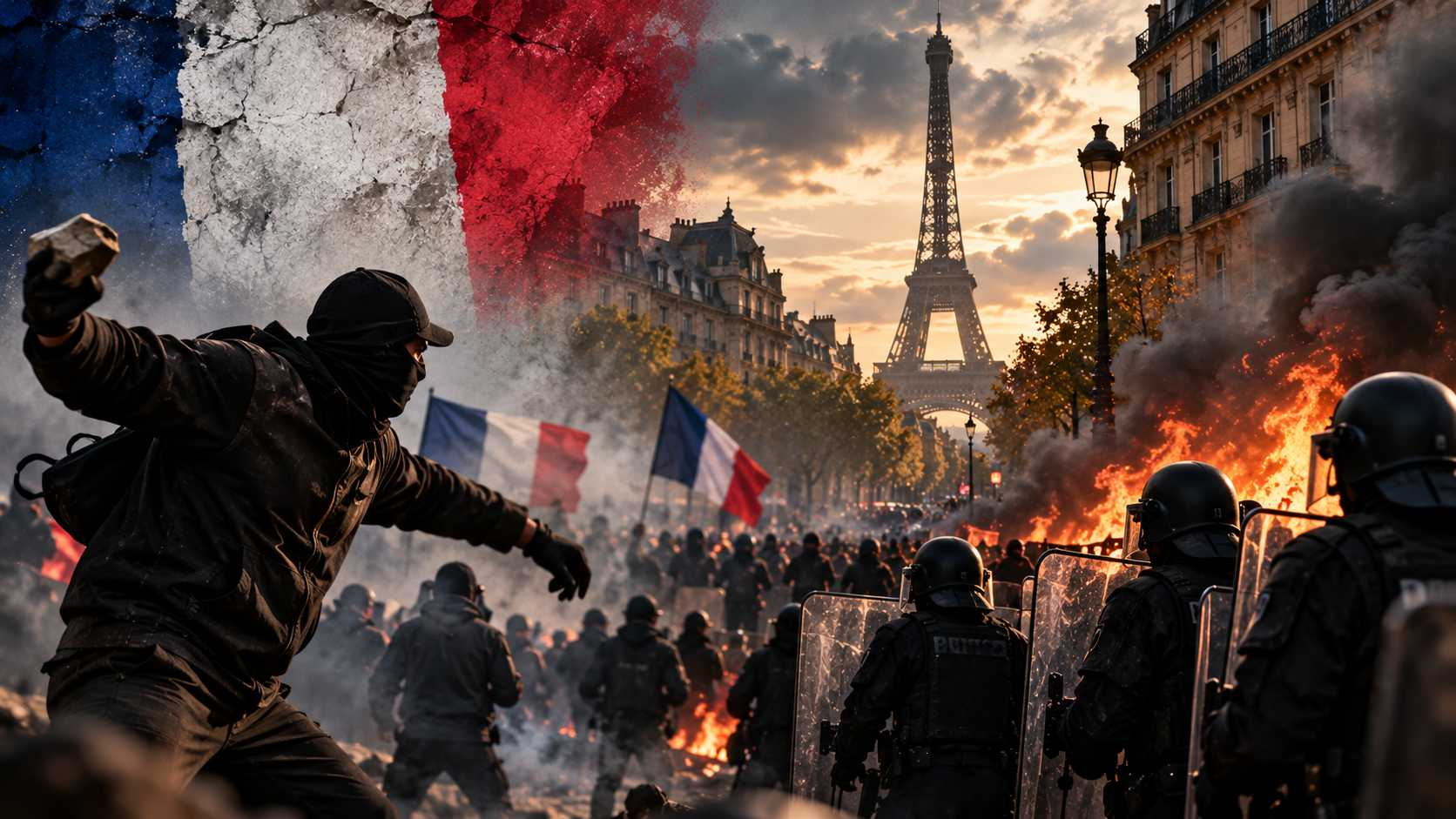
As France struggles to contain violent demonstrations, questions are emerging about the organizations supporting protest movements, their international connections, and what the unrest could mean for the United States.

France is experiencing another period of serious civil unrest, with violent demonstrations, damaged businesses and attacks on public buildings prompting authorities to impose curfews in an effort to restore order. But beyond the immediate destruction, there is a larger question that deserves attention: Are these demonstrations simply spontaneous expressions of public frustration, or are organized political networks helping turn legitimate grievances into something far more destructive?
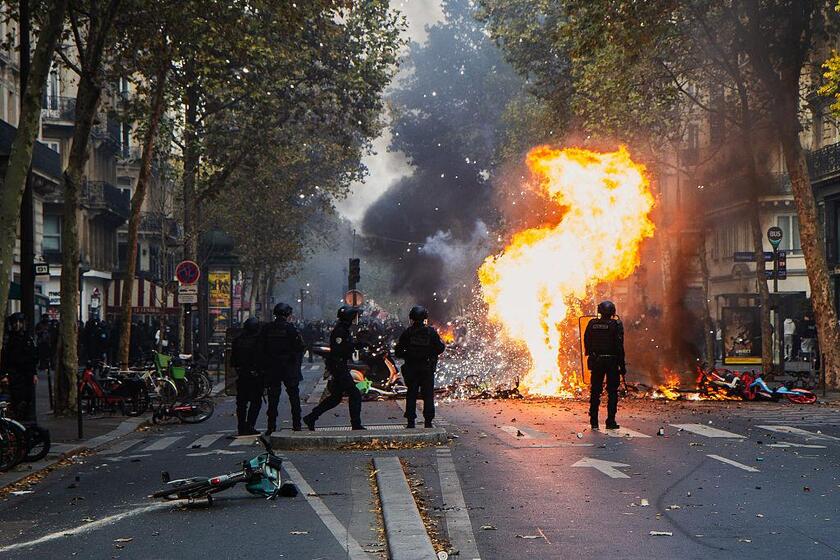
Demonstrations over rising living costs and public services escalated into clashes, fires and looting across France on October 17, 2026. Hundreds of thousands participated in the nationwide protests, while authorities reported extensive arrests and damage in several cities.

Photo credit: Stéphanie Lecocq / Reuters


That was the central issue I examined during my latest Hot Zone broadcast. After years of reporting from demonstrations and riots around the world, I've learned that the people filling the streets are not always the only ones shaping what happens there. Political organizations, advocacy networks and wealthy donors can play an important role in organizing demonstrations, distributing materials and promoting particular messages. The challenge is determining where legitimate political organizing ends and where unlawful activity begins. Those distinctions matter, especially when allegations involve foreign influence, political extremism and the possibility of coordinated violence.

I'm preparing to travel to France to investigate the situation firsthand, speak with people on the ground and examine what is actually happening beyond the images circulating online.

France's Unrest Raises Questions About Public Order

According to reports discussed during the broadcast, French authorities have imposed overnight curfews in several areas, with restrictions reportedly running from 11 p.m. until 6 a.m. Some local officials have also introduced additional measures aimed at younger demonstrators.

More than 2,400 arrests and damage to over 2,000 businesses were reported during the unrest, although those figures require confirmation from official French sources.

One of the most disturbing incidents involved a fire at a historic municipal building in Limoges. The structure, described as more than 140 years old, suffered extensive damage. I intend to visit the area during my reporting trip because the destruction of a building like that represents much more than a financial loss.
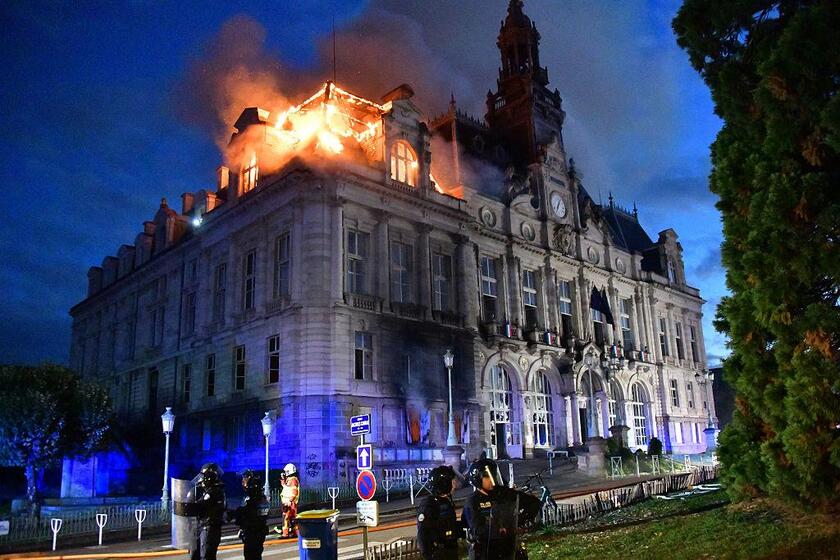
Flames engulf the historic town hall in Limoges, France, on October 17, 2026, during nationwide unrest. The nineteenth-century building suffered extensive damage, including the collapse of sections of its roof.

Photo credit: Lucas Destrem / Reuters


Historic buildings preserve the identity of communities. They reflect generations of craftsmanship, civic investment and cultural heritage that cannot easily be replaced.

There have also been disturbing allegations that some businesses were targeted because of their Jewish ownership. I want to be particularly careful about that claim because I have not independently confirmed it. If investigators establish that Jewish-owned businesses were deliberately identified and attacked, that would raise serious concerns about antisemitic violence, but it would be irresponsible to present the allegation as established fact before the evidence is available.

Meanwhile, Marine Le Pen has emerged as one of the most prominent political voices responding to the unrest.

In remarks featured during the broadcast, she condemned the destruction of public buildings, attacks on police officers and looting of businesses while calling for greater accountability. "Violence is not an opinion. Destruction is not expression. And chaos is no plan for France," she declared.

Le Pen also proposed making individuals convicted of damaging property financially responsible for the destruction they cause. I believe that principle deserves serious consideration. People who deliberately destroy businesses, vehicles and public property should face meaningful legal consequences, including restitution where appropriate. Peaceful protest is a fundamental right, but it does not provide immunity for criminal conduct.

The Organizations Behind the Demonstrations

One of the most revealing parts of my investigation involved examining the organizations associated with demonstrations in France.

During the broadcast, I discussed reporting that identified approximately 54 organizations participating in, supporting or promoting protest activity. The groups represented a broad range of political interests, including student organizations, labor unions, socialist movements, environmental campaigns, Palestinian solidarity organizations and anti-fascist networks.
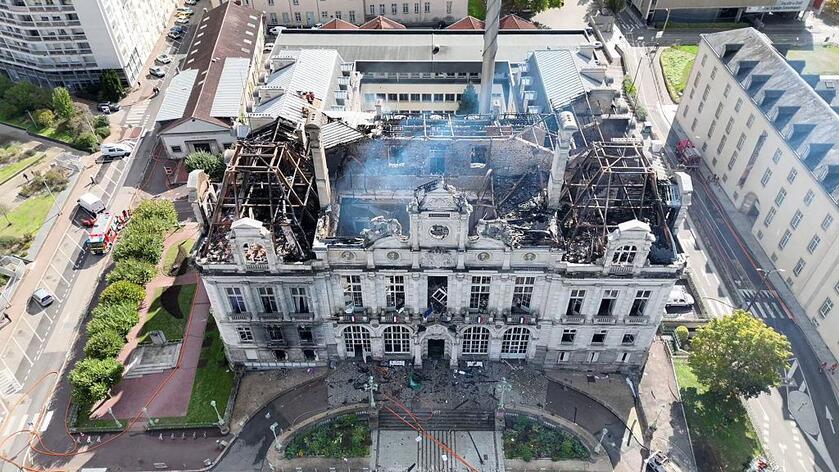
Debris covers the interior of Limoges town hall following a fire during the October 17 demonstrations. The damage to the protected historic building has raised concerns about the loss of an important part of the city's architectural heritage.

Photo credit: Ville de Limoges, via The Connexion


The involvement of these organizations does not automatically mean they are coordinating violence. Political organizations routinely participate in demonstrations, and peaceful advocacy is not evidence of criminal wrongdoing. Nevertheless, the overlap between different movements raises legitimate questions about how protests are organized, how messages spread and whether particular groups are attempting to redirect public anger toward broader ideological objectives. I encountered similar patterns while covering demonstrations in the United States.

During the first Trump administration, I spent approximately two years traveling around the country reporting on protests involving gun policy, racial justice, abortion, immigration and other contentious political issues. I began recognizing some of the same individuals at demonstrations thousands of miles apart. People I had encountered in Portland would later appear at events in Washington, D.C., sometimes carrying similar signs and repeating nearly identical political messages.

That experience convinced me that at least some protest movements involve experienced organizers who travel between events and maintain connections with larger advocacy networks. Of course, recognizing the same activists at multiple demonstrations does not establish that they are being paid to commit crimes. But it does illustrate why journalists should examine the organizational structures behind major protest movements rather than treating every demonstration as an entirely isolated event.

Following the Money: Neville Roy Singham and the Socialist Movement

One individual who deserves closer scrutiny is Neville Roy Singham, an American technology entrepreneur who sold his software consulting company and subsequently became involved in funding left-wing political and media organizations. Singham has attracted attention because of his financial relationships with organizations that promote socialist causes and his connections to China, where he has lived and maintained business and political relationships.

During the broadcast, I examined the Party for Socialism and Liberation, an American socialist political organization whose messaging has appeared at demonstrations in different locations. One sign caught my attention because I recognized it from protests I had covered years earlier in Washington.

Its message read:

"Trump is a symptom. Capitalism is the disease. Socialism is the cure."

The same slogan appeared in material associated with demonstrations discussed during the broadcast. For me, that illustrated the continuity of political messaging across different countries and protest movements.

Singham's relationships with organizations associated with socialist activism have been the subject of public scrutiny. However, the precise funding arrangements between individual donors, nonprofit organizations and political groups must be established through financial records rather than assumptions.

I am particularly concerned about the possibility that foreign governments could exploit these networks to influence public opinion or deepen political divisions in Western countries. China has an obvious strategic interest in weakening American influence and promoting narratives favorable to the Chinese Communist Party. But that strategic interest alone does not prove that Beijing is directing a particular protest, financing criminal activity or controlling the organizations involved.

During the broadcast, I offered my opinion that some of the money supporting these networks could ultimately be connected to Chinese government interests. I also made clear that I had not independently corroborated that conclusion. That is precisely why further investigation is necessary. The important questions concern where the money originates, how it moves between organizations, whether foreign officials exercise influence over its distribution and whether any funds are used to facilitate unlawful conduct. Those are questions that should be answered through evidence, not political assumptions.

From France to Italy and Ireland

The demonstrations discussed during the broadcast were not limited to France. I also examined footage from Florence, Italy, and Ireland, where protesters displayed political symbols and Palestinian flags. The appearance of similar symbols across demonstrations involving different local grievances caught my attention because it suggests that some activists see these issues as connected parts of a larger political struggle.

That does not mean every person carrying a Palestinian flag supports the same political organizations, much less violent extremism. The symbols used at demonstrations can reflect solidarity, ideological affiliation or broader opposition to government policies. However, the participation of international activist networks in multiple movements is a legitimate subject for investigation. Some organizations view conflicts in the Middle East, economic inequality, environmental policy and opposition to Western governments through a shared ideological framework. That can create alliances between groups that otherwise disagree on major political or social questions.

The resulting coalitions may be politically influential, but their existence does not establish that their participants share responsibility for violent acts committed by particular individuals. What matters is whether organizers are encouraging peaceful political participation or deliberately facilitating intimidation, vandalism and attacks. Governments should make that distinction carefully, protecting the rights of lawful demonstrators while holding those responsible for violence accountable.

How China, Russia and Iran Fit Into the Larger Picture

The unrest in Europe also raises a broader geopolitical question about the interests of governments that oppose American and European influence.

China, Russia and Iran have developed increasingly important relationships in recent years, particularly as Moscow has sought additional economic and diplomatic support during its war against Ukraine. During the broadcast, I discussed Russian Foreign Minister Sergey Lavrov's reported visit to Tehran and his remarks concerning Russia's relationship with Iran.

Lavrov also claimed that Russia had not intentionally targeted Ukrainian civilian infrastructure except where facilities directly supported Ukrainian military operations. That assertion is difficult to reconcile with what I have personally witnessed in Ukraine.

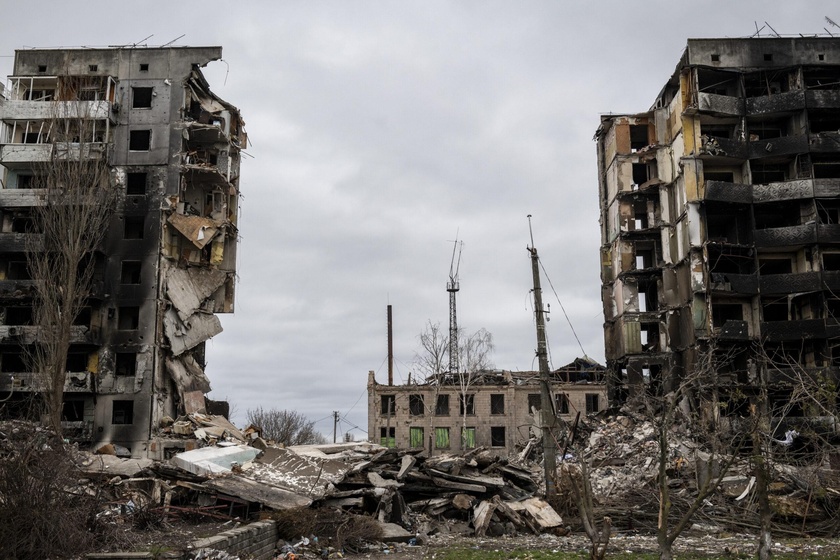
I've walked through the ruins of apartment buildings destroyed by Russian attacks. I've seen residential neighborhoods where families were killed and where the destruction bore no obvious relationship to a legitimate military target. The human consequences of Russia's invasion cannot be explained away through diplomatic statements.

Reports of growing Russian support for Iran are also significant because Tehran remains deeply involved in regional confrontations affecting Israel and American interests. Russia and Iran have different political systems and strategic priorities, but both have reasons to challenge Western influence. China, meanwhile, benefits from  economic and diplomatic relationships with both governments.

I have argued that these increasingly connected conflicts may represent the early stages of a much broader international confrontation. That is my strategic assessment, not a declaration that a formal world war has begun.

The danger is that regional conflicts, economic competition, information campaigns and military partnerships could increasingly reinforce one another, making it harder for Western governments to respond to any single crisis without confronting several others.

Trump's Ukraine Statements Raise Serious Concerns

One of the most troubling developments discussed during the broadcast involved President Donald Trump's latest comments about Ukrainian President Volodymyr Zelenskyy.

After Zelenskyy reportedly suggested that Trump was on the wrong side of history regarding the war, Trump responded by criticizing the Ukrainian president and arguing that he should have accepted an earlier agreement. Trump also claimed that Ukraine had given the United States nothing in return for American assistance.

I strongly disagree with that assessment. Ukraine has provided the United States and its allies with an extraordinary opportunity to understand how modern warfare is changing. Before Russia's full-scale invasion, Western military planning remained heavily focused on conventional weapons systems, including tanks, armored vehicles and expensive platforms developed for earlier generations of warfare. Ukraine has demonstrated the importance of inexpensive drones, electronic warfare, rapid battlefield adaptation and decentralized technological innovation. The lessons emerging from that conflict are already influencing military planning around the world.

American defense planners have gained valuable information about how Western equipment performs against Russian systems, how drones can disrupt conventional formations and how relatively inexpensive technology can impose enormous costs on a much larger military.

Those lessons have strategic value that extends far beyond the financial assistance Washington has provided. Ukraine has also imposed substantial losses on Russia's armed forces, reducing Moscow's capacity to threaten other countries. That does not mean the United States should provide unlimited assistance without oversight. It means that American support should be evaluated against the security benefits and strategic consequences involved. When Trump suggests that Ukraine has contributed nothing, he overlooks some of the most important military lessons of the twenty-first century.

Russia's Military Buildup Near NATO

Another issue receiving increasing attention is Russia's reported movement of military equipment into storage facilities near NATO territory.

During the broadcast, I examined reports describing tanks, infantry fighting vehicles, armored personnel carriers and artillery being positioned or refurbished in regions relatively close to Finland and the Baltic states. The reports included references to equipment in Karelia and the Kostroma region, although the specific deployments and their intended purpose require independent verification. The concern is understandable. Russia has suffered significant equipment losses in Ukraine, where drones have made traditional armored operations increasingly dangerous. At the same time, NATO governments are reassessing their own readiness for a possible confrontation with Moscow. I raised the possibility that Russia could be positioning certain conventional systems for contingencies involving NATO countries whose forces have not yet adapted as extensively to drone warfare. That remains an interpretation rather than a confirmed Russian operational plan.

Nevertheless, European governments would be foolish to ignore the lessons of Ukraine.

The next major war may be decided as much by electronic warfare, unmanned systems and the speed of technological adaptation as by the number of tanks and artillery pieces a country possesses.

NATO must prepare accordingly.

The Danger of Political Tribalism

One question from viewers during the broadcast captured a problem that extends far beyond Europe. A viewer explained that he struggled with the Russia-Ukraine conflict partly because American Democrats supported Ukraine, making him reluctant to support the same position. I understand how political polarization produces that reaction, but I believe it is a dangerous way to evaluate international events.

We cannot decide whether a country is right or wrong simply by looking at which American political party supports it. Russia invaded Ukraine. Ukraine did not invade Russia. That distinction matters. My perspective begins with a moral assessment of the conflict, informed by my Christian faith and my experience reporting from the region. It does not require me to agree with every decision made by Ukraine's government or to support every policy proposed by American politicians. It requires me to recognize that an independent nation has the right to defend itself against foreign aggression. The same principle should guide our response to political extremism at home. Violence committed by far-left organizations is wrong, but violence committed by far-right extremists is equally wrong. I've reported from demonstrations involving neo-Nazis and other radical movements, and I have seen the danger posed by extremism from different political directions. A free society must defend peaceful political expression while rejecting intimidation, vandalism and attacks on innocent people, regardless of who commits them.

Why I'm Going to France

The events unfolding in France deserve more than commentary based on social media videos and competing political narratives. I intend to travel there, examine the damage, interview people affected by the unrest and investigate the claims surrounding the organizations involved. Some of the allegations circulating online are serious, particularly those involving antisemitic targeting, foreign financial influence and the possible coordination of violent demonstrations.

Those claims must be investigated carefully rather than repeated without evidence. The broader challenge is already clear. Western societies are facing increasingly complex security threats in which domestic political instability, international ideological movements and competition between major powers can overlap. Governments must be prepared to enforce the law without undermining civil liberties, and journalists must be willing to investigate uncomfortable questions without allowing political preferences to substitute for facts. The people whose businesses have been destroyed and whose communities have been damaged deserve accountability. The public also deserves accurate information about who is organizing demonstrations, where the money comes from and whether foreign interests are attempting to exploit political divisions. That is what I intend to investigate when I arrive in France. Because when a city is burning, the most important question is not simply who is standing in the street. It is what caused the unrest, who is exploiting it and what can be done to prevent the destruction from happening again.


community logo
Join the Chuck Holton Community
To read more articles like this, sign up and join my community today
6
What else you may like…
Videos
Podcasts
Posts
Articles
New White House Press Secretary Preaches!

Stephen Miller is on fire in this speech. This is exactly what I've been saying about the protests in France, and why it's so important to keep them from happening in the US.

00:04:02
Hegseth Fires Back at Impeachment: "We Have Only Just Begun to Fight"

Secretary of War Pete Hegseth delivers a defiant statement from the steps of the Pentagon, defending two years of sweeping changes at the Department of War and firing back at the Democrats who have filed articles of impeachment against him.

Hegseth lists the "sacred cows" he says the department has torn down: DEI, climate change as a military objective, transgender service, and renaming bases. He defends strikes on narco-terrorists, the military's role in border security and mass deportations, and the war to keep Iran from getting a nuclear weapon, calling it "courageous and historic."

He also calls on the lame-duck Congress to pass a reconciliation bill with at least $350 billion for the military. He dismisses the impeachment effort, led by what he calls "a disgruntled, defeated Congressman," as "the politics of personal destruction," the same tactic he says was used twice against President Trump. His message to the troops: "Don't blink, ignore the noise, never hesitate."

00:05:47
The Future of America? I Hope Not!

Dave Rubin made this AI video that paints a pretty bleak future if the DSA wins an election. What do you think?

00:03:00
Episode 622 - Field Producer Dennis Azato and Chuck Reminisce

My erstwhile field producer and cameraman Dennis Azato has accompanied me on ten years of adventures across the globe. Today he joins me in Ukraine and we spend some time remembering our many trips together.

Episode 622 - Field Producer Dennis Azato and Chuck Reminisce

Already Clean, Called to Abide: Rethinking New Testament Warnings

We often make Scripture far more complicated than it needs to be when we read our own theological systems into the text instead of letting the passages speak for themselves. A great example of this is how people handle warnings about darkness, unfruitfulness, and falling away.

For centuries, many have argued over whether a true believer can walk in darkness or "fall away," often inventing ideas that aren't in the text—like claiming that passages such as John 15 or Hebrews 6 are actually talking about "false believers" who never had true faith. When we step back and read these passages in their actual context, the picture is much simpler and clearer.

1. Eternal Life vs. Fellowship and Fruitfulness

*Throughout the New Testament, there is a clear difference between being born again (eternal salvation) and abiding in Christ (daily fellowship and fruitfulness):

*1 John 2:11 & Romans 13: John writes to help believers live in active fellowship with God. ...

🙏⬆️🏆✝️✡️🕎🇺🇸⚖️”BREAKING: Trump Just CANCELED Their "Victory"... Cash Jordan AND ???!! 😱“Muslim Cops DEMAND NY Dog Owner Follow Sharia Law, Then THIS Happened.” Tal Oran AND Next even atheist to others of FAITH, know/feel “America Has FALLEN” Harris Sultan Atheist AND “ISLAM IS A DIVINE PUNISHMENT FOR THE WEST'S SEXUAL SIN AND ATHEISM?” Raymond Ibrahim Explains.

"But even if we, or an angel from heaven, preach any other gospel to you than what we have preached to you, let him be accursed. As we have said before, so now I say again, if anyone preaches any other gospel to you than what you have received, let him be accursed."
(Galatians 1:8–9)

The legalistic system of Lordship Salvation stands as a direct assault on the purity of the Gospel, adding the heavy weights of human performance (Galatians 5:1–4), behavioral reform, and fleshly metrics to the finished work of Jesus Christ (John 19:30). By twisting the biblical reality of metanoia (a change of mind) into a demanding requirement to "completely forsake all sin" to qualify for salvation, it strips away assurance from God's people and forces a weary, sin-burdened soul to look inward at their own shifting performance rather than outward at the cross (Hebrews 12:2). This perversion completely ignores the reality of our unredeemed physical bodies (Romans 8:23), where sin still dwells in the flesh ...

post photo preview
Trump Says the Iran War Is Over. Tehran Has Other Plans.

Despite Washington's claims of military success, new threats in the Persian Gulf, cyberattacks in Europe and concerns over American bases suggest the confrontation with Iran is far from settled.

President Donald Trump continues to insist that the war with Iran is effectively over, but developments across the Middle East and Europe tell a considerably more complicated story. Iranian threats against shipping, reported attacks on infrastructure and growing concerns about the security of American military installations suggest that Tehran remains willing and able to challenge the United States.

Speaking during my latest Hot Zone broadcast from Panama, I examined the growing disconnect between Washington's declarations of victory and the situation on the ground. While I welcome any genuine opportunity to end the fighting, I remain concerned that the administration is confusing the absence of major combat operations with the achievement of its strategic objectives.

A Blockade Without a Resolution

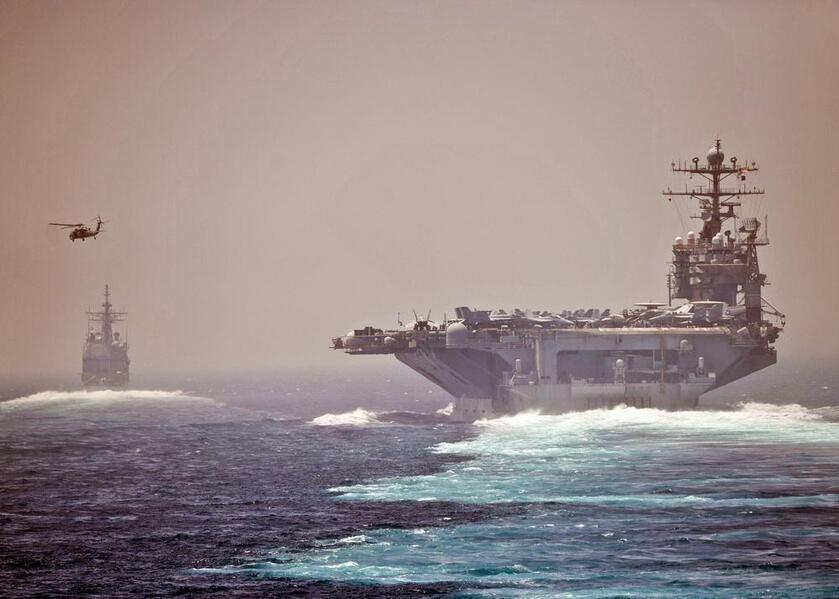
The aircraft carrier USS Abraham Lincoln and guided-missile cruiser USS Cape St. George transit the Strait of Hormuz in May 2012. The strategically important waterway remains central to American efforts to restrict Iranian maritime activity.
Credit: U.S. Navy / Official U.S. Navy Imagery.


During his latest remarks, President Trump described the American naval blockade of Iran as an extraordinary success, arguing that Gulf nations prefer maintaining the current arrangement rather than returning to open warfare. According to Trump, the blockade and additional restrictions on land routes have severely damaged Iran's economy while keeping American casualties to a minimum.

There is some logic behind the Gulf states' preference for the status quo. Countries such as Qatar, Saudi Arabia, Bahrain and the United Arab Emirates have little interest in seeing their infrastructure attacked again, particularly when Iranian retaliation has repeatedly threatened regional stability.

However, maintaining a blockade is not the same thing as winning a war, and I believe that distinction is being overlooked. American forces remain deployed throughout the region, while Iran continues threatening international shipping and rejecting Washington's characterization of the diplomatic situation.

Trump also claimed that oil shipments through the Strait of Hormuz had reached unprecedented levels, a statement I challenged during the broadcast. Although energy prices have declined as markets anticipate a reduced likelihood of renewed fighting, that does not necessarily mean maritime traffic has returned to its prewar levels.

The administration should be measuring success by whether Iran's ability to threaten its neighbors has been meaningfully reduced, not simply by whether American forces have avoided casualties during a particular period.

Iran Continues to Challenge Washington

Iranian officials have publicly disputed Trump's suggestion that Tehran is eager to reach an agreement, maintaining demands that include American military withdrawal from the region, financial concessions and changes to Israel's military posture.

The situation became more concerning following reports of an Iranian strike against an island off the coast of Oman. Iranian sources claimed the target was an American radar installation, although the United States has not acknowledged operating such a facility at the location.

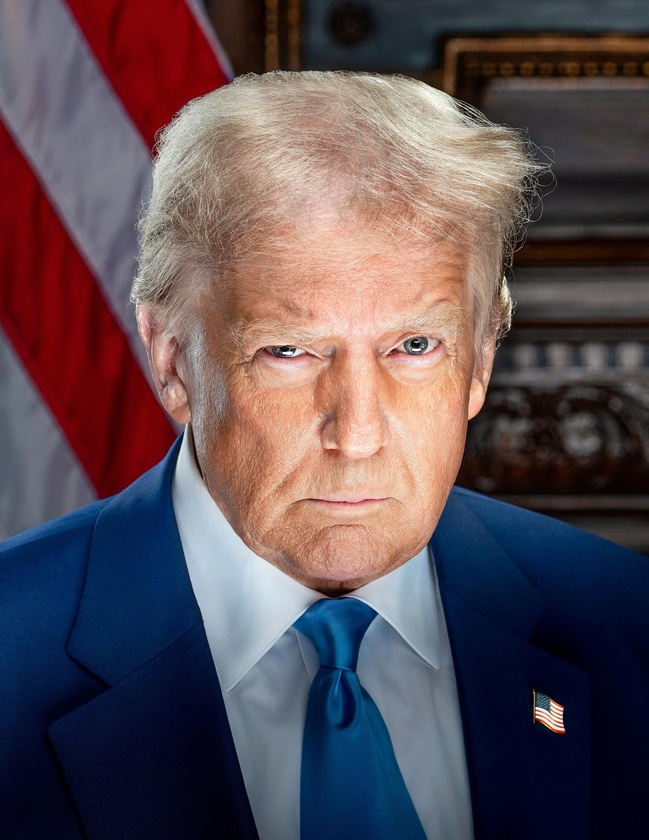
President Donald Trump, pictured in his official 2025 portrait. His administration has described the confrontation with Iran as a military success, even as questions remain about Tehran's capabilities and the future of regional security.

Credit: Daniel Torok / Official White House Portrait.


I examined satellite imagery of the island during the broadcast and found structures consistent with communications equipment, but nothing that conclusively established the presence of an American military radar system. Nevertheless, the reported strike demonstrates why it would be premature to conclude that Iran has abandoned its willingness to use military force.

Iran has also released footage purporting to show an extensive underground missile facility, complete with missiles, drones and other weapons. The authenticity and timing of that footage require verification, but its intended message is unmistakable: Tehran wants its adversaries to believe that its military capabilities remain substantial.

That is hardly the behavior of a government publicly preparing to surrender.

Cyberattacks Bring the Conflict Closer to Europe

The confrontation is no longer confined to the Persian Gulf. France has reportedly attributed a series of destructive cyberattacks against refrigerated storage and other infrastructure to Iranian actors, despite earlier claims of responsibility by Russian hacking groups.

Secretary of State Marco Rubio condemned the reported attacks and emphasized the Iranian Revolutionary Guard's history of conducting sabotage and other operations beyond Iran's borders. The allegations are particularly serious because disrupting civilian infrastructure through computer networks can produce enormous financial losses without a single conventional weapon being fired.

I have argued for some time that cyberattacks against essential services should be treated as significant national security threats rather than dismissed as ordinary computer crimes. If a hostile government deliberately destroys food supplies or compromises critical systems, the consequences can be comparable to those of a physical attack.

The precise responsibility for these incidents must be established, especially given the overlapping activities of Iranian and Russian cyber groups. Nevertheless, the growing vulnerability of civilian infrastructure should concern governments throughout Europe and North America.

American Bases Face New Security Concerns

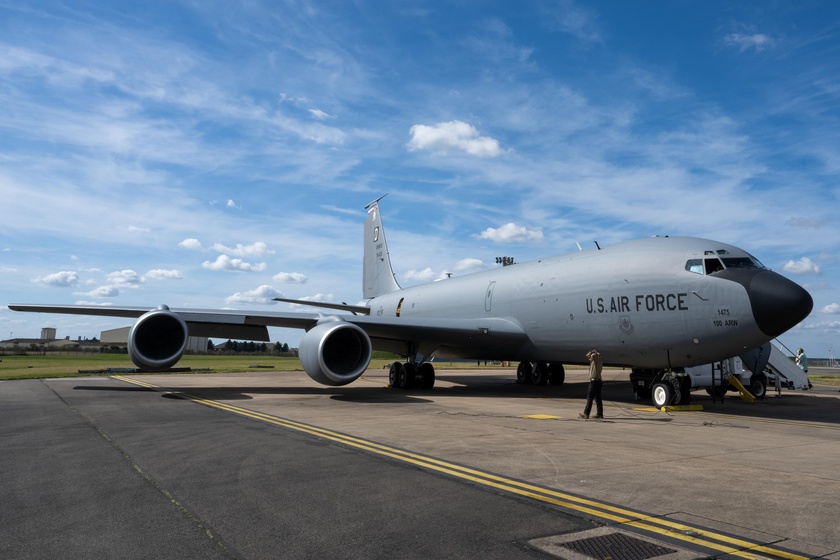
Another troubling development involves reports that American KC-135 aerial refueling aircraft were relocated from RAF Mildenhall in the United Kingdom following warnings of a possible terrorist threat.

President Donald Trump, pictured in his official 2025 portrait. His administration has described the confrontation with Iran as a military success, even as questions remain about Tehran's capabilities and the future of regional security.

Credit: Daniel Torok / Official White House Portrait.


During the broadcast, I discussed the reported movement of those aircraft and the possibility that Iranian operatives or affiliated networks could be seeking opportunities to target American military personnel outside the Middle East. The details of the threat have not been independently confirmed, but any credible warning involving U.S. military installations deserves serious attention.

The situation also raises questions about Israel's expectations for the next phase of the conflict. Israeli defense planners are reportedly considering scenarios involving either renewed American military operations or additional Iranian attacks against U.S. and Israeli interests.

Meanwhile, China continues conducting military exercises around Taiwan, demonstrating how quickly American attention and resources can become stretched across multiple theaters. I intend to report from that part of the world in early 2027, where the growing military pressure on Taiwan deserves much closer examination.

Washington's Political Battles Continue

The administration is also confronting a domestic controversy involving Defense Secretary Pete Hegseth, following an impeachment initiative associated with Representative Thomas Massie.

Hegseth forcefully defended his conduct at a Pentagon press conference, arguing that the proposed action was politically motivated and could undermine military personnel carrying out lawful orders. Trump and Rubio also expressed their support for the defense secretary.

I agree that political disputes should not be allowed to undermine military effectiveness, although Congress has a legitimate responsibility to examine the legality of military operations. The distinction between lawful oversight and partisan grandstanding matters, particularly when American service members are deployed in dangerous environments.

There is also a larger question that the administration has yet to answer convincingly: What exactly would constitute victory over Iran?

I served in the military before spending more than two decades reporting from conflict zones, and one lesson has remained consistent throughout that experience. Military success cannot be measured solely by how few casualties an operation produces, because the purpose of deploying military forces is to accomplish a clearly defined mission while minimizing unnecessary losses.

Protecting American lives is essential, but avoiding every conceivable risk cannot become a substitute for strategy.

The War May Be Paused, but the Threat Remains

I would be delighted to see a lasting peace emerge from this confrontation, particularly one that prevents Iran from obtaining nuclear weapons and protects the countries threatened by its military activities. But such an outcome requires more than optimistic statements from Washington, especially when Iranian officials continue issuing threats and demonstrating their remaining capabilities.

President Donald Trump, pictured in his official 2025 portrait. His administration has described the confrontation with Iran as a military success, even as questions remain about Tehran's capabilities and the future of regional security.

Credit: Daniel Torok / Official White House Portrait.


For now, the blockade remains in place, American forces remain deployed, and the possibility of renewed escalation has not disappeared. The administration may have succeeded in reducing the immediate intensity of the conflict, but whether it has achieved a lasting strategic victory is another question entirely.

Until Iran's ability and willingness to threaten its neighbors are meaningfully addressed, declaring the war over risks giving Americans a false sense of security. The fighting may have slowed, but the underlying confrontation remains unresolved.

What are your thoughts? 

Read full Article
post photo preview
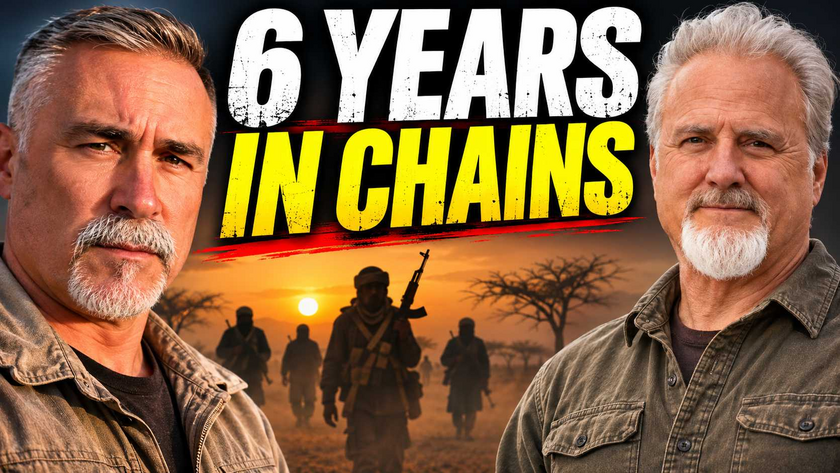
Held by Al-Qaeda for 6½ Years: Jeff Woodke's Story of Survival, Faith & Forgiveness
Early Access Content

In October 2016, American humanitarian aid worker Jeff Woodke was attacked in his home in Abalak, Niger, where he'd served nomadic communities for 27 years. His guards were killed, he was beaten, stripped and hauled into the Sahara by Al-Qaeda-linked militants, and he spent the next six and a half years in chains.
▎
▎ In this interview, Jeff describes the night he was taken, daily life as a hostage, two months locked in a four-by-four-foot box, and the moment he hit rock bottom and asked his captors to end his life. He explains why love and prayer kept him going, why he chose to forgive the men who held him, and what the West gets wrong about jihadist groups in Africa. He also talks about the long road back: PTSD, triggers, therapy and learning to live again.
▎
▎ Jeff's book All the Way Home is available wherever books are sold. Learn more at jeffwoodke.com and follow his writing on Substack. Get Jeff's book at https://a.co/d/04GNsckG


Only for Supporters
To read the rest of this article and access other paid content, you must be a supporter
Read full Article
post photo preview
America Divided, Europe Under Attack: The Wars Washington Cannot Ignore

As the Trump administration faces political fallout over Iran, suspected Russian cyberattacks and growing instability across Europe are raising difficult questions about American leadership and national security.

The United States is facing a troubling combination of political division at home and growing security threats abroad. In Europe, cyberattacks, aviation disruptions and continuing unrest are creating new concerns about Russia's campaign against the West, while Washington is struggling with the political consequences of its military operations against Iran.

These developments may appear unrelated, but they reveal a larger problem: Western governments are finding it increasingly difficult to respond decisively to threats that do not fit traditional definitions of warfare. Meanwhile, disagreements within the Trump administration are raising questions about whether American leaders have a coherent strategy for dealing with those threats.

Russia's War Against Europe Is Already Underway

I recently returned from Paris, where demonstrations and confrontations with police have continued to disrupt parts of the city. Although it would be inaccurate to describe Paris as a whole as a war zone, the unrest illustrates the tensions affecting several European countries and the opportunities those divisions create for hostile foreign powers.

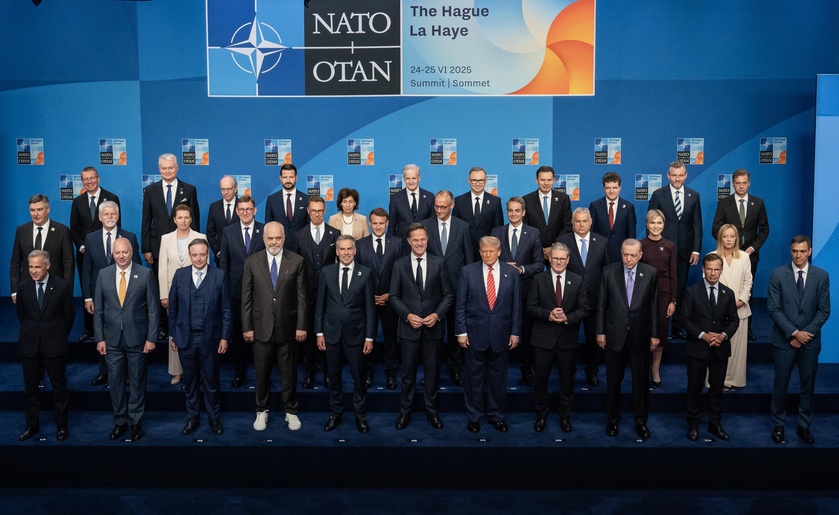
NATO leaders gather for the alliance's summit in The Hague, Netherlands, on June 25, 2025. European governments have increased their focus on collective defense, military readiness and emerging threats to civilian infrastructure.

Photo: Bart Maat / Dutch Ministry of Foreign Affairs, via Wikimedia Commons


I believe Russia is actively exploiting those divisions through a broader campaign of asymmetric warfare, including cyberattacks and other disruptive operations. During my latest broadcast, I discussed reports of refrigerated storage systems being remotely manipulated to temperatures high enough to destroy food supplies, with two Russian hacking groups reportedly claiming responsibility.

The potential consequences of these attacks extend far beyond damaged equipment or financial losses. Destroying refrigerated food supplies through a computer network can produce some of the same economic and humanitarian consequences as physically attacking a distribution center, particularly as European countries prepare for winter.

There have also been reports of widespread aviation disruptions involving bomb threats against aircraft across numerous European countries. According to information discussed during the broadcast, dozens of aircraft had reportedly been affected, with some flights diverted or escorted by military aircraft.

The attribution and full extent of these incidents still require independent confirmation, but the strategic question remains important. If a hostile government can disrupt transportation, destroy essential supplies and destabilize civilian infrastructure without deploying conventional military forces, at what point should those operations be treated as acts of war?

European countries are already conducting military readiness exercises near Russia's borders, including preparations for civilian evacuations and rapid military responses. I do not believe Russia is currently in a position to launch a successful conventional invasion of NATO territory, but that may be precisely why Moscow has an incentive to rely on less conventional methods.

Ukraine and the Contradictions of Russian Diplomacy

The continuing war in Ukraine provides another example of the gap between Moscow's diplomatic language and its military conduct. During a recent appearance in Washington, Russian envoy Kirill Dmitriev publicly thanked First Lady Melania Trump for her humanitarian efforts involving civilians affected by the conflict.

War-damaged residential buildings in Ukraine illustrate the destruction inflicted on civilian communities during Russia's invasion. The continuing attacks remain a central concern as diplomatic efforts seek a negotiated settlement.

Photo: International Humanitarian Law Centre / Diakonia; individual photographer not identified in the available source


I respect Melania Trump's willingness to help people caught in the fighting, but I find it difficult to accept Russia presenting itself as a humanitarian partner while its military continues attacking Ukrainian communities. Diplomatic gestures should not distract from the suffering of civilians or the conditions under which Russia is willing to negotiate.

Ukraine has also continued targeting Russian energy infrastructure, including oil refineries that support the country's economy and military operations. Those strikes are placing additional pressure on Moscow, although predictions that Russia is approaching military collapse should be treated cautiously until supported by stronger evidence.

The fundamental obstacle to peace remains Russia's negotiating position, which continues to demand concessions Ukraine is unlikely to accept. A ceasefire that merely allows Moscow to consolidate its gains without providing Ukraine with meaningful security would do little to resolve the underlying conflict.

Trump's Iran War Creates a Political Divide

Back in Washington, the political consequences of the conflict with Iran have become increasingly difficult for the administration to ignore. President Trump has acknowledged that higher energy prices associated with the war contributed to Republican electoral losses, while maintaining that confronting Iran was necessary to protect American national security.

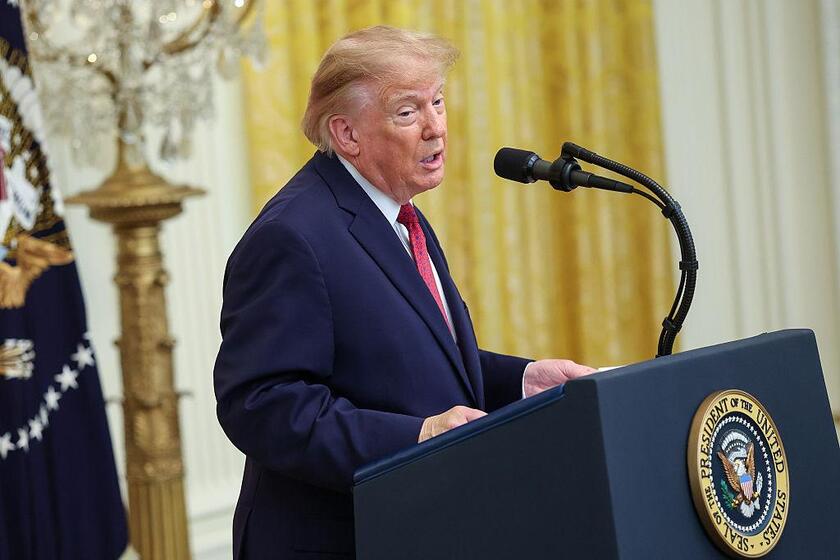
President Donald Trump speaks at the White House in Washington on September 30, 2026. Following Republican losses in the midterm elections, Trump acknowledged the political impact of the war with Iran while defending his decision to confront Tehran.

Photo: Jonathan Ernst / Reuters


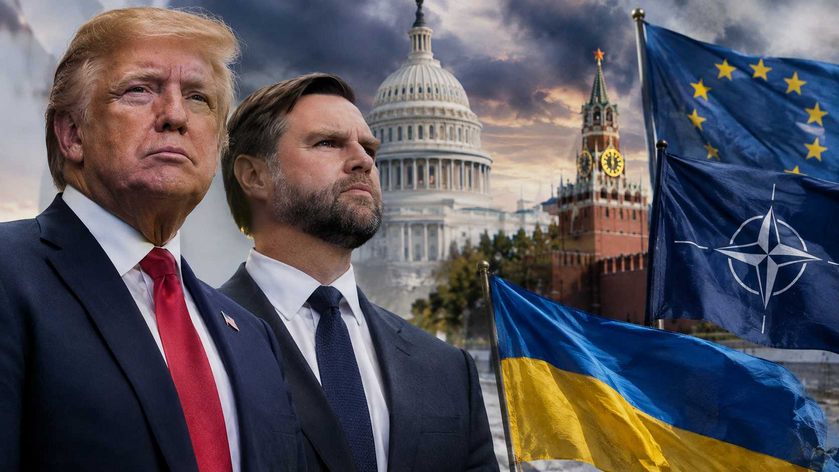
Vice President JD Vance has taken a different approach in his public discussion of the election results, emphasizing voter frustration over the war, inflation and the cost of living. His remarks have exposed disagreements over the administration's foreign-policy priorities and the direction Republicans should take in the coming years.

I believe there is an important distinction between questioning the decision to confront Iran and questioning how that confrontation was carried out. If President Trump possessed credible intelligence indicating an urgent nuclear threat, military action may have been justified, but the administration still owes Americans a clear explanation of its objectives and the results achieved.

My concern is that the United States entered a major confrontation without establishing a sufficiently clear path toward a lasting outcome. The Iranian government remains a serious regional security threat, and any diplomatic agreement must be evaluated against the regime's record, its military capabilities and the likelihood that it will honor its commitments.

Secretary of State Marco Rubio has made a compelling argument about the broader consequences of allowing Iran to threaten neighboring countries and international energy infrastructure. His warnings about Tehran's support for armed groups throughout the Middle East are reminders that the issue extends beyond gasoline prices or short-term political calculations.

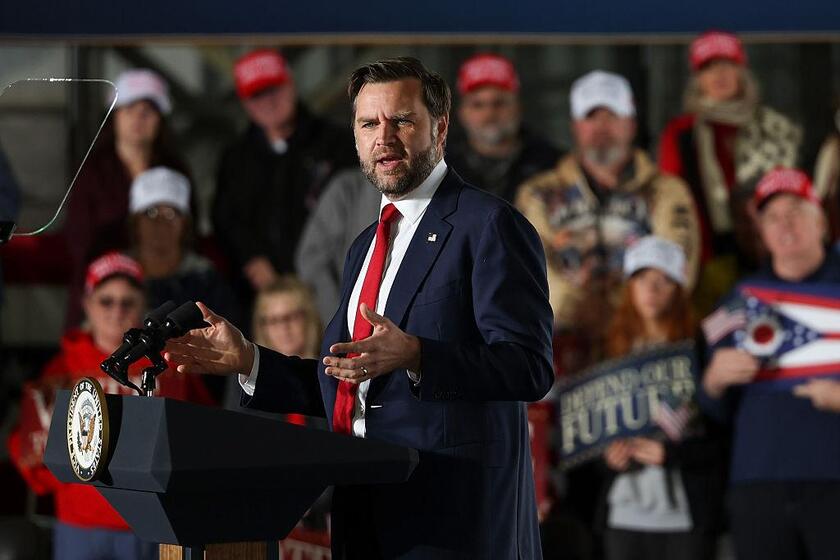
Vice President JD Vance addresses a Republican campaign rally in Swanton, Ohio, on November 2, 2026. Vance's subsequent comments about the Iran war and Republican electoral losses highlighted disagreements within the administration over its foreign-policy priorities.

Photo: Andrew Dolph / USA TODAY Network via Imagn Images


At the same time, political accountability cannot be avoided simply because a president believes his original decision was correct. Trump is ultimately responsible for the administration he assembled, the advisers he appointed and the strategic decisions made under his leadership.

The Danger of Political Distraction

The growing disagreements within the Republican Party come as Congress faces renewed arguments over executive authority, military operations and possible impeachment proceedings involving senior administration officials. Some of these disputes involve legitimate constitutional questions, while others risk becoming political theater that distracts from more immediate national security concerns.

Americans have every right to question the cost of foreign wars, the effectiveness of military operations and the decisions of elected leaders. Those questions should be answered with evidence and a serious examination of America's strategic interests rather than political loyalty or partisan accusations.

What concerns me most is that our adversaries are not waiting for Washington to settle its internal disagreements. Russia continues its campaign against Ukraine and is accused of disruptive operations across Europe, while Iran remains capable of threatening regional stability and international commerce.

We cannot afford to confuse political messaging with military success or diplomatic ceremonies with genuine progress toward peace. The United States needs leaders who recognize the difference, understand the threats we face and are willing to make difficult decisions while remaining accountable for the consequences.

The world is becoming more dangerous, and pretending otherwise will not make those dangers disappear.

Read full Article
See More
Available on mobile and TV devices
google store google store app store app store
google store google store app tv store app tv store amazon store amazon store roku store roku store
Powered by Locals