Chuck Holton
Politics • Culture • News
When Trust Breaks Down: Cyberattacks, Civil Unrest and the Fragility of Modern Society
November 03, 2026
post photo preview

From suspected cyber sabotage in Europe to violent incidents in American cities, the warning signs are worth examining. But understanding the difference between isolated disorder and a society in crisis is just as important.

PANAMA — I've returned to my studio after a week reporting from France, where I spent time among protesters, watched police confront demonstrators and experienced firsthand some of the unrest that has dominated headlines across Europe. Since coming home, I've been looking at several other developments, including reports of cyberattacks targeting European infrastructure, renewed nuclear speculation involving Iran and disturbing scenes of violence in American cities.

At first glance, these stories may seem unrelated. But they raise a common question about the resilience of modern society: What happens when people can no longer depend on the systems, institutions and neighbors that make ordinary life possible?

A Different Kind of Warfare

One of the most concerning developments I've been following involves reports of cyber intrusions affecting commercial refrigeration systems across several European countries. According to the information discussed during my latest broadcast, attackers have allegedly manipulated connected refrigeration equipment, causing food to spoil and potentially imposing substantial losses on businesses.

If confirmed, these incidents would illustrate how cyber warfare can reach far beyond military networks and government computers. Modern food distribution depends on refrigeration, transportation, electricity and digital monitoring systems. Disrupting even one part of that chain can create costs that eventually reach consumers.

I suspect Russia is involved in some of these activities, given its record of cyber operations and efforts to undermine European security. However, the specific refrigeration incidents and their attribution require independent confirmation. That distinction matters because identifying the perpetrator of a cyberattack is rarely as straightforward as identifying the damage it caused.

The broader vulnerability is undeniable. As more equipment becomes connected to the internet, businesses and governments must consider how those connections could be exploited during a confrontation.

What I Actually Saw in France

Social media has been filled with videos of burning barricades, smashed storefronts and confrontations between protesters and police. I witnessed some of that disorder myself, including situations where police deployed tear gas. But I also spent time walking through Paris on a beautiful autumn morning, passing ordinary businesses, tourists and residents going about their daily routines.

That experience reinforced something I've said repeatedly in my reporting: The news shows us what is unusual, but repeated exposure to unusual events can make them appear normal.

There are serious political and economic tensions in France, and I encountered demonstrators whose views were considerably more radical than those of the average citizen. I also believe there are legitimate questions about whether foreign influence operations are attempting to amplify political divisions on both the left and the right.

But it would be misleading to suggest that all of France, or all of Europe, is descending into chaos. Most of the places I visited were functioning normally, and even in areas where protests had occurred, daily life continued.

Recognizing that reality doesn't diminish the seriousness of the violence. It gives us a more accurate picture of what is happening.

Nuclear Warnings and the Danger of Speculation

Another subject I addressed was Tucker Carlson's claim that President Trump could be preparing to launch a nuclear strike against an Iranian underground nuclear facility sometimes called Pickaxe Mountain.

Carlson's argument, as presented in the material I reviewed, was that the facility might be too deeply buried for conventional weapons to destroy. I disagree with the leap from that assessment to the conclusion that a nuclear strike is therefore being planned.

Deeply buried targets present difficult military problems, and the capabilities and limitations of conventional penetrator weapons deserve serious discussion. But there is a considerable difference between evaluating possible military options and having credible evidence that a president intends to use a nuclear weapon.

A nuclear attack would carry extraordinary humanitarian, environmental and geopolitical consequences. Claims that such an attack is imminent should be supported by much stronger evidence than speculation about the depth of a facility or the preferences of individual officials.

I also believe nuclear rhetoric must be evaluated consistently, including the threats and warnings issued by Russian officials throughout the war in Ukraine. The prospect of nuclear escalation is too serious to become another instrument of political sensationalism.

The Difference Between High-Trust and Low-Trust Communities

Back in the United States, videos circulating after Halloween showed street fights, reckless driving and reports of shootings in several cities. Some of the footage was deeply troubling, particularly when young people appeared to be participating in violence or theft.

The individual incidents and casualty figures need to be verified before drawing national conclusions, and broader crime trends cannot be established from a collection of viral videos. Nevertheless, the behavior depicted raises questions about personal responsibility, parenting and the expectations that hold communities together.

I often describe the distinction as the difference between a high-trust society and a low-trust society.

In a high-trust community, people generally respect their neighbors, look after one another's property and expect disagreements to be settled without violence. In a low-trust environment, residents become accustomed to protecting themselves against theft, intimidation and disorder, and ordinary activities begin to require precautions that once seemed unnecessary.

I grew up in a time when Halloween was largely about neighborhood relationships. Children went door to door, parents knew the families on their street, and the candy was almost secondary to the opportunity to visit with neighbors. Seeing videos of people stealing entire bowls of candy may seem trivial compared with serious violent crime, but it illustrates how quickly a simple community tradition can lose its meaning when consideration for others disappears.

I believe parents have a particularly important responsibility here. Children learn what is acceptable by watching adults, and communities cannot expect young people to develop respect, self-control and responsibility if those values are never demonstrated at home.

Rebuilding What Makes Communities Strong

There is a temptation to look at cyberattacks, political unrest and street violence and conclude that civilization itself is collapsing. I don't believe the evidence supports such a sweeping conclusion, and my recent trip to France provided plenty of reminders that ordinary people are still living peaceful, productive lives.

At the same time, functioning societies depend on more than laws, police officers and reliable technology. They depend on people who are willing to act responsibly even when nobody is watching, families that teach children to respect others, and neighbors who know and care about one another.

Those relationships are also an important part of preparedness. Whether a community faces a prolonged blackout, a natural disaster or a period of civil unrest, people who trust and help one another will generally be better equipped to respond.

I've spent years reporting from conflict zones and disaster areas, and the lesson I keep coming back to is that resilience begins long before an emergency. It begins with the habits we develop, the responsibilities we accept and the communities we build.

We should take genuine threats seriously without allowing every alarming headline to convince us that the world is falling apart. The goal is to understand what is happening, prepare sensibly and preserve the trust that makes a free and stable society possible.


community logo
Join the Chuck Holton Community
To read more articles like this, sign up and join my community today
4
What else you may like…
Videos
Podcasts
Posts
Articles
Uncertainty Isn't Something You Predict. It's Something You Prepare For

I've spent years reporting from war zones, disaster areas and countries in political and economic chaos. Before that, I spent 10 years as a stockbroker helping clients make big financial decisions. Put those two together and one lesson stands out: uncertainty isn't something you predict. It's something you prepare for.

That's why I believe physical gold has earned a place in a diversified retirement plan. And when people ask me who I trust, I tell them Preserve Gold. They take the time to educate every client and help them make informed decisions about protecting their savings.

Take a minute to watch the video. If it makes sense for you, request their free Wealth Protection Guide. You can get up to $20,000 in free gold and silver with a qualified purchase or rollover.

Preserve Gold also helps keep The Hot Zone on the air, so thank you for checking them out.

— Chuck

VISIT OUR SPONSOR: https://preservegold.com/hotzone/
OR text OFFER to 50505 today and take a stand for your future.
...

00:01:00
New White House Press Secretary Preaches!

Stephen Miller is on fire in this speech. This is exactly what I've been saying about the protests in France, and why it's so important to keep them from happening in the US.

00:04:02
Hegseth Fires Back at Impeachment: "We Have Only Just Begun to Fight"

Secretary of War Pete Hegseth delivers a defiant statement from the steps of the Pentagon, defending two years of sweeping changes at the Department of War and firing back at the Democrats who have filed articles of impeachment against him.

Hegseth lists the "sacred cows" he says the department has torn down: DEI, climate change as a military objective, transgender service, and renaming bases. He defends strikes on narco-terrorists, the military's role in border security and mass deportations, and the war to keep Iran from getting a nuclear weapon, calling it "courageous and historic."

He also calls on the lame-duck Congress to pass a reconciliation bill with at least $350 billion for the military. He dismisses the impeachment effort, led by what he calls "a disgruntled, defeated Congressman," as "the politics of personal destruction," the same tactic he says was used twice against President Trump. His message to the troops: "Don't blink, ignore the noise, never hesitate."

00:05:47
Episode 622 - Field Producer Dennis Azato and Chuck Reminisce

My erstwhile field producer and cameraman Dennis Azato has accompanied me on ten years of adventures across the globe. Today he joins me in Ukraine and we spend some time remembering our many trips together.

Episode 622 - Field Producer Dennis Azato and Chuck Reminisce
Live Q&A this Saturday, plus our Thanksgiving special

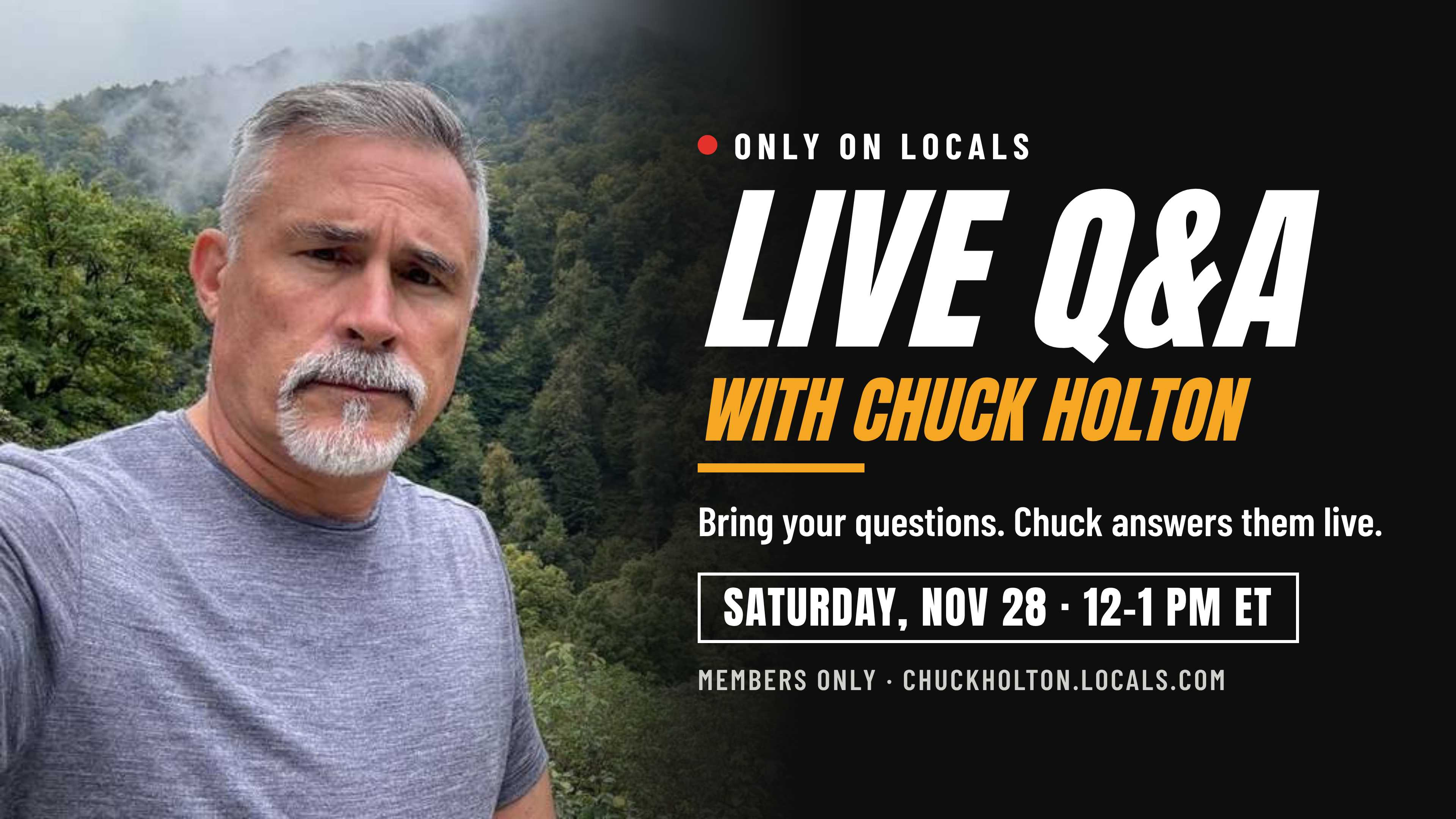
This Saturday, November 28, I'm going live with all of you for our monthly Q&A call.

It starts at 12pm ET and runs for an hour.

There's no script and no edits. You ask, and I answer.

What we'll talk about

Ask me anything. The front lines in Ukraine. The cartel story we just released. What it's like to report from places most people are told to stay away from. What I think is coming next.

Nothing is off the table.

How to send your questions

Post your questions in the comments below. You can also bring them live on Saturday.

The ones you send early get answered first, so don't wait until the call starts.

If you're not a member yet

Come join us at chuckholton.locals.com.

For Thanksgiving, The Hot Zone on Locals is $5 a month instead of $9. It's our best promotion of the year.

Members get:

Monthly live Q&A calls with me
Exclusive, uncensored content
A free copy of the documentary
Real footage with no ads

You don't need a promo code. Click this link and the discount is already applied:
...

post photo preview

Too often, we can become more interested in defending the theological systems or interpretive traditions we have long held to (Mark 7:8–9) than in changing when our understanding is proven faulty. This isn't pleasing to God; it is mere tribalism (1 Corinthians 3:3–4). It is a work of the flesh rooted in pride (Galatians 5:19–20), whereas true discipleship is rooted in humility (Philippians 2:3–5).

If we have believed something for many years and it can be proven faulty according to the whole counsel of God (Acts 20:27) rather than a human tradition (Colossians 2:8), we need to be willing to let go of the lesser to take hold of the better (Philippians 3:7–8). We must do this because we will all be judged by Christ according to our works (2 Corinthians 5:10) and our inner motivations (1 Corinthians 4:5).

Therefore, let us live humbly and honestly in the light of God's presence (1 John 1:7), living only to please Him and no one else (Galatians 1:10). I would rather be criticized ...

🪖🙏⬆️✝️✡️🕎🇺🇸🏆 From antichrist/of evil🇹🇷🇨🇳🇷🇺🇮🇷👿🛜📰🚨💯✔️
”LIVE:🙏🏆⬆️✝️✡️🕎🇺🇸🫆🕵️‍♂️✔️FBI
Hacked☪️👿 - Cyber WAR In United States - UK🤡👿Invites
👿🇮🇷🇹🇷🇨🇳🇷🇺🧌☪️IRGC Leader To London. Tousi TV” AND “The Most Terrifying PEW RESEARCH Ever Published: “”THEY WILL MASSACRE YOUR GRANDCHILDREN”" Ali Tabrizi” AND
“Cowboy’s Islam👿 Warning Just Went VIRAL…Tal Oran - TheTravelingClatt” AND Humm… No Exact Day or Time am/pm SO HOWEVER THE SEASON/YEAR A COMETH 🤔🙏⬆️✝️✡️🕎🫆📜🛟🤍 “Messiah 2030 ~ The Prophetic Messianic Timeline - Part 1 of 3 (Part 4 in production) Messiah 2030” AND FROM 6MONTHS AGO: “URGENT SPEECH BY EX-FBI SPECIAL AGENT ON ISLAM: Islam Is About To Go Kinetic 🇺🇸 "”We Are At War”" - Ali Tabrizi

post photo preview
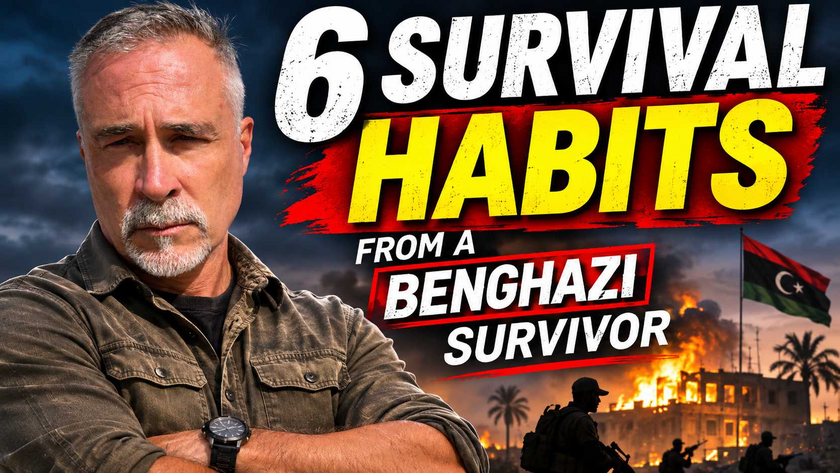
Surviving the Worst: 6 Skills That Actually Save Lives
Early Access Content

Dave "Boon" Benton spent 13 hours fighting off wave after wave of attackers at the CIA annex in Benghazi, Libya on September 11, 2012. They were outnumbered, no cavalry was coming, and they were making life-or-death calls with only a fraction of the information they needed. When a man like that boils down what he knows about staying alive into five words, I pay attention: "Train a little, a lot."

That lines up with everything the Army pounded into my head as a Ranger, and with what I've seen in 25 years of carrying a camera through some of the most dangerous places on the planet. The people who come through a crisis in one piece aren't the ones with $4,000 of gear still in the shrink wrap. They're the ones who practiced something small over and over until it got boring.

Only for Supporters
To read the rest of this article and access other paid content, you must be a supporter
Read full Article
post photo preview
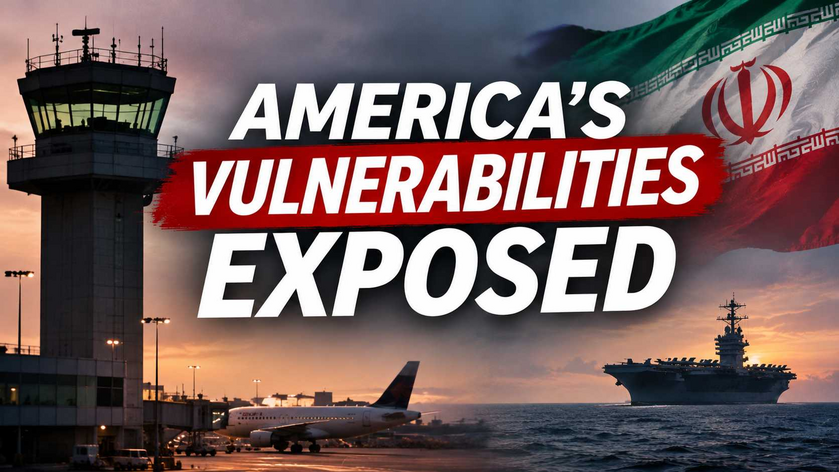
America's Vulnerabilities Exposed as Iran Raises the Stakes

An unprecedented aviation shutdown, reports of Iranian threats against President Trump, and renewed attacks in the Persian Gulf are raising serious questions about American security and preparedness.

A nationwide aviation shutdown, reports of an Iranian assassination plot against President Donald Trump, and continued military threats in the Persian Gulf have exposed some troubling vulnerabilities in America's national security. Although these developments appear to be unrelated, they illustrate how quickly modern systems can be disrupted and how dangerous it is to assume that the government can protect the country from every conceivable threat.

During my latest Hot Zone broadcast, I examined what officials are saying about the Federal Aviation Administration's massive system failure, new intelligence reports involving Iran, and the increasingly uncertain prospects for resolving the conflict in the Middle East. What concerns me most is not simply that these events occurred, but how much they reveal about the condition of America's critical infrastructure and the challenges facing our military leadership.

An Aging Aviation System Finally Breaks Down

The nationwide ground stop that disrupted American air travel on Friday initially prompted speculation about terrorism or a foreign cyberattack. Given the growing number of threats against American infrastructure, those concerns were understandable, but the evidence presented so far points toward a considerably more ordinary explanation.

Transportation Secretary Sean Duffy explained that the disruption apparently began during routine maintenance at a remote FAA facility, where contractor L3Harris was transitioning telecommunications equipment from aging copper connections to fiber-optic technology. During that process, a router reportedly began overwhelming other components of the network with more than 1,000 connection attempts every four to five seconds, interfering with communications and radar information.

The FAA responded by grounding aircraft until technicians could isolate the problem and restore the system. Officials said they had not determined whether the failure resulted from contractor error or defective equipment, although they did not believe a cyberattack was responsible.

What astonishes me is the age of the technology involved. According to information discussed during the broadcast, some equipment dates back to 2001, while portions of the underlying air traffic control infrastructure are considerably older.

I flew more than 300,000 miles last year, and I expect to travel a comparable distance this year. Knowing that one of the world's most technologically advanced countries continues depending on equipment that is decades old to manage its airspace is hardly reassuring.

The shutdown reportedly disrupted thousands of flights and affected more than a million travelers, with delays continuing long after the system was restored. Although officials deserve credit for prioritizing passenger safety, the incident demonstrates how a relatively localized technical failure can produce nationwide consequences.

The administration has emphasized the need for additional funding to modernize air traffic control. However, Congress has already provided substantial resources for FAA improvements, and the public deserves a clear explanation of how those funds are being spent and why critical systems remain so vulnerable.

Preparedness Is Not the Same as Panic

The aviation failure also renewed questions about reports that American military installations have been instructed to maintain significant emergency supplies, including food, water and fuel.

Homeland Security Secretary Markwayne Mullin attempted to reassure Americans during a television interview, arguing that the United States possesses stronger infrastructure and greater redundancy than many other countries. He urged the public not to interpret military preparedness measures as evidence that a national emergency was imminent.

I appreciate the effort to prevent unnecessary panic, but I disagree with the suggestion that ordinary Americans have no reason to prepare for disruptions.

There is nothing unreasonable about keeping emergency food, drinking water, essential medications and backup communications available for your family. The aviation shutdown demonstrated how quickly a technical problem can affect an enormous number of people, and an extended disruption to electricity, communications or transportation could create much more serious consequences.

I've written extensively about community preparedness in my book Death of Civilization, and one of the most important lessons is that resilience begins long before an emergency occurs. Families should know how to communicate when cellular networks fail, while neighbors should understand who might need assistance during an extended power outage.

That doesn't require living in fear or assuming that disaster is inevitable. It simply means recognizing that government systems, however sophisticated, are not infallible.

Reports of an Iranian Plot Against Trump

Meanwhile, an Israeli newspaper has reported that intelligence officials warned Washington about an alleged Iranian plan to target President Trump and other senior American officials using explosive-laden drones.

According to the account discussed during the broadcast, Israel's Mossad shared intelligence with American counterparts, and another Western intelligence service reportedly reviewed the findings. However, the alleged plot has not been publicly confirmed by the White House or the CIA, making it important to distinguish the reported warning from an established assassination attempt.

When questioned about the threat, Trump responded with humor, suggesting that the reporters standing near him would also be in danger if someone attempted to attack him.

The president's security detail has extensive counter-drone capabilities, and a successful attack against a heavily protected official would face substantial obstacles. Nevertheless, the rapid development of relatively inexpensive drone technology has created security challenges that governments can no longer afford to dismiss.

Having reported extensively from Ukraine, I have seen how small unmanned aircraft have transformed modern warfare. Systems that once required sophisticated military resources can now be produced at a fraction of the cost, forcing security services to rethink how they protect personnel and installations.

If the allegations concerning Iran are substantiated, Washington will have to consider what they mean for negotiations with a government accused of threatening the American president.

Iran's Military Threat Has Not Disappeared

The reported assassination threat comes as the United States continues maintaining a substantial naval presence near Iran.

During the broadcast, I discussed reports of three American aircraft carriers operating in the broader region, along with destroyers and other supporting vessels. Such a concentration of naval power provides Washington with considerable military options, although the presence of those forces does not necessarily mean another operation is imminent.

Iran, meanwhile, continues presenting itself as capable of resisting American pressure. Reports discussed during the broadcast suggest that Tehran may retain between 1,500 and 2,500 missiles, although the estimate was described as having low confidence.

Iranian authorities have also claimed responsibility for attacks against commercial tankers in the Strait of Hormuz and American military facilities in Bahrain. Some of those claims remain unverified, and American officials have disputed Iranian accounts of successful strikes.

One particularly dramatic Iranian claim involved the alleged sinking of a large oil tanker carrying approximately two million barrels of crude. I have not seen independent evidence establishing that such a vessel was lost, and the absence of a corresponding major reaction in maritime insurance markets raises further questions about the claim.

These distinctions matter because wartime propaganda is designed to influence public perceptions as much as military outcomes. We should take credible threats seriously without accepting every statement issued by Tehran as fact.

Economic Pressure Has Its Limits

Treasury Secretary Scott Bessent has argued that Iran's economy is deteriorating rapidly under American pressure, citing projections of a potentially severe contraction between March 2026 and March 2027.

Economic restrictions can impose enormous costs on a government, but they do not automatically produce political change. Iran's leadership has demonstrated a willingness to tolerate extraordinary hardship among its own population while continuing to prioritize military and security operations.

At the same time, global oil markets appear to be adapting to disruptions in the Persian Gulf. Increased production from other countries and substantial quantities of crude already in transit have helped ease concerns about an immediate supply crisis.

I discussed the possibility that expanding global production could eventually create an oversupply, pushing energy prices lower even while Iranian exports remain restricted. That would be welcome news for consumers, although the consequences for oil-producing countries could be considerably more complicated.

The larger question is whether economic pressure alone can persuade Iran's leadership to abandon its regional military activities and nuclear ambitions. I remain skeptical that sanctions, without a credible broader strategy, will produce the outcome Washington wants.

Washington Needs a Clear Strategy

The United States possesses overwhelming military capabilities, but military strength is only useful when political leaders establish clear and achievable objectives.

I am increasingly concerned that the administration's public statements about Iran have not always matched developments on the ground. Americans have repeatedly heard that the conflict is effectively over, yet Iranian threats continue, American forces remain deployed, and the possibility of renewed fighting has not disappeared.

That uncertainty also affects the service members assigned to ships and bases throughout the region. Maintaining a substantial military presence indefinitely without a clearly communicated mission places additional strain on personnel and equipment while leaving America's adversaries uncertain about Washington's intentions.

A lasting settlement would be preferable to another prolonged conflict, provided it genuinely addresses the threats that brought the United States and Iran into confrontation. But diplomacy must be supported by a realistic assessment of Tehran's capabilities, intentions and willingness to comply with any agreement.

The aviation shutdown offers an important parallel. America cannot solve its infrastructure problems simply by reassuring the public that everything is under control, just as it cannot resolve a military confrontation by repeatedly declaring that victory has already been achieved.

In both cases, the country needs competent leadership, honest assessments and a willingness to confront difficult realities before they develop into larger crises.

The immediate aviation emergency has passed, but the vulnerabilities it exposed remain. And while the administration continues searching for a way forward with Iran, the threats facing American personnel, infrastructure and national security have not disappeared.

We would be wise to recognize both realities rather than waiting for the next emergency to remind us how fragile some of our most important systems have become.

Read full Article
post photo preview
Havana Syndrome: Secret Weapon Attacks on U.S. Soil?
Early Access

Help Build the Frontier Forge Institute: We're working to establish a year-long residential training academy where young men can develop practical skills, physical fitness, leadership, and Christian character. Learn more and support the mission at https://frontierforge.org/vision.

Could a secret weapon be targeting American intelligence officers and military personnel right here in the United States? In this episode of The Hot Zone, I break down Catherine Herridge's latest reporting on suspected Havana Syndrome attacks near Washington, DC, including reports of government researchers suffering mysterious brain injuries while investigating directed-energy technology. Become a Supporter to see this early access video from the Hot Zone.


Only for Supporters
To read the rest of this article and access other paid content, you must be a supporter
Read full Article
See More
Available on mobile and TV devices
google store google store app store app store
google store google store app tv store app tv store amazon store amazon store roku store roku store
Powered by Locals