Chuck Holton
Politics • Culture • News
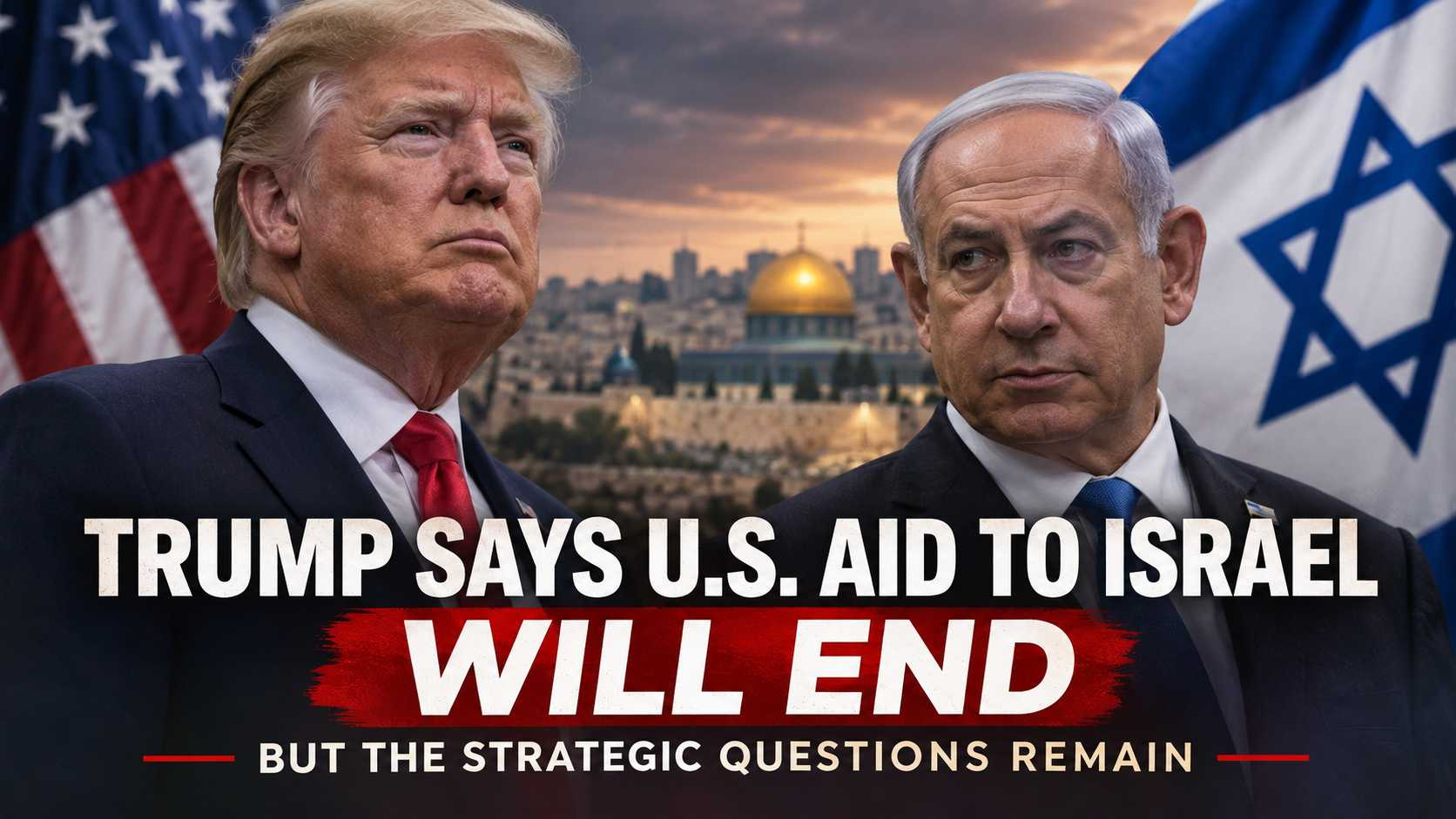
Trump Says U.S. Aid to Israel Will End, but the Strategic Questions Remain
2 hours ago
post photo preview

As Washington continues military operations against Iran, a surprising announcement about Israel raises questions about American commitments, regional security and the real value of foreign aid.

President Donald Trump has announced that the United States will stop providing approximately $4 billion in annual assistance to Israel at the end of this year, saying the country is prosperous enough to manage without American support. According to Trump, the decision was discussed with Israeli Prime Minister Benjamin Netanyahu, who reportedly suggested that Israel should begin moving away from its dependence on U.S. assistance.

The announcement deserves serious attention, not simply because Israel is one of America's most important allies, but because the financial relationship between the two countries is considerably more complicated than most people realize. There is also a significant question about how the proposed cutoff would work, given that the existing U.S.-Israel memorandum of understanding extends through 2028.

What America Gets in Return

When Americans hear that their government provides billions of dollars to another country, the understandable reaction is to ask why that money isn't being spent at home. I believe taxpayers have every right to demand accountability, but the more useful question is what the United States receives in exchange for that investment.

Much of the military assistance provided to Israel is used to purchase American-made defense equipment, supporting manufacturers, suppliers and jobs here in the United States. The arrangement also helps sustain a defense-industrial base that America depends upon for its own military readiness, meaning the benefits extend well beyond the equipment delivered to Israel.

There are strategic advantages that are harder to measure in dollars. Israel provides intelligence, military expertise and operational experience in a region where American interests are constantly threatened, while cooperation on missile defense and advanced aircraft has produced lessons valuable to both countries.

None of this means every dollar is automatically justified or that Israel should receive American assistance indefinitely. It does mean that ending the arrangement should be based on a careful assessment of what America stands to lose, rather than the assumption that eliminating foreign aid necessarily produces an equivalent financial benefit at home.

Iran Remains an Unfinished Conflict

The announcement comes as President Trump continues to describe the conflict with Iran as effectively over, despite acknowledging another American strike against Iranian air-defense infrastructure. During his recent remarks, Trump characterized the operation as relatively minor, while maintaining that the United States had already won the war.

That distinction is difficult to reconcile with the continuing military activity around the Strait of Hormuz. American forces remain engaged in operations intended to protect shipping and counter Iranian threats, and the existence of those missions suggests that the security situation remains unresolved.

Vice President JD Vance has expressed optimism about a possible negotiated settlement, emphasizing the need for verifiable assurances that Iran will not rebuild its nuclear program. Iranian officials, meanwhile, continue to issue warnings about further American military action, illustrating the considerable distance that may still separate the two sides.

I am concerned that Washington is allowing its public messaging to get ahead of the reality on the ground. A conflict does not become settled merely because political leaders prefer to describe it that way, particularly when military operations continue and the opposing government retains the ability to threaten regional security.

A Broader Question of American Leadership

The debate over Israel is part of a larger argument about America's responsibilities abroad. Similar questions arise when discussing assistance to Ukraine, where American equipment and support have contributed to Ukraine's defense while providing important information about the performance of modern weapons in combat.

I understand the frustration of Americans who are tired of expensive foreign commitments, especially when they are struggling with rising prices and uncertainty at home. But withdrawing from international partnerships also carries costs, and those costs must be weighed against any immediate savings.

Supporting an ally does not require agreeing with every decision its government makes, just as supporting an American president does not mean remaining silent when his policies deserve scrutiny. My responsibility as a journalist is to examine what is happening, question the claims being made and tell you what I believe the evidence supports, regardless of which political party is in power.

For now, Trump's announcement raises more questions than it answers. Until the administration explains how the proposed cutoff fits with the existing agreement and what arrangements would replace it, Americans should be cautious about treating the end of military assistance to Israel as a settled decision.


community logo
Join the Chuck Holton Community
To read more articles like this, sign up and join my community today
2
What else you may like…
Videos
Podcasts
Posts
Articles
The Future of America? I Hope Not!

Dave Rubin made this AI video that paints a pretty bleak future if the DSA wins an election. What do you think?

00:03:00
Paris Parody

This is the funny video I put up at the beginning of today's live.

00:01:18
Faith Is Growing in the Places Tourists Never See

Cartagena is famous for beaches, colonial walls and tourists. But that isn't the whole city.

Away from the postcards, I connected with a local Christian congregation that started with roughly 30 people and is now building something much bigger. Their vision isn't simply to fill a building. They want to reach into the streets and serve people who have largely been forgotten.

That mission matters in a city where poverty remains a serious problem. Cartagena's own government statistics show hundreds of thousands of residents continue to live below the monetary poverty line.

00:01:44
Episode 622 - Field Producer Dennis Azato and Chuck Reminisce

My erstwhile field producer and cameraman Dennis Azato has accompanied me on ten years of adventures across the globe. Today he joins me in Ukraine and we spend some time remembering our many trips together.

Episode 622 - Field Producer Dennis Azato and Chuck Reminisce

PRAY Democrats allowed to takeover USA to finish it off for who really owns what was the USA is iran/russia/china/turkey as seen by open boarders/takeover to taking right to bare arms away to poison vaccines of fake viruses to not letting law enforcement remove illegeals to the mindkauf in takeover of media and full takeover of politics as seen by not attacking like they did Madura with iran and russia.? Yet attacked Venezuela no waiting to do that.? When bigger enemy is iran/russia/chiba/turkey…? YEAH USA NOT USA BUT ran by iran/turkey/russia/china as main devil nations for Antichrist/Satan.
PRAY WITHOUT CEASING We don’t end up killed and or held captive by jigsdists sooner than they’d set up evil plan, since democrats allowed takeover since clintins/obama the main pimps of letting USA get replaced by devil nations main pimps/ iran/turkey/russias/china.
www.newsmax.com/election-maps/

James Talarico Midterm Elections 2026

BRACE FOR IMPACT, because I doubt I will be quiet when that senate vote directly affects me. I just won't. Voting is personal, it really just is.

Though baptized in a Lutheran church, I grew up in a Presbyterian church. That church has since been sold to build it's present location in Dallas Center, Iowa. I still remember the sermon our pastor gave on Snoppy when courting his future congregation. A congregation gets to vote on accepting an individual, as a version of a job interview.

Wednesday 28 October, 2026 I voted NO for future Senator James Talarico. The same vote I would give belonging to a congregation. Though individually I am very religiously fluid, I would avoid him entirely. If I find an individual so unbearable individually, I certainly don't want him as a representative of my state. Voters are often similarly fluid. Midterm elections often reflect different feelings than presidential elections. I get that. What I am truly Thankful for, is ...

Amen 🙏

post photo preview
post photo preview
From the Archive: Russian Atrocities in Ukraine
An Award Winning Documentary of Russian War Crimes

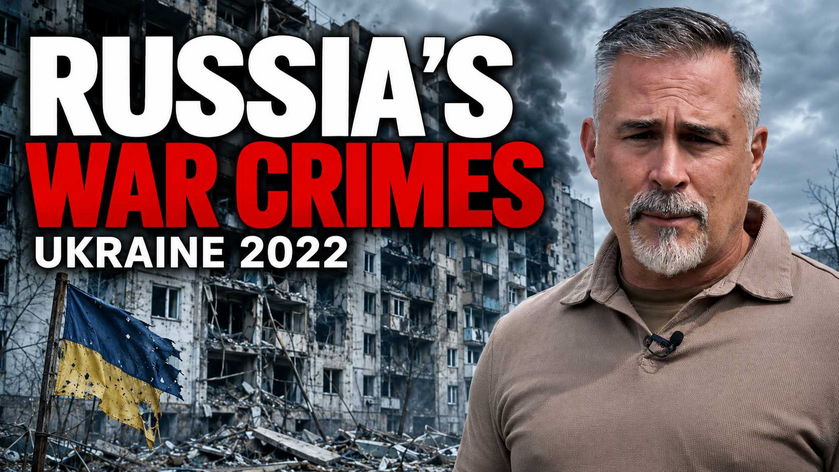
In the late summer of 2022, six months into Russia's full-scale invasion, our Newsmax crew put together a documentary on the crimes Russian forces committed against Ukrainians. We'd been in the country since three weeks before the first shots. By August I had come to see the war as a clash of worldviews, and the atrocities showed the difference better than anything I could say.

The film starts at the Irpin River in the first days of the war, when Ukrainian commanders blew the bridges to stop the Russian push on Kyiv and thousands of civilians were stranded on the wrong side. We helped some of them across. Many never made it out.

From there it goes to Bucha, where mass graves turned up behind a church afterthe Russians pulled back.old me about the day asniper shot her mother as they walked down the street together. "The bullet   got right between her eyen, Tanya, buried herhusband in front of her apartment building. I asked if she could ever forgive the men who did it. "They," she said. "They did iton purpose, so never."

We also covered the filtration camps, where Russian troops strip-searched     Ukrainians for tattoos ans, and the July 2022 fireat the Olenivka POW camp that killed 53 Ukrainian defenders of Mariupol. We   walked through Bykivnia, ere the Soviets dumped more than 200,000 bodies. The Russians are making lists again, and Ukrainians know where lists lead.

Some of the footage is hat again because thefamilies we met told me the same thing over and over: what scared them most was being forgotten by the world.  See the award-winning documentary below:

Only for Supporters
To read the rest of this article and access other paid content, you must be a supporter
Read full Article
post photo preview
When Trust Breaks Down: Cyberattacks, Civil Unrest and the Fragility of Modern Society

From suspected cyber sabotage in Europe to violent incidents in American cities, the warning signs are worth examining. But understanding the difference between isolated disorder and a society in crisis is just as important.

PANAMA — I've returned to my studio after a week reporting from France, where I spent time among protesters, watched police confront demonstrators and experienced firsthand some of the unrest that has dominated headlines across Europe. Since coming home, I've been looking at several other developments, including reports of cyberattacks targeting European infrastructure, renewed nuclear speculation involving Iran and disturbing scenes of violence in American cities.

At first glance, these stories may seem unrelated. But they raise a common question about the resilience of modern society: What happens when people can no longer depend on the systems, institutions and neighbors that make ordinary life possible?

A Different Kind of Warfare

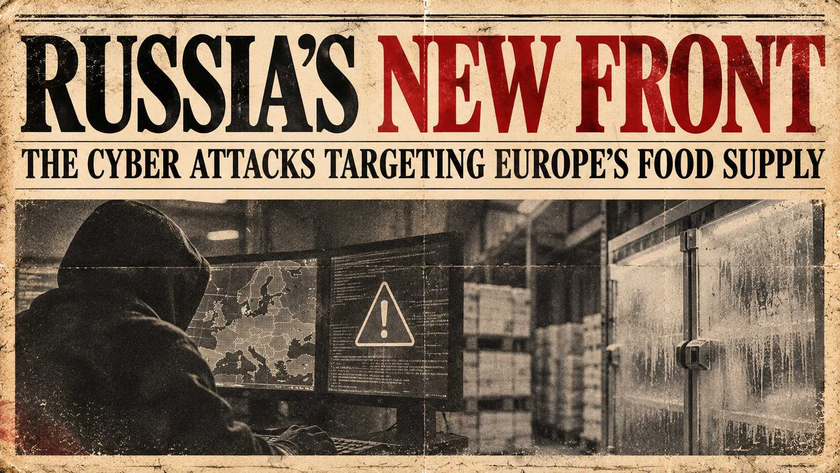
One of the most concerning developments I've been following involves reports of cyber intrusions affecting commercial refrigeration systems across several European countries. According to the information discussed during my latest broadcast, attackers have allegedly manipulated connected refrigeration equipment, causing food to spoil and potentially imposing substantial losses on businesses.

If confirmed, these incidents would illustrate how cyber warfare can reach far beyond military networks and government computers. Modern food distribution depends on refrigeration, transportation, electricity and digital monitoring systems. Disrupting even one part of that chain can create costs that eventually reach consumers.

I suspect Russia is involved in some of these activities, given its record of cyber operations and efforts to undermine European security. However, the specific refrigeration incidents and their attribution require independent confirmation. That distinction matters because identifying the perpetrator of a cyberattack is rarely as straightforward as identifying the damage it caused.

The broader vulnerability is undeniable. As more equipment becomes connected to the internet, businesses and governments must consider how those connections could be exploited during a confrontation.

What I Actually Saw in France

Social media has been filled with videos of burning barricades, smashed storefronts and confrontations between protesters and police. I witnessed some of that disorder myself, including situations where police deployed tear gas. But I also spent time walking through Paris on a beautiful autumn morning, passing ordinary businesses, tourists and residents going about their daily routines.

That experience reinforced something I've said repeatedly in my reporting: The news shows us what is unusual, but repeated exposure to unusual events can make them appear normal.

There are serious political and economic tensions in France, and I encountered demonstrators whose views were considerably more radical than those of the average citizen. I also believe there are legitimate questions about whether foreign influence operations are attempting to amplify political divisions on both the left and the right.

But it would be misleading to suggest that all of France, or all of Europe, is descending into chaos. Most of the places I visited were functioning normally, and even in areas where protests had occurred, daily life continued.

Recognizing that reality doesn't diminish the seriousness of the violence. It gives us a more accurate picture of what is happening.

Nuclear Warnings and the Danger of Speculation

Another subject I addressed was Tucker Carlson's claim that President Trump could be preparing to launch a nuclear strike against an Iranian underground nuclear facility sometimes called Pickaxe Mountain.

Carlson's argument, as presented in the material I reviewed, was that the facility might be too deeply buried for conventional weapons to destroy. I disagree with the leap from that assessment to the conclusion that a nuclear strike is therefore being planned.

Deeply buried targets present difficult military problems, and the capabilities and limitations of conventional penetrator weapons deserve serious discussion. But there is a considerable difference between evaluating possible military options and having credible evidence that a president intends to use a nuclear weapon.

A nuclear attack would carry extraordinary humanitarian, environmental and geopolitical consequences. Claims that such an attack is imminent should be supported by much stronger evidence than speculation about the depth of a facility or the preferences of individual officials.

I also believe nuclear rhetoric must be evaluated consistently, including the threats and warnings issued by Russian officials throughout the war in Ukraine. The prospect of nuclear escalation is too serious to become another instrument of political sensationalism.

The Difference Between High-Trust and Low-Trust Communities

Back in the United States, videos circulating after Halloween showed street fights, reckless driving and reports of shootings in several cities. Some of the footage was deeply troubling, particularly when young people appeared to be participating in violence or theft.

The individual incidents and casualty figures need to be verified before drawing national conclusions, and broader crime trends cannot be established from a collection of viral videos. Nevertheless, the behavior depicted raises questions about personal responsibility, parenting and the expectations that hold communities together.

I often describe the distinction as the difference between a high-trust society and a low-trust society.

In a high-trust community, people generally respect their neighbors, look after one another's property and expect disagreements to be settled without violence. In a low-trust environment, residents become accustomed to protecting themselves against theft, intimidation and disorder, and ordinary activities begin to require precautions that once seemed unnecessary.

I grew up in a time when Halloween was largely about neighborhood relationships. Children went door to door, parents knew the families on their street, and the candy was almost secondary to the opportunity to visit with neighbors. Seeing videos of people stealing entire bowls of candy may seem trivial compared with serious violent crime, but it illustrates how quickly a simple community tradition can lose its meaning when consideration for others disappears.

I believe parents have a particularly important responsibility here. Children learn what is acceptable by watching adults, and communities cannot expect young people to develop respect, self-control and responsibility if those values are never demonstrated at home.

Rebuilding What Makes Communities Strong

There is a temptation to look at cyberattacks, political unrest and street violence and conclude that civilization itself is collapsing. I don't believe the evidence supports such a sweeping conclusion, and my recent trip to France provided plenty of reminders that ordinary people are still living peaceful, productive lives.

At the same time, functioning societies depend on more than laws, police officers and reliable technology. They depend on people who are willing to act responsibly even when nobody is watching, families that teach children to respect others, and neighbors who know and care about one another.

Those relationships are also an important part of preparedness. Whether a community faces a prolonged blackout, a natural disaster or a period of civil unrest, people who trust and help one another will generally be better equipped to respond.

I've spent years reporting from conflict zones and disaster areas, and the lesson I keep coming back to is that resilience begins long before an emergency. It begins with the habits we develop, the responsibilities we accept and the communities we build.

We should take genuine threats seriously without allowing every alarming headline to convince us that the world is falling apart. The goal is to understand what is happening, prepare sensibly and preserve the trust that makes a free and stable society possible.

Read full Article
post photo preview
Why Are Governments Around the World Telling People to Prepare for a Crisis?

From Europe to Asia, governments are urging citizens to keep emergency supplies on hand. The question is whether these warnings signal a growing threat or simply a recognition of how vulnerable modern life has become.

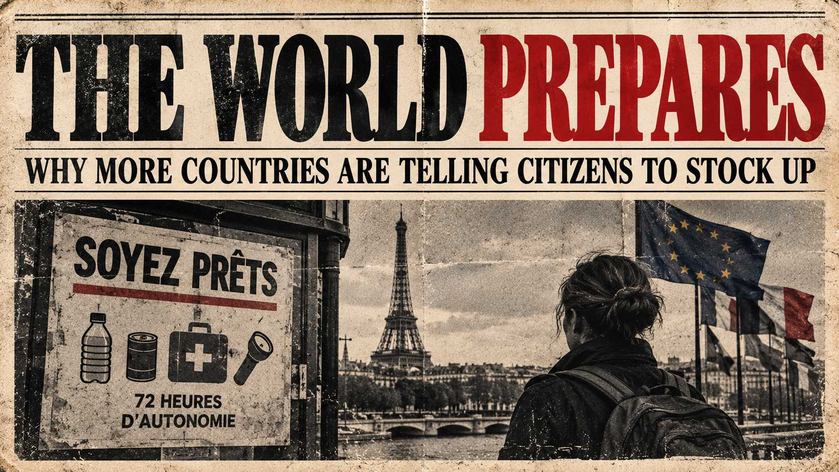
PARIS, FRANCE — I've been reporting from France this week, where protests and economic frustrations have been part of the story. But another development has caught my attention, and it extends far beyond the streets of Paris. Governments around the world are increasingly encouraging their citizens to prepare for emergencies, with recommendations ranging from three days of supplies to two weeks or more.

France is among the countries promoting household preparedness, while similar guidance has been discussed across Europe and in countries including Japan, Taiwan and the United States. Austria, for example, has been cited as recommending a substantially longer reserve of essential supplies. At the same time, I've been following reports of American military efforts to make installations more self-sufficient during prolonged disruptions.

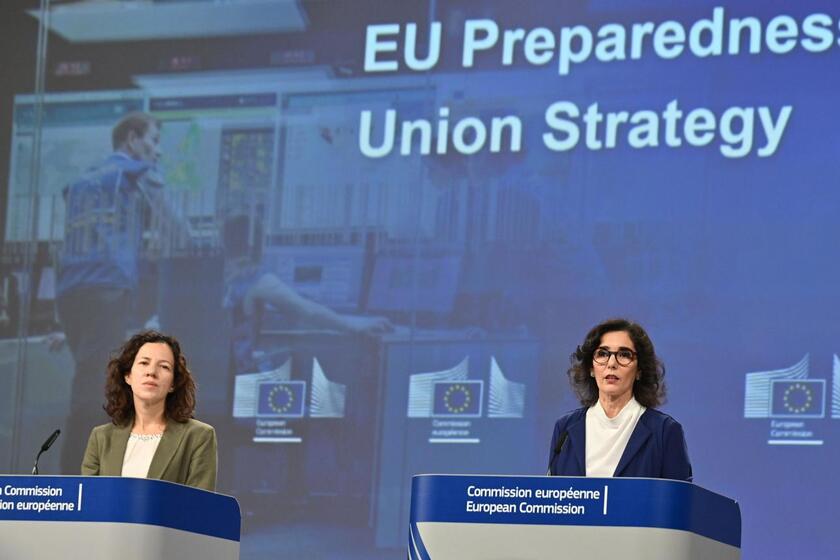
European Commission officials present the EU's Preparedness Union Strategy in Brussels on March 26, 2025. The initiative encourages households to be able to manage at least 72 hours without outside assistance.

Credit: Dursun Aydemir / Anadolu via Getty Images, as credited by Euractiv. Licensed editorial image.


Naturally, this raises an uncomfortable question: What are these governments preparing for, and do they know something the rest of us don't?

I don't think we should automatically assume that some enormous catastrophe is imminent. Different countries face different threats, and many of these preparedness programs have existed for years. Japan must contend with earthquakes, tsunamis and typhoons, while European governments are increasingly concerned about the possibility of sabotage, cyberattacks and other disruptions connected to the war in Ukraine.

Still, there is a common lesson behind these warnings. Modern societies have become extraordinarily dependent on systems that most people rarely think about until something goes wrong.

The Fragility of an Interconnected World

During my latest broadcast, I discussed a video attributed to Iran that appeared to threaten undersea internet cables serving countries around the Persian Gulf. The scenario raises legitimate questions about what might happen if a major communications network were disrupted during a wider conflict.

I don't believe Iran has the capability to shut down the entire global internet, which was designed with multiple routes and considerable redundancy. However, damage to important cables or other communications infrastructure could create serious regional problems, particularly when combined with attacks on energy facilities, transportation networks or commercial shipping.

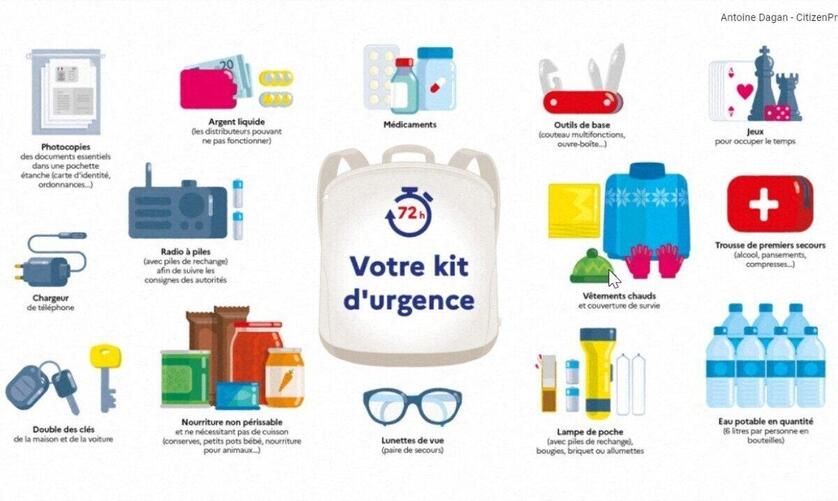
French government guidance identifies essential supplies for the first 72 hours of an emergency, including drinking water, food, medication, a flashlight and a battery-powered radio.

Credit: Gouvernement français / République française.


Consider how much of everyday life now depends on reliable connectivity. Banks, businesses, hospitals, shipping companies and distribution networks all rely on digital systems. A prolonged disruption could interfere with payments, deliveries and essential services, even if the effects varied considerably from one region to another.

The danger is not necessarily that everything would stop at once. It's that failures in one system can create problems in several others, exposing weaknesses that are easy to overlook during normal times.

Why the Middle East Matters to Everyone

The possibility of renewed fighting involving Iran adds another layer of concern. A wider conflict could threaten oil production, shipping through the Strait of Hormuz, desalination facilities and other infrastructure on which millions of people depend.

The economic consequences would not remain confined to the Middle East. Higher energy and transportation costs eventually reach consumers through food prices, manufacturing expenses and the cost of everyday necessities.

Here in France, many of the protesters I've spoken with have complained about the rising cost of living. Their frustrations have several causes, including domestic taxation and economic policy, but international instability can make an already difficult situation worse.

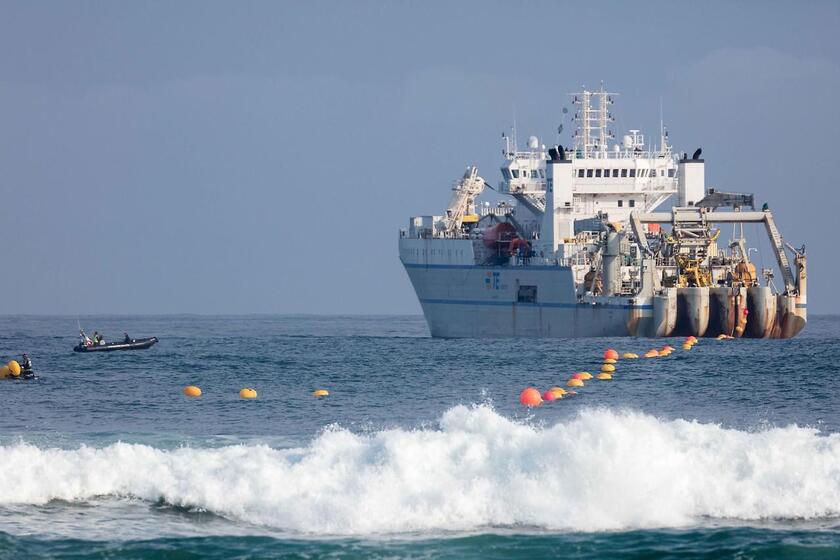
A vessel participates in the deployment of the Marea submarine communications cable across the Atlantic. Undersea fiber-optic networks carry vital international data traffic and can be vulnerable to physical disruption.

Credit: Microsoft, Marea subsea cable project, 2017.


That is why I believe preparedness deserves serious consideration. We don't have to predict a war, a financial crisis or a major cyberattack to recognize that any one of these events could disrupt ordinary life.

What I've Learned From Covering Disasters

After more than two decades reporting from war zones and disaster areas, I've seen what happens when electricity disappears, supply chains break down and people can no longer depend on the services they normally take for granted.

My advice is not to panic or spend a fortune on survival equipment. Start with the basics: enough food and drinking water for several days, necessary medications, a modest amount of cash, and a reliable way to receive information if the power or internet goes down.

I also recommend keeping physical copies of important documents, backing up essential digital files to an offline drive, and having paper maps available in case navigation services become unreliable. A battery-powered radio, backup charging equipment and a family communication plan can make an enormous difference during an emergency.

But there is something even more important than the supplies in your basement.

Your relationships with family, friends and neighbors may be your greatest resource when a crisis arrives. People who know one another, communicate and work together are better positioned to handle unexpected hardship than those who try to prepare for every possible scenario entirely on their own.

And for me, spiritual preparedness is just as important. Having a solid foundation in your faith can provide the perspective and stability needed when circumstances become frightening or uncertain.

Preparedness Is Not Panic

I don't know whether the coming months will bring a major international crisis, and I don't believe anyone should pretend to know the future with certainty. What I do know is that governments are taking resilience seriously, and ordinary families have good reasons to do the same.

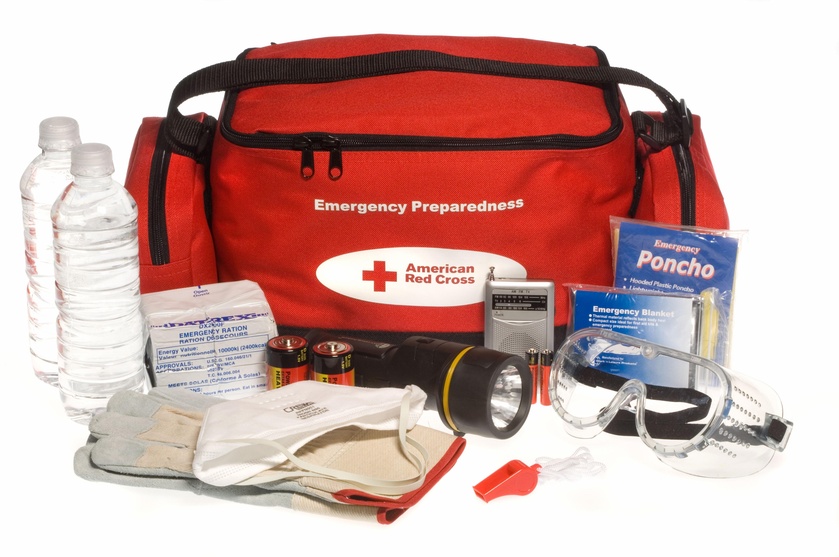
An American Red Cross emergency preparedness kit contains practical supplies intended to help individuals and families during disasters or interruptions to essential services.

Credit: American Red Cross photograph, July 7, 2006; archived by NARA/DVIDS Public Domain Archive. The archive identifies this image as public domain.


If you put aside two weeks of food and nothing happens, you've simply stocked your pantry. But if something does happen, those preparations could spare your family a great deal of unnecessary hardship.

I've written extensively about this subject in my book Death of Civilization, which explores practical preparedness and the importance of building resilient communities. Supporters of my Locals community can access a PDF copy through ChuckHolton.com.

The goal isn't to live in fear of the next catastrophe. It's to prepare wisely enough that, whatever happens, fear doesn't have to make your decisions for you.

Read full Article
See More
Available on mobile and TV devices
google store google store app store app store
google store google store app tv store app tv store amazon store amazon store roku store roku store
Powered by Locals