




The new Arctic security agreement strengthens Washington’s position in Greenland and shuts the door on a Russian or Chinese military foothold. But despite the president’s sweeping announcement, the United States has not taken possession of Greenland — and many of the military rights being celebrated today have existed for decades.
After several days traveling through Ukraine, Poland and Germany, I finally made it back home to Panama. I had barely unpacked — or, more accurately, discovered that the airline had apparently decided to keep my luggage — when President Donald Trump announced what he described as a historic agreement over Greenland.
Trump said the United States had secured “permanent control over security” in Greenland and would have the ability to prevent American adversaries from establishing military bases, deploying forces or making sensitive investments there. He called it an agreement without an expiration date and said the United States would begin developing a larger military presence on the island.
That sounds enormous. It sounds almost as if the United States finally got Greenland after all.
But that is not what happened.
Denmark and Greenland remain sovereign over the territory, and their leaders have been considerably more restrained in describing the agreement. They say the arrangement strengthens security in the Arctic and North Atlantic while preserving Danish sovereignty and Greenland’s right to self-determination. The final agreement is expected to be signed around the United Nations General Assembly and still must go through the appropriate parliamentary procedures.
The more interesting question is not whether Trump “got Greenland.” He didn’t.
The question is what America actually gained.
America Was Already There
One of the most important pieces of context has largely disappeared beneath the headlines: the United States has had extensive military rights in Greenland since 1951.
Under the existing defense agreement with Denmark, American forces already have broad authority to operate military facilities, station personnel, move supplies and conduct military operations in Greenland. The United States once operated more than a dozen installations there and today maintains Pituffik Space Base, formerly known as Thule Air Base.
That is why I think some of the celebration surrounding this new agreement needs to be put into perspective.
When I compared what we already possessed under the old arrangement with what has been publicly described in the new one, much of it looked familiar. The United States already had an enormous amount of latitude to defend Greenland and use it as part of the broader defense of North America and NATO.
There are, however, potentially important additions.
According to reporting on the negotiations, the new framework is intended to survive even if Greenland eventually becomes independent from Denmark. It also restricts non-NATO countries from establishing military bases and places tighter limits on sensitive investments by countries such as Russia and China. Depending on the final language, that could give Washington a more durable position in an Arctic region that is becoming increasingly important strategically.
That matters.
But it is a long way from annexation.
Trump’s Negotiating Style on Display
When I traveled to Greenland earlier this year, Trump was openly talking about acquiring the island and repeatedly refusing to rule out force. Those statements infuriated Denmark, alarmed European governments and were deeply unpopular among many Greenlanders.
At the time, I argued that if the United States wanted a larger military footprint or stronger guarantees against Chinese and Russian influence, there were far less destructive ways to accomplish that than threatening a NATO ally.
What we are seeing now looks very much like the end result of Trump’s familiar negotiating method: begin with a demand so extreme that everyone assumes it is impossible, create enormous pressure around it, and then retreat toward an agreement that would previously have looked ambitious.
You can like that method or hate it. I have never thought it was necessary to insult allies in order to negotiate with them. But in this case, Trump appears to have emerged with a strengthened American security position while Denmark retains sovereignty and Greenland retains its right to determine its own future.
That is a meaningful result.
It is simply not the same thing as America taking Greenland.
There is another reason for caution. As I recorded the live discussion, the complete text of the agreement had not yet been publicly released. That makes some of the sweeping claims surrounding it impossible to evaluate definitively. The governments involved have also described the arrangement differently, with Trump emphasizing permanent American control while Danish and Greenlandic officials emphasize sovereignty and shared security.
Until the final text is public, the details matter more than the victory speeches.
The Bigger Story Is Europe
Greenland is only one piece of a much larger strategic shift I watched unfolding during my trip through Europe.
Poland is becoming increasingly important to American military planning. Trump announced that progress is being made toward establishing a new permanent U.S. Army base there, while roughly 10,000 American troops are already stationed in the country on a rotational basis. Poland has spent years asking Washington for a more permanent American military commitment.
I saw that concern firsthand.
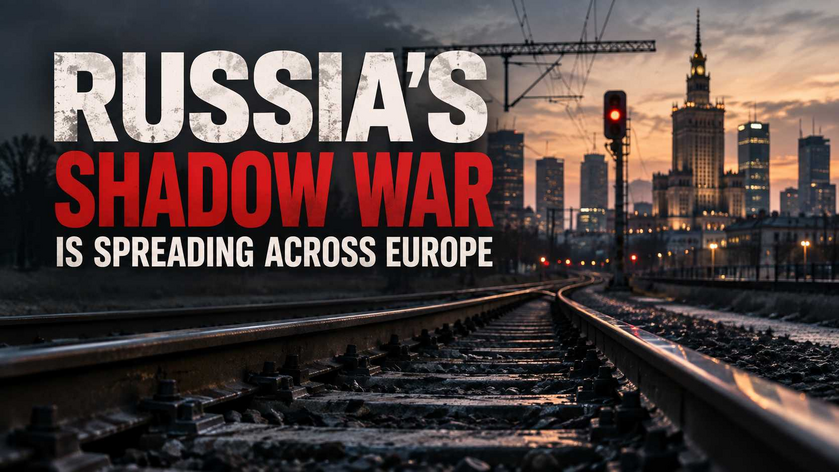
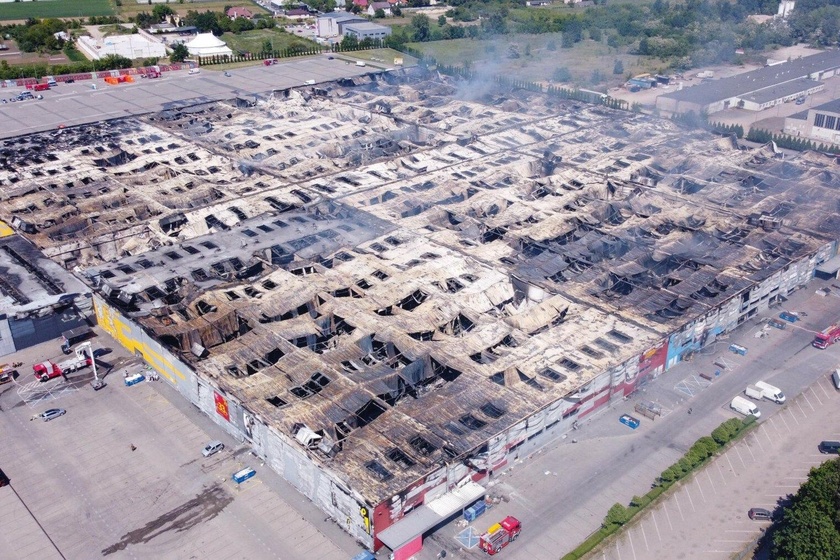
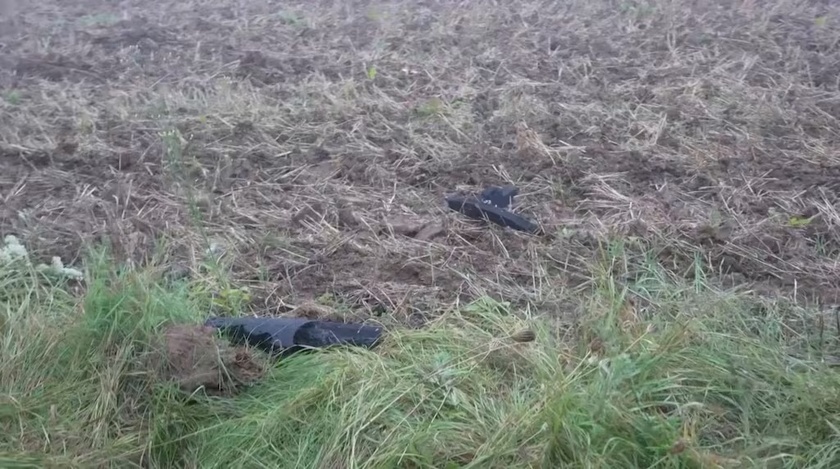
While I was in Warsaw, I visited the Polish parliament and interviewed Poland’s defense leadership about the growing security pressure along NATO’s eastern flank. Polish officials are deeply concerned about sabotage, drone incursions and other asymmetric threats connected to Russia, while the alliance is simultaneously watching conventional military activity around Belarus, Kaliningrad and the narrow Suwałki corridor connecting Poland with Lithuania.
The Polish message to Americans was remarkably straightforward: they consider the alliance with the United States central to their security.
That makes the movement we are seeing from Washington particularly interesting.
For much of Trump’s second term, Europeans have questioned whether the United States was moving away from NATO. Now Washington is discussing a permanent base in Poland while simultaneously strengthening its long-term position in Greenland.
Those two developments should be viewed together.
One sits on NATO’s Arctic and North Atlantic flank. The other sits near the alliance’s eastern frontier with Russia and Belarus.
Whatever the rhetoric surrounding NATO has been, the military geography is moving in the opposite direction from American withdrawal.
Washington Turns Up the Pressure on Moscow
There is another important development.
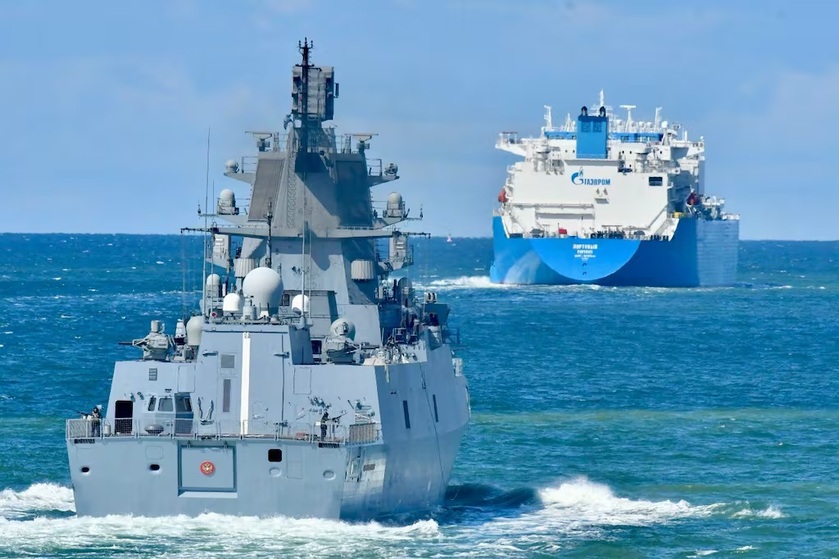
Trump signed a sweeping bipartisan Russia sanctions bill on September 18 after it passed the Senate 86-11 and the House 262-159. The legislation expands sanctions against Russian officials, banks and the so-called shadow fleet used to move Russian energy, while giving the president authority to impose tariffs as high as 100 percent on major importers of Russian oil and natural gas.
That does not guarantee that every available sanction or tariff will be used. As I pointed out during the live broadcast, giving the executive branch authority to apply economic pressure and actually exercising that authority are two different things.
Still, taken together with the discussions over Poland and Greenland, the direction is notable.
The United States is strengthening its ability to operate in the Arctic, discussing a more permanent military presence on NATO’s eastern flank and giving the administration powerful new economic tools against Russia.
That is not the posture of a country abandoning Europe.
Greenland Was Never Just About Greenland
This is why I think the Greenland story is being misunderstood.
The important part is not the idea that America somehow conquered an enormous Arctic island without firing a shot. It didn’t. Greenland remains Greenland, and Denmark remains sovereign.
The important part is that Washington appears to have secured a more durable strategic arrangement in one of the most important pieces of geography on the planet.
Greenland sits between North America, Europe and the Arctic. It matters for missile warning, space operations, air and maritime access and the emerging competition over the High North. Russia possesses an enormous Arctic coastline, while China has spent years seeking economic and strategic access to the region.
Keeping hostile military infrastructure out of Greenland is unquestionably important to American security.
Trump deserves credit if the final agreement strengthens that position while preserving the relationship with Denmark and Greenland.
But we should also be precise about what happened.
America did not take Greenland.
It appears to have strengthened an arrangement that has existed for 75 years, made that relationship more durable and secured additional guarantees against Russian and Chinese influence. That is less dramatic than the rhetoric surrounding the announcement, but strategically it may be far more useful.
And after what I just saw traveling through Poland and along NATO’s eastern frontier, I suspect Greenland will not be the last place where we see the United States quietly strengthening its position as the confrontation with Russia moves into a more dangerous phase.