
Chuck Holton
Politics • Culture • News
The Hot Zone 2023-2024 BOOK—A Perfect Gift for the Holidays!
A Beautiful Collection of Stories and Photos from Our Year of Global Adventures
November 29, 2024

Looking for the perfect holiday gift? The Hot Zone 2023-2024 Book is more than just a collection of stunning stories and photos—it’s a way to give back. Every purchase helps families in Colombia build brighter futures. Give a gift that inspires and makes a difference this season!


 

CLICK HERE TO BUY THE BOOK! 

community logo
Join the Chuck Holton Community
To read more articles like this, sign up and join my community today
4
What else you may like…
Videos
Podcasts
Posts
Articles
Faith Is Growing in the Places Tourists Never See

Cartagena is famous for beaches, colonial walls and tourists. But that isn't the whole city.

Away from the postcards, I connected with a local Christian congregation that started with roughly 30 people and is now building something much bigger. Their vision isn't simply to fill a building. They want to reach into the streets and serve people who have largely been forgotten.

That mission matters in a city where poverty remains a serious problem. Cartagena's own government statistics show hundreds of thousands of residents continue to live below the monetary poverty line.

00:01:44
Three Years. Never Forget.

I can't show you this on Youtube, but you need to see it.

00:03:58
September 25, 2026
You Will Be Shocked at What they Find in this Drone

Russia's new GERAN drone is wreaking havoc across Ukraine. The Ukrainians captured one and took it apart. You'll be amazed at what they found.

00:04:12
Episode 622 - Field Producer Dennis Azato and Chuck Reminisce

My erstwhile field producer and cameraman Dennis Azato has accompanied me on ten years of adventures across the globe. Today he joins me in Ukraine and we spend some time remembering our many trips together.

Episode 622 - Field Producer Dennis Azato and Chuck Reminisce

Heavenly Father,

You are faithful to Your covenants. By the blood of Christ, we are now one with the commonwealth of Israel (Ephesians 2:12-13). Through the Gospel, You have grafted us into Your chosen people to share in their blessings and fulfill Your promises (Romans 11:17). As Jesus so greatly desired to gather ethnic Israel, as a hen gathers her chicks, we pray for them to come out of blindness (Matthew 23:37). We pray that the veil would be removed from their eyes—especially for the ones who will see Jesus and mourn over Him whom they pierced (Zechariah 12:10; 2 Corinthians 3:14-16). For if the Jews' exclusion, because they rejected Jesus, brought riches to us among the nations, how much more will their re-inclusion be when they finally repent and receive Jesus as their Messiah (Romans 11:12)!?

As it is written in Romans, it will be like life from the dead (Romans 11:15)! For when Israel finally gets right with God, You will send Jesus from Heaven to restore all things, ...

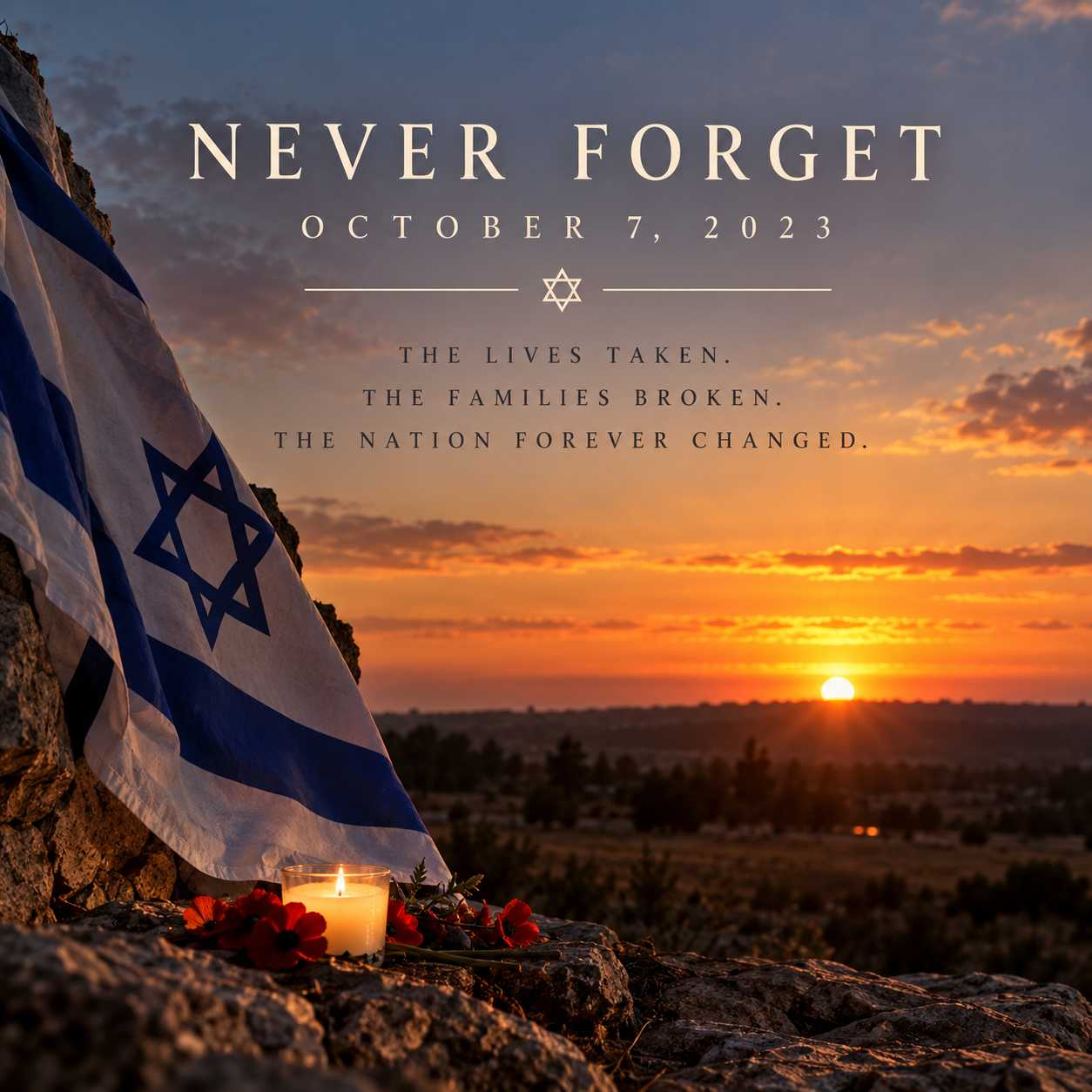
Never forget October 7, 2023. I stand with Israel.

post photo preview
post photo preview
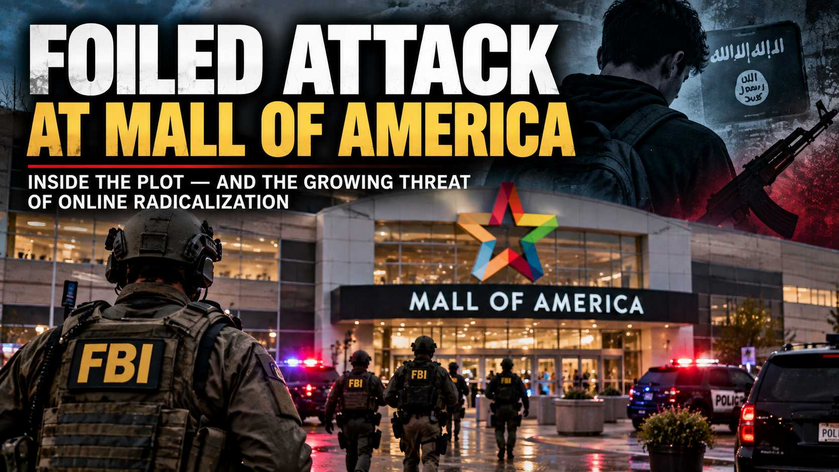
FBI Foils Alleged Mall of America Attack as Online Radicalization Raises New Concerns

The arrest of an 18-year-old accused of planning a mass shooting in Minnesota has renewed questions about extremist recruitment, youth violence and the growing influence of online networks.

Federal authorities have reportedly disrupted a potential mass-casualty attack at the Mall of America in Minnesota, arresting an 18-year-old man accused of preparing to open fire on shoppers in what investigators believe was an act of jihadist-inspired violence.

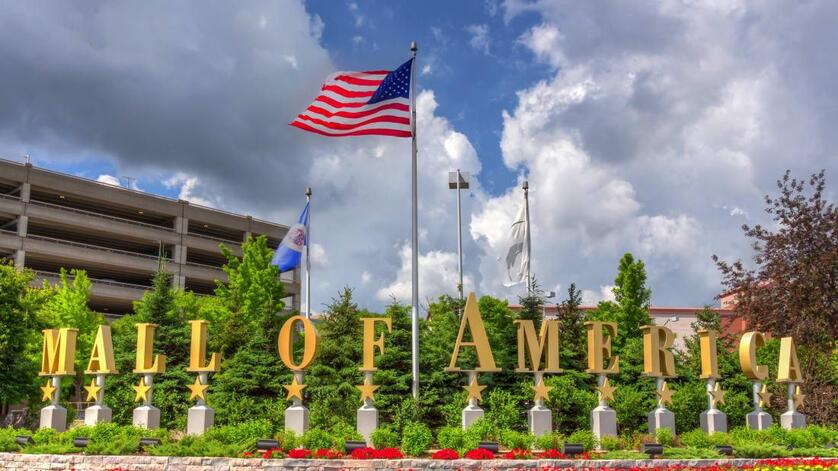
The Mall of America in Bloomington, Minnesota, was the alleged target of a mass shooting planned for October 24, 2026. Federal investigators say an 18-year-old suspect intended to kill dozens of shoppers during a Hmong arts celebration before FBI agents arrested him on October 6.


According to details discussed during my latest broadcast, the suspect had allegedly obtained an AK-47-style rifle and approximately 200 rounds of ammunition, with the intention of killing between 30 and 60 people inside one of the country's largest shopping centers. Authorities reportedly had been investigating him for an extended period before intervening.

The allegations, if substantiated, describe a potentially catastrophic attack prevented before innocent people were killed. They also raise questions extending well beyond the circumstances of one arrest: how does a young American become radicalized to the point that he is allegedly willing to murder dozens of strangers, and what can be done to identify that process before it turns violent?

Having spent more than two decades reporting on terrorism, insurgencies and armed conflict around the world, I have seen how extremist organizations exploit alienation, resentment and ideological grievance to recruit people into violence. What concerns me about this case is that the alleged suspect did not have to travel to a foreign battlefield to encounter those influences. According to the account presented during the broadcast, he was born and raised in the United States.

That distinction is central to understanding the threat.

A Suspect Already Known to Investigators

One of the most troubling details emerging from the case is the suggestion that the suspect had been under investigation for approximately two years.

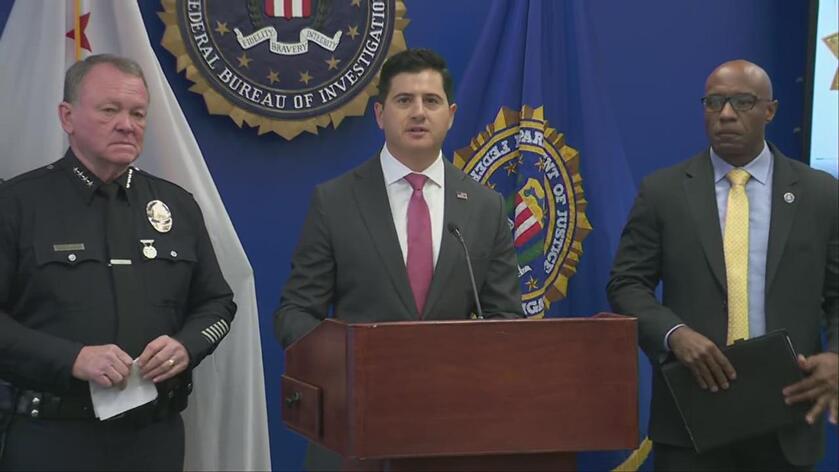
U.S. Attorney Daniel Rosen, FBI Special Agent in Charge Christopher Dotson and Bloomington Police Chief Booker Hodges announce federal charges against an 18-year-old Minnesota man on October 7, 2026. Investigators allege the suspect planned an ISIS-inspired mass shooting at the Mall of America before being arrested during an undercover operation.


During the broadcast, I discussed reports that FBI agents had previously approached his parents on two occasions because of concerns about his possible radicalization. According to those accounts, the parents referred investigators to their attorneys rather than discussing the matter directly.

The precise circumstances of those encounters, including what investigators disclosed and how the family responded, have not been independently established in the material available to me. Seeking legal representation is not itself evidence of wrongdoing, and the parents have not been shown to have participated in the alleged plot.

Nevertheless, the reported length of the investigation illustrates the difficulties facing counterterrorism agencies. Authorities must distinguish between disturbing statements, ideological extremism and concrete preparations for violence, while also gathering enough evidence to justify an arrest.

That process becomes particularly complicated when a suspect's activities occur primarily online.

Former FBI Deputy Director Dan Bongino addressed that challenge during an interview aired on Fox News, describing how extremist recruitment has evolved alongside social media and other digital communications platforms.

“One of the most prominent significant problems we were faced with ... was this explosion basically of online radicalization where these terror groups were taking advantage of chat room type tools, social media type tools, you know, basically the digital domain to recruit.”

Bongino said the FBI had undertaken changes intended to improve its ability to identify potentially dangerous individuals, including the use of artificial intelligence to analyze large volumes of investigative tips.

He argued that technological advances were making it more difficult for suspects to remain unnoticed, although the effectiveness of those changes cannot be established from his remarks alone.

The larger point is difficult to dispute: extremist organizations no longer need to recruit exclusively through personal relationships, physical meetings or travel to conflict zones. Online platforms can connect vulnerable individuals with violent ideologies across enormous distances, often without the knowledge of their families or communities.

The Challenge of Radicalization at Home

Minnesota is home to one of the largest Somali American communities in the United States, a population that has grown over several decades through refugee resettlement, family reunification and subsequent generations born in America.

The suspect discussed in the broadcast was described as an American-born young man whose parents immigrated from Somalia. His background has attracted considerable attention, but it is important to distinguish the allegations against one individual from the broader community in which he grew up.

Somali American community leaders publicly condemned the reported plot and emphasized that the young people involved in violence are also products of American society.

One community representative made that point directly:

“We strongly condemn gun violence and youth violence. We recognize that Somali American youth were involved and those responsible must be held accountable. But those are also American youth born and raised all here, educated here, and grow up in our communities. This is not simply a Somali problem.”

I have interviewed Somali community leaders in Minnesota during previous reporting assignments, and I believe there is an important truth in that statement.

When a young person is born in America, attends American schools and grows up surrounded by American institutions, it is not enough to explain his behavior solely through his parents' country of origin.

The more difficult question is what happened during those formative years.

How did an American teenager allegedly become convinced that murdering people at a shopping mall was a worthwhile objective? What influences shaped that decision, and at what point did those influences develop into preparations for violence?

Those are questions investigators, parents, educators and community leaders should be asking.

Minneapolis Confronts a Broader Youth Violence Problem

The alleged terrorism case comes amid broader concerns about youth violence in the Minneapolis–St. Paul area.

During the broadcast, I reviewed an interview in which a Minnesota police chief discussed increasingly aggressive behavior among young offenders, including the availability of privately manufactured firearms and the difficulties investigators face in tracing certain weapons.

The chief described a troubling change in the attitudes of some young people involved in criminal activity.

“We're dealing with kids who are just way more violent ... a lot of times they're able to print these guns on printers in their house, which makes it a little bit more difficult too for us to get.”

He also pointed to what he characterized as a growing disregard for social expectations and authority.

“The level of disrespect that they have for society is even far greater than ... a lot of the gang members that I grew up with in North Minneapolis.”

The chief's remarks concern a broader criminal-justice problem and do not establish that ordinary gang violence and ideologically motivated terrorism share the same causes. But they do raise overlapping questions about social isolation, family involvement, access to weapons and the influence of violent peer networks.

I have reported from Minneapolis before, including on gang activity affecting some immigrant neighborhoods. The existence of criminal networks in a community does not mean that the community as a whole supports them. In fact, residents are often among the people most directly harmed by the violence.

The challenge is to confront the individuals responsible without treating an entire population as collectively guilty.

Terrorist Recruitment Has Entered the Digital Age

The internet has fundamentally changed the way extremist movements reach potential recruits.

During earlier reporting assignments in Europe, I investigated the propaganda operations of ISIS and the ways the organization encouraged attacks far beyond the territory it once controlled in Iraq and Syria.

In Dresden, Germany, I reported on the Frauenkirche, the historic church destroyed during the Second World War and later reconstructed. The building had appeared in extremist propaganda identifying symbolic European landmarks as potential targets.

That reporting followed the deadly ISIS-inspired vehicle attack in Barcelona, Spain, which demonstrated how extremist ideology could inspire violence far from the organization's principal areas of operation.

The significance of these examples is not that every person exposed to extremist propaganda becomes dangerous. Most do not. It is that a relatively small number of susceptible individuals can be encouraged toward violence without ever establishing a conventional relationship with a terrorist organization.

Digital communication allows recruiters to cultivate grievances, reinforce distorted beliefs and provide ideological justification for attacks. In some cases, individuals radicalize largely through their own consumption of propaganda rather than through direct contact with an organized group.

That creates an especially difficult problem for law enforcement because the warning signs can resemble ordinary online behavior until an individual begins making concrete preparations.

Isolation, Resentment and the Search for Belonging

Another subject I discussed during the broadcast was the relationship between social isolation and violent radicalization.

Several years ago, I investigated online communities associated with the so-called incel movement, a term commonly used to describe people who identify as involuntarily celibate. Some violent offenders have adopted extremist ideas associated with that movement, including misogyny and resentment toward society.

It would be inaccurate, however, to suggest that socially isolated men generally become violent or that most mass shootings can be attributed to the incel phenomenon. Social isolation alone does not explain terrorism, and investigators must be careful not to confuse broad personality traits with evidence of an actual threat.

What interests me is how violent extremist movements can exploit a person's existing anger or sense of rejection.

Someone who feels disconnected from family, friends and society may become particularly receptive to an online community promising purpose, recognition or belonging. An extremist recruiter can then redirect those feelings toward an ideological enemy, transforming personal grievances into a justification for violence.

The mechanisms differ among jihadist movements, white supremacist organizations and other forms of extremism, but the underlying exploitation of vulnerability is a recurring concern.

This is why the problem cannot be addressed exclusively through arrests and surveillance. Those tools are necessary when someone poses a credible threat, but they do not eliminate the conditions that make extremist recruitment possible.

The Role of Families and Communities

One of the most important lessons from years of covering conflict is that violent ideologies thrive when people lose meaningful connections to the world around them.

During the broadcast, I urged parents and grandparents to pay attention when young people become increasingly isolated, hostile or absorbed in online environments that encourage hatred.

That does not mean every teenager who spends too much time on a computer is a potential terrorist. It means adults should remain involved in the lives of the young people around them, particularly when troubling behavior is accompanied by threats, fascination with mass violence or efforts to obtain weapons.

My advice was straightforward:

“Reach out to try him some love. Try to make him feel like he's a part of a family.”

I have spent much of my career reporting from places where violence has become an ordinary part of daily life. Again and again, I have seen the damage caused when hatred becomes the organizing principle of a person's identity.

Families, religious institutions, schools and local communities cannot replace professional counterterrorism investigations, but they can provide the relationships and accountability that help prevent alienation from becoming something more dangerous.

That responsibility belongs to all of us, regardless of political affiliation, religion or background.

Security Alone Cannot Defeat an Ideology

The FBI deserves credit when it identifies a credible threat and prevents an attack before innocent people are harmed. If the allegations in the Mall of America case are proven, the intervention may have prevented a devastating loss of life.

But there is a larger problem that no single arrest can resolve.

Counterterrorism agencies face an enormous challenge because they must identify and stop potentially violent individuals before an attack occurs. Extremists, meanwhile, can exploit anonymous accounts, encrypted communications and rapidly changing online networks to spread their messages.

The answer requires effective intelligence gathering, responsible intervention when warning signs emerge and sustained cooperation between authorities and communities.

It also requires recognizing that ideological hatred cannot always be defeated by force alone.

Toward the end of my broadcast, I reflected on something I have learned after more than 25 years of reporting on wars around the world.

“You can force people to be peaceful at the point of a gun, but they can still hate each other.”

That observation applies as much to domestic extremism as it does to foreign battlefields.

Law enforcement can arrest a suspect, seize a weapon and prevent an attack. Those are indispensable achievements. But the underlying hatred that makes such violence attractive to certain individuals requires a different response, one that includes families, communities, education and the willingness to confront extremist ideas before they develop into action.

The reported plot against the Mall of America should serve as a reminder of both the danger and the opportunity before us.

The danger is that a young person growing up in the United States can allegedly become so consumed by an extremist worldview that he prepares to kill dozens of fellow Americans.

The opportunity is that this particular attack was reportedly stopped before it happened.

As investigators work to establish the full circumstances of the case, the country needs to pay attention not only to how the suspect was apprehended, but also to how someone so young allegedly reached that point in the first place.

Preventing the next attack will require understanding both.

Read full Article
post photo preview
LIVE CALL with Chuck Holton — October 3rd at 11 AM Central

Join Chuck Holton LIVE on October 3rd at 11 AM Central for a live call covering the latest developments, what’s happening on the ground, and the stories you need to be watching.

Chuck will share his perspective, answer questions, and discuss what he’s seeing as events continue to unfold around the world.

📅 October 3rd
⏰ 11:00 AM Central Time

Bring your questions and join us live!


Only for Supporters
To read the rest of this article and access other paid content, you must be a supporter
Read full Article
September 30, 2026
post photo preview
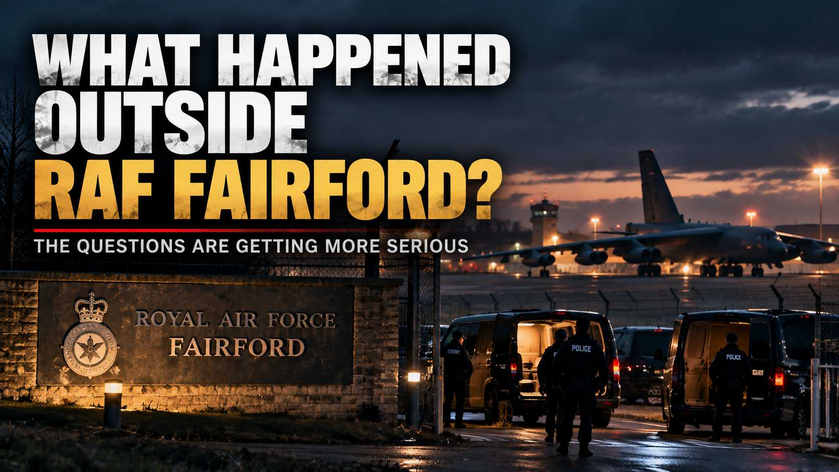
What Happened Outside RAF Fairford? The Questions Are Getting More Serious

Five British men were arrested near a U.S.-operated bomber base after being found with three suspicious vans in the middle of the night. No explosives were ultimately discovered, but petrol was recovered, investigators are examining possible foreign involvement, and Washington says the incident was far more serious than it may first appear.


The more information that comes out about what happened outside RAF Fairford over the weekend, the stranger this story becomes.

Shortly after midnight Sunday, three vans were spotted near the Gloucestershire air base, which has become an important operating location for American bombers during the war with Iran. A local resident reported seeing a group of masked men near the vehicles and alerted police. Armed officers responded, five men were arrested, homes were evacuated and bomb-disposal specialists spent hours examining the vans.

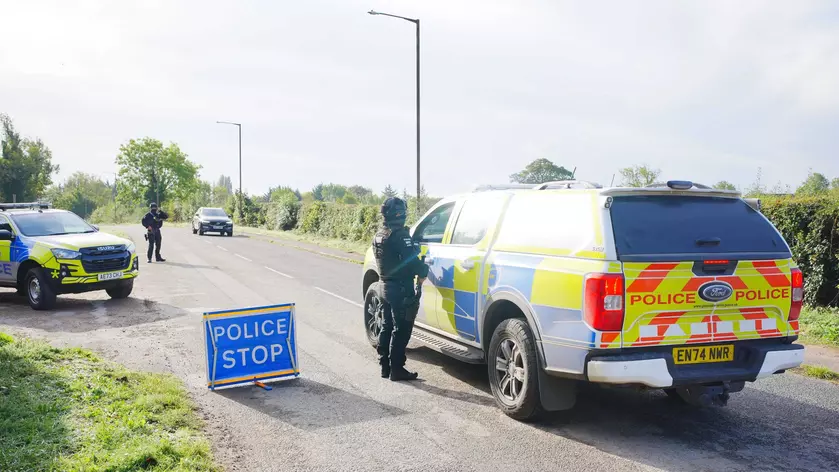
Armed police guard a road near RAF Fairford in Gloucestershire following the arrest of five British men in the early hours of September 27, 2026. Counterterrorism investigators are examining why three suspicious vans were near the U.S.-operated air base and whether a foreign actor may have been involved.


British counterterrorism police initially arrested the five men under the Explosives Act and later on suspicion of preparing an act of terrorism. All five are British nationals in their 20s from London. They have since been released on police bail under what authorities describe as stringent restrictions while the investigation continues.

Then came an important development.

Police announced that they had found no explosive devices in the vehicles. They did, however, recover a quantity of petrol.

That changes part of the story. It does not explain it.

Three Vans in the Middle of the Night

There is still a very basic question investigators need to answer: What were these men doing there?

RAF Fairford is not an ordinary airport. It is a strategically important British installation used extensively by the United States Air Force. Its unusually long runway makes it suitable for America's heavy bomber fleet, and B-1 and B-52 bombers have operated from Fairford during the conflict with Iran.

Iran's Revolutionary Guard has previously identified Fairford as a potential target because of its role in American military operations against Iran.

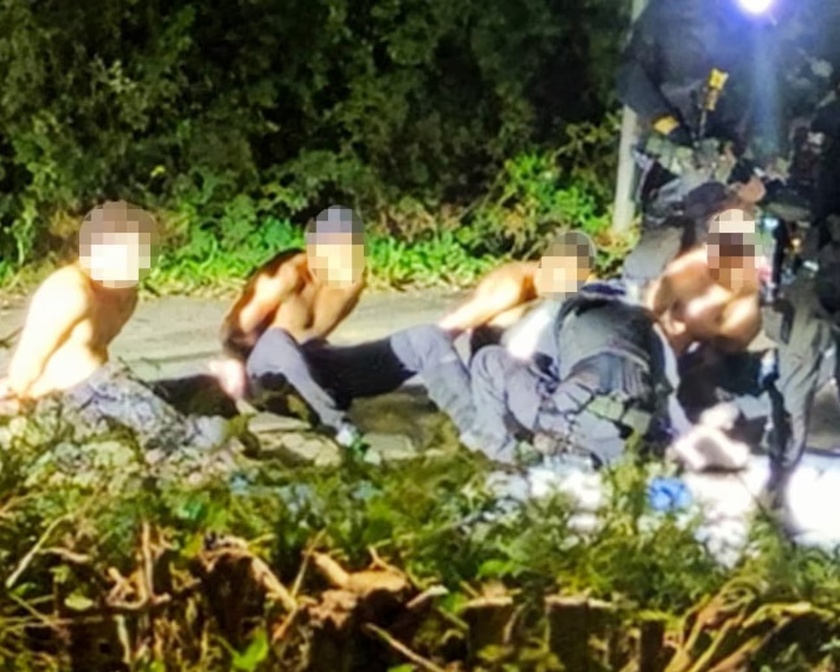
Suspects are detained by armed police near RAF Fairford early on September 27, 2026. Five British nationals in their 20s were arrested on suspicion of explosives offenses and later on suspicion of preparing an act of terrorism. All five were subsequently released on bail while the investigation continues.


So when several masked men turn up near that particular installation in three vans shortly after midnight, authorities have little choice but to treat it seriously.

That is exactly what they did.

The original account from the scene described men wearing face coverings who fled after being spotted by a local resident. Bomb-disposal teams were brought in, a security cordon was established and nearby homes were evacuated while investigators worked through the vehicles.

Police now say there were no explosives inside those vans. That is an important fact, and it means some of the early reporting suggesting investigators had discovered a ready-made bomb was wrong.

But the absence of explosives does not answer the question of intent.

Police recovered petrol. The men were close to a military installation housing extremely valuable American aircraft. And British counterterrorism investigators have not closed the case. They are continuing to investigate whether the men may have been acting, knowingly or unknowingly, on behalf of a foreign state.

That last possibility is where this story becomes much more consequential.

Was a Foreign Government Involved?

British authorities have been deliberately cautious.

Assistant Commissioner Laurence Taylor, the head of Britain's counterterrorism policing, has said investigators are keeping an open mind and examining multiple possibilities, including whether proxies or individuals working for a foreign state could have been involved.

They have not publicly concluded that Iran directed these men.

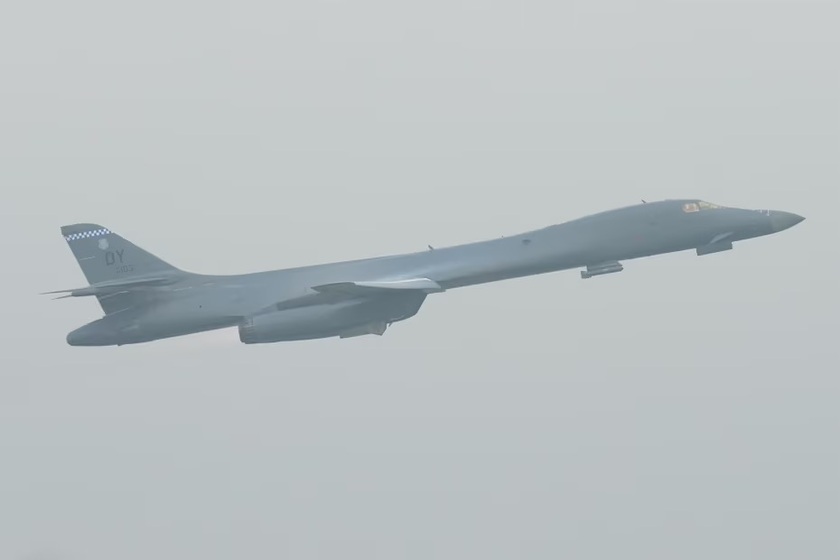
A U.S. Air Force B-1B Lancer takes off from RAF Fairford on September 29, 2026, as the investigation surrounding the security incident continued outside the base. Fairford has supported American bomber operations during the conflict with Iran.


Iran has denied involvement, and at this point there is not enough publicly available evidence for me—or anyone outside the investigation—to state definitively that Tehran ordered an operation against RAF Fairford.

The American government, however, is talking about this somewhat differently.

Secretary of State Marco Rubio told Fox News that there were details he could not discuss publicly, but described what happened as an extremely serious situation.

“What happened, what almost happened, what could have happened in the UK over the weekend is a very serious situation.”

Rubio went further, saying the incident “clearly involves the hands of a foreign actor,” although he stopped short of publicly identifying which country he believed was responsible.

He also connected the episode to Iran's public threats against American interests around the world.

That tells me something important.

The U.S. government apparently knows considerably more about this incident than has been released publicly.

That does not prove Iran was responsible. But when the U.S. secretary of state publicly says a foreign actor was involved while British counterterrorism police simultaneously investigate possible state sponsorship, it deserves attention.

The Iran Connection Cannot Be Dismissed

One of the mistakes people make when they imagine state-sponsored terrorism is assuming that a foreign government has to send its own intelligence officers into another country carrying explosives.

That is not necessarily how these operations work.

Iran has previously been accused by Western governments and security agencies of using criminal intermediaries and locally recruited proxies in plots abroad. That structure offers obvious advantages: distance from the operation, reduced exposure for Iranian personnel and a degree of plausible deniability if the people carrying out the act are arrested.

That is one reason the nationality of the Fairford suspects does not resolve the question of foreign involvement. All five men are British citizens. That tells us who they are; it does not necessarily tell us whether someone else directed or financed whatever they were doing.

During the live broadcast, I said the incident had characteristics that made me suspicious of an Iranian connection. But suspicion is not proof, and there are still enormous holes in the publicly available story.

We do not know precisely why the men were there.

We do not know what they intended to do with the petrol.

We do not know whether other individuals were involved.

And most importantly, we do not yet know who—if anyone—sent them.

Until investigators answer those questions, this remains an unresolved counterterrorism investigation rather than a proven Iranian attack.

Why Fairford Matters

The location is what makes the possibility so serious.

RAF Fairford has played a direct role in American operations against Iran. Earlier this year, the base hosted a major concentration of U.S. bombers as the air campaign intensified. At one point, roughly 15 B-1 and B-52 bombers were reportedly stationed there, and B-52s operating from Fairford flew missions over Iran.

These are enormously valuable aircraft, but their strategic importance goes well beyond their price tag.

A modern bomber sitting on the ground is fundamentally different from one flying at altitude surrounded by sophisticated defensive systems. Aircraft on an airfield are stationary targets, which is precisely why military bases have layered security.

An attacker would not necessarily need some spectacular truck bomb to create a serious problem. Fire alone can damage aircraft, fuel systems, maintenance equipment and other infrastructure.

That is why I am reluctant to dismiss this incident simply because police did not discover a completed explosive device.

The important question is not merely what was inside those vans when police opened them.

The important question is what the men intended to do once they reached their destination.

The Decision to Release the Suspects

The other part of this case attracting attention is Britain's decision to release all five suspects on bail.

President Donald Trump publicly questioned the decision, saying he would not have released them. Rubio acknowledged that many people were disturbed by it as well.

British counterterrorism officials have defended the move.

Taylor emphasized that release on bail does not mean the men have been cleared. They remain under investigation and face restrictions on their movement and contact with other people.

There may be investigative reasons for that decision that the public does not know. There may also be evidence that significantly changes our understanding of what happened.

That is why I am not prepared to tell you that releasing them proves British authorities are ignoring the threat. We simply do not have enough information to know what investigators know.

But I do think the public deserves answers.

When five men are arrested under terrorism and explosives laws near a military base actively supporting combat operations, when a major counterterrorism response follows, when the U.S. secretary of state says a foreign actor was involved, and when the suspects are subsequently released on bail, people are naturally going to ask what happened.

A Warning Beyond One British Air Base

There is a bigger lesson here, regardless of what investigators ultimately determine.

The conflict with Iran does not necessarily remain confined to Iranian territory, the Persian Gulf or the Strait of Hormuz.

American forces operate from installations around the world. Those bases, the people serving on them and the infrastructure supporting them become potential targets when the United States enters a sustained military confrontation.

Iran does not need to defeat the United States conventionally to create problems. A state facing overwhelming American military power has every incentive to look for asymmetric methods—proxies, sabotage, cyberattacks and other operations that are cheaper, harder to attribute and capable of creating political effects far beyond the physical damage they cause.

Whether RAF Fairford turns out to be an example of that strategy remains an open question.

British investigators have not attributed the incident to Iran. Tehran denies involvement. No explosives were found in the vans. Those facts should not be buried simply because they complicate the story.

But neither should we ignore the facts pointing in the other direction: masked men, three vans, petrol, a strategically important American bomber base, previous Iranian threats against that installation and a statement from America's secretary of state that a foreign actor was involved.

Those pieces do not yet give us the entire picture.

They give us enough to keep asking questions.

And until British and American authorities explain exactly what those men were doing outside RAF Fairford in the middle of the night, this is one story I would not dismiss.

Read full Article
See More
Available on mobile and TV devices
google store google store app store app store
google store google store app tv store app tv store amazon store amazon store roku store roku store
Powered by Locals