





Chuck Holton
Politics • Culture • News
Chuck Holton is an American war correspondent, published author, and motivational speaker.
Interested? Want to learn more about the community?
September 07, 2025
Houthi Drone Strikes Israel - Two Wounded

Three Houthi drones were fired at Israel on Sunday. Two were shot down and the third struck the airport in Eilat, Wounding to his Israelis and causing the airspace to be shut down.

00:00:07
Interested? Want to learn more about the community?
What else you may like…
Videos
Podcasts
Posts
Articles
Great Video Out of the White House

This administration definitely has it's social media game locked in. Love them showing Maduro blustering and ....well...

00:01:01
On the Ground in Cucuta

My flight to the border was full of Venezuelans going home. When we landed they shouted “Venezuela is free!” And burst into cheers!

00:00:14
More Fraud - This Time in Ohio
00:01:39
Episode 622 - Field Producer Dennis Azato and Chuck Reminisce

My erstwhile field producer and cameraman Dennis Azato has accompanied me on ten years of adventures across the globe. Today he joins me in Ukraine and we spend some time remembering our many trips together.

Episode 622 - Field Producer Dennis Azato and Chuck Reminisce
Your Semi-Annual Reminder that I am NOT on TikTok

If you happen to be following me there, you are actually following a Nigerian scammer or three.

post photo preview

Hey @ChuckHolton Is it possible for us to block someone in this feed if they are turning out to be a troll? Thanks
Also, sent you an e-mail concerning Russia hitting Ukraine, tonight. We were getting text updates, it seems like Putin has unleashed hades on the people.

🇺🇸🛡️🪖👮‍♂️🕊️🪦⬆️🛐
https://x.com/JudgeJeanine/status/2009267682269339744

post photo preview
Border Noise, Big Consequences: What I Saw Between Colombia and Venezuela

I’ve been traveling up and down the border between Venezuela and Colombia, stopping at different crossings to see what the situation looks like after the operation that removed Nicolás Maduro. At one crossing we got close enough to see Venezuelan soldiers checking cars under a big sign that reads “Welcome to Venezuela.” It was quiet—almost deceptively so.

But the crossing I’m at now? It’s chaos.

There are streams of vehicles and motorcycles pouring out of Venezuela… and, just as importantly, streams going back in. That’s the detail you have to notice. Because if this were a mass exodus, you’d see one-way traffic—people fleeing. Instead, you’re seeing something else:

This is commerce.

People crossing to Colombia to shop, to work, to take their kids to school—and then returning home. In many places along this border, it’s so open and routine that families live one way and function the other. Venezuelans send their kids to Colombian schools. They buy Colombian groceries. They haul back supplies—like the girl I saw riding on the back of a motorcycle carrying two 20-foot PVC pipes into Venezuela like it was the most normal thing in the world.

That’s the border in 2026: not a wall, not a line, but a living artery.

And right now, it’s carrying a lot more than backpacks and building supplies.


Trump vs. Petro: A Brewing Fight on the Wrong Border

While I’m standing here, you can see M117 armored personnel carriers behind me—vehicles the United States gave to Colombia. That matters because it ties directly into the developing political fight between President Trump and Colombian President Gustavo Petro.

Trump recently called Petro a “sick man,” accused him of being tied to the drug trade, and let’s be honest—Colombia has shipped more cocaine into the United States than most Americans realize.

Petro’s history doesn’t help him. He was a guerrilla in his youth. He claims he hasn’t touched a gun since the 1970s, but now he’s posturing publicly—saying he’s ready to pick one up again if that’s what it takes to defend Colombia from Donald Trump.

And here’s the thing: I’ve heard this movie before.

Just weeks ago, Maduro was taunting Trump—calling him a coward, daring him to come get him. And then… Trump did. Maduro dared the wrong man at the wrong time.

You’d think Petro might have learned something from that.

Instead, Petro is talking like a high-school junior in the schoolyard, puffing his chest out and saying, essentially: “Come on then.”

Which would be funny—if it weren’t so dangerous—because a lot of the Colombian military’s equipment, training, aviation support, and maintenance systems have historically been U.S.-supplied or U.S.-supported. The irony of threatening to fight America with America’s equipment isn’t lost on anyone here.

Petro has now called for nationwide protests tomorrow across Colombia—demonstrations aimed at Trump and the U.S. posture toward Petro’s government.

So tonight, we’re getting on a plane to Bogotá to attend what’s expected to be the biggest rally in the main downtown square.

If you want to know where the story is going next—it’s going there.


Caracas Was “Calm”… Until It Wasn’t

Now let’s talk about what happened in Caracas last night, because it reveals how fragile—and paranoid—the remaining regime really is.

There was confusion in the city. A drone was reportedly flying near sensitive areas. Some people insisted it was just a commercial drone—some kid with a DJI Mavic. But the response from Venezuelan forces was immediate and extreme:

They unleashed air defense fire into the sky—tracer rounds everywhere—and then armored vehicles flooded the area around the presidential palace.

That tells you two things:

Only for Supporters
To read the rest of this article and access other paid content, you must be a supporter
Read full Article
post photo preview
2026: What I’m Watching, and Why I Think It Matters

As the year winds down, I’ve been thinking a lot about where we’re headed next — not in a sensational way, but in a practical one. People ask me all the time, “What do you think 2026 is going to look like?”
And my answer usually disappoints them. Because I don’t think it’s going to be defined by one big event. I think it’s going to be defined by pressure. Pressure on systems. Pressure on governments. Pressure on families. Pressure on people who are already stretched thin. And when enough pressure builds up in enough places at the same time, things start to move — sometimes in ways no one intended.


The World Feels Unsettled Because It Is

One thing that’s hard to ignore right now is how much unrest there is everywhere you look. More than half the countries on Earth are dealing with some form of conflict — not always open war, but violence, insurgency, civil disorder, or proxy fighting. That’s not normal, and it’s not sustainable. What’s different now is that most of these conflicts aren’t clean or contained. They overlap. They spill. They bleed into other regions and other systems — economics, energy, migration, politics. It creates a sense that nothing is fully stable anymore, even if daily life looks mostly normal.

Ukraine 

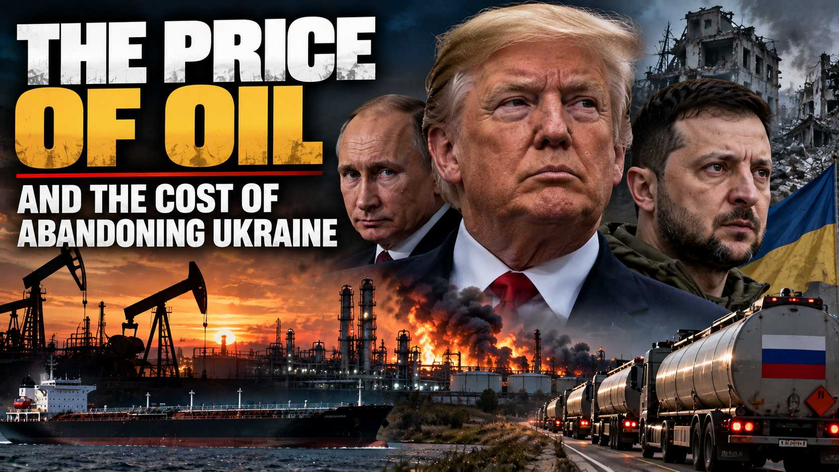
I keep coming back to Ukraine, not because it’s the only war that matters, but because it shows us how modern conflict actually works. I’ve been there. I’ve talked to people who are living through it, not watching it on a screen. What strikes you immediately is how normal life continues even under extraordinary strain. Russia has taken ground. That’s true. But it has paid an astonishing price to do it. Hundreds of thousands of casualties. Massive equipment losses. A constant drain on manpower and money. And increasingly, a war economy that’s cannibalizing the rest of the country. At the same time, Ukraine has focused on something far less visible than territory: Russia’s ability to sustain the fight. Oil facilities. Logistics. Supply chains. These are slow, unglamorous targets — but they matter. The lesson here isn’t who’s winning today. The lesson is that wars are no longer decided quickly, and they’re rarely decided cleanly. They grind. They exhaust. And they punish countries that mistake endurance for strength.


Iran

Iran is another place where pressure is building. Economically, things are very bad. Prices have skyrocketed. Infrastructure is failing. Water shortages alone would destabilize any country, let alone one already struggling under sanctions and mismanagement. Socially, the protests are telling. They aren’t just symbolic. They’re persistent, and they’re widespread. When people chant that they can’t all be arrested, that tells you something important has shifted. History suggests that governments under that kind of internal strain don’t usually become more restrained abroad. They become more unpredictable. That’s why I don’t think the tension between Iran and Israel is finished — regardless of what gets said publicly.


Israel

Only for Supporters
To read the rest of this article and access other paid content, you must be a supporter
Read full Article
Christmas Special Live Call Link

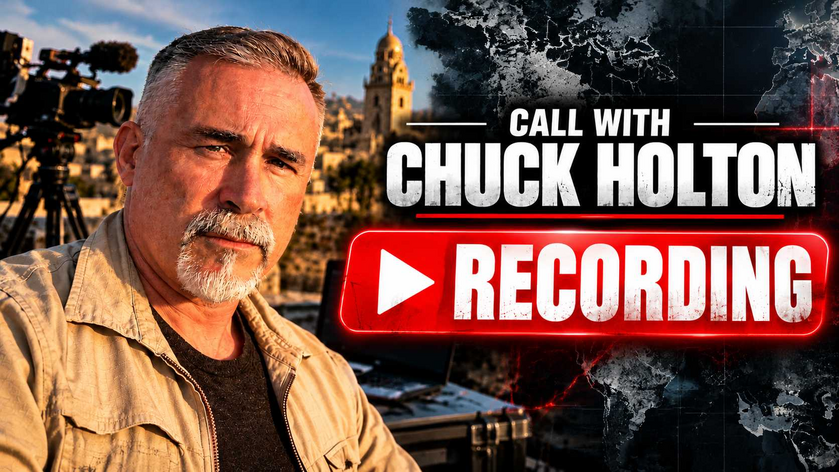
Reminder: Live Call with Chuck Tomorrow at 12PM

Join Chuck Holton and the Hot Zone crew tomorrow, December 20th at 12PM for a special live call!

We’ll be announcing the winners of the Christmas giveaway and giving you an inside look at what’s coming next for The Hot Zone.


Only for Supporters
To read the rest of this article and access other paid content, you must be a supporter

Read full Article
See More
Available on mobile and TV devices
google store google store app store app store
google store google store app tv store app tv store amazon store amazon store roku store roku store
Powered by Locals