Chuck Holton
Politics • Culture • News
Gaza Base Rumors & a White House Shock: What Trump’s Meeting with Syria’s New Leader Really Signals
November 11, 2025
post photo preview

A lot came fast in the last 48 hours: reports that Washington may stage a stabilization force on Israel’s side of the Gaza border, and a first-ever White House meeting between President Donald Trump and Syria’s transitional leader, Ahmed al-Sharaa—an ex-jihadist commander turned head of state. Let’s separate noise from signal.

“We’re not putting American brigades in Gaza. The idea on the table is a staging site inside Israel to support a multinational peace force—if, and only if, the political conditions exist.”
—Senior U.S. official, background brief, summarized from regional reporting. 

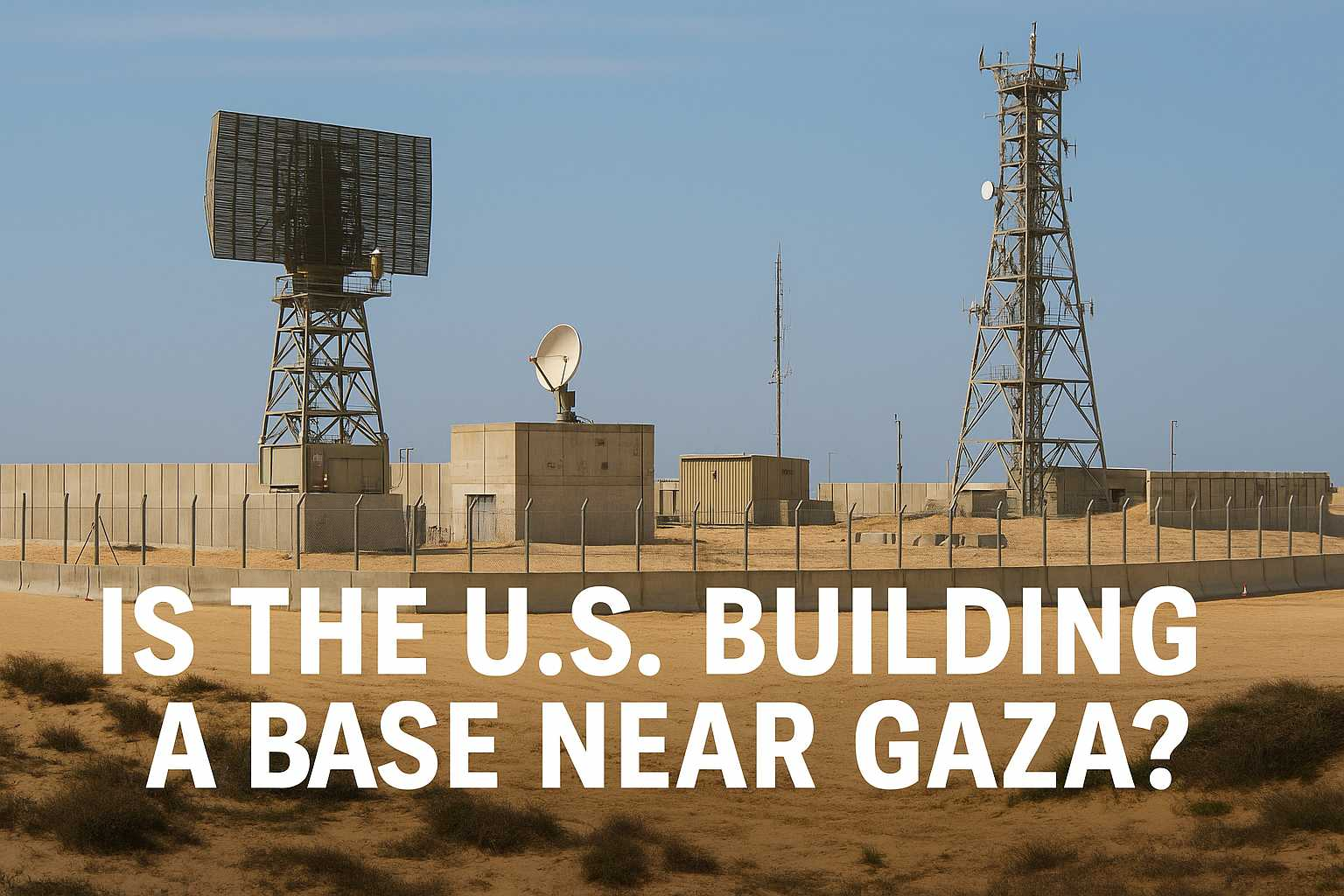
1) Is the U.S. building a base near Gaza?

Multiple Israeli outlets report Washington is exploring a large facility on Israeli soil adjacent to Gaza to support an international stabilization force once Hamas is out of governance. Early estimates: several thousand personnel with an operating bill around $500 million and a mission centered on staging, training, logistics, and coordination—not a big American garrison living inside the Strip. Key detail: Israel would retain a veto over which nations participate (for example, Ankara’s involvement has been described as a non-starter by Israeli officials).

What this would and wouldn’t mean

  • Not “boots in Gaza.” The concept situates the facility inside Israel, reducing exposure and leveraging Israeli infrastructure (water, power, secure roads). 

  • International force, U.S.-led coordination. Think liaison-heavy oversight and contractors, not 10–20k U.S. soldiers camping on the fence. 

My read: If a force is truly coming, staging it in Israel is the least-bad logistics and security choice. But the U.S. should condition any shovels in the ground on: a firm political framework, Israeli veto authority, strict financial oversight, and hard exit criteria.

“A base near Gaza would mark a shift for Israel, which has typically resisted international security footprints around the Strip.” 

2) Trump’s Oval Office with Ahmed al-Sharaa: optics vs. strategy

President Trump welcomed Ahmed al-Sharaa—the Islamist rebel chief whose coalition toppled Bashar al-Assad in late 2024 and now leads Syria’s transitional government—in a first-of-its-kind White House meeting. The session focused on counter-ISIS cooperation, normalization steps, and sanctions relief. 

“Today we turn a page. Syria will join the fight to finally extinguish ISIS, and we’ll work with the United States to stabilize our country.”
—Ahmed al-Sharaa, remarks around the visit, as reported by major outlets.

Sanctions: what actually changed?
Washington announced a 180-day partial suspension of Caesar Act sanctions—an extension of earlier limited waivers—to test cooperation while keeping leverage. A full repeal remains a congressional decision. 

“The suspension of Caesar Act provisions supports Syria’s economic recovery while preserving accountability tools.”
—U.S. government guidance on the new relief. 

Why this matters:

  • Counter-ISIS math: The U.S. wants to crush ISIS remnants without surging U.S. troops. Al-Sharaa’s forces have been raiding ISIS cells nationwide; Washington is testing whether that can scale with joint targeting and intel sharing. 

  • The risk: We’ve played “enemy-of-my-enemy” before. Tactical wins can mint tomorrow’s adversary. Guardrails—snapback sanctions, human-rights baselines, and verifiable counter-terror deliverables—are non-negotiable.

3) The detainee powder keg the world keeps ignoring

The ISIS detainee and displaced-person complex in northeast Syria remains a strategic time bomb. The Al-Hol and related camps still hold tens of thousands, including ~9–10k adult males under detention and many foreign nationals. U.S. commanders warn the sites remain radicalization incubators and breakout targets, urging rapid repatriation and adjudication

“Repatriating vulnerable populations before they are radicalized is not just compassion—it’s a decisive blow against ISIS’s ability to regenerate.”
—U.S. Central Command statement. 

If the U.S. is going to empower Damascus against ISIS, then the deal must include:

  1. A concrete detainee plan (due process or transfer to secure, internationally supervised facilities),

  2. Verified persecution safeguards for minorities, and

  3. Independent monitoring tied to sanctions snapback.

4) So where does this leave us?

  • A Gaza-adjacent staging base is being explored—not green-lit—and only makes sense with clear political conditions, Israeli veto power, and airtight oversight. 

  • The Trump–al-Sharaa meeting marks a strategic gamble: squeeze ISIS using new Syrian partners while keeping Washington’s hand on the sanctions lever. The test is whether Damascus can deliver sustained counter-ISIS results without reverting to old habits. 

“Short-term, this could accelerate ISIS’s defeat; long-term, it will only work if the guardrails hold.”


Sources for further reading

  • AP: Trump hosts Syria’s al-Sharaa for a first-of-its-kind meeting. AP News

  • The Guardian: US declares partial suspension of sanctions after historic meeting. The Guardian

  • Times of Israel liveblog: US said planning major base near Gaza (est. $500M, several thousand troops). The Times of Israel


community logo
Join the Chuck Holton Community
To read more articles like this, sign up and join my community today
3
What else you may like…
Videos
Podcasts
Posts
Articles
Iranian Regime Killing Hundreds of Protesters

Here's another one I can't show you on Youtube:

00:00:59
Great Video Out of the White House

This administration definitely has it's social media game locked in. Love them showing Maduro blustering and ....well...

00:01:01
On the Ground in Cucuta

My flight to the border was full of Venezuelans going home. When we landed they shouted “Venezuela is free!” And burst into cheers!

00:00:14
Episode 622 - Field Producer Dennis Azato and Chuck Reminisce

My erstwhile field producer and cameraman Dennis Azato has accompanied me on ten years of adventures across the globe. Today he joins me in Ukraine and we spend some time remembering our many trips together.

Episode 622 - Field Producer Dennis Azato and Chuck Reminisce
Iran has closed its airspace.

It looks like an attack is imminent on Iran. Its airspace is closed, and there are fighter jets being heard over Iraq, right on the border with Iran right now. Stay tuned. I will go live as soon as something happens.

post photo preview
No, the United States is not invading Greenland.

Watch this very good explainer about why it would be all but impossible for the United States to invade Greenland.

Systems Failure - A Study in Chaos

I'm going to be talking about this article on today's live. Although it is very technical, I encourage you to take a look at it if you are so inclined.

https://x.com/DataRepublican/status/2009859719373205881

post photo preview
Border Noise, Big Consequences: What I Saw Between Colombia and Venezuela

I’ve been traveling up and down the border between Venezuela and Colombia, stopping at different crossings to see what the situation looks like after the operation that removed Nicolás Maduro. At one crossing we got close enough to see Venezuelan soldiers checking cars under a big sign that reads “Welcome to Venezuela.” It was quiet—almost deceptively so.

But the crossing I’m at now? It’s chaos.

There are streams of vehicles and motorcycles pouring out of Venezuela… and, just as importantly, streams going back in. That’s the detail you have to notice. Because if this were a mass exodus, you’d see one-way traffic—people fleeing. Instead, you’re seeing something else:

This is commerce.

People crossing to Colombia to shop, to work, to take their kids to school—and then returning home. In many places along this border, it’s so open and routine that families live one way and function the other. Venezuelans send their kids to Colombian schools. They buy Colombian groceries. They haul back supplies—like the girl I saw riding on the back of a motorcycle carrying two 20-foot PVC pipes into Venezuela like it was the most normal thing in the world.

That’s the border in 2026: not a wall, not a line, but a living artery.

And right now, it’s carrying a lot more than backpacks and building supplies.


Trump vs. Petro: A Brewing Fight on the Wrong Border

While I’m standing here, you can see M117 armored personnel carriers behind me—vehicles the United States gave to Colombia. That matters because it ties directly into the developing political fight between President Trump and Colombian President Gustavo Petro.

Trump recently called Petro a “sick man,” accused him of being tied to the drug trade, and let’s be honest—Colombia has shipped more cocaine into the United States than most Americans realize.

Petro’s history doesn’t help him. He was a guerrilla in his youth. He claims he hasn’t touched a gun since the 1970s, but now he’s posturing publicly—saying he’s ready to pick one up again if that’s what it takes to defend Colombia from Donald Trump.

And here’s the thing: I’ve heard this movie before.

Just weeks ago, Maduro was taunting Trump—calling him a coward, daring him to come get him. And then… Trump did. Maduro dared the wrong man at the wrong time.

You’d think Petro might have learned something from that.

Instead, Petro is talking like a high-school junior in the schoolyard, puffing his chest out and saying, essentially: “Come on then.”

Which would be funny—if it weren’t so dangerous—because a lot of the Colombian military’s equipment, training, aviation support, and maintenance systems have historically been U.S.-supplied or U.S.-supported. The irony of threatening to fight America with America’s equipment isn’t lost on anyone here.

Petro has now called for nationwide protests tomorrow across Colombia—demonstrations aimed at Trump and the U.S. posture toward Petro’s government.

So tonight, we’re getting on a plane to Bogotá to attend what’s expected to be the biggest rally in the main downtown square.

If you want to know where the story is going next—it’s going there.


Caracas Was “Calm”… Until It Wasn’t

Now let’s talk about what happened in Caracas last night, because it reveals how fragile—and paranoid—the remaining regime really is.

There was confusion in the city. A drone was reportedly flying near sensitive areas. Some people insisted it was just a commercial drone—some kid with a DJI Mavic. But the response from Venezuelan forces was immediate and extreme:

They unleashed air defense fire into the sky—tracer rounds everywhere—and then armored vehicles flooded the area around the presidential palace.

That tells you two things:

Only for Supporters
To read the rest of this article and access other paid content, you must be a supporter
Read full Article
post photo preview
2026: What I’m Watching, and Why I Think It Matters

As the year winds down, I’ve been thinking a lot about where we’re headed next — not in a sensational way, but in a practical one. People ask me all the time, “What do you think 2026 is going to look like?”
And my answer usually disappoints them. Because I don’t think it’s going to be defined by one big event. I think it’s going to be defined by pressure. Pressure on systems. Pressure on governments. Pressure on families. Pressure on people who are already stretched thin. And when enough pressure builds up in enough places at the same time, things start to move — sometimes in ways no one intended.


The World Feels Unsettled Because It Is

One thing that’s hard to ignore right now is how much unrest there is everywhere you look. More than half the countries on Earth are dealing with some form of conflict — not always open war, but violence, insurgency, civil disorder, or proxy fighting. That’s not normal, and it’s not sustainable. What’s different now is that most of these conflicts aren’t clean or contained. They overlap. They spill. They bleed into other regions and other systems — economics, energy, migration, politics. It creates a sense that nothing is fully stable anymore, even if daily life looks mostly normal.

Ukraine 

I keep coming back to Ukraine, not because it’s the only war that matters, but because it shows us how modern conflict actually works. I’ve been there. I’ve talked to people who are living through it, not watching it on a screen. What strikes you immediately is how normal life continues even under extraordinary strain. Russia has taken ground. That’s true. But it has paid an astonishing price to do it. Hundreds of thousands of casualties. Massive equipment losses. A constant drain on manpower and money. And increasingly, a war economy that’s cannibalizing the rest of the country. At the same time, Ukraine has focused on something far less visible than territory: Russia’s ability to sustain the fight. Oil facilities. Logistics. Supply chains. These are slow, unglamorous targets — but they matter. The lesson here isn’t who’s winning today. The lesson is that wars are no longer decided quickly, and they’re rarely decided cleanly. They grind. They exhaust. And they punish countries that mistake endurance for strength.


Iran

Iran is another place where pressure is building. Economically, things are very bad. Prices have skyrocketed. Infrastructure is failing. Water shortages alone would destabilize any country, let alone one already struggling under sanctions and mismanagement. Socially, the protests are telling. They aren’t just symbolic. They’re persistent, and they’re widespread. When people chant that they can’t all be arrested, that tells you something important has shifted. History suggests that governments under that kind of internal strain don’t usually become more restrained abroad. They become more unpredictable. That’s why I don’t think the tension between Iran and Israel is finished — regardless of what gets said publicly.


Israel

Only for Supporters
To read the rest of this article and access other paid content, you must be a supporter
Read full Article
Christmas Special Live Call Link

Reminder: Live Call with Chuck Tomorrow at 12PM

Join Chuck Holton and the Hot Zone crew tomorrow, December 20th at 12PM for a special live call!

We’ll be announcing the winners of the Christmas giveaway and giving you an inside look at what’s coming next for The Hot Zone.


Only for Supporters
To read the rest of this article and access other paid content, you must be a supporter
Read full Article
See More
Available on mobile and TV devices
google store google store app store app store
google store google store app tv store app tv store amazon store amazon store roku store roku store
Powered by Locals