






Chuck Holton
Politics • Culture • News
Chuck Holton is an American war correspondent, published author, and motivational speaker.
Interested? Want to learn more about the community?
What’s Really Going On Between the Armenian Government and the Church — And Why Tucker Carlson Is Getting It Wrong…As Usual

Over the past few months, Armenia has been pulled into an intense controversy involving the government and leaders of the Armenian Apostolic Church. Some commentators — especially abroad — have tried to frame this as a full-blown “war on Christianity.” And one of the loudest voices pushing that angle is Tucker Carlson.

But here’s the simple truth: that framing is intellectually dishonest. It cherry-picks facts, ignores context, and whips up outrage for an American audience that doesn’t know the internal dynamics of Armenia.

Let’s break down what’s actually happening.

A Deep, Complicated History — Not a Religious Crackdown

The Armenian Apostolic Church is one of the oldest Christian institutions on earth. It has guided Armenians through centuries of foreign rule, genocide, and national trauma. Naturally, it still carries enormous respect.

But it has also long been involved in politics, and its current top leadership has close ties to Russian political interests. That’s important, because Armenia’s government — since the 2018 revolution — has tried to reduce Russian influence and strengthen civilian governance.

That effort alone created friction.

The Arrests Were Political, Not Religious

The recent controversy centers on two archbishops who were arrested — not for preaching, not for practicing Christianity, and not for challenging the faith — but for allegedly engaging in political activity that crossed into calls for a coup and even violence.

Leaked audio recordings show one archbishop discussing plans that authorities interpreted as encouraging assassinations or violent intimidation. The opposition did not deny the recordings — only insisted they were “out of context.”

No other clergy have been targeted.
Worship has not been restricted.
Churches remain open and fully active.

This is not religious persecution.

So Why Are Pundits Calling It That?

This is where the foreign commentary comes in — particularly Tucker Carlson’s coverage. Instead of presenting the full picture, Carlson stripped away all context and repackaged the story as an emotional narrative: Christian clergy jailed by an anti-Christian government.

It’s a powerful narrative, but it’s not true. And Armenian analysts have pointed out that this framing mirrors the same Russian disinformation themes that aim to destabilize Armenia internally:
• Painting the government as anti-Christian
• Claiming Armenia is being “Islamized”
• Portraying the Church as the last defender of Armenian identity
• Casting political arrests as spiritual persecution

These narratives serve a purpose: they divide Armenians, undermine trust in democratic institutions, and make the country more vulnerable to outside manipulation.

Religious Freedom in Armenia Is Not Under Attack

Despite the noise, Armenia still enjoys:
• Free worship
• Open churches
• Active clergy
• Constitutionally protected religious freedom

The government’s dispute is with specific individuals, not with Christianity.

The Real Struggle Is About Sovereignty, Not Religion

At the heart of this controversy is a larger fight over Armenia’s future:
• How much influence should Russia have?
• Should religious leaders wield political power?
• Who gets to shape Armenia’s direction — elected officials or unelected networks tied to foreign interests?

This is a political struggle, not an attack on the Christian faith.

And when outsiders like Tucker Carlson present this as a religious war, they aren’t helping Armenia. They’re deepening the divide at a moment when the country is already fragile.

Final Takeaway

Armenia is not persecuting Christians. That claim is misleading, inflammatory, and rooted in geopolitics, not facts.

The real story is about power, influence, and Armenia’s struggle to chart its own future. Recognizing that reality is the first step toward understanding what’s truly unfolding in the world’s first Christian nation.

Interested? Want to learn more about the community?
What else you may like…
Videos
Podcasts
Posts
Articles
Ukraine Safeguarding its Troops with Technology

If you have wondered why Russia is losing so many men and Ukraine is not, this will help explain it. Russia is sending men into the front lines where they are killed by drone operators from Ukraine who are hundreds of miles away from the front lines.

00:02:17
Live Call Recording: April 25, 2026

Thank you all for joining us this month on our Live call. I love getting to see your faces and have real conversations with you all.

What was your favorite moment or topic from this call?

01:25:31
Israel Makes a Commercial from its Critics

Love this.

00:00:49
Episode 622 - Field Producer Dennis Azato and Chuck Reminisce

My erstwhile field producer and cameraman Dennis Azato has accompanied me on ten years of adventures across the globe. Today he joins me in Ukraine and we spend some time remembering our many trips together.

Episode 622 - Field Producer Dennis Azato and Chuck Reminisce

Made me laugh so I had to share 😂😂😂

post photo preview

Hi Chuck. Been following you on YT for a couple years. Time to put my money to good use here! God bless what you do!! Would love a copy of your new book! 🫶🏼🫶🏼

“Mosab Hassan Yousef Just Said What Nobody Wants to Admit”
1.3K views · 2 hours ago Stand Tall Israel on YouTube AND
“Interview with ‘The Green Prince’ Mosab Hassan Yousef” [Son of one of main creator of hamas, who left hamas and knows what He is saying] 61k views streamed 3months ago Aye Rand Institute on YouTube AND Rabbi/Pastor Schneider on YouTube “Sounding the Alarm With Rabbi Schneider | If You're Not Afraid, You Should Be”

post photo preview
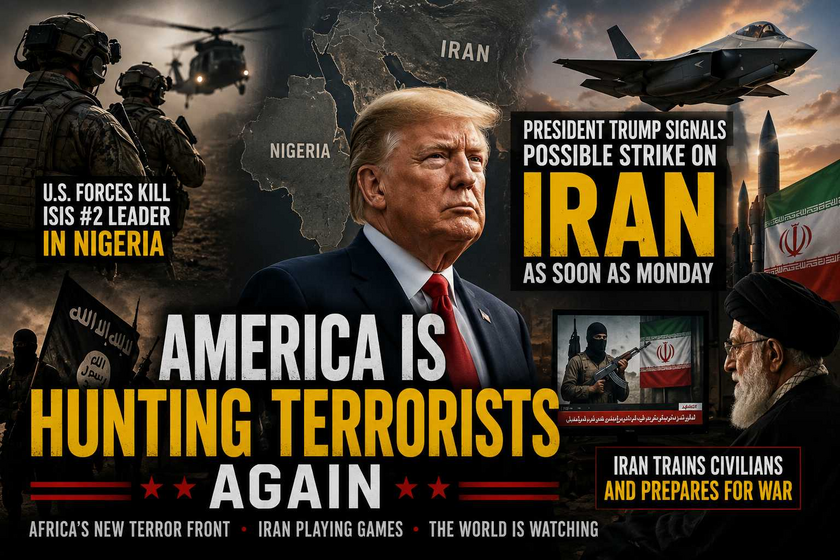
America Is Hunting Terrorists Again — And Iran May Be Next

While most Americans were grilling burgers, watching baseball, or trying not to think about geopolitics for five minutes, the United States quietly carried out a major counterterrorism operation in Nigeria—and at the same time, all signs point to President Trump preparing for another possible strike on Iran. Those two stories may seem unrelated.

They’re not. They tell us a lot about where American foreign policy is headed, how terrorism has evolved, and why the Middle East may be far from finished exploding.

If you missed the LIVE, you can watch it HERE

The U.S. Just Took Out One of the World’s Top Terror Leaders

President Trump announced that U.S. special operations forces, working alongside Nigerian forces, eliminated Abu Bal al-Minuki—the number two global leader of ISIS.

Or as I jokingly call them on YouTube so I don’t get demonetized: the “Black Pajama Boys.”

Now before you shrug this off as another headline from some faraway place most Americans can’t find on a map, understand what this means. ISIS never really disappeared. We destroyed their caliphate during the first Trump administration. We crushed their territorial control in Syria and Iraq. But the organization itself survived. The brand survived. And now the center of gravity for ISIS activity has shifted into Africa.

That’s where the war is.

Africa Is Becoming the New Terror Front

Most Americans still think of terrorism through the lens of Iraq and Afghanistan. That’s outdated thinking. Today, the majority of ISIS activity is concentrated across parts of Africa—especially Nigeria and the surrounding region. And the violence there is horrific. Last year alone, more than 3,600 Christians were murdered in Nigeria.

Three thousand six hundred people slaughtered largely because of their faith. Some of that violence comes from ISIS-linked groups. Much of it comes from radicalized Fulani militants who attack Christian villages, burn homes, seize farmland, and massacre civilians. I’ve been to Nigeria. I’ve seen the fear people live under there. And while the world’s media obsesses over American politics 24 hours a day, entire Christian communities are being erased in parts of Africa with barely a mention.

Why America Should Care

There’s a growing mindset in America that says:
“America First means America Only.”

I disagree. If we have the ability to stop terrorists before they spread globally, we should do it. Not because we’re the world’s babysitter. But because history shows that when terrorists are allowed to build safe havens overseas, eventually Americans die too. That’s not theory. That’s exactly what happened before 9/11. And ISIS has adapted. Instead of focusing solely on controlling territory, they’re now investing heavily in online radicalization.

They recruit lone wolves.
They inspire attacks remotely.
They spread propaganda globally.

That means the battlefield isn’t just Nigeria anymore. It’s your phone.

Iran Is Playing Games — And Trump Knows It

At the same time all this is happening, the Iran situation is getting more dangerous by the day. President Trump openly admitted that negotiations with Iran keep collapsing because Tehran repeatedly agrees to terms… and then pretends the conversation never happened. That’s because Iran was never negotiating in good faith to begin with. They’re stalling. Trying to preserve their nuclear capability while avoiding another American strike.

And meanwhile, the regime is preparing its own population for possible war. Iran reportedly sent text messages asking citizens whether they’d be willing to “martyr themselves for the regime.” Think about how insane that is. At the same time, Iranian state television has literally been airing AK-47 training sessions for civilians—although judging by the footage, some of these guys shouldn’t be trusted with a Nerf gun. One instructor accidentally fired a round through the ceiling of the studio during a live demonstration.

Funny? Sure. Also revealing. Because it tells you the regime is nervous.

The Strait of Hormuz Is the Real Red Line

A lot of people think this conflict is mainly about nuclear weapons. It’s not. The real issue is control of the Strait of Hormuz—the narrow waterway through which a huge percentage of the world’s oil flows. Iran wants control over it. The rest of the world cannot allow that. That’s why the U.S. still has major naval forces positioned in the region right now, even after the ceasefire. And according to multiple reports, additional military strikes could happen as soon as this week.

Here’s the Bigger Picture

What we’re watching right now is a transition. America appears to be moving back toward aggressive counterterrorism operations overseas while simultaneously preparing for the possibility of a larger regional conflict with Iran. And unlike the endless nation-building experiments of the past, these operations are increasingly:

  • precision-based,
  • intelligence-driven,
  • drone-supported,
  • and focused on eliminating threats before they metastasize.

That’s the future of warfare. But it also means the world is becoming more unstable—not less.

Final Thought

Here’s the reality nobody wants to admit:

The bad guys never stopped organizing.

ISIS adapted.
Iran stalled.
China maneuvered.
Russia escalated.
Terror groups spread into Africa.
And the world kept pretending everything was returning to normal.

It isn’t. The question isn’t whether America should engage with threats overseas. The question is whether we deal with them there… or wait until they show up here. Because history has already answered that question once. And it cost us thousands of lives.

Stay alert. Stay informed. And as always—keep your head on a swivel.
Read full Article
post photo preview
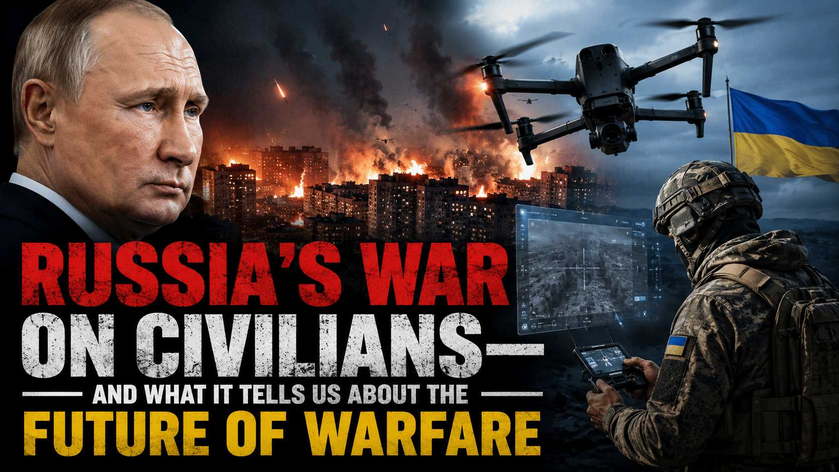
Russia’s War on Civilians—and What It Tells Us About the Future of Warfare

I don’t talk about Ukraine as much as I used to. Not because it’s not important—but because a lot of people have tuned it out. It’s been going on long enough that it’s faded into the background noise for most Americans. That’s a mistake. Because what’s happening in Ukraine right now is a preview of the future of warfare—and it has direct implications for U.S. national security.

Let me explain.

(If you missed the LIVE, you can watch it HERE )

A War on Civilians, Not Soldiers

Russia just launched one of the largest aerial assaults of the entire war—over 1,500 drones and missiles in about a 30-hour period.

Think about that for a second. Thirty straight hours of air raid sirens. Explosions. Families hiding in basements. Kids wondering if their apartment building is next. And here’s the part that matters most: these weren’t primarily military targets. Russia is targeting civilians—apartment buildings, infrastructure, everyday people. That’s not accidental. It’s intentional. It’s terrorism as strategy.

I’ve stood in the rubble of those buildings. I’ve seen what’s left behind. One image that still sticks with me is a little girl’s pet turtle—blown out of an apartment after a missile strike, painted toenails and all. They never found the girl. That’s what this war looks like on the ground.

Ukraine Fights a Different Kind of War

Now contrast that with how Ukraine is fighting. While Russia is hitting civilians, Ukraine is targeting oil refineries, aircraft, radar systems—military infrastructure that actually affects the war effort. That difference matters. Ukraine isn’t trying to terrorize the Russian population. They’re trying to degrade Russia’s ability to wage war. That’s the difference between a military campaign and a campaign of intimidation. And it’s one of the reasons Ukrainian morale is holding strong—even under constant attack.

The Drone War Has Changed Everything

If you want to understand where warfare is heading, don’t look at tanks. Look at drones. Ukraine is now operating at a level that frankly should concern every military planner in the United States. They’ve figured out how to:

  • Launch drones remotely from hidden platforms
  • Fly them from anywhere in the world
  • Strike deep inside enemy territory
  • Automate large portions of the battlefield

We’re talking about unmanned ground vehicles evacuating wounded soldiers. Armed robotic systems holding defensive positions. Drone boats launching missiles and aerial drones from the sea. At one point, a single unmanned ground vehicle reportedly held off a Russian unit for over a month.

And here’s the uncomfortable truth: the United States is behind in this area. We’re now sending personnel to learn from the Ukrainians.

Russia Is Bleeding Itself Out

Despite the massive attacks, Russia is not winning this war. They’re losing soldiers at a staggering rate—far faster than they can replace them. And that matters long-term. Wars aren’t just about territory. They’re about demographics, economics, and sustainability. Russia is burning through its future—its young men, its workforce, its ability to project power decades from now. Meanwhile, Ukraine is fighting like a country that knows it has no choice. Because for Ukraine, this isn’t a war of choice. It’s an existential fight. If they lose, their country ceases to exist.

Propaganda Is a Battlefield Too

Another piece of this war that doesn’t get enough attention is information warfare. There’s a massive amount of Russian propaganda circulating—especially on social media—trying to paint Ukraine as the aggressor or muddy the waters about what’s actually happening. But the basic facts haven’t changed:

Russia invaded Ukraine.
Ukraine didn’t invade Russia.

Everything else spins out from that reality.

Why This Matters to You

You might be thinking, “Okay, but why should I care?”

Here’s why.

Only for Supporters
To read the rest of this article and access other paid content, you must be a supporter
Read full Article
post photo preview
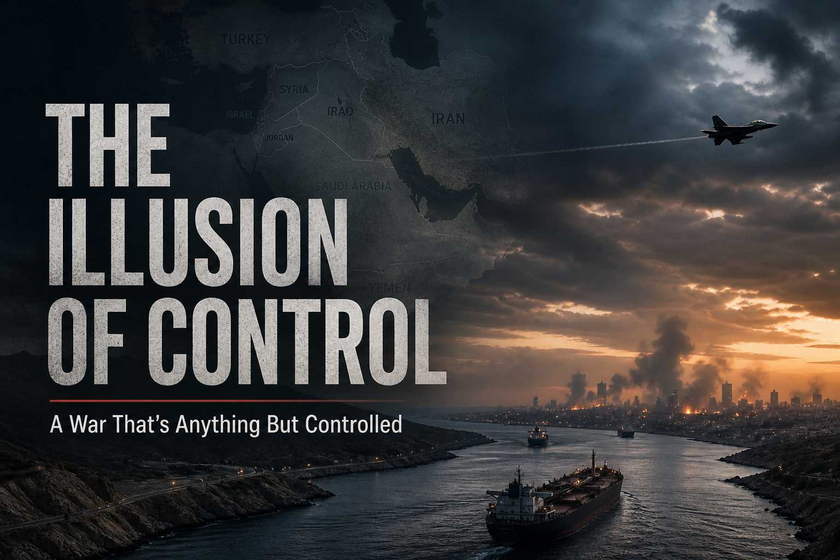
The Illusion of Control in a War That’s Anything But Controlled

When you spend enough time around conflict—real conflict, not the sanitized version filtered through headlines—you begin to recognize a pattern that most people miss.

At the beginning of almost every war, there is a moment when one side appears to be in control. The strikes are precise, the objectives are clear, and the narrative is simple enough for public consumption. It looks organized. It looks deliberate. It looks like someone, somewhere, has a plan. But that moment never lasts. And what we are seeing right now is the beginning of that shift.

What Looks Stable… Usually Isn’t

From a distance, the situation appears manageable. Military assets are being deployed with precision, targets are being hit, and responses are being measured—at least on the surface. But stability in war is often an illusion. Because what you’re really looking at is not control—it’s timing. Timing between actions. Timing between responses. Timing between decisions that haven’t yet been made. And once that timing breaks down, everything changes. That’s when a conflict stops being predictable and starts becoming dangerous in ways that no one can fully control.

The Problem With Modern Warfare

One of the biggest misconceptions people have about modern conflict is that technological superiority guarantees a clean outcome. It doesn’t. What it does is create the appearance of control. Precision weapons, intelligence gathering, satellite surveillance—all of these tools allow a military to operate with incredible effectiveness in the early stages. But they do not eliminate uncertainty. In many ways, they simply push it further down the timeline. Because war is not just about destroying targets. It’s about influencing behavior. And behavior is far harder to predict than infrastructure.

Only for Supporters
To read the rest of this article and access other paid content, you must be a supporter
Read full Article
See More
Available on mobile and TV devices
google store google store app store app store
google store google store app tv store app tv store amazon store amazon store roku store roku store
Powered by Locals