



Chuck Holton
Politics • Culture • News
Chuck Holton is an American war correspondent, published author, and motivational speaker.
Interested? Want to learn more about the community?

When we grasp Scripture through the Holy Spirit's perspective, the Bible becomes the most exciting, faith-building and life-changing book. For all of God's word fits together perfectly, and is always complimentary in it's revelation!

So Lord Jesus, please open our minds to what You desire to communicate to us today from Your word. For Your word is truth, and it sanctifies us. Help us to wait on You - being ever humble, patient and prayerful as we diligently study Your Scriptures. For You are our one and only Heavenly Teacher. We acknowledge our inadequacy before You, and trust completely in Your sufficiency.
Amen and amen.

Interested? Want to learn more about the community?
What else you may like…
Videos
Podcasts
Posts
Articles
Pray for the Kurdish people in Syria

A great evil is unfolding across Syria as forces loyal to Ahmed Al Sharaa attack the Kurdish people in eastern Syria. Jihadi fighters are now unarmed and are allying themselves with ISIS once again, killing and beheading civilians in the streets. They also released thousands of ISIS fighters from prisons that were being guarded by the Kurds.

00:02:28
Iranian Regime Killing Hundreds of Protesters

Here's another one I can't show you on Youtube:

00:00:59
Great Video Out of the White House

This administration definitely has it's social media game locked in. Love them showing Maduro blustering and ....well...

00:01:01
Episode 622 - Field Producer Dennis Azato and Chuck Reminisce

My erstwhile field producer and cameraman Dennis Azato has accompanied me on ten years of adventures across the globe. Today he joins me in Ukraine and we spend some time remembering our many trips together.

Episode 622 - Field Producer Dennis Azato and Chuck Reminisce
Fire and Ice - Check out Chuc'k's Hike in Iceland
January 23, 2026

Bongino is back! The collective sigh...

post photo preview
January 22, 2026

Hi Chuck,
I received an update today from Dave Eubanks of FBR. You may already be aware of this, but passing it on just in case.

“January 21, 2026
A Free Burma Rangers team is currently in Qamishli city in northern Syria, where thousands of Kurdish families have been displaced, many for the third time, after violent attacks from the Syrian government forces.
Now Hasakah, a gateway city to many Kurdish, Christian, and Yezidi areas, is being attacked. If this continues to escalate, it may mean the death of Kurds, Christians, and Yezidis who are living in Syria.”

Bless you, Chuck, for being our eyes and ears in this dangerous world.
Kristin Elkinton
Waxhaw, NC

post photo preview
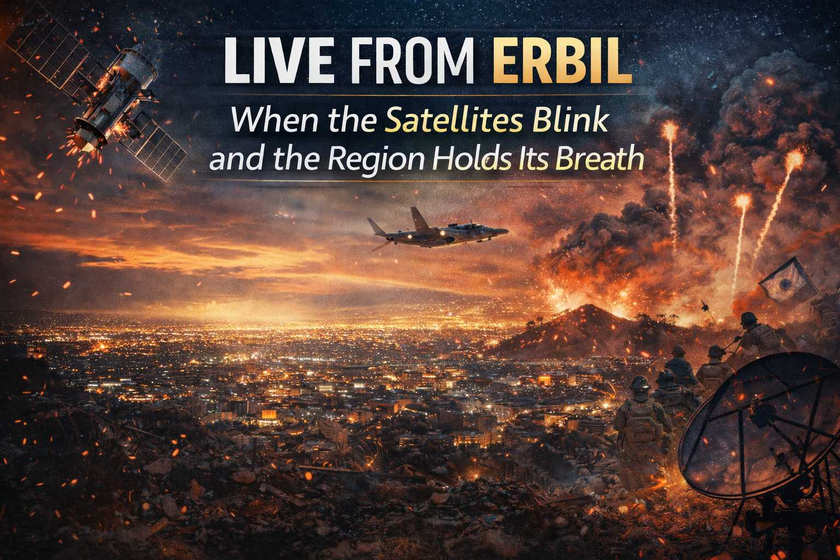
Live From Erbil: When the Satellites Blink and the Region Holds Its Breath

There are places in the world where the air feels different—not because of altitude or humidity, but because history is leaning forward, listening for the next sound, and everybody can feel it in their bones.

Tonight, I’m coming to you from Erbil, up here in northern Iraqi Kurdistan, not far from the Iranian border, and I’m sitting alongside one of my favorite people on planet Earth, my friend Ibrahim—one of the greatest Kurds you’ll ever meet, the kind of guy who has seen enough betrayal to make most men bitter, and yet somehow still has the courage to look you in the eye and talk about hope like it’s a real thing.

We were fighting the Starlink connection when we went live, and if the signal froze, if the audio hiccuped, if the feed stuttered and jumped, it wasn’t because we were being dramatic—it’s because the internet across this region is in bad shape right now, and I suspect it’s connected to what’s happening next door in Iran, where the regime has been trying to silence the country by shutting down the digital oxygen that keeps people connected to the outside world, because tyrants always do the same thing when they start losing control: they cut the wires, they darken the streets, and they hope the world will look away.

But the world isn’t looking away, not tonight.

And neither are we.


The Rumors Out of Iran Are Horrifying—and the Regime Is Acting Like a Dying Animal

The word coming out of Iran right now is brutal, and I’m going to be careful here because some of the numbers are hard to corroborate in real time, especially when the regime is jamming communications and the fog of fear is thick, but what we are hearing—what people are whispering, what sources are repeating, what the Iranian people themselves are trying to scream through the cracks—is that the regime has been massacring civilians in staggering numbers, to the point where some claims are approaching tens of thousands and even more, and whether those figures are precise or inflated in the chaos, the direction of the story is unmistakable: the killing is accelerating, not slowing down.

And it feels, from the outside looking in, like the Islamic Republic has reached that stage where it’s no longer trying to govern—it’s trying to survive, and it’s doing it the only way it knows how, by lashing out, by killing its way out of the problem, like a cornered animal that can’t imagine surrender because surrender would mean accountability, and accountability would mean the end.
That’s the atmosphere right now.

That’s the temperature of this moment.

And into that moment, President Trump has made statements—big statements—about help being on the way, statements he has reiterated, and meanwhile the people of Iran are begging him to intervene, not because they suddenly trust America or love the West, but because they have reached that level of desperation where they’ll grab onto any lifeline, even one that might cut their hands.

But here’s the thing: for all the talk, it has looked like the United States was not prepared to strike when those words were first spoken.

That gap—between “help is on the way” and the reality of “nothing has happened yet”—is where hope turns into rage, and where people start dying in the dark while the world debates.


This Is Not Political Posturing: Look at the Fuel

Now, I want you to understand something, because there’s a lot of noise online and it’s easy to get cynical and say, “Oh, this is just chest-thumping,” or “This is just another round of saber-rattling,” or “This is a bluff.”
But when you’re looking at military posture, one of the biggest telltale signs isn’t the speeches, and it isn’t even the ships—it’s fuel.

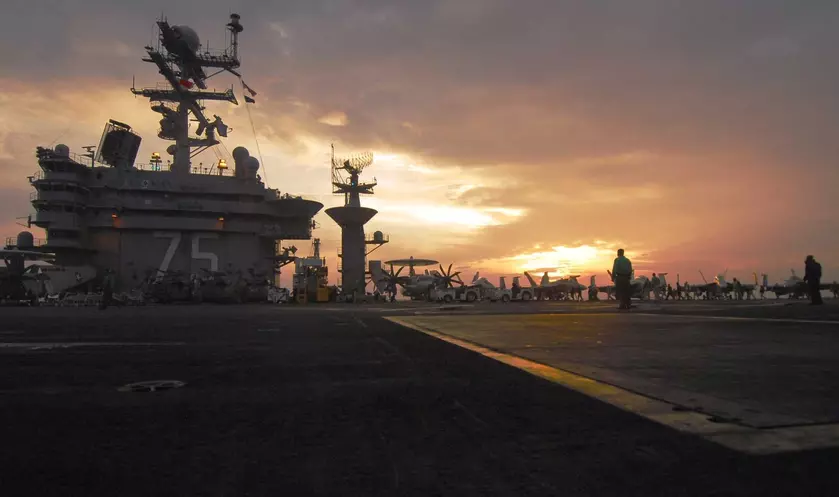
Right now, the United States has amassed more than 5.37 million pounds of fuel offload capacity in the region, and that should make your eyebrows go up, because you don’t stage that kind of refueling capability unless you’re preparing for sustained operations, the kind of operations where aircraft aren’t just launching once, dropping a payload, and going home, but where they are cycling, returning, refueling, and going right back in again until the mission is complete.
Only for Supporters
To read the rest of this article and access other paid content, you must be a supporter
Read full Article
post photo preview
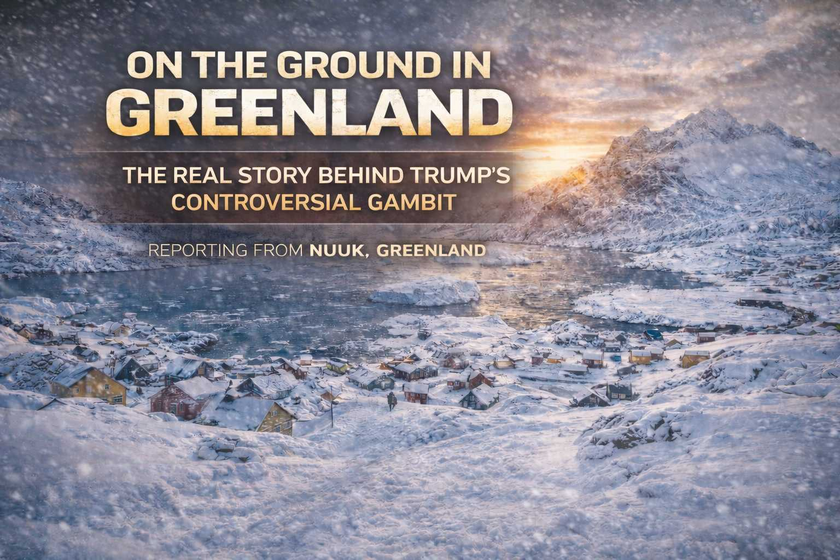
I Went to Greenland. The Truth About Trump's Claim

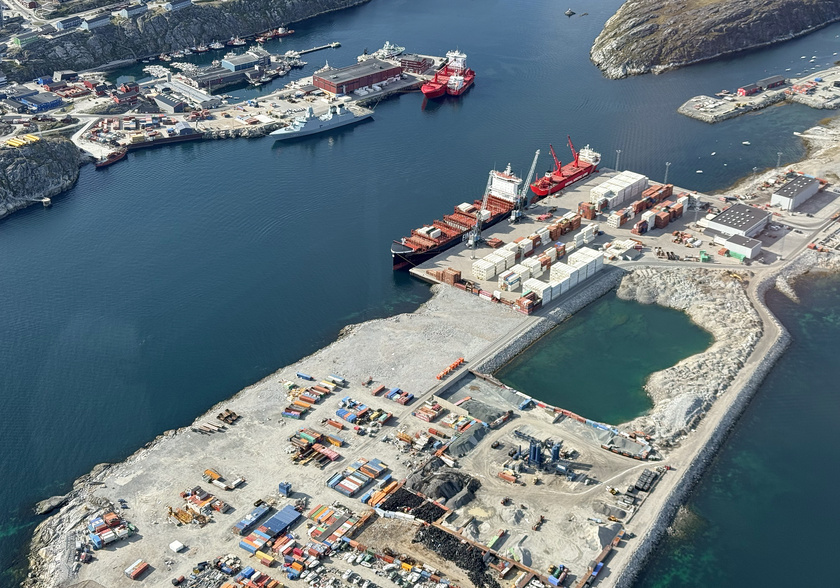
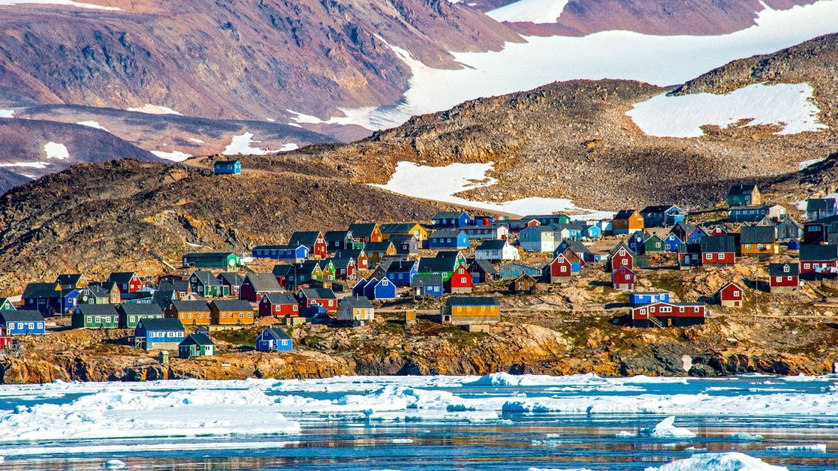
I stepped off the plane into Nuuk expecting “cold,” the way you expect cold when you’ve looked at a weather app and seen a number with a minus sign attached, but Greenland doesn’t really do cold as a temperature so much as it does cold as a condition—something that presses against your cheeks, creeps into your gloves, and makes the simplest choices feel like strategy, like whether you can afford to stop walking long enough to film a shot without your hands turning into useless bricks.

The first thing that hits you is how close everything feels to the edge of the world: the ocean is right there, the mountains loom like the backdrop of a survival documentary, and the snow doesn’t just “fall,” it moves sideways, drifting and pooling into ridges that force you off sidewalks and into the kind of half-plowed, half-forgotten paths where you start making peace with the idea that you might have to cut between somebody’s house just to find your way back to wherever “home” is tonight.

I walked down to the water because I wanted to see what Nuuk looks like the way Nuuk sees itself—facing outward, facing the sea—and out there, unbelievably, there was a guy in a boat, just working the icy water like it was any other day, which is the kind of detail that makes you realize how quickly humans can normalize the extraordinary when the extraordinary is what they grew up with.

And then there were the icebergs.

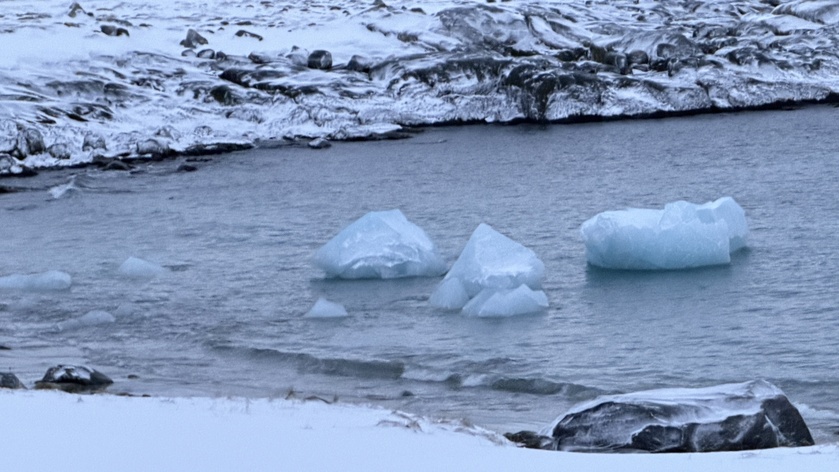
Not the dramatic, movie-poster ones you think of when someone says “iceberg,” but these smaller pieces that look like they broke off something much bigger and drifted in close, like the Arctic casually scattering fragments of itself along the shore for you to study up close; some of them were the size of a truck, which still qualifies as “tiny” here, and some were smaller still, but the color is what keeps pulling your eyes back—this improbable, almost luminous blue that looks like it belongs in a gemstone, not in a chunk of frozen seawater sitting on a beach.

It was around sixteen degrees when I filmed that first clip—sixteen Fahrenheit—and people kept telling me, almost cheerfully, that I was lucky, because this was “pretty warm,” and that’s the kind of local optimism you either admire or resent depending on how far into your gloves the cold has crawled.

But I didn’t come to Greenland just to confirm that it is, in fact, Greenland.

I came because I wanted to see what it feels like in a place when the President of the United States starts talking about that place the way a developer talks about an empty lot, or the way a bully talks about a smaller kid’s lunch money, and I wanted to hear it from the people who live here—people who have never had to wonder whether America is a friend, because the assumption has always been yes, of course, that’s what allies are.

Only for Supporters
To read the rest of this article and access other paid content, you must be a supporter
Read full Article
post photo preview
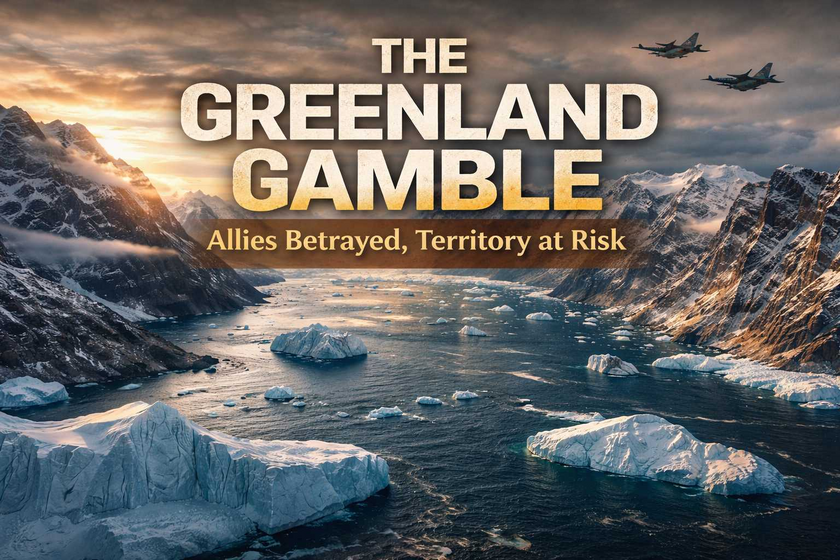
Comprehensive Report: Why Denmark and Greenland Are Not America’s Enemies


Ah, yes, the classic foreign policy move: eye a strategic chunk of ice bigger than Texas, declare it must be yours “one way or another,” and then act surprised when your long-time NATO buddy starts looking at you like you’re the ex who won’t stop texting at 3 a.m. President Trump’s revived obsession with acquiring Greenland—first floated as a cheeky real-estate deal in 2019, now upgraded to vague military-threat territory in his second term—has managed to turn a reliable ally into a diplomatic headache. But let’s be clear: Denmark and Greenland are emphatically not America’s enemies. In fact, they’re the kind of allies who show up when it counts, bleed for the cause, and then get rewarded with public musings about forced annexation. Charming.


The Post-9/11 Loyalty Test: Denmark Actually Showed Up


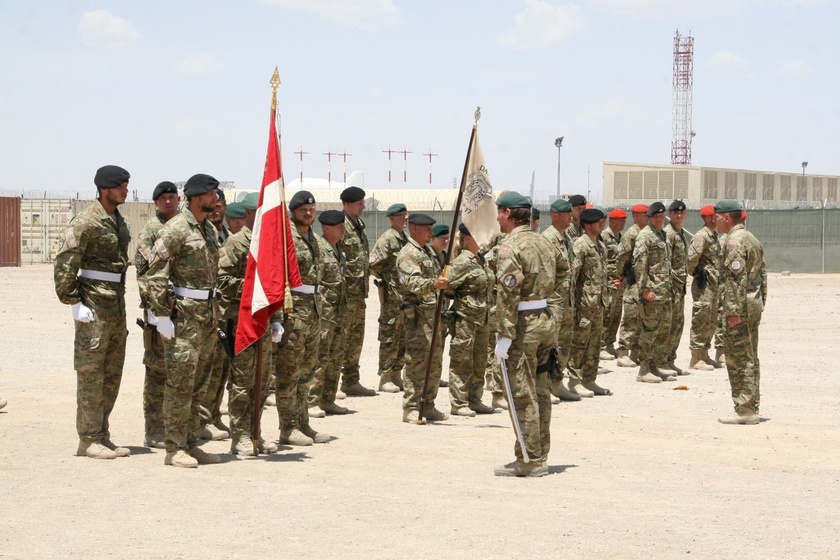
When the towers fell on September 11, 2001, NATO invoked Article 5 for the first (and so far only) time in its history. An attack on one is an attack on all. The United States called, and Denmark—tiny, prosperous, usually more known for pastries than combat—didn’t just RSVP. They deployed troops to the sharp end.
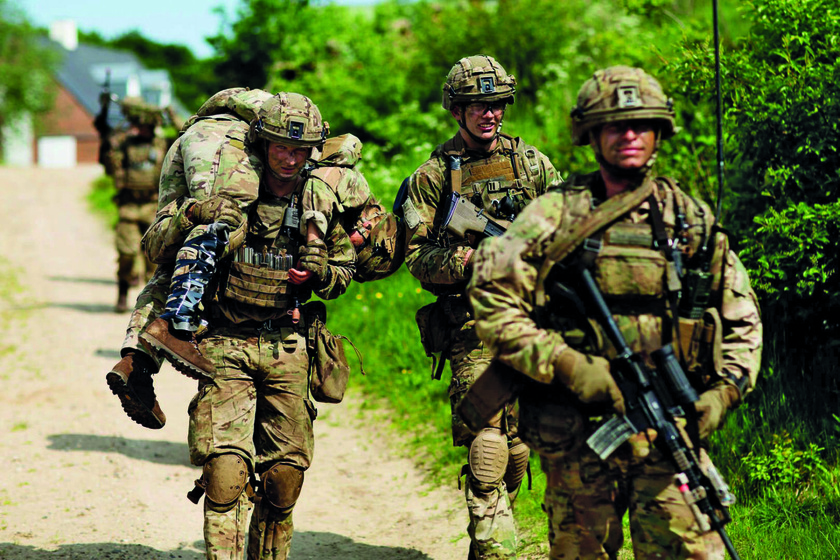
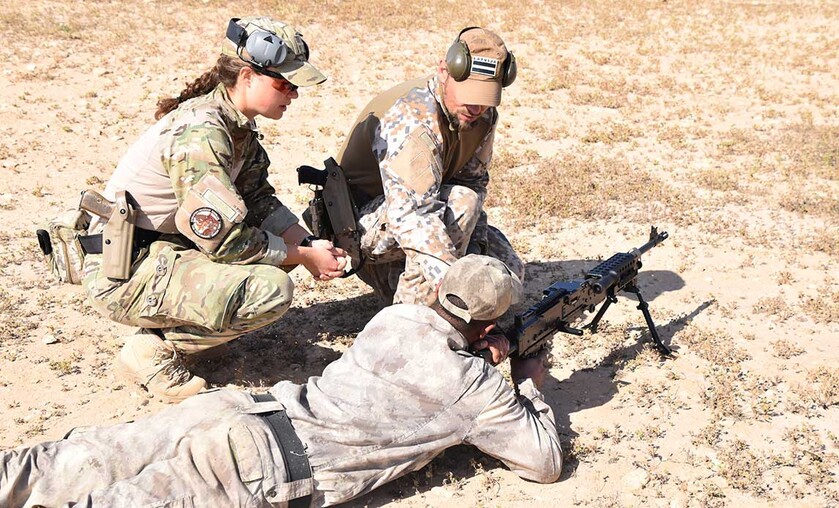
Denmark sent around 9,500 personnel to Afghanistan between 2002 and 2013, mostly in the brutal Helmand Province as part of the British-led task force. They fought in some of the war’s nastiest spots, suffered ambushes, IEDs, and prolonged sieges (remember Musa Qala in 2006?). The result? 43 Danish soldiers killed in Afghanistan alone—the highest per-capita loss of any NATO ally, even edging out the United States in proportional sacrifice for a nation of under 6 million people. That’s not “token support.” That’s putting skin in the game.
And it didn’t stop there. Denmark was one of the few countries (and the only Scandinavian one) to join the U.S.-led invasion and occupation of Iraq, deploying forces despite domestic controversy. Another 8 Danish soldiers died in Iraq. In total, over 50 Danish troops never came home from these post-9/11 operations.
President Obama once publicly thanked Denmark for its “extraordinary contributions” in Helmand, noting they operated “without caveat” and took “significant casualties.” Yet here we are, years later, with threats to seize Greenland dangling like a bad punchline. If that’s how we treat allies who literally died defending our collective security, no wonder the rest of NATO is side-eyeing the whole thing.


The Greenland Reality Check: Already a Cooperative Arrangement


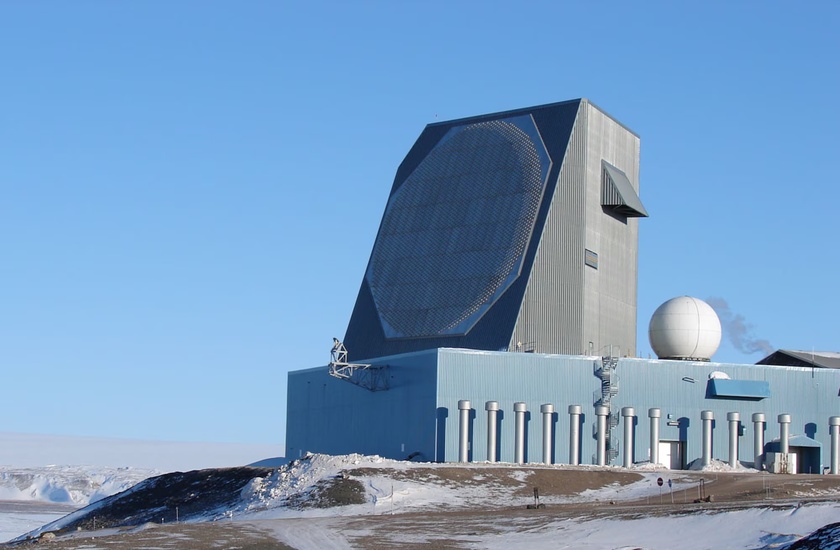
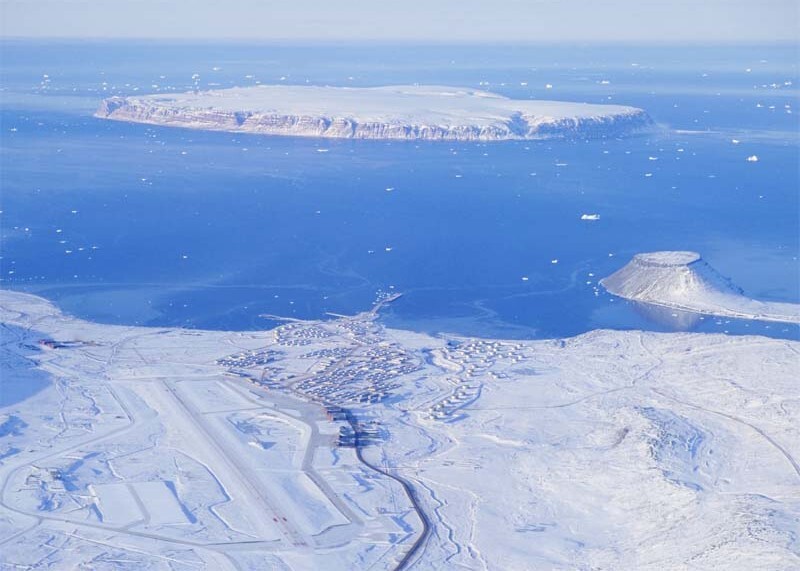
Greenland isn’t some hostile foreign outpost—it’s Danish sovereign territory, but the U.S. has had a cozy military foothold there since World War II. The 1951 Defense of Greenland Agreement lets American forces operate bases like Pituffik Space Base (formerly Thule Air Base), with radar systems crucial for missile defense and Arctic monitoring.

U.S. planes fly over, land, and conduct operations with Danish cooperation—no need for a takeover when you already have the keys.


Denmark has consistently facilitated U.S. access while balancing Greenlandic self-governance. Recent years have seen upgrades to early-warning systems tied to ballistic missile defense, plus joint economic and environmental cooperation. In short: the current setup works for American national security interests without anyone needing to wave invasion threats around. Why risk blowing up a perfectly functional alliance over something that’s already half yours?


The Backfire Potential: Bravado Meets Reality


Trump’s approach—bluster first, details later—might play well in rally crowds, but it’s textbook overreach when directed at a NATO ally. Danish leaders (and Greenlanders, who poll at ~85% against joining the U.S.) have called it “absurd,” with warnings that any military move would spell “the end of NATO.” Other European allies are rallying behind Denmark, boosting military exercises in Greenland as a not-so-subtle signal. Threatening to invade a partner that invoked Article 5 for us, sent troops to our wars, and hosts our Arctic bases? That’s not “winning” the negotiation—it’s handing Russia and China the propaganda gift of a fractured West on a silver platter.


In the end, Denmark and Greenland aren’t enemies. They’re the friends who had your back when it was dangerous, expensive, and unpopular. Treating them like a hostile takeover target is not just bad strategy—it’s hilariously tone-deaf. Maybe next time, try diplomacy instead of threats. Or at least buy them dinner first. After all, they’ve already paid in blood.

Read full Article
See More
Available on mobile and TV devices
google store google store app store app store
google store google store app tv store app tv store amazon store amazon store roku store roku store
Powered by Locals