
Chuck Holton
Politics • Culture • News
Live From Erbil: When the Satellites Blink and the Region Holds Its Breath
January 24, 2026
post photo preview

There are places in the world where the air feels different—not because of altitude or humidity, but because history is leaning forward, listening for the next sound, and everybody can feel it in their bones.

Tonight, I’m coming to you from Erbil, up here in northern Iraqi Kurdistan, not far from the Iranian border, and I’m sitting alongside one of my favorite people on planet Earth, my friend Ibrahim—one of the greatest Kurds you’ll ever meet, the kind of guy who has seen enough betrayal to make most men bitter, and yet somehow still has the courage to look you in the eye and talk about hope like it’s a real thing.

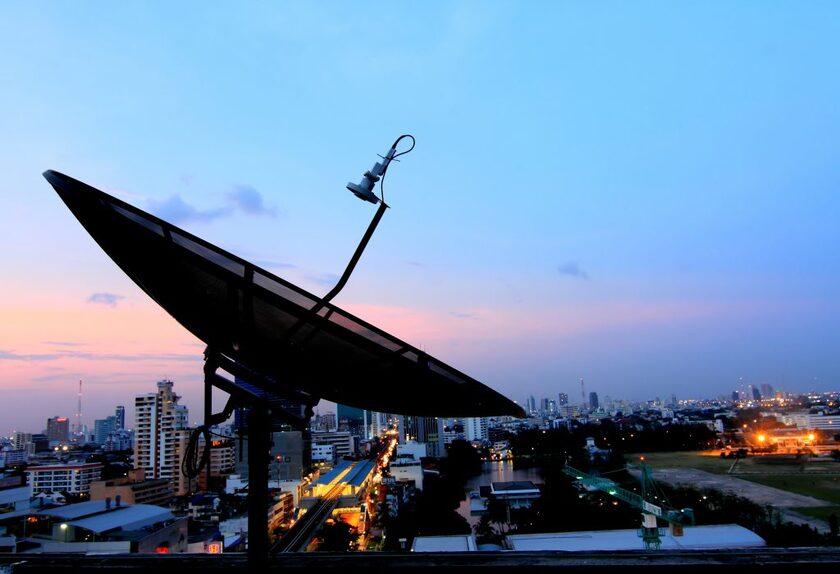
We were fighting the Starlink connection when we went live, and if the signal froze, if the audio hiccuped, if the feed stuttered and jumped, it wasn’t because we were being dramatic—it’s because the internet across this region is in bad shape right now, and I suspect it’s connected to what’s happening next door in Iran, where the regime has been trying to silence the country by shutting down the digital oxygen that keeps people connected to the outside world, because tyrants always do the same thing when they start losing control: they cut the wires, they darken the streets, and they hope the world will look away.

But the world isn’t looking away, not tonight.

And neither are we.


The Rumors Out of Iran Are Horrifying—and the Regime Is Acting Like a Dying Animal

The word coming out of Iran right now is brutal, and I’m going to be careful here because some of the numbers are hard to corroborate in real time, especially when the regime is jamming communications and the fog of fear is thick, but what we are hearing—what people are whispering, what sources are repeating, what the Iranian people themselves are trying to scream through the cracks—is that the regime has been massacring civilians in staggering numbers, to the point where some claims are approaching tens of thousands and even more, and whether those figures are precise or inflated in the chaos, the direction of the story is unmistakable: the killing is accelerating, not slowing down.

And it feels, from the outside looking in, like the Islamic Republic has reached that stage where it’s no longer trying to govern—it’s trying to survive, and it’s doing it the only way it knows how, by lashing out, by killing its way out of the problem, like a cornered animal that can’t imagine surrender because surrender would mean accountability, and accountability would mean the end.
That’s the atmosphere right now.

That’s the temperature of this moment.

And into that moment, President Trump has made statements—big statements—about help being on the way, statements he has reiterated, and meanwhile the people of Iran are begging him to intervene, not because they suddenly trust America or love the West, but because they have reached that level of desperation where they’ll grab onto any lifeline, even one that might cut their hands.

But here’s the thing: for all the talk, it has looked like the United States was not prepared to strike when those words were first spoken.

That gap—between “help is on the way” and the reality of “nothing has happened yet”—is where hope turns into rage, and where people start dying in the dark while the world debates.


This Is Not Political Posturing: Look at the Fuel

Now, I want you to understand something, because there’s a lot of noise online and it’s easy to get cynical and say, “Oh, this is just chest-thumping,” or “This is just another round of saber-rattling,” or “This is a bluff.”
But when you’re looking at military posture, one of the biggest telltale signs isn’t the speeches, and it isn’t even the ships—it’s fuel.

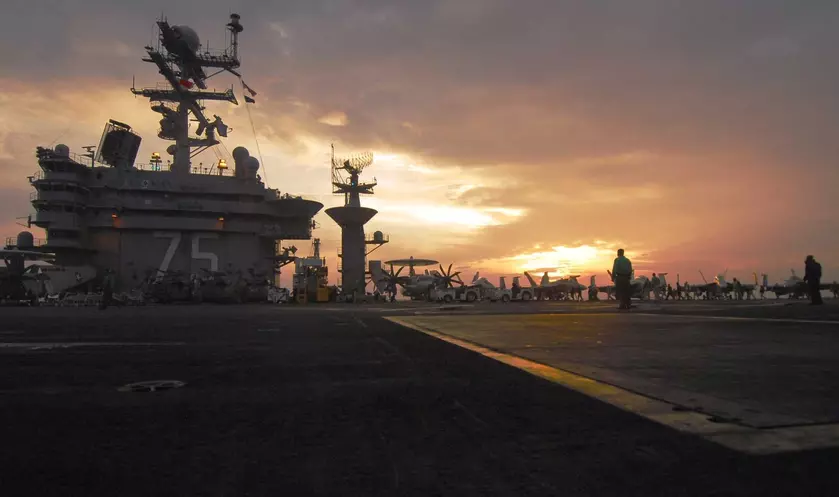
Right now, the United States has amassed more than 5.37 million pounds of fuel offload capacity in the region, and that should make your eyebrows go up, because you don’t stage that kind of refueling capability unless you’re preparing for sustained operations, the kind of operations where aircraft aren’t just launching once, dropping a payload, and going home, but where they are cycling, returning, refueling, and going right back in again until the mission is complete.


Only for Supporters
To read the rest of this article and access other paid content, you must be a supporter
24
What else you may like…
Videos
Podcasts
Posts
Articles
Shabbat Shalom from Israel

If this is what we're fighting for, I'm good with that.

00:02:20
Tim Miller on Cultural Decay in America

Check out this great interview Tim Miller did on FOX the other day.

00:04:10
Bringing dignity to imprisoned women

I’m in Cartagena and yesterday we went to the women’s prison here to bring some much-needed necessities to the ladies and give them the gospel of the good news of Jesus Christ. It was a powerful time. I’m very glad I got a chance to do this. Thank you to all of you who donated to help these women. They are truly “the least of these “.

00:00:19
Episode 622 - Field Producer Dennis Azato and Chuck Reminisce

My erstwhile field producer and cameraman Dennis Azato has accompanied me on ten years of adventures across the globe. Today he joins me in Ukraine and we spend some time remembering our many trips together.

Episode 622 - Field Producer Dennis Azato and Chuck Reminisce

When I was 19, I jumped into the airport a few miles from where I am right now in Camaron, Panama, during Operation Just Cause. Back then, I was here as a young Ranger. Now I am at a resort down the road. Hard to believe how life works. I ended up moving and raising my family in Panama. A lot happened between those two points, but it is always strange being at this resort so close to where it all started.

We are all partakers of a heavenly calling, in Christ Jesus (Hebrews 3:1). This isn't only about our future existence, but also our present reality, since we're seated with Him now, in the heavenlies; i.e. the spirit realm (Ephesians 2:6). For our new (spiritual) nature reflects the quality and character of His heavenly kingdom (John 3:3-7); for we've been created anew according to the image of the Great King Himself (Colossians 3:9-11). As He has also said (paraphrasing), rejoice, for your names are written in Heaven (Luke 10:19-20); and likewise, Paul affirmed that our citizenship isn't of this world but is of Heaven's dominion (Philippians 3:20-21).

For these reasons, and many many more, we are commanded:

"If then you were raised with Christ, seek those things which are above, where Christ is sitting at the right hand of God. Be mindful of things above, not on things on the earth. For you died, and your life has been hidden with Christ in God."(Colossians 3:1-3)

The Iran War Has Reached an Inflection Point
The battlefield is shifting, the pressure on Tehran is intensifying, and the real fight now may be over oil, internal collapse, and what comes after the regime.

Over the last two weeks, we have seen the war expand far beyond a limited exchange of strikes and counterstrikes. What we are witnessing now is not simply a campaign to degrade Iranian military capability. It is becoming, in very real terms, a campaign designed to push the regime toward collapse and replacement. That does not mean the outcome is guaranteed, and it certainly does not mean the road ahead will be simple, but the center of gravity in this war is clearly changing.

For days now, I have been listening to what I call the black-pill conservatives, the people who always seem to predict disaster, who have spent this conflict insisting that Israel is on the verge of destruction, that the United States is walking blindly into catastrophe, and that any effort to break the back of the Iranian regime will end in humiliation. I have very little patience for that kind of fatalism, especially when it is delivered from a safe distance by men who have no skin in the game and no real feel for what is happening on the ground. That is why I wanted to hear directly from somebody who is actually there, so I reached out to Chris Mitchell, the Jerusalem bureau chief for CBN, and asked him to give me a quick, straightforward assessment of what life looks like in Israel right now.

What Chris described was not an image of a country collapsing under unbearable pressure. He described a nation that is still taking fire, still hearing sirens, still seeing interceptions overhead, and still dealing with shrapnel falling dangerously close to homes and historic neighborhoods, but he also described a society that remains remarkably resilient. The missile volume is down from where it was at the outset of the war, even though the attacks have not stopped. Interceptions continue over Jerusalem, debris still lands in populated areas, and cluster munitions remain a very real danger, but the spirit of the Israeli people has not broken. In fact, the mood he described was exactly what you would expect from a country that understands the stakes. Israelis do not want this war ended prematurely. They want it prosecuted to a real conclusion, one in which the regime in Tehran is either removed or reduced to the point that it no longer poses a threat to Israel or to its neighbors.

That matters, because there are a great many people online trying to sell the fantasy that Israel is secretly being devastated, that casualty numbers are being hidden, and that the public is on the verge of demanding surrender. Chris dismissed that outright, and from everything else I’m seeing, he is right to do so. Israel has taken some damage, and every death is a tragedy, but this idea that the country is being brought to its knees is nonsense. He pointed out something else that is worth paying attention to as well: the Israeli stock market is doing extremely well. That may sound like a side note, but it is not. Markets are not perfect moral indicators, but they do tell you something about confidence, and right now confidence inside Israel is not collapsing. It is growing.

The reason for that confidence is straightforward. Israel and the United States are not merely reacting anymore. They are shaping the battlefield, and President Trump in particular has spent the last twenty-four hours sending a very clear message to Tehran that the war can still get far worse for them. Up until now, the overwhelming majority of the strikes have been focused on military targets, command nodes, launch sites, production capacity, and the infrastructure of repression. But Trump has made it clear that if Iran continues trying to choke off the Strait of Hormuz and weaponize the global energy market, the next phase of pressure may extend to critical infrastructure that the regime desperately needs in order to function.

Only for Supporters
To read the rest of this article and access other paid content, you must be a supporter
Read full Article
The Iran War Has Come Home
Terror attacks on American soil, new Iranian proxy activity in Europe, and a widening battlefield are changing the shape of this conflict

This conflict has already moved beyond the region where it began. It is no longer just a story about missile launches over Israel, strikes on Iranian military infrastructure, or tension in the Strait of Hormuz. It has now reached into Europe, and it has reached into the United States. In other words, the war has come home.

Over the last twenty-four hours alone, we saw two terror attacks inside the United States, both tied to jihadi lone-wolf actors. Investigators are still sorting out whether those incidents were coordinated in any meaningful operational sense, and my own suspicion is that they probably were not, but they occurred close enough together in time to create understandable concern. The larger point is not whether those two attacks were centrally directed from some bunker halfway around the world. The larger point is that the ideological fire has already spread, and we should expect more sparks before this is over.

One of those attacks took place at Old Dominion University, where a man entered an ROTC class, confirmed that it was indeed the ROTC class, and then opened fire on the instructor, Lieutenant Colonel Brandon Shaw. I do not name mass shooters, because I refuse to give evil free publicity, but I will absolutely name the victims, because they are the ones whose memory deserves honor. Lieutenant Colonel Shaw was a combat veteran who had served with the 82nd Airborne, and he was murdered in that classroom.

What happened next says a great deal about the kind of courage America desperately needs to recover. Rather than scatter, hide, and pray the violence would pass them by, the students in that room converged on the shooter. They tackled him, subdued him, and, in the words of the police chief, rendered him “no longer alive.” Additional reporting later indicated that one of the students had a pocketknife and used it repeatedly until the threat was over. It was brutal, and it was tragic, but it was also the kind of response that actually stops evil instead of cowering in the face of it.

I have said for years that I do not like the way we train people to respond to mass casualty events. We tell them to “run, hide, fight,” as though fighting were some regrettable last resort rather than the morally necessary thing to do when someone is murdering innocent people in front of you. My view is very simple: if a shooter is in a room full of people and he is the only one with a weapon, then every able-bodied man in that room should turn and converge on him. Yes, some people may get hurt in the process. That is awful, but if we make a habit of meeting evil with decisive force, we will eventually see less of it.

I remember once being on a military installation during the Obama years and seeing a poster instructing soldiers that in the event of a mass shooting they should run away, hide, and only fight as a last resort. Underneath all of that was the phrase, “Don’t be a hero.” I remember standing there thinking that if there is one place on earth where we ought to be cultivating heroism, it is on an American military base. The idea that we would tell our soldiers not to be heroes is the kind of moral confusion that only a very soft and very unserious culture could produce. At Old Dominion, those students rejected that message instinctively, and I thank God they did. May the memory of Lieutenant Colonel Brandon Shaw be a blessing.

The second attack took place at what was described as the nation’s largest synagogue, located in Detroit. An assailant rammed his vehicle into the entrance and opened fire through the windows at security personnel. In that case, the outcome was different for one very important reason: the synagogue had prepared. Security had recently conducted active-shooter training, they were already on high alert, and they were equipped to respond. The guards neutralized the threat before the attacker managed to kill anyone inside. That is not luck. That is what preparation looks like, and it is the kind of sober realism more institutions in the West are going to need in the months and years ahead.

According to the information I cited in the live, both of these attackers were American citizens, but both had been radicalized. In the case of the Old Dominion shooter, I noted that he had previously been arrested in 2013 for material support to ISIS, imprisoned, and then released in 2024. Whatever the final public record says about every detail in that case, the broader pattern is not hard to see. The threat is not theoretical, and it is not entirely external. Radicalization is already present inside our own borders, and wartime conditions only make that more dangerous.

Nor were these the only incidents worth noting. There was a thwarted synagogue attack in Norway, additional attacks in Israel including a stabbing and an attempted vehicle ramming, and the grim reality that in Israel these kinds of attacks have become so common they barely make international news anymore. That fact alone ought to tell us something. One side in this broader conflict has normalized violence against civilians to such a degree that the outside world has become numb to it. When attacks pile up in this many countries within such a short period of time, and when the same ideological slogans accompany them over and over again, it becomes absurd to pretend we do not recognize the common denominator.

Only for Supporters
To read the rest of this article and access other paid content, you must be a supporter
Read full Article
post photo preview
The Iran War Is Only Just Beginning

If you’ve been watching the headlines over the last couple of weeks, you might think the war with Iran is already winding down. The airstrikes have been relentless, the Iranian military has taken serious losses, and the regime’s ability to strike back has clearly been degraded. From a distance it might look like the coalition campaign has already accomplished most of its objectives.

But that would be a dangerous misunderstanding.

Because in reality, what we’ve seen so far is only the first phase of the war. And if the strategic assessments coming out of Washington and Tel Aviv are correct, the part that comes next could be far more complicated—and far more consequential.

For nearly two weeks now, coalition forces have been carrying out a massive air campaign against Iran’s military infrastructure. Missile launchers have been destroyed, naval vessels sunk, air defense systems wiped out, and command-and-control facilities systematically dismantled. The goal has been clear: strip Iran of the ability to project power across the region and cripple its ability to threaten Israel and America’s allies.

By most military measures, that part of the mission has been working.

Iran’s air defense network has been heavily degraded, allowing coalition aircraft to operate with increasing freedom inside Iranian airspace. Their naval forces have taken devastating losses, particularly in the Persian Gulf where several key vessels have been destroyed or damaged. And the missile launch systems that once allowed Iran to fire large salvos across the region are being hunted down and eliminated one after another.

From a tactical standpoint, the air campaign has been effective.

But wars are rarely decided by airpower alone.

The Real Strategic Problem

Airstrikes can destroy equipment. They can blind radar systems and cripple infrastructure. They can eliminate missile batteries and sink ships. But they cannot solve every problem that exists inside a conflict this complex.

The deeper challenge lies in what remains after those strikes.

Only for Supporters
To read the rest of this article and access other paid content, you must be a supporter
Read full Article
See More
Available on mobile and TV devices
google store google store app store app store
google store google store app tv store app tv store amazon store amazon store roku store roku store
Powered by Locals