










Chuck Holton
Politics • Culture • News
Chuck Holton is an American war correspondent, published author, and motivational speaker.
Interested? Want to learn more about the community?
Car Explosion Outside U.S. Embassy in Yerevan Sparks Fire, Investigation Underway

YEREVAN, Armenia — February 19, 2026
A vehicle exploded outside the U.S. Embassy in Yerevan, Armenia, this evening, prompting a significant fire and emergency response from local authorities, according to multiple eyewitness reports and local media.

Around 6:00 p.m. local time, a car reportedly exploded on Isakov Avenue, directly in front of the U.S. Embassy compound in Armenia’s capital. The blast was powerful enough to ignite a large fire that was visible from surrounding blocks and drew firefighters and police to the scene.
Video posted on social media shows flames and smoke rising from the area of the explosion, and emergency services were at the location within minutes.

At this time, no official statement has been released by the U.S. Embassy or Armenian government regarding the cause of the explosion, possible casualties, or whether the incident was deliberate. Authorities are currently investigating.
Embassies typically have robust security perimeters, and there is no confirmed report of damage to the embassy building itself at this stage — just to the vehicle that exploded outside.

Early reports do not yet provide verified information on injuries or fatalities. Multiple outlets describe the fire and explosion, but details regarding people harmed remain unconfirmed as news continues to emerge.
This incident is unfolding against an already tense global backdrop of escalating geopolitical conflict in other regions. There is currently no credible reporting linking this explosion to foreign state actors or terrorist groups, though such possibilities would be part of a formal investigation by Armenian law enforcement and security officials.

Local authorities and emergency responders are continuing to gather evidence and secure the scene. Given the proximity to the U.S. diplomatic mission, the investigation will likely involve multiple security agencies.

Interested? Want to learn more about the community?
What else you may like…
Videos
Podcasts
Posts
Articles
Paris Parody

This is the funny video I put up at the beginning of today's live.

00:01:18
Faith Is Growing in the Places Tourists Never See

Cartagena is famous for beaches, colonial walls and tourists. But that isn't the whole city.

Away from the postcards, I connected with a local Christian congregation that started with roughly 30 people and is now building something much bigger. Their vision isn't simply to fill a building. They want to reach into the streets and serve people who have largely been forgotten.

That mission matters in a city where poverty remains a serious problem. Cartagena's own government statistics show hundreds of thousands of residents continue to live below the monetary poverty line.

00:01:44
Three Years. Never Forget.

I can't show you this on Youtube, but you need to see it.

00:03:58
Episode 622 - Field Producer Dennis Azato and Chuck Reminisce

My erstwhile field producer and cameraman Dennis Azato has accompanied me on ten years of adventures across the globe. Today he joins me in Ukraine and we spend some time remembering our many trips together.

Episode 622 - Field Producer Dennis Azato and Chuck Reminisce

📰✔️💯”What just happened in Jordan ...SaharTV” AND “Nine Killed in Church Funeral Attack: The Warning for American Churches. Christian Warrior” AND
“Report: Over 60 Christians Killed in Ethiopia.CBN News” AND
“Inside Brazil's Right Wing Movement Fighting to Take Back Brazil @NickShirley”
Jordan a long time place most known for housing/breeding terrorists to make up ‘gazans’ and make new breed of terrorists to kill BIBLE Nations, like breed in yemen lebenonon libia iraq syria afghanistan europe africa asia americas australia and etc lands… that open boarders/open jihad let world be infiltrated with of breed terrorists: students/lobbiests/doctors/attorneys/actors/service members in military/politicians etc all to takeover BIBILE Nations and even beautiful Japan attacked by jihadists clowns !!???!!! All BIBLE AND Nommuslim nations Full of takeover via breed terror: isis taliban khaidah pmoi mek hamass democrats/marxisthollywood/witchcraft occult devil churches etc ...

"To Him who loved us and washed us from our sins in His own blood, and has made us kings and priests to His God and Father, to Him be glory and dominion forever and ever. Amen." (Revelation 1:5b-6)

At our conversion, we were consecrated as a royal priesthood under the High Priestly ministry of Jesus Christ (1 Peter 2:9; Hebrews 6:20). For our hearts were sprinkled to cleanse us from an evil conscience and our bodies were washed with pure water to set us apart for God's worship (Hebrews 10:22). On behalf of Christ's unending priestly ministry of intercession (Hebrews 4:14, 7:25), we have freedom to enter into the Holiest Place in Heaven's temple (Hebrews 10:19). By faith and with boldness in prayer, we can come before God's throne of grace (Hebrews 4:16) to receive His help to persevere in faithfulness and accomplish His will (Hebrews 10:35-36).

Our present service to Him is preparing us for greater ministry and privileges under our King and High Priest in the coming age.

"And have made us ...

"He has delivered us from the power of darkness and conveyed us into the kingdom of the Son of His love" (Colossians 1:13)

Believers are instantly rescued from the authority of darkness and transferred into the kingdom of the Son of God's love the moment we first receive Jesus by our faith in His very name (Colossians 1:13, John 1:12). Yet, for us to practically enter His kingdom and walk under His authority in this fallen world, we must continuously receive His reign in a disposition as a little child—meaning in all humility, meekness, and reliance upon His providential care (Matthew 18:4). When we practice this mentality, we will experience in the Holy Spirit the righteousness, peace, and joy of His kingdom (Romans 14:17). For the characteristics of His rule and the nature of the King will be manifested in our lives so that others might taste of His goodness through us and take refuge in Him via the Gospel message (Psalm 34:8).

"But Jesus having called them near, said, “Permit the ...

post photo preview
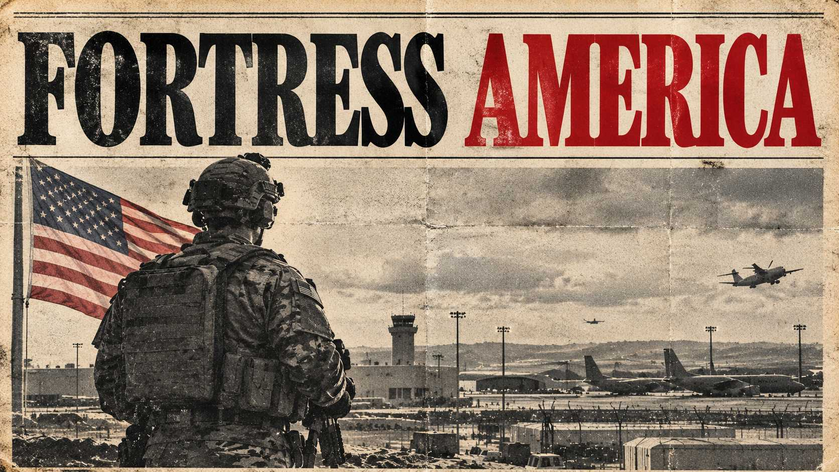
Fortress America: Why the Pentagon Is Preparing for a War That Could Reach American Soil

As the United States confronts growing threats from China, Russia and Iran, a new military initiative aims to protect American bases, power systems and supply chains from attacks that could cripple the nation's ability to fight.

CHANTILLY, FRANCE — For decades, Americans have lived with the comforting assumption that major wars happen somewhere else. We have fought conflicts in the Middle East, Asia and Europe, but the United States itself has remained largely insulated from the destruction that accompanies modern warfare. Two oceans and friendly neighbors have provided a degree of protection that much of the world has never enjoyed.

That geographical advantage remains important, but technology has fundamentally changed the nature of the threat. An adversary no longer needs to send an invasion force across the Atlantic or Pacific to inflict serious damage on the United States. Cyberattacks, sabotage, inexpensive drones and disruptions to critical supply chains could interfere with American military operations without a single enemy soldier crossing our borders.
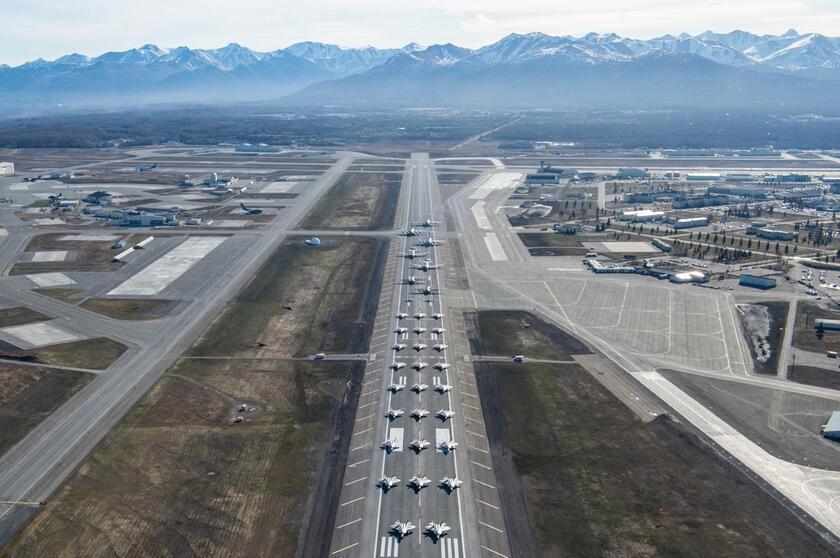
American military installations depend on complex networks of electricity, communications, fuel and transportation infrastructure.


The Pentagon appears to be taking that reality more seriously. On September 30, Defense Secretary Pete Hegseth announced an initiative called Fortress America, an ambitious effort to strengthen the resilience of American military installations and reduce their dependence on vulnerable civilian infrastructure and foreign suppliers.

The announcement has prompted understandable questions about what the administration might know concerning future threats. With tensions involving Iran, Russia and China continuing to rise, some Americans are wondering whether the Pentagon is preparing for an imminent attack.

Having spent years reporting from conflict zones and investigating the vulnerabilities of America's electrical grid, I believe there is a more practical explanation. The military is finally addressing weaknesses that have been apparent for years, and the lessons emerging from Ukraine have made those vulnerabilities impossible to ignore.

The Pentagon's New Insurance Policy

Hegseth described Fortress America as a national insurance policy intended to ensure that American military forces can continue operating even when the infrastructure surrounding them fails.

The initiative takes its name from an acronym representing Federal Operations for Resilience, Troop Resources, Energy, Supply and Survivability. Its objectives include making military installations energy-independent, rebuilding critical domestic supply chains, expanding strategic reserves, protecting bases against physical and cyber threats, and securing military communications and satellite capabilities.

"Every major military installation in America is going to generate its own power independent of the civilian grid," Hegseth declared during the announcement.

He explained that military bases must be capable of continuing operations even if an adversary disables the civilian electrical network through sabotage or cyberattack. Aircraft must remain operational, command centers must maintain communications, and essential systems must continue functioning regardless of what happens beyond the perimeter fence.

The initiative also calls for expanding domestic production of rare-earth minerals, semiconductors, specialty metals and other materials essential to modern weapons systems.

For years, the United States has relied on foreign suppliers for materials that are indispensable to its national defense. That arrangement may reduce costs during peacetime, but it creates an enormous strategic vulnerability if those suppliers become adversaries or international shipping routes are disrupted.

This is where globalization has demonstrated one of its greatest weaknesses. A supply chain designed primarily around efficiency and cost can become a liability when national survival depends on maintaining access to essential resources.

If America finds itself in a military confrontation with China, for example, it would be extraordinarily dangerous to discover that critical components needed to sustain American military operations are unavailable because their production depends on Chinese facilities.

Fortress America is intended to reduce that dependence before a crisis occurs.

The Hidden Vulnerability of America's Power Grid

One of the most important aspects of the initiative concerns electricity.

I previously produced a documentary examining the condition of the American power grid, and what I learned during that investigation was deeply concerning. Much of the country's electrical infrastructure was designed decades ago, and some of its most important components are aging, difficult to replace and vulnerable to deliberate attack.
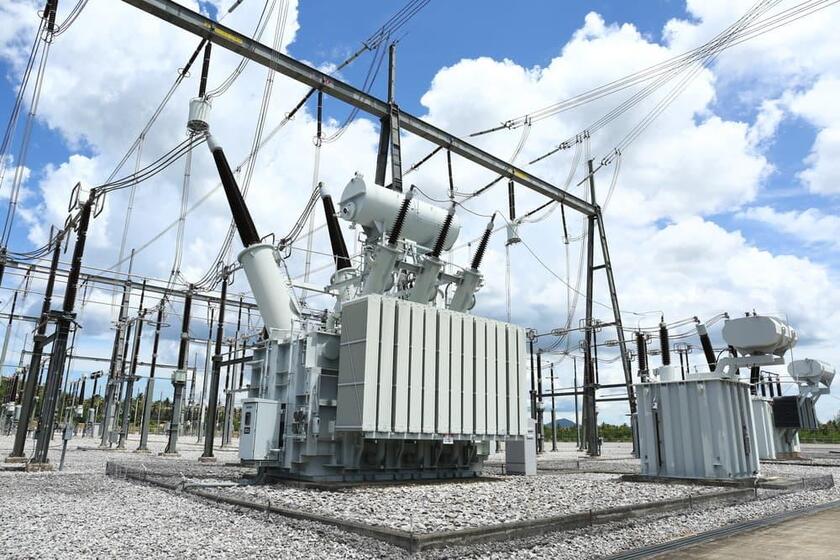
High-voltage transformers are essential components of the electrical grid, and replacing damaged equipment can be a lengthy process.


Large high-voltage transformers are particularly important because they are essential to transmitting electricity across long distances. These machines are expensive, specialized and often built to meet the requirements of individual installations.

Replacing one can take considerable time, particularly when manufacturers face limited production capacity or shortages of specialized materials.

During my earlier investigation, experts warned that coordinated attacks against a relatively small number of critical components could produce widespread and prolonged disruptions. The precise scale of such a scenario is difficult to predict, and catastrophic estimates should not be treated as inevitable outcomes. Nevertheless, the underlying vulnerability is real.

Electricity supports nearly every function of modern society. Water treatment facilities, hospitals, communications networks, fuel distribution systems, food storage and transportation infrastructure all depend on reliable power.

A prolonged blackout would therefore create problems extending far beyond the inconvenience of losing lighting or internet access.

For the military, the consequences could be even more serious. An installation might possess advanced aircraft, sophisticated weapons and highly trained personnel, but those capabilities become far less useful if the base loses access to power, communications, fuel or maintenance facilities.

The Pentagon's decision to reduce its dependence on the civilian grid is not evidence that officials know a catastrophic blackout is imminent. It is recognition that a modern military should never rely entirely on infrastructure it does not control.

Nuclear Microreactors and a New Approach to Military Energy

One of the technologies being considered for military energy resilience is the nuclear microreactor.

Unlike traditional nuclear power plants, which require enormous facilities and extensive infrastructure, microreactors are designed to provide electricity from comparatively compact installations. Some proposed designs are transportable, allowing them to be deployed where reliable power is needed.
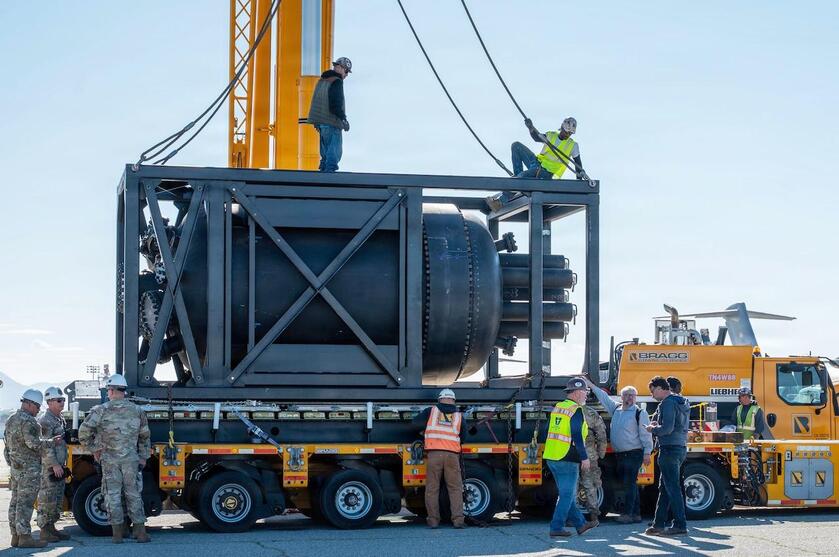
Compact nuclear reactor technology is being developed as a potential source of reliable electricity for military operations.


During the broadcast, I discussed the Army's Janus program, which has been associated with plans to develop nuclear power capabilities for military installations. The facilities mentioned include Fort Bragg, Fort Campbell, Fort Hood, Fort Benning and Fort Drum, with an ambitious timeline extending toward 2028.

The specific funding, construction schedules and operational milestones will depend on regulatory approvals, engineering requirements and the progress of individual projects.

Nuclear microreactors are only part of the proposed solution. The military is also examining large battery-storage systems, solar installations, microgrids and other technologies capable of maintaining electricity during a disruption.

Microgrids are particularly valuable because they can operate independently of the larger electrical network. If a regional power system fails, an installation with sufficient local generation and storage can isolate itself and continue supplying electricity to essential facilities.

Another technology I discussed involves microturbine generators, which can provide decentralized power using various fuels. These systems are especially interesting because of what we are seeing in Ukraine. Rather than depending exclusively on large power plants that present obvious targets for Russian missiles, Ukraine has increasingly pursued smaller and more distributed sources of electricity. The objective is to make the national energy system more difficult to disable through attacks against a limited number of major facilities.

That approach offers an important lesson for American military planners. A network of smaller, independent energy systems can provide greater resilience than a single centralized source of electricity.

The United States is learning from Ukraine's experience, and those lessons may prove invaluable in a future conflict.

China Has Already Demonstrated the Cyber Threat

The possibility of attacks against American infrastructure is not merely theoretical.

In 2024, American intelligence and cybersecurity agencies issued warnings concerning a Chinese state-sponsored hacking operation known as Volt Typhoon. The operation involved efforts to gain access to critical infrastructure networks, including systems associated with communications, energy, transportation and water services. American officials warned that the activity could allow Chinese operators to disrupt essential services during a future crisis.

Consider what that could mean during a confrontation over Taiwan.

If China launched a military operation in the Pacific, Beijing might attempt to interfere with American ports, railroads, communications networks and electrical systems at the same time. Even temporary disruptions could complicate the movement of military personnel, equipment and supplies.

A cyberattack would not necessarily need to destroy infrastructure permanently to have a significant military effect. Delaying American mobilization during the opening stages of a conflict could provide an adversary with a valuable operational advantage. This is one of the principal threats Fortress America is designed to address. The Pentagon cannot assume that American military installations will remain secure simply because they are located thousands of miles from the battlefield.

Ukraine Has Changed the Meaning of a Front Line

The war in Ukraine has demonstrated another reality that Western military planners can no longer ignore: modern warfare does not always have a clearly defined rear area.

For generations, armies organized their operations around the distinction between the front line, where combat occurred, and the rear, where supplies, maintenance facilities and command centers could operate with relative security. Long-range drones and precision weapons have weakened that distinction.
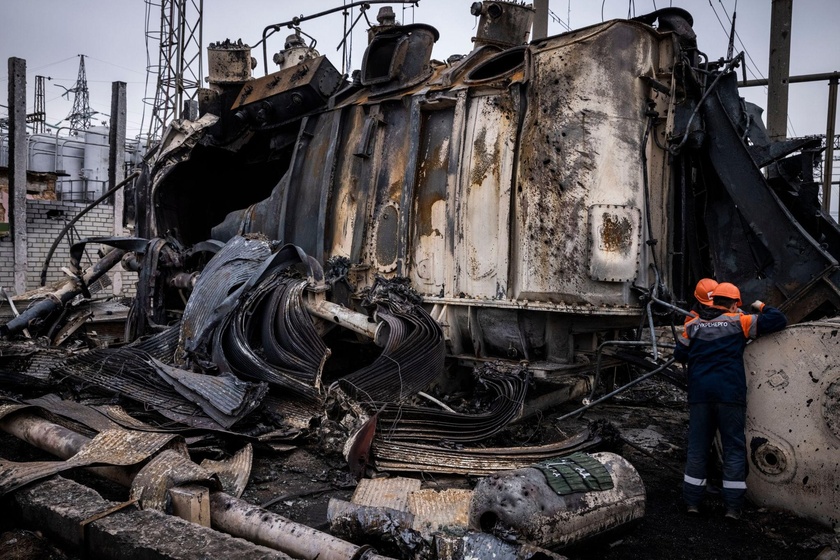
Russian attacks on Ukraine's energy infrastructure have demonstrated the vulnerability of centralized electrical systems during modern warfare.


Both Russia and Ukraine have demonstrated the ability to strike infrastructure far beyond the immediate battlefield. Fuel facilities, ammunition storage sites, airfields and electrical installations can all become targets. Relatively inexpensive drones have also created threats to military installations that would once have required sophisticated aircraft or missile systems. That has enormous implications for American bases, including those located inside the United States.

An installation does not need to be within range of an enemy's conventional artillery to face the possibility of attack. Sabotage, cyber intrusions and small unmanned aircraft can threaten facilities that were never designed with those dangers in mind.

Fortress America therefore includes plans to strengthen protection against drones, physical sabotage and electronic interference.

It also recognizes the growing importance of space-based systems. Satellites provide navigation, intelligence, communications and other capabilities essential to modern military operations. If an adversary interferes with those systems, the consequences could extend across multiple theaters of conflict. The battlefield is no longer confined to the territory where soldiers are fighting. It increasingly includes communications networks, industrial facilities, power systems and space.

The California Attack That Should Have Been a Warning

One of the clearest examples of America's infrastructure vulnerabilities occurred in California in 2013.

The Metcalf electrical substation, near San Jose, was attacked by unidentified individuals who damaged transformers after communications lines in the area had been disrupted.

The attackers fired numerous rounds into equipment at the facility, causing extensive damage. The incident attracted significant attention because of the apparent coordination involved and the possibility that the perpetrators possessed detailed knowledge of the infrastructure they were targeting.

The people responsible were not publicly identified, and their motives remain uncertain. Although some observers suggested that the attack displayed characteristics of a professionally organized operation, there is no established public evidence proving that a foreign government directed it.

That uncertainty does not diminish the importance of what happened.

The incident demonstrated that critical infrastructure could be damaged through relatively simple physical attacks, without sophisticated missiles or advanced military equipment. It also exposed the importance of rapid decision-making by utility personnel and the need for effective emergency procedures. The Metcalf attack should have prompted a broader national conversation about infrastructure protection. More than a decade later, many of the underlying concerns remain relevant. When we consider the possibility of coordinated cyberattacks, physical sabotage and disruptions to electricity or communications, the importance of building independent military capabilities becomes obvious.

Preparing for a War on Multiple Fronts

The strategic environment facing the United States is becoming increasingly complicated.

Washington is confronting tensions with Iran while attempting to deter Chinese military action against Taiwan and responding to Russia's continuing war in Ukraine. Each of those situations presents different challenges, but the possibility of overlapping crises creates enormous pressure on American military resources. A major conflict could interrupt global shipping, restrict access to critical minerals, disrupt semiconductor production and place extraordinary demands on ammunition and fuel supplies.

Fortress America is intended to prepare for precisely that kind of disruption.

Hegseth has called for strategic reserves containing sufficient munitions, fuel, medical supplies, blood, spare parts and other essential materials to sustain operations even when normal supply chains are interrupted.

During the broadcast, I discussed reporting suggesting that some installations could eventually be expected to sustain operations for as long as 90 days without outside resupply. That figure has not been confirmed as a universal Pentagon requirement, but it illustrates the level of independence military planners are considering.

The important distinction is between maintaining enough supplies for ordinary peacetime operations and maintaining enough to survive the demands of a prolonged conflict.

Those are very different requirements.

An installation that operates efficiently under normal conditions may become dangerously vulnerable when transportation routes close, commercial suppliers cannot deliver and the surrounding civilian infrastructure begins to fail.

Building reserves is expensive, but discovering that those reserves are missing after a war begins would be considerably more costly.

What This Means for American Families

There is another lesson here that extends beyond the military.

If the Pentagon believes its installations should be capable of operating independently during a prolonged emergency, American families should also consider how they would manage if essential services were interrupted.
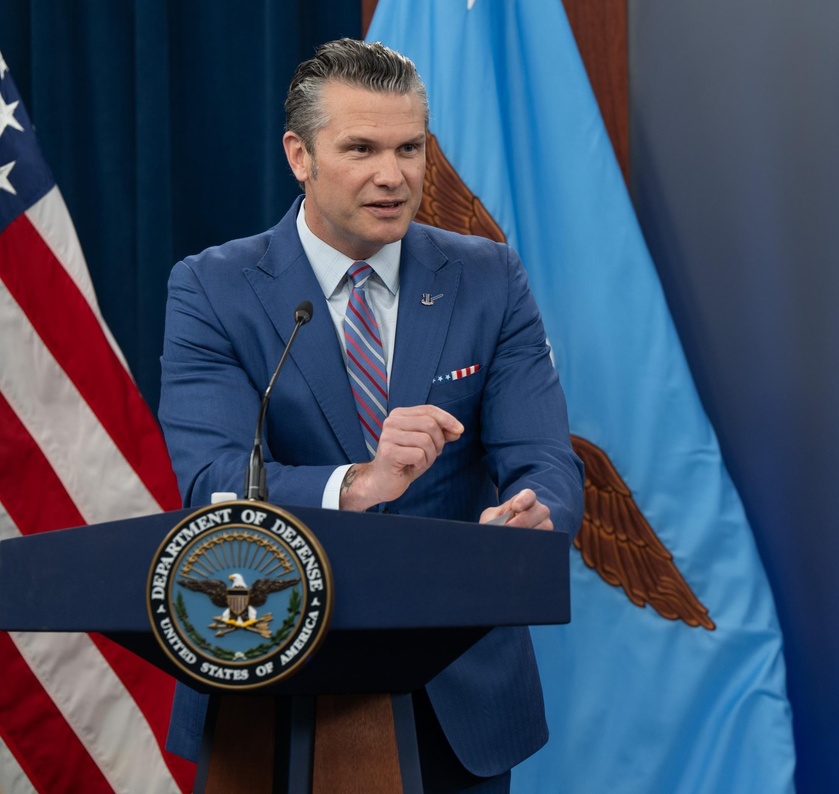
Defense Secretary Pete Hegseth outlined plans to strengthen military energy independence, supply chains and installation security.


During my broadcast, I played remarks from a British official encouraging households to maintain basic emergency supplies, including drinking water, nonperishable food, medications, flashlights and backup charging equipment. The advice was straightforward, but it reflects something that previous generations understood much better than many Americans do today. There was a time when maintaining extra food, preserving produce and knowing how to provide for one's family were ordinary parts of life.

Years ago, I founded an online community called Homesteading Today because I was concerned that many of those practical skills were disappearing. The community brought together people interested in gardening, raising livestock, food preservation and the kind of self-reliance that was once common across much of rural America.

Those skills remain valuable, particularly when modern supply systems are disrupted. I am not suggesting that everyone should build a bunker or prepare for the collapse of civilization. Nor do I believe the announcement of Fortress America means a catastrophic event is about to occur.

But keeping a reasonable supply of food and drinking water, maintaining essential medications, having emergency lighting and preserving some access to cash are sensible precautions.

Families should also understand their local emergency arrangements and consider how they would communicate if cellular networks or internet services became unavailable.

Preparedness is not about living in fear. It is about reducing the consequences of emergencies that may never happen but are entirely possible.

A Necessary Investment, Not a Prediction of Disaster

The announcement of Fortress America comes at a time when the United States faces serious international threats.

During the broadcast, I also discussed reports of renewed tensions involving Iran, including concerns about possible attacks against civilian infrastructure in the Persian Gulf if another military confrontation occurs.

Water desalination facilities, electrical networks, ports and energy installations are especially important in a region where large populations depend on complex infrastructure to maintain everyday life.

Any deliberate attack against civilian systems essential to survival would raise grave humanitarian and legal concerns.

Meanwhile, Russia's continued attacks on Ukrainian infrastructure have provided a stark demonstration of how electricity and other essential services can become central elements of modern warfare.

These developments explain why the Pentagon is increasingly focused on resilience.

They do not, however, establish that American officials possess secret information about an imminent attack on the homeland.

The military has been studying energy security, supply-chain vulnerabilities and installation protection for years. Fortress America appears to represent an effort to bring those priorities together and accelerate their implementation.

I believe that is the correct approach, although the initiative's ultimate success will depend on whether its ambitious promises translate into functioning systems, reliable domestic production and measurable improvements in military readiness.

There is a difference between announcing a strategy and building the capabilities required to carry it out.

The Most Important Lesson From Ukraine

One of the reasons I continue to emphasize the importance of Ukraine is that the war has become an extraordinary demonstration of how military technology and strategy are changing.

American planners are learning valuable lessons about drones, electronic warfare, decentralized energy systems, battlefield communications and the vulnerability of conventional military infrastructure.

Those lessons have direct implications for the defense of the United States.

At the same time, I remain concerned about delays in approving the transfer of certain American-made air defense systems that European countries want to provide to Ukraine.

During the broadcast, I discussed reports that European allies had requested permission to transfer equipment they had already purchased, but that American approval had not yet been granted.

The details of those requests require confirmation, but the principle is important. Ukraine continues to face Russian missile and drone attacks, and delays in providing defensive capabilities can carry serious human consequences.

I support the administration's effort to strengthen America's military resilience, but I also believe we must recognize the strategic value of helping Ukraine defend itself.

The United States is benefiting from lessons learned at an enormous cost to the Ukrainian people. We should not overlook that reality.

Strength Comes From Resilience

The central lesson of Fortress America is that military superiority means very little if the systems supporting it cannot survive an attack.

America possesses some of the most advanced aircraft, weapons and military technology in the world, but those capabilities depend on electricity, fuel, communications, industrial production and reliable logistics.

For too long, we have assumed that those supporting systems would remain available because they always had been.

The experience of Ukraine, the discovery of Chinese cyber intrusions and the vulnerabilities exposed by past attacks on American infrastructure demonstrate why that assumption is no longer sufficient.

Fortress America is an acknowledgment that the United States must prepare not only to fight a war but also to sustain its military operations when the normal systems of modern life are disrupted.

That preparation should have begun much earlier, but I am encouraged to see it receiving greater attention now.

And there is a lesson here for every American household as well. We cannot eliminate every danger, and we should not spend our lives worrying about disasters that may never occur. But we can take reasonable steps to ensure that an interruption in electricity, communications or essential supplies does not immediately become a personal catastrophe.

The purpose of preparedness is not to predict the next crisis. It is to make sure that when something goes wrong, we are capable of continuing forward.

That is what Fortress America is supposed to accomplish for the military, and it is a principle worth applying to our own lives.

Read full Article
The Time to Prepare Is Before a Crisis


The Time to Prepare Is Before a Crisis


After years of reporting from conflict zones and some of the most unstable places in the world, I've learned one lesson that applies far beyond the battlefield:

The worst time to prepare for a crisis is when you're already in one.

I've seen firsthand how quickly circumstances can change. And while most Americans aren't facing the dangers I've witnessed overseas, the same principle applies to protecting your financial future.

Between mounting government debt, persistent economic uncertainty, and unpredictable markets, there are plenty of reasons to take a closer look at how your retirement savings are positioned.

That's one reason I believe in physical gold and silver — and why I've chosen to partner with Preserve Gold.

For thousands of years, precious metals have helped people preserve wealth through periods of economic and political uncertainty. Today, they remain an option for Americans looking to diversify beyond traditional paper assets.

Preserve Gold takes an educational, no-pressure approach to helping Americans understand how physical precious metals can fit into their retirement strategy.

See why millions of Americans are turning to physical gold and silver to help protect their retirement savings with this FREE Wealth Protection Kit from Preserve Gold.

In this kit, Preserve Gold — trusted by 750+ five-star reviewers — shows you how to:

  • Move part of an eligible 401(k) or IRA into physical gold or silver through a qualifying tax-free, penalty-free rollover

  • Help protect a portion of your savings from a potential market correction and rising inflation 

  • Work with a provider backed by a price-match guarantee, free insured shipping, no-fee client buybacks, and a 24-hour purchase guarantee

Plus, you may qualify for up to $20,000 in Gold and Silver with an eligible account rollover or purchase.

Don't wait for the next period of market uncertainty to start exploring your options.

Click here to claim your FREE Wealth Protection Kit today.


Disclaimer: Preserve Gold cannot provide tax or legal advice and will not advise to the tax or legal consequences of buying precious metals or opening a precious metals IRA. Even though Preserve Gold and its representatives are precious metals specialists, we are not licensed financial advisors and do not give financial advice. Individuals should consult with their legal, investment, or tax professionals for such services. All investments carry risk. Some of those risks associated with precious metals include the following. Prices may rise or fall, which means that the value of your metals may go up or down and you may sell for more or less than what you paid. Past performance does not guarantee future results. Preserve Gold cannot guarantee or promise future market movement, prices, or profits. 

In this communication, statements made are opinions and historical performance is no indication of future performance or returns. Information derived from third parties represents only the opinions of the third parties', and we do not endorse any of the third parties' opinions. Copyright © 2026 Preserve Gold Group, Inc. All rights reserved.


Read full Article
post photo preview
Who Is Behind Europe's Growing Unrest? Following the Money and the Political Networks

As France struggles to contain violent demonstrations, questions are emerging about the organizations supporting protest movements, their international connections, and what the unrest could mean for the United States.

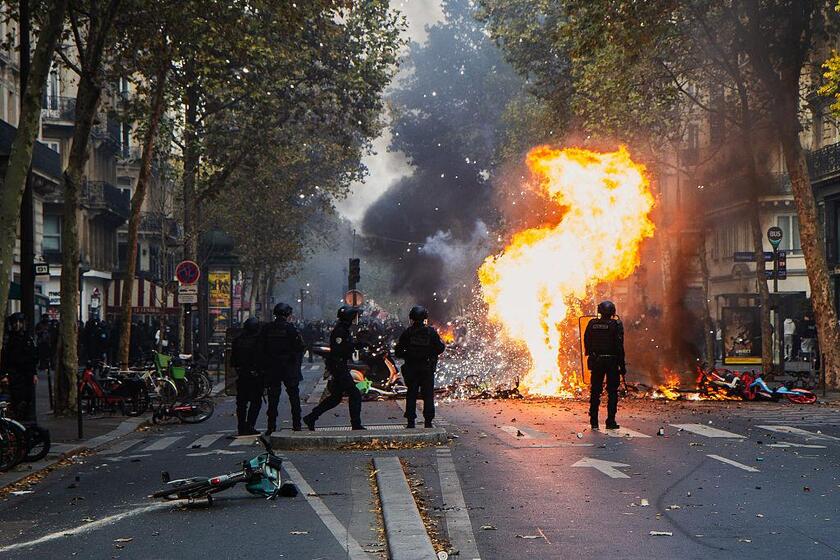
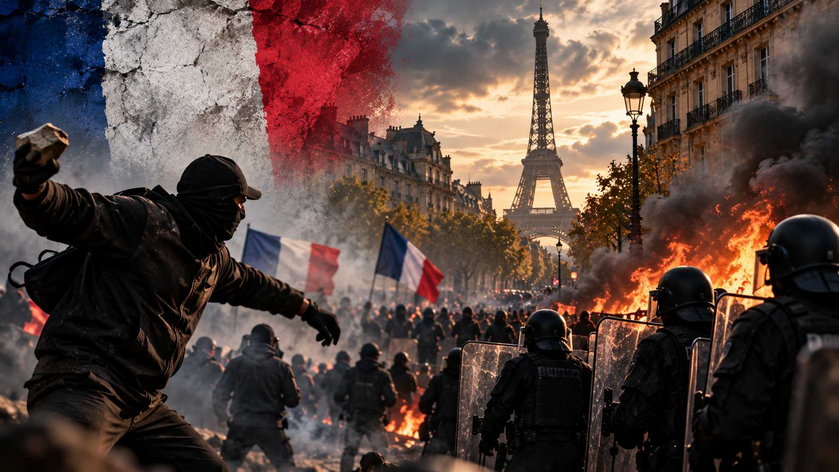
France is experiencing another period of serious civil unrest, with violent demonstrations, damaged businesses and attacks on public buildings prompting authorities to impose curfews in an effort to restore order. But beyond the immediate destruction, there is a larger question that deserves attention: Are these demonstrations simply spontaneous expressions of public frustration, or are organized political networks helping turn legitimate grievances into something far more destructive?

Demonstrations over rising living costs and public services escalated into clashes, fires and looting across France on October 17, 2026. Hundreds of thousands participated in the nationwide protests, while authorities reported extensive arrests and damage in several cities.

Photo credit: Stéphanie Lecocq / Reuters


That was the central issue I examined during my latest Hot Zone broadcast. After years of reporting from demonstrations and riots around the world, I've learned that the people filling the streets are not always the only ones shaping what happens there. Political organizations, advocacy networks and wealthy donors can play an important role in organizing demonstrations, distributing materials and promoting particular messages. The challenge is determining where legitimate political organizing ends and where unlawful activity begins. Those distinctions matter, especially when allegations involve foreign influence, political extremism and the possibility of coordinated violence.

I'm preparing to travel to France to investigate the situation firsthand, speak with people on the ground and examine what is actually happening beyond the images circulating online.

France's Unrest Raises Questions About Public Order

According to reports discussed during the broadcast, French authorities have imposed overnight curfews in several areas, with restrictions reportedly running from 11 p.m. until 6 a.m. Some local officials have also introduced additional measures aimed at younger demonstrators.

More than 2,400 arrests and damage to over 2,000 businesses were reported during the unrest, although those figures require confirmation from official French sources.

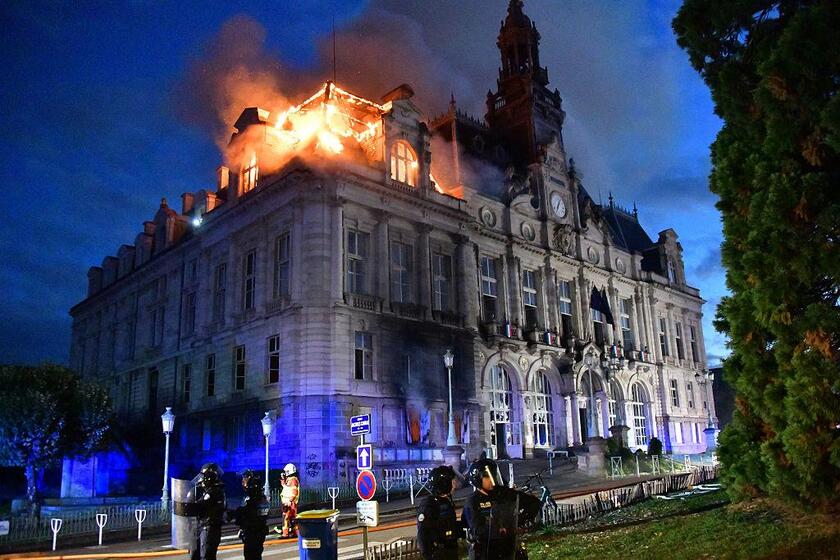
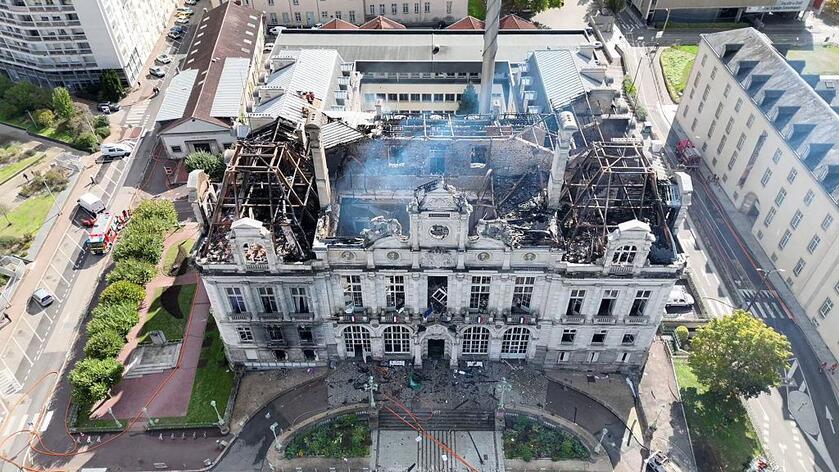
One of the most disturbing incidents involved a fire at a historic municipal building in Limoges. The structure, described as more than 140 years old, suffered extensive damage. I intend to visit the area during my reporting trip because the destruction of a building like that represents much more than a financial loss.

Flames engulf the historic town hall in Limoges, France, on October 17, 2026, during nationwide unrest. The nineteenth-century building suffered extensive damage, including the collapse of sections of its roof.

Photo credit: Lucas Destrem / Reuters


Historic buildings preserve the identity of communities. They reflect generations of craftsmanship, civic investment and cultural heritage that cannot easily be replaced.

There have also been disturbing allegations that some businesses were targeted because of their Jewish ownership. I want to be particularly careful about that claim because I have not independently confirmed it. If investigators establish that Jewish-owned businesses were deliberately identified and attacked, that would raise serious concerns about antisemitic violence, but it would be irresponsible to present the allegation as established fact before the evidence is available.

Meanwhile, Marine Le Pen has emerged as one of the most prominent political voices responding to the unrest.

In remarks featured during the broadcast, she condemned the destruction of public buildings, attacks on police officers and looting of businesses while calling for greater accountability. "Violence is not an opinion. Destruction is not expression. And chaos is no plan for France," she declared.

Le Pen also proposed making individuals convicted of damaging property financially responsible for the destruction they cause. I believe that principle deserves serious consideration. People who deliberately destroy businesses, vehicles and public property should face meaningful legal consequences, including restitution where appropriate. Peaceful protest is a fundamental right, but it does not provide immunity for criminal conduct.

The Organizations Behind the Demonstrations

One of the most revealing parts of my investigation involved examining the organizations associated with demonstrations in France.

During the broadcast, I discussed reporting that identified approximately 54 organizations participating in, supporting or promoting protest activity. The groups represented a broad range of political interests, including student organizations, labor unions, socialist movements, environmental campaigns, Palestinian solidarity organizations and anti-fascist networks.

Debris covers the interior of Limoges town hall following a fire during the October 17 demonstrations. The damage to the protected historic building has raised concerns about the loss of an important part of the city's architectural heritage.

Photo credit: Ville de Limoges, via The Connexion


The involvement of these organizations does not automatically mean they are coordinating violence. Political organizations routinely participate in demonstrations, and peaceful advocacy is not evidence of criminal wrongdoing. Nevertheless, the overlap between different movements raises legitimate questions about how protests are organized, how messages spread and whether particular groups are attempting to redirect public anger toward broader ideological objectives. I encountered similar patterns while covering demonstrations in the United States.

During the first Trump administration, I spent approximately two years traveling around the country reporting on protests involving gun policy, racial justice, abortion, immigration and other contentious political issues. I began recognizing some of the same individuals at demonstrations thousands of miles apart. People I had encountered in Portland would later appear at events in Washington, D.C., sometimes carrying similar signs and repeating nearly identical political messages.

That experience convinced me that at least some protest movements involve experienced organizers who travel between events and maintain connections with larger advocacy networks. Of course, recognizing the same activists at multiple demonstrations does not establish that they are being paid to commit crimes. But it does illustrate why journalists should examine the organizational structures behind major protest movements rather than treating every demonstration as an entirely isolated event.

Following the Money: Neville Roy Singham and the Socialist Movement

One individual who deserves closer scrutiny is Neville Roy Singham, an American technology entrepreneur who sold his software consulting company and subsequently became involved in funding left-wing political and media organizations. Singham has attracted attention because of his financial relationships with organizations that promote socialist causes and his connections to China, where he has lived and maintained business and political relationships.

During the broadcast, I examined the Party for Socialism and Liberation, an American socialist political organization whose messaging has appeared at demonstrations in different locations. One sign caught my attention because I recognized it from protests I had covered years earlier in Washington.

Its message read:

"Trump is a symptom. Capitalism is the disease. Socialism is the cure."

The same slogan appeared in material associated with demonstrations discussed during the broadcast. For me, that illustrated the continuity of political messaging across different countries and protest movements.

Singham's relationships with organizations associated with socialist activism have been the subject of public scrutiny. However, the precise funding arrangements between individual donors, nonprofit organizations and political groups must be established through financial records rather than assumptions.

I am particularly concerned about the possibility that foreign governments could exploit these networks to influence public opinion or deepen political divisions in Western countries. China has an obvious strategic interest in weakening American influence and promoting narratives favorable to the Chinese Communist Party. But that strategic interest alone does not prove that Beijing is directing a particular protest, financing criminal activity or controlling the organizations involved.

During the broadcast, I offered my opinion that some of the money supporting these networks could ultimately be connected to Chinese government interests. I also made clear that I had not independently corroborated that conclusion. That is precisely why further investigation is necessary. The important questions concern where the money originates, how it moves between organizations, whether foreign officials exercise influence over its distribution and whether any funds are used to facilitate unlawful conduct. Those are questions that should be answered through evidence, not political assumptions.

From France to Italy and Ireland

The demonstrations discussed during the broadcast were not limited to France. I also examined footage from Florence, Italy, and Ireland, where protesters displayed political symbols and Palestinian flags. The appearance of similar symbols across demonstrations involving different local grievances caught my attention because it suggests that some activists see these issues as connected parts of a larger political struggle.

That does not mean every person carrying a Palestinian flag supports the same political organizations, much less violent extremism. The symbols used at demonstrations can reflect solidarity, ideological affiliation or broader opposition to government policies. However, the participation of international activist networks in multiple movements is a legitimate subject for investigation. Some organizations view conflicts in the Middle East, economic inequality, environmental policy and opposition to Western governments through a shared ideological framework. That can create alliances between groups that otherwise disagree on major political or social questions.

The resulting coalitions may be politically influential, but their existence does not establish that their participants share responsibility for violent acts committed by particular individuals. What matters is whether organizers are encouraging peaceful political participation or deliberately facilitating intimidation, vandalism and attacks. Governments should make that distinction carefully, protecting the rights of lawful demonstrators while holding those responsible for violence accountable.

How China, Russia and Iran Fit Into the Larger Picture

The unrest in Europe also raises a broader geopolitical question about the interests of governments that oppose American and European influence.

China, Russia and Iran have developed increasingly important relationships in recent years, particularly as Moscow has sought additional economic and diplomatic support during its war against Ukraine. During the broadcast, I discussed Russian Foreign Minister Sergey Lavrov's reported visit to Tehran and his remarks concerning Russia's relationship with Iran.

Lavrov also claimed that Russia had not intentionally targeted Ukrainian civilian infrastructure except where facilities directly supported Ukrainian military operations. That assertion is difficult to reconcile with what I have personally witnessed in Ukraine.

I've walked through the ruins of apartment buildings destroyed by Russian attacks. I've seen residential neighborhoods where families were killed and where the destruction bore no obvious relationship to a legitimate military target. The human consequences of Russia's invasion cannot be explained away through diplomatic statements.

Reports of growing Russian support for Iran are also significant because Tehran remains deeply involved in regional confrontations affecting Israel and American interests. Russia and Iran have different political systems and strategic priorities, but both have reasons to challenge Western influence. China, meanwhile, benefits from  economic and diplomatic relationships with both governments.

I have argued that these increasingly connected conflicts may represent the early stages of a much broader international confrontation. That is my strategic assessment, not a declaration that a formal world war has begun.

The danger is that regional conflicts, economic competition, information campaigns and military partnerships could increasingly reinforce one another, making it harder for Western governments to respond to any single crisis without confronting several others.

Trump's Ukraine Statements Raise Serious Concerns

One of the most troubling developments discussed during the broadcast involved President Donald Trump's latest comments about Ukrainian President Volodymyr Zelenskyy.

After Zelenskyy reportedly suggested that Trump was on the wrong side of history regarding the war, Trump responded by criticizing the Ukrainian president and arguing that he should have accepted an earlier agreement. Trump also claimed that Ukraine had given the United States nothing in return for American assistance.

I strongly disagree with that assessment. Ukraine has provided the United States and its allies with an extraordinary opportunity to understand how modern warfare is changing. Before Russia's full-scale invasion, Western military planning remained heavily focused on conventional weapons systems, including tanks, armored vehicles and expensive platforms developed for earlier generations of warfare. Ukraine has demonstrated the importance of inexpensive drones, electronic warfare, rapid battlefield adaptation and decentralized technological innovation. The lessons emerging from that conflict are already influencing military planning around the world.

American defense planners have gained valuable information about how Western equipment performs against Russian systems, how drones can disrupt conventional formations and how relatively inexpensive technology can impose enormous costs on a much larger military.

Those lessons have strategic value that extends far beyond the financial assistance Washington has provided. Ukraine has also imposed substantial losses on Russia's armed forces, reducing Moscow's capacity to threaten other countries. That does not mean the United States should provide unlimited assistance without oversight. It means that American support should be evaluated against the security benefits and strategic consequences involved. When Trump suggests that Ukraine has contributed nothing, he overlooks some of the most important military lessons of the twenty-first century.

Russia's Military Buildup Near NATO

Another issue receiving increasing attention is Russia's reported movement of military equipment into storage facilities near NATO territory.

During the broadcast, I examined reports describing tanks, infantry fighting vehicles, armored personnel carriers and artillery being positioned or refurbished in regions relatively close to Finland and the Baltic states. The reports included references to equipment in Karelia and the Kostroma region, although the specific deployments and their intended purpose require independent verification. The concern is understandable. Russia has suffered significant equipment losses in Ukraine, where drones have made traditional armored operations increasingly dangerous. At the same time, NATO governments are reassessing their own readiness for a possible confrontation with Moscow. I raised the possibility that Russia could be positioning certain conventional systems for contingencies involving NATO countries whose forces have not yet adapted as extensively to drone warfare. That remains an interpretation rather than a confirmed Russian operational plan.

Nevertheless, European governments would be foolish to ignore the lessons of Ukraine.

The next major war may be decided as much by electronic warfare, unmanned systems and the speed of technological adaptation as by the number of tanks and artillery pieces a country possesses.

NATO must prepare accordingly.

The Danger of Political Tribalism

One question from viewers during the broadcast captured a problem that extends far beyond Europe. A viewer explained that he struggled with the Russia-Ukraine conflict partly because American Democrats supported Ukraine, making him reluctant to support the same position. I understand how political polarization produces that reaction, but I believe it is a dangerous way to evaluate international events.

We cannot decide whether a country is right or wrong simply by looking at which American political party supports it. Russia invaded Ukraine. Ukraine did not invade Russia. That distinction matters. My perspective begins with a moral assessment of the conflict, informed by my Christian faith and my experience reporting from the region. It does not require me to agree with every decision made by Ukraine's government or to support every policy proposed by American politicians. It requires me to recognize that an independent nation has the right to defend itself against foreign aggression. The same principle should guide our response to political extremism at home. Violence committed by far-left organizations is wrong, but violence committed by far-right extremists is equally wrong. I've reported from demonstrations involving neo-Nazis and other radical movements, and I have seen the danger posed by extremism from different political directions. A free society must defend peaceful political expression while rejecting intimidation, vandalism and attacks on innocent people, regardless of who commits them.

Why I'm Going to France

The events unfolding in France deserve more than commentary based on social media videos and competing political narratives. I intend to travel there, examine the damage, interview people affected by the unrest and investigate the claims surrounding the organizations involved. Some of the allegations circulating online are serious, particularly those involving antisemitic targeting, foreign financial influence and the possible coordination of violent demonstrations.

Those claims must be investigated carefully rather than repeated without evidence. The broader challenge is already clear. Western societies are facing increasingly complex security threats in which domestic political instability, international ideological movements and competition between major powers can overlap. Governments must be prepared to enforce the law without undermining civil liberties, and journalists must be willing to investigate uncomfortable questions without allowing political preferences to substitute for facts. The people whose businesses have been destroyed and whose communities have been damaged deserve accountability. The public also deserves accurate information about who is organizing demonstrations, where the money comes from and whether foreign interests are attempting to exploit political divisions. That is what I intend to investigate when I arrive in France. Because when a city is burning, the most important question is not simply who is standing in the street. It is what caused the unrest, who is exploiting it and what can be done to prevent the destruction from happening again.

Read full Article
See More
Available on mobile and TV devices
google store google store app store app store
google store google store app tv store app tv store amazon store amazon store roku store roku store
Powered by Locals