Chuck Holton
Politics • Culture • News
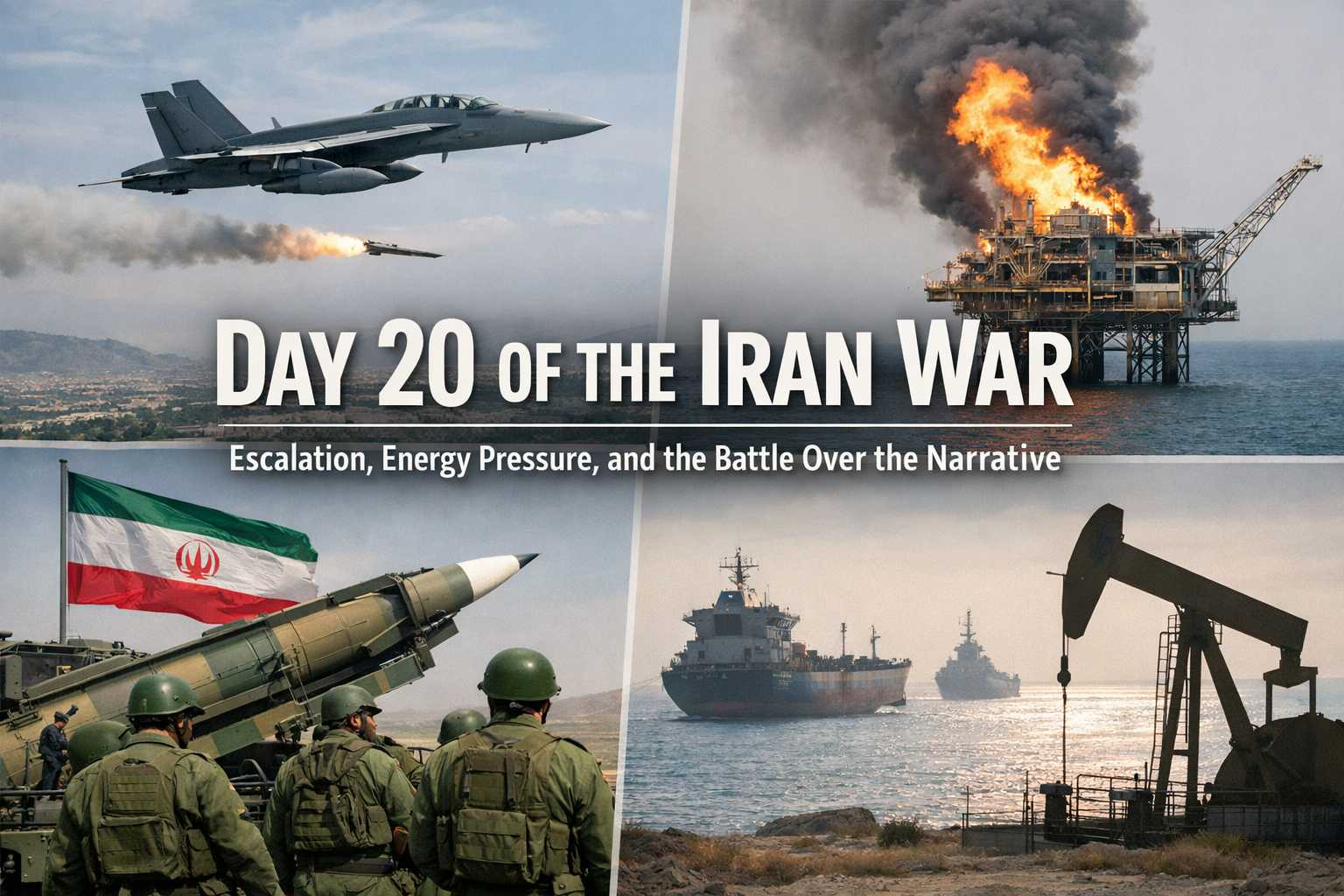
Day 20 of the Iran War: Escalation, Energy Pressure, and the Battle Over the Narrative
March 20, 2026
post photo preview

Twenty days into the war with Iran, the pace of operations is not slowing in any meaningful way. If anything, the tempo is increasing. Despite repeated claims from pundits and political commentators that the conflict is nearing some natural plateau, the public statements coming from both Washington and Jerusalem point in the opposite direction. U.S. and Israeli forces continue to expand the scale and depth of their campaign, targeting military infrastructure, industrial production, naval assets, and energy-related vulnerabilities inside Iran.

Defense Secretary Pete Hegseth said this morning that U.S. forces are still setting records for the number of targets struck per day. The Israelis have now reported approximately 8,500 targets hit since the conflict began, and by their own assessment they are not even halfway through the target set. That matters, because it underscores a basic reality that many casual observers miss: Iran is a vast country with deep infrastructure, difficult terrain, and a military architecture built over decades to absorb punishment and continue operating under pressure. This was never going to be resolved in a matter of days.
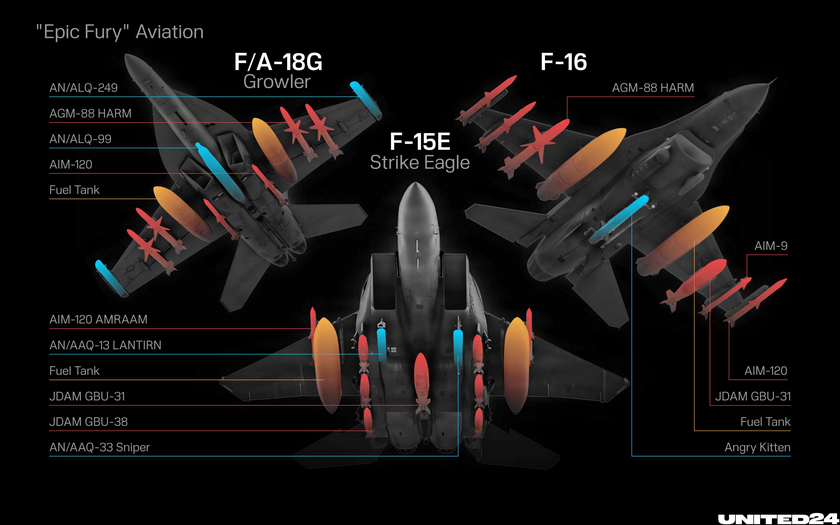
What has changed, however, is the scale of degradation already inflicted on Iran’s military capacity. According to the Pentagon, Iranian ballistic missile attacks against U.S. forces are down roughly 90 percent since the war began, and the same is reportedly true of one-way attack drones. That does not mean Iran has stopped firing. It means its capacity to sustain previous rates of attack has been severely reduced. Iran would be shooting much more if it still could. The fact that it cannot tells us something important about how much damage has already been done to its production lines, storage facilities, launch systems, and command structure.

The naval picture is even more striking. Hegseth stated that more than 120 Iranian naval vessels have been damaged or sunk, with battle damage assessments still pending on many others. Iran’s submarine fleet, once counted at eleven boats, has reportedly been eliminated as an effective fighting force. Its surface fleet is no longer a significant factor in the conflict, and its military ports have been badly crippled. In practical terms, that means Iran’s ability to project power at sea, mine shipping lanes, and sustain meaningful maritime pressure has been heavily reduced. U.S. Central Command continues to publish footage of strikes against Iranian boats in and around the Gulf, indicating that forces are still finding and destroying targets at sea rather than running out of them.

That point is worth emphasizing because one of the recurring narratives in recent days has been that the campaign is somehow reaching exhaustion. President Trump himself joked about the idea that there were “no targets left,” but the reality is exactly the opposite. There are many targets left, and the coalition is still expanding the strike list as Iranian assets are exposed, relocated, or activated in response to pressure.

Only for Supporters
To read the rest of this article and access other paid content, you must be a supporter
11
What else you may like…
Videos
Podcasts
Posts
Articles
Rubio rocks!

Marco Rubio goes full Ayn Rand and it is glorious.

00:02:57
Update From Croatia

From yesterday*

I appreciate all of you supporting the hot zone. Thank you for being here.

How do you think this is all going to end?

00:03:39
Ukraine Safeguarding its Troops with Technology

If you have wondered why Russia is losing so many men and Ukraine is not, this will help explain it. Russia is sending men into the front lines where they are killed by drone operators from Ukraine who are hundreds of miles away from the front lines.

00:02:17
Episode 622 - Field Producer Dennis Azato and Chuck Reminisce

My erstwhile field producer and cameraman Dennis Azato has accompanied me on ten years of adventures across the globe. Today he joins me in Ukraine and we spend some time remembering our many trips together.

Episode 622 - Field Producer Dennis Azato and Chuck Reminisce
America Isn't Ready for the Next Crisis | Chuck Holton on Faith, Community & Preparedness

In this interview with CBN News, former Army Ranger and war correspondent Chuck Holton argues that America's greatest crisis isn't a future apocalypse—it's the quiet breakdown already happening in communities today. Drawing from his book RED Teams, Holton says the real signs of collapse are loneliness, fractured families, neglected widows and the elderly, and churches that have become spectators instead of community leaders.

https://cbn.com/news/us/faith-preparedness-and-survival-former-army-rangers-message-america

I apologize in advance for this post-But
I'm very confused here...
I thought Turning Point USA and Charlie Kirk were Christian organizations..?
"A black-prolife-transgender lesbian-christian"? (Is that really a "thing"??)

I kept waiting for Babylon-Bee to pop up but it didn't.

Has the whole world gone nuts or only me?

🪖🏆⬆️”An Army Ranger's Message to Christian Men: Get Ready” CBN News

post photo preview
Supporters Only Content
What Iranians Really Think About This War

In this special interview, I sit down with an Iranian software engineer and anti-IRGC activist living in the UK who shares a perspective few people in the West ever hear. We discuss the growing opposition to the Iranian regime, what ordinary Iranians think about the current war, why many no longer support the Islamic Republic, and what could happen if the regime eventually falls. Whether you agree with every conclusion or not, this conversation offers a rare firsthand look into how one Iranian dissident views his country's future.


Only for Supporters
To read the rest of this article and access other paid content, you must be a supporter
Read full Article
post photo preview
The Threat Against Trump Is Worse Than We Knew
An Iranian plot, a dramatic Air Force One deception, and America’s dangerous race to catch up on drone defense

The threat environment around President Donald Trump has reached a level I have never seen before—and new reporting about what happened during his trip to Turkey shows just how serious it has become.

When Trump left Ankara after meeting with NATO leaders on July 8, the public was initially told that he had used an older Air Force One for nostalgic reasons. Then we heard that the newer aircraft was unavailable. After that, reports suggested that security concerns had influenced the decision.

Now we are learning that the situation was much more dramatic.

According to new reporting, American and Israeli intelligence had picked up a credible Iranian threat against the president’s aircraft. The danger was considered serious enough that the Secret Service and the military carried out the kind of deception you would expect to see in a Hollywood thriller.

Trump boarded the older Air Force One with members of the press pool and his staff. Everyone aboard was reportedly instructed to close the window shades. A catering truck then pulled alongside the aircraft as though it were delivering food.

Instead, the president got into the truck.

The vehicle carried him across the tarmac to a smaller, less conspicuous government aircraft—a C-32A—which then flew him out of Ankara. Many of the people traveling with him apparently did not know what was happening until later.

Think about that for a moment. The president of the United States had to slip off Air Force One in a catering vehicle and leave a NATO summit aboard a smaller decoy aircraft because the Iranian threat was considered credible enough that officials feared his plane could be attacked.

That tells us at least two things. First, Iran’s threats against President Trump cannot be dismissed as empty propaganda. Second, the United States cannot afford to assume that every NATO ally can provide a secure operating environment simply because its flag appears on the right list in Washington.

Israel reportedly helped identify the threat. If that intelligence contributed to getting the president home alive, Americans ought to remember it.

Why Are Missile Batteries Guarding a Golf Course?

The extraordinary precautions did not end in Turkey.

Recent images from Trump’s golf club in Bedminster, New Jersey, show Avenger short-range air-defense systems positioned nearby and surrounded by concertina wire. These Humvee-mounted systems carry Stinger missiles and a .50-caliber machine gun.

That is not normal golf-course scenery.

The Avenger is designed to protect troops and critical assets from low-flying aircraft, helicopters, and other aerial threats. If officials are deploying that kind of equipment while the president plays golf, they are not worried only about a hobbyist accidentally flying a DJI drone into restricted airspace.

They are preparing for the possibility of a deliberate attack.

The obvious threat is a small commercial or homemade drone modified to carry explosives. These aircraft can fly low, move quickly, and approach from directions that make them difficult to detect. They are also cheap. That creates an ugly economic problem: firing a Stinger missile costing hundreds of thousands of dollars at a drone worth a few hundred or a few thousand dollars is wildly inefficient.

But if that drone is headed toward the president, nobody is going to worry about the price of the missile.

The harder problem is engagement range. A small drone can be difficult to detect and hit before it gets close enough for an explosion—or even falling debris—to injure the person being protected. A manually aimed machine gun is not an ideal answer to a dinner-plate-sized target moving at highway speed. Missiles also have practical limitations at very short distances.

That is why presidential protection now requires a layered counter-drone system: radar and other sensors to detect the aircraft, electronic systems to disrupt or seize control of it, directed-energy weapons to damage its electronics, and kinetic weapons as the final line of defense.

After the assassination attempt in Butler, Pennsylvania—where the attacker had reportedly flown a drone over the venue before climbing onto a roof—the Secret Service accelerated its counter-drone efforts. That was necessary, but it also revealed how far behind the United States had allowed itself to fall.

The Drone War Is Already Here

Only for Supporters
To read the rest of this article and access other paid content, you must be a supporter
Read full Article
post photo preview
When Charity Becomes Self-Destructive: Spain’s Border Crisis Is a Warning to the West When Charity Becomes Self-Destructive: Spain’s Border Crisis Is a Warning to the West

A large and sudden influx of migrants into Spain’s North African enclave of Ceuta has created a situation that should be understood as a broader warning to Western nations that attempt to separate compassion from enforcement, borders, and consequences. Ceuta, a Spanish territory located on the northern coast of Africa and directly adjacent to Morocco, has historically maintained a population of roughly 80,000 people, yet local authorities now report that tens of thousands of migrants have arrived in an extremely short period, with some estimates suggesting the number may exceed 60,000.

The scale of this demographic shock is difficult to overstate, as it effectively places a population nearly equal to the city’s own residents into a confined urban space without adequate preparation for housing, screening, or public order. Reports from the ground describe migrants entering through gaps in border fencing, bypassing coastal defenses, and in some cases swimming into Spanish territory, with footage showing both celebratory scenes upon arrival and confrontations with security forces overwhelmed by the volume of crossings.

Local officials in Ceuta have called for emergency national intervention, including military deployment and reinforced border control, as they confront a situation that has rapidly exceeded municipal capacity. National political discourse, however, continues to emphasize themes of solidarity and inclusion, language that appears increasingly disconnected from the operational reality faced by those responsible for maintaining order on the ground.

This crisis is not an isolated development but part of a long-established migration pattern that I have previously reported on in the region. The geography of Ceuta and Melilla, Spain’s two enclaves on the North African coast, creates a uniquely accessible entry point into Europe, where migrants can reach Spanish jurisdiction not only by sea but also by crossing land barriers that separate the enclaves from Morocco.

During earlier reporting in the region, I encountered individuals who had repeatedly attempted entry despite deportation, including one Algerian migrant who described multiple crossings and returns, driven by the economic disparity between North Africa and Europe. His explanation was straightforward: the opportunity available on the European side of the border represented a level of income and stability that was otherwise unattainable in his country of origin.

This economic imbalance is central to understanding the persistence of migration flows, as individuals from lower-income regions will naturally seek access to higher-income economies when physical proximity makes such movement feasible. While it is important to recognize the human motivations involved, it is equally important to acknowledge that these flows are shaped by policy decisions that determine how easily entry is achieved and how consistently immigration rules are enforced.

Spain’s approach, which has increasingly allowed irregular entrants to remain and eventually regularize their status, creates a system in which initial illegal entry can lead to long-term residence and access to broader European mobility. As a result, Ceuta functions not merely as a local issue but as a gateway into a wider continental migration system.

Migration as a Strategic Tool

There is also a geopolitical dimension to these events that cannot be ignored, as migration flows have at times been influenced by state behavior and used as leverage in diplomatic disputes. In previous incidents involving Spain and Morocco, border enforcement patterns appeared to shift in ways that coincided with political tensions, resulting in sudden surges of crossings that placed immediate pressure on Spanish authorities.

This dynamic reflects a broader reality in which migration can be used as an instrument of statecraft, not through direct military confrontation but through the manipulation of border permeability. Unlike conventional conflict, this form of pressure exploits legal and humanitarian frameworks that make it difficult for receiving countries to respond with force, even when the scale of entry overwhelms administrative capacity.

Only for Supporters
To read the rest of this article and access other paid content, you must be a supporter
Read full Article
See More
Available on mobile and TV devices
google store google store app store app store
google store google store app tv store app tv store amazon store amazon store roku store roku store
Powered by Locals