



For a few days, it looked like the crisis with Iran might finally be cooling off. Markets steadied, diplomats returned to the negotiating table, and Washington projected confidence that a new round of talks could prevent a wider regional war. The headlines suggested the worst might be behind us.
That optimism didn't last long.
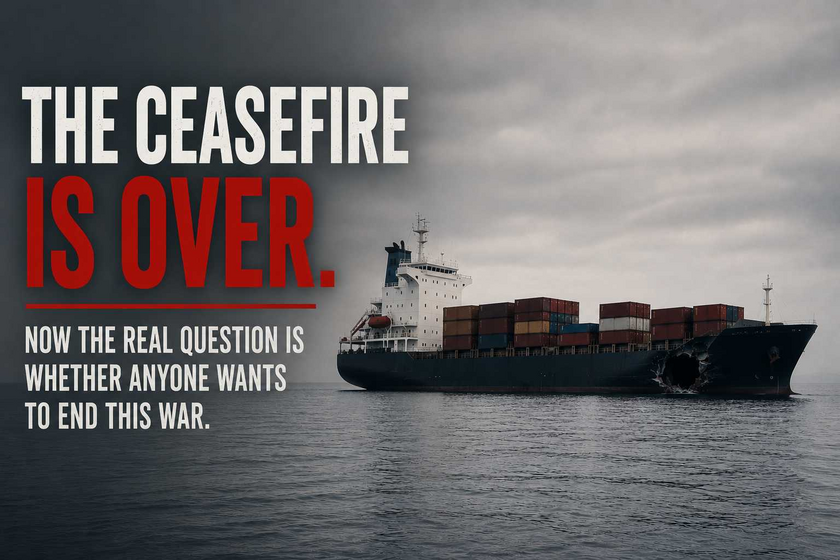
Iran resumed attacks on commercial shipping in the Strait of Hormuz, once again targeting one of the world's most critical maritime chokepoints. The United States answered with another round of airstrikes against Iranian military targets, and Tehran responded in kind. Within hours, it became clear that what many were calling a ceasefire was never much more than a temporary pause in the fighting.
The reality is that this conflict never truly stopped. It simply shifted into a new phase.
The Strait of Hormuz Remains the Center of the Conflict
Iran's strategy hasn't changed. Rather than confronting the United States directly, Tehran continues to use the Strait of Hormuz as its primary source of leverage. Nearly 20 percent of the world's oil supply passes through this narrow stretch of water, making it one of the most strategically important shipping lanes on Earth. Even limited disruptions can send shockwaves through global energy markets.
The latest attack on the cargo vessel Ever Lovely demonstrated that Iran remains willing to threaten commercial shipping despite ongoing negotiations. In response, American forces struck missile launchers, drone facilities, naval assets, and infrastructure belonging to the Islamic Revolutionary Guard Corps.
Those strikes were significant, but they were also carefully calibrated. Washington continues to describe its actions as "proportional responses," designed to deter further attacks without triggering a broader regional war. Whether that approach actually changes Iran's behavior is becoming an increasingly important question.
Diplomacy Faces a Serious Challenge
President Trump has repeatedly expressed confidence that Iran wants a negotiated settlement. Iranian officials, however, continue sending a very different message.