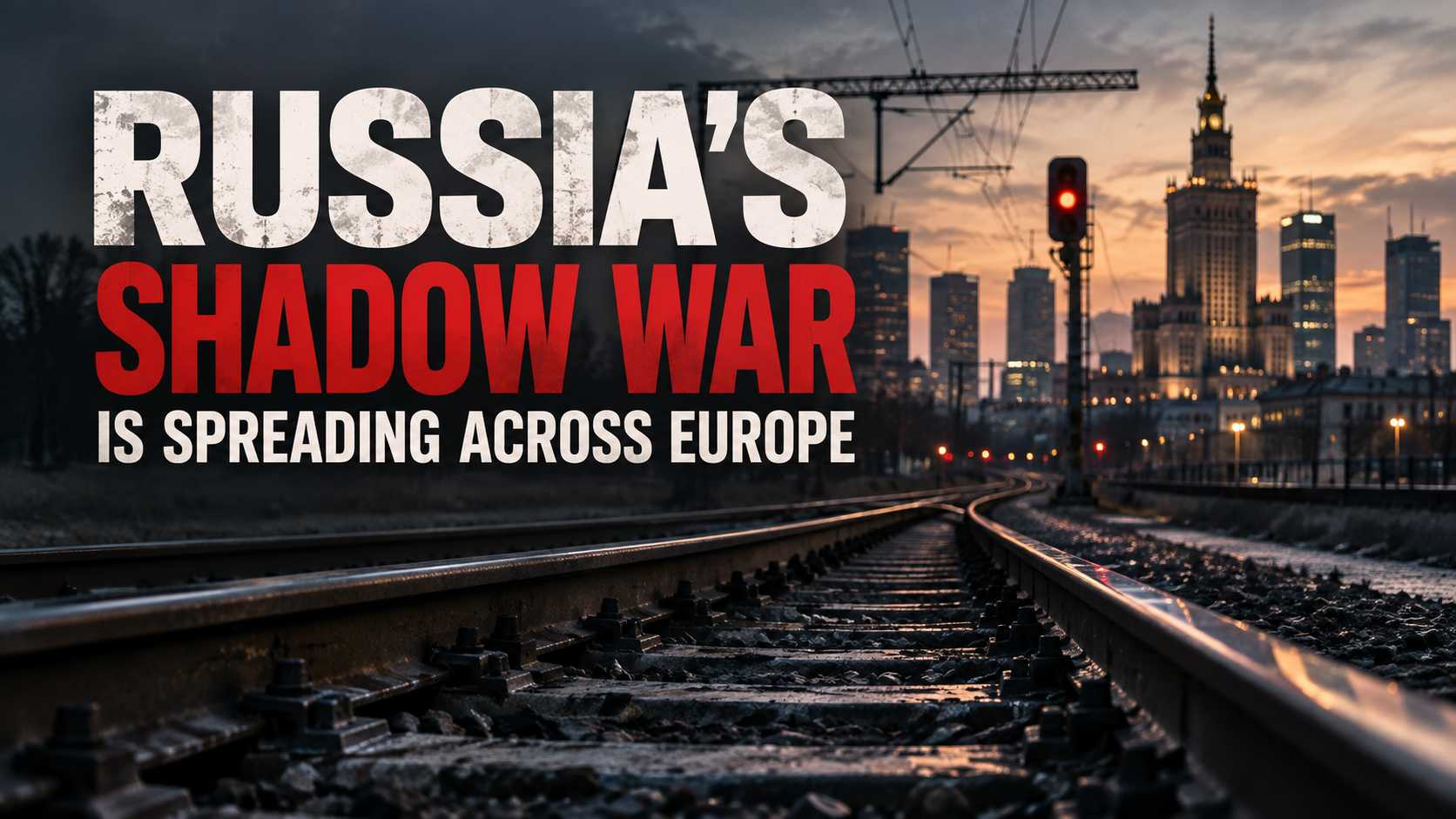
From sabotage and arson to drones and dangerous encounters in the Baltic, a growing series of incidents is forcing Europe to confront a difficult question: How far can the pressure escalate before NATO responds?
WARSAW, Poland — I came to Europe because the pattern was becoming increasingly difficult to ignore. Russia’s war against Ukraine is still being fought with missiles, drones, artillery and soldiers, but another confrontation is developing farther west — one that often operates below the threshold of conventional warfare.
From here in Warsaw, the signs of that confrontation are increasingly visible.
Across Europe, authorities are dealing with sabotage, suspicious fires, attacks on infrastructure, drone incursions and increasingly dangerous encounters involving Russian military forces. Not every incident has been publicly attributed to Moscow, and it is important not to treat suspicion as proof. But some cases have already produced compelling evidence of Russian involvement, while others are being investigated against the backdrop of a broader campaign European officials have increasingly described as hybrid warfare.
One of the clearest examples is here in Warsaw.
A Shopping Center Destroyed by Fire
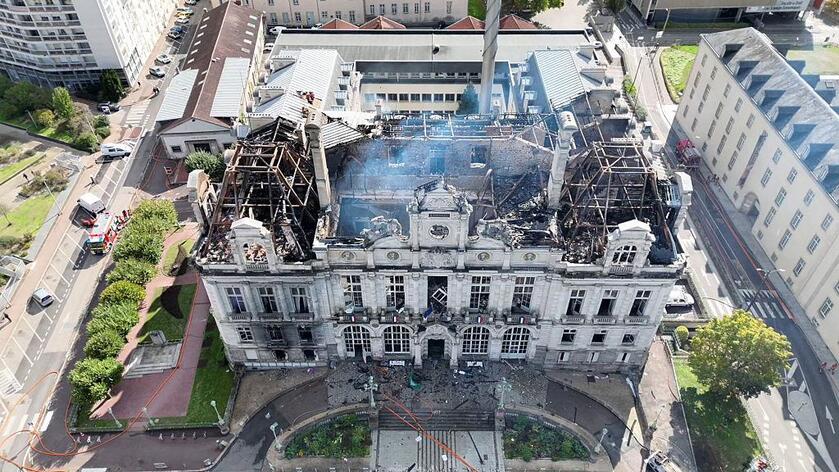
I visited the remains of the Marywilska 44 shopping complex, a massive commercial center that once contained roughly 1,400 shops and service businesses. In May 2024, the complex was destroyed by fire.
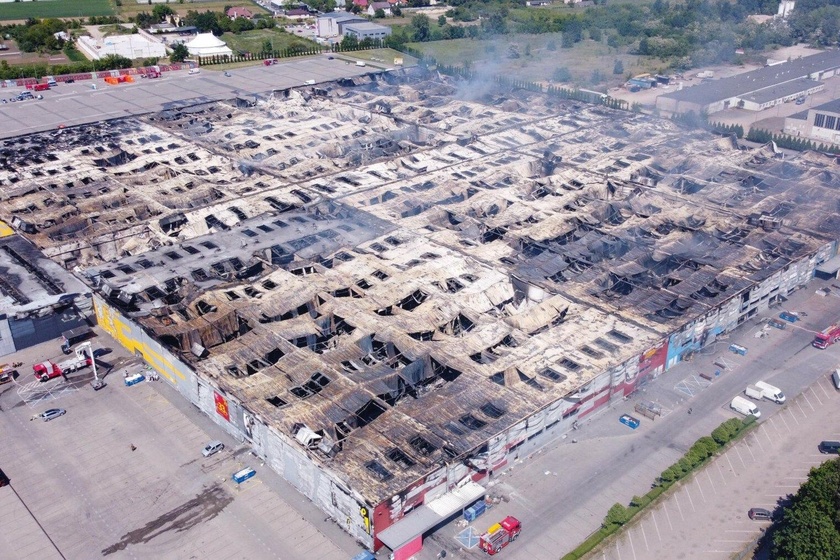
The burned remains of the Marywilska 44 shopping complex in Warsaw, Poland. Polish prosecutors say the May 2024 fire was deliberately set as part of a sabotage operation carried out on behalf of Russian intelligence.
Polish prosecutors have since concluded that the blaze was deliberately set by members of an organized group operating on behalf of Russian intelligence. Investigators say individuals connected to the operation were instructed to record the fire and send the footage to handlers for use on Russian propaganda channels. Polish prosecutors have also linked members of the same network to other arson operations in Lithuania and attempted attacks elsewhere in the region.
Standing at that site changes the way you think about the term hybrid warfare. It sounds clinical when discussed in a television studio. On the ground, it can mean an enormous commercial complex burned to the ground and hundreds of people's livelihoods disrupted.
The objective of an operation like this does not necessarily have to be territorial conquest. Disruption itself can be the weapon.
Sabotage Brings Dutch Railways to a Halt
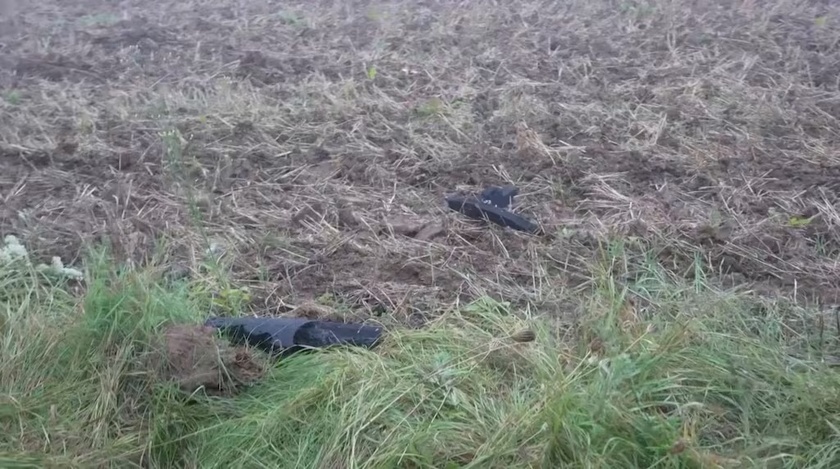
That concern became even more immediate this week in the Netherlands, where authorities discovered deliberately placed materials on railway tracks at approximately 30 locations.
Metal pipes were positioned across rails, causing signaling problems and major disruptions across the Dutch network. Jumper cables were also reportedly used to interfere with railway systems. Police have opened a major investigation into what authorities are treating as coordinated sabotage.

At this point, however, Dutch authorities have not publicly identified who carried out the operation or established a Russian connection. That distinction matters.
But the scale of the operation is alarming regardless of who is ultimately found responsible. Someone demonstrated the ability to interfere with a NATO country's transportation infrastructure simultaneously across dozens of locations.
The purpose of hybrid warfare is often precisely this kind of ambiguity. The aggressor does not necessarily need to send tanks across a border. Instead, infrastructure fails, transportation is disrupted, fires break out and governments are forced to spend resources investigating incidents whose perpetrators may initially be difficult to identify.
The public experiences the consequences long before anyone knows for certain who is responsible.
Pressure in the Baltic
The escalation is not confined to covert activity.
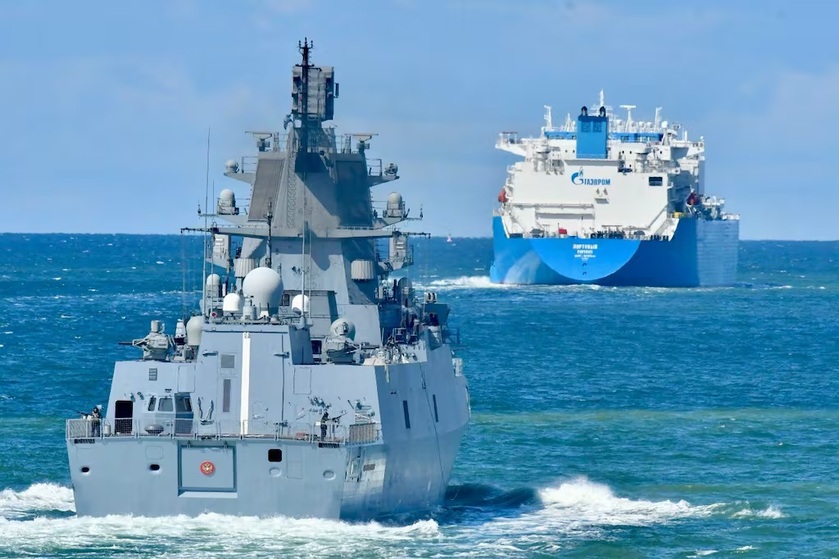
A Russian frigate in international waters off Denmark fired two flares toward a Danish military helicopter that had been sent to photograph the vessel. Danish officials said one of the flares passed close to the aircraft. Denmark subsequently summoned Russia’s ambassador, while Prime Minister Mette Frederiksen described the incident as part of a broader pattern of increasingly aggressive Russian behavior in Europe.
Russia, for its part, accused the Danish helicopter of conducting dangerous maneuvers near its ship.
At roughly the same time, NATO aircraft intercepted and destroyed an explosive-carrying drone that entered Lithuanian airspace after approaching from Belarus. The incidents are different, but together they illustrate just how crowded and dangerous the space between Russia and NATO is becoming.
This is where the danger of miscalculation becomes difficult to dismiss.
A flare narrowly misses a helicopter. A drone crosses a border. A railway is sabotaged. A fire destroys a commercial building. Each incident can be treated individually as something short of war.
But what happens when one of them kills dozens of people?
The Strategy Behind the Pressure
My assessment is that Russia is testing how much pressure it can apply without provoking a direct NATO military response.
European governments remain among Ukraine’s most important supporters. Moscow has little realistic prospect of convincing those governments through diplomacy that abandoning Ukraine is in their interests. But it may have another avenue: convince ordinary Europeans that supporting Ukraine carries an increasingly uncomfortable price.
If trains stop running, factories are disrupted, infrastructure becomes unreliable and fear begins affecting everyday life, public pressure can eventually migrate upward toward elected governments.
That is the logic behind hybrid warfare. You do not necessarily defeat your opponent's army. You attack the society supporting it.
Russia’s conventional military remains heavily committed inside Ukraine, while Ukraine continues striking Russian energy and military infrastructure far behind the front lines. The Kremlin therefore has an incentive to find other methods of imposing costs on the countries supporting Kyiv.
Whether Europe is prepared to respond effectively is becoming one of the most consequential questions of this war.
Ukraine Is Still the Center of the Conflict
None of this means the conventional war has slowed.
Russia continues launching enormous numbers of missiles and drones against Ukraine, while Ukraine continues carrying out long-range attacks against Russian military and energy infrastructure. The human cost remains staggering, particularly for civilians living near the front and in cities subjected to repeated aerial attacks.
But the significance of what is happening in Europe is that the geographic boundaries of the conflict are becoming less clear.
Former British Prime Minister Boris Johnson, speaking recently in Ukraine, described the conflict as fundamentally an imperial war and argued that the West must provide Ukraine with a clearer future inside European institutions. His argument is that ambiguity about Ukraine’s future has helped prolong rather than resolve the confrontation.
Whether one agrees with that conclusion or not, Europe is already confronting consequences that extend far beyond Ukrainian territory.
Where Is the Line?
NATO was created around the principle that an attack against one member can be treated as an attack against all. That principle is relatively straightforward when the attack involves tanks, aircraft or missiles.
Hybrid warfare deliberately makes the calculation harder.
What happens when the weapon is an arsonist?
What happens when critical infrastructure is sabotaged by people working indirectly for a foreign intelligence service?
What happens when a drone crosses NATO airspace, or a Russian warship fires flares toward a NATO aircraft and the next encounter ends differently?
Those are no longer theoretical questions.
I’m in Poland because I wanted to see this developing confrontation firsthand. From Warsaw, I’ll be traveling north toward the Suwałki Gap and then toward the border with Russia’s Kaliningrad exclave — one of the most strategically sensitive pieces of territory anywhere in NATO.
Ukraine remains the battlefield where the shooting war is concentrated. But the struggle surrounding it is already reaching much farther into Europe.
The question now is not simply whether Russia is willing to keep applying pressure.
It is how much pressure Europe will tolerate before it decides the line has been crossed.