
















Chuck Holton
Politics • Culture • News
Chuck Holton is an American war correspondent, published author, and motivational speaker.
Interested? Want to learn more about the community?

"Which (things) we also speak, not in words taught of human wisdom, but in (words) taught of (the) Holy Spirit, fitting together spiritual (things) with spiritual (things)" (1 Corinthians 2:13).

Notice that phrase "fitting together" (1 Corinthians 2:13), which comes from the Greek word synkrinō (Strong’s G4793), a compound word meaning to join, measure, or interlock things side-by-side so they align as one cohesive whole. While reading a passage in its immediate setting—for example, when studying a book like the Gospel of Mark—is vital, we cannot isolate a single book from the rest of Scripture (2 Timothy 3:16; 2 Peter 1:20–21). When believers refuse to measure their understanding of Mark against the full counsel of God's Word (Acts 20:27), they end up with a fragmented, contradictory theology that breeds confusion (1 Corinthians 14:33) instead of edification (Ephesians 4:12–16).

Yet the Holy Spirit never contradicts Himself in the Scriptures (John 10:35; 2 Timothy 3:16) when things are understood correctly in context of all of God's Writings and the original languages of them—and today's technology makes this possible for people like myself who have no formal training. The Spirit teaches us (John 14:26; 1 John 2:27) to interlock spiritual truth with spiritual truth by comparing Scriptures with other Scriptures across all of Scripture for the sake of clarity and understanding (1 Corinthians 2:13; Isaiah 28:10). When we do this, every piece fits together seamlessly, giving us clear, unclouded revelation into God's nature and heavenly purposes (Ephesians 1:17–18).

Granted, this does involve a lifetime of learning and obeying (2 Timothy 2:15; 2 Peter 3:18), but as Jesus' disciples, this is what we are called to do (Matthew 28:19–20; John 8:31). As we practice the truth we have already learned, the Lord will entrust us with even more knowledge and understanding (Mark 4:24–25) so that we should walk in wisdom (Colossians 1:9–10; Ephesians 5:15) and reveal His very glory and holy name (Matthew 5:16; 1 Peter 2:9).

P.S. This message is not my exact words, but has been put together at my direction according to my studies and convictions.

Interested? Want to learn more about the community?
What else you may like…
Videos
Podcasts
Posts
Articles
New White House Press Secretary Preaches!

Stephen Miller is on fire in this speech. This is exactly what I've been saying about the protests in France, and why it's so important to keep them from happening in the US.

00:04:02
Hegseth Fires Back at Impeachment: "We Have Only Just Begun to Fight"

Secretary of War Pete Hegseth delivers a defiant statement from the steps of the Pentagon, defending two years of sweeping changes at the Department of War and firing back at the Democrats who have filed articles of impeachment against him.

Hegseth lists the "sacred cows" he says the department has torn down: DEI, climate change as a military objective, transgender service, and renaming bases. He defends strikes on narco-terrorists, the military's role in border security and mass deportations, and the war to keep Iran from getting a nuclear weapon, calling it "courageous and historic."

He also calls on the lame-duck Congress to pass a reconciliation bill with at least $350 billion for the military. He dismisses the impeachment effort, led by what he calls "a disgruntled, defeated Congressman," as "the politics of personal destruction," the same tactic he says was used twice against President Trump. His message to the troops: "Don't blink, ignore the noise, never hesitate."

00:05:47
The Future of America? I Hope Not!

Dave Rubin made this AI video that paints a pretty bleak future if the DSA wins an election. What do you think?

00:03:00
Episode 622 - Field Producer Dennis Azato and Chuck Reminisce

My erstwhile field producer and cameraman Dennis Azato has accompanied me on ten years of adventures across the globe. Today he joins me in Ukraine and we spend some time remembering our many trips together.

Episode 622 - Field Producer Dennis Azato and Chuck Reminisce

🙏🇺🇸🇮🇱🇺🇦🏆♾️💝✝️✡️🕎🏆⬆️🙏🪖🛡️
💯✔️📰[~6 hours ago] “LIVE: Explosions In Iran - US Issues Security Alert In Europe - Sirens Activated In Iraq” @TousiTV”
AND [~9 hours ago] “Iran Threatens Trump as War Reaches Breaking Point (Condensed) @hotzonepodcast”

💝🎄🇮🇱✝️✡️🕎🇺🇸"The Birth of Messiah" - Christmas Table Runner – [from] I Am Israel
https://iamisraelfilm.com/products/the-birth-of-messiah-christmas-table-runner

We learn in Galatians 3 that what Christ achieved through His faithfulness (Galatians 3:22), we have a share in because Christ is the promised Seed that was given to Abraham (Galatians 3:16)—the individual Seed by which all the nations would be blessed (Genesis 22:18; Galatians 3:8). He is the recipient of all of God's promises (Galatians 3:16; 2 Corinthians 1:20) and inherits all things because of His faithfulness (Hebrews 1:2; Philippians 2:8–9).

Because He never sinned (1 Peter 2:22; Hebrews 4:15), perfectly fulfilled the law in His life and in His teaching (Matthew 5:17), and gave His life up as an offering and a sacrifice for our sins (Ephesians 5:2; Hebrews 10:12), we have been forgiven (Ephesians 1:7). Through our faith in the gospel (Ephesians 1:13), not only are we forgiven, but we have been baptized into Christ and have put on the Firstborn Heir of all things (Galatians 3:27; Colossians 1:15; Hebrews 1:2).

For this reason, it says in Galatians 3 that there is neither Jew nor ...

post photo preview
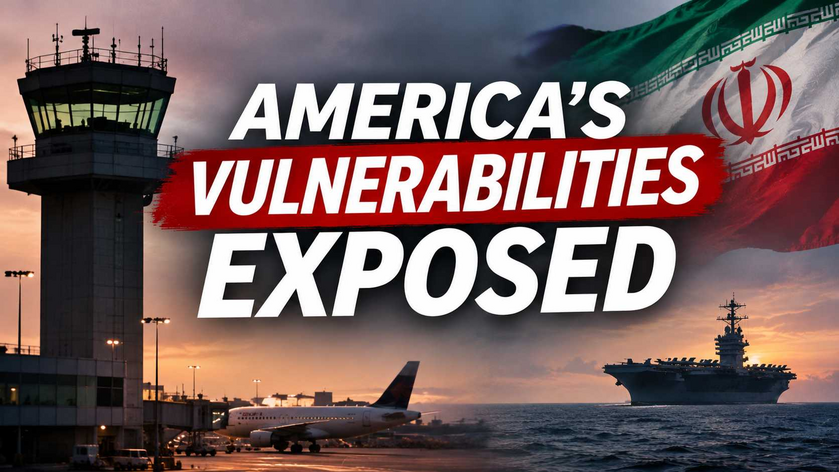
America's Vulnerabilities Exposed as Iran Raises the Stakes

An unprecedented aviation shutdown, reports of Iranian threats against President Trump, and renewed attacks in the Persian Gulf are raising serious questions about American security and preparedness.

A nationwide aviation shutdown, reports of an Iranian assassination plot against President Donald Trump, and continued military threats in the Persian Gulf have exposed some troubling vulnerabilities in America's national security. Although these developments appear to be unrelated, they illustrate how quickly modern systems can be disrupted and how dangerous it is to assume that the government can protect the country from every conceivable threat.

During my latest Hot Zone broadcast, I examined what officials are saying about the Federal Aviation Administration's massive system failure, new intelligence reports involving Iran, and the increasingly uncertain prospects for resolving the conflict in the Middle East. What concerns me most is not simply that these events occurred, but how much they reveal about the condition of America's critical infrastructure and the challenges facing our military leadership.

An Aging Aviation System Finally Breaks Down

The nationwide ground stop that disrupted American air travel on Friday initially prompted speculation about terrorism or a foreign cyberattack. Given the growing number of threats against American infrastructure, those concerns were understandable, but the evidence presented so far points toward a considerably more ordinary explanation.

Transportation Secretary Sean Duffy explained that the disruption apparently began during routine maintenance at a remote FAA facility, where contractor L3Harris was transitioning telecommunications equipment from aging copper connections to fiber-optic technology. During that process, a router reportedly began overwhelming other components of the network with more than 1,000 connection attempts every four to five seconds, interfering with communications and radar information.

The FAA responded by grounding aircraft until technicians could isolate the problem and restore the system. Officials said they had not determined whether the failure resulted from contractor error or defective equipment, although they did not believe a cyberattack was responsible.

What astonishes me is the age of the technology involved. According to information discussed during the broadcast, some equipment dates back to 2001, while portions of the underlying air traffic control infrastructure are considerably older.

I flew more than 300,000 miles last year, and I expect to travel a comparable distance this year. Knowing that one of the world's most technologically advanced countries continues depending on equipment that is decades old to manage its airspace is hardly reassuring.

The shutdown reportedly disrupted thousands of flights and affected more than a million travelers, with delays continuing long after the system was restored. Although officials deserve credit for prioritizing passenger safety, the incident demonstrates how a relatively localized technical failure can produce nationwide consequences.

The administration has emphasized the need for additional funding to modernize air traffic control. However, Congress has already provided substantial resources for FAA improvements, and the public deserves a clear explanation of how those funds are being spent and why critical systems remain so vulnerable.

Preparedness Is Not the Same as Panic

The aviation failure also renewed questions about reports that American military installations have been instructed to maintain significant emergency supplies, including food, water and fuel.

Homeland Security Secretary Markwayne Mullin attempted to reassure Americans during a television interview, arguing that the United States possesses stronger infrastructure and greater redundancy than many other countries. He urged the public not to interpret military preparedness measures as evidence that a national emergency was imminent.

I appreciate the effort to prevent unnecessary panic, but I disagree with the suggestion that ordinary Americans have no reason to prepare for disruptions.

There is nothing unreasonable about keeping emergency food, drinking water, essential medications and backup communications available for your family. The aviation shutdown demonstrated how quickly a technical problem can affect an enormous number of people, and an extended disruption to electricity, communications or transportation could create much more serious consequences.

I've written extensively about community preparedness in my book Death of Civilization, and one of the most important lessons is that resilience begins long before an emergency occurs. Families should know how to communicate when cellular networks fail, while neighbors should understand who might need assistance during an extended power outage.

That doesn't require living in fear or assuming that disaster is inevitable. It simply means recognizing that government systems, however sophisticated, are not infallible.

Reports of an Iranian Plot Against Trump

Meanwhile, an Israeli newspaper has reported that intelligence officials warned Washington about an alleged Iranian plan to target President Trump and other senior American officials using explosive-laden drones.

According to the account discussed during the broadcast, Israel's Mossad shared intelligence with American counterparts, and another Western intelligence service reportedly reviewed the findings. However, the alleged plot has not been publicly confirmed by the White House or the CIA, making it important to distinguish the reported warning from an established assassination attempt.

When questioned about the threat, Trump responded with humor, suggesting that the reporters standing near him would also be in danger if someone attempted to attack him.

The president's security detail has extensive counter-drone capabilities, and a successful attack against a heavily protected official would face substantial obstacles. Nevertheless, the rapid development of relatively inexpensive drone technology has created security challenges that governments can no longer afford to dismiss.

Having reported extensively from Ukraine, I have seen how small unmanned aircraft have transformed modern warfare. Systems that once required sophisticated military resources can now be produced at a fraction of the cost, forcing security services to rethink how they protect personnel and installations.

If the allegations concerning Iran are substantiated, Washington will have to consider what they mean for negotiations with a government accused of threatening the American president.

Iran's Military Threat Has Not Disappeared

The reported assassination threat comes as the United States continues maintaining a substantial naval presence near Iran.

During the broadcast, I discussed reports of three American aircraft carriers operating in the broader region, along with destroyers and other supporting vessels. Such a concentration of naval power provides Washington with considerable military options, although the presence of those forces does not necessarily mean another operation is imminent.

Iran, meanwhile, continues presenting itself as capable of resisting American pressure. Reports discussed during the broadcast suggest that Tehran may retain between 1,500 and 2,500 missiles, although the estimate was described as having low confidence.

Iranian authorities have also claimed responsibility for attacks against commercial tankers in the Strait of Hormuz and American military facilities in Bahrain. Some of those claims remain unverified, and American officials have disputed Iranian accounts of successful strikes.

One particularly dramatic Iranian claim involved the alleged sinking of a large oil tanker carrying approximately two million barrels of crude. I have not seen independent evidence establishing that such a vessel was lost, and the absence of a corresponding major reaction in maritime insurance markets raises further questions about the claim.

These distinctions matter because wartime propaganda is designed to influence public perceptions as much as military outcomes. We should take credible threats seriously without accepting every statement issued by Tehran as fact.

Economic Pressure Has Its Limits

Treasury Secretary Scott Bessent has argued that Iran's economy is deteriorating rapidly under American pressure, citing projections of a potentially severe contraction between March 2026 and March 2027.

Economic restrictions can impose enormous costs on a government, but they do not automatically produce political change. Iran's leadership has demonstrated a willingness to tolerate extraordinary hardship among its own population while continuing to prioritize military and security operations.

At the same time, global oil markets appear to be adapting to disruptions in the Persian Gulf. Increased production from other countries and substantial quantities of crude already in transit have helped ease concerns about an immediate supply crisis.

I discussed the possibility that expanding global production could eventually create an oversupply, pushing energy prices lower even while Iranian exports remain restricted. That would be welcome news for consumers, although the consequences for oil-producing countries could be considerably more complicated.

The larger question is whether economic pressure alone can persuade Iran's leadership to abandon its regional military activities and nuclear ambitions. I remain skeptical that sanctions, without a credible broader strategy, will produce the outcome Washington wants.

Washington Needs a Clear Strategy

The United States possesses overwhelming military capabilities, but military strength is only useful when political leaders establish clear and achievable objectives.

I am increasingly concerned that the administration's public statements about Iran have not always matched developments on the ground. Americans have repeatedly heard that the conflict is effectively over, yet Iranian threats continue, American forces remain deployed, and the possibility of renewed fighting has not disappeared.

That uncertainty also affects the service members assigned to ships and bases throughout the region. Maintaining a substantial military presence indefinitely without a clearly communicated mission places additional strain on personnel and equipment while leaving America's adversaries uncertain about Washington's intentions.

A lasting settlement would be preferable to another prolonged conflict, provided it genuinely addresses the threats that brought the United States and Iran into confrontation. But diplomacy must be supported by a realistic assessment of Tehran's capabilities, intentions and willingness to comply with any agreement.

The aviation shutdown offers an important parallel. America cannot solve its infrastructure problems simply by reassuring the public that everything is under control, just as it cannot resolve a military confrontation by repeatedly declaring that victory has already been achieved.

In both cases, the country needs competent leadership, honest assessments and a willingness to confront difficult realities before they develop into larger crises.

The immediate aviation emergency has passed, but the vulnerabilities it exposed remain. And while the administration continues searching for a way forward with Iran, the threats facing American personnel, infrastructure and national security have not disappeared.

We would be wise to recognize both realities rather than waiting for the next emergency to remind us how fragile some of our most important systems have become.

Read full Article
post photo preview
Havana Syndrome: Secret Weapon Attacks on U.S. Soil?
Early Access

Help Build the Frontier Forge Institute: We're working to establish a year-long residential training academy where young men can develop practical skills, physical fitness, leadership, and Christian character. Learn more and support the mission at https://frontierforge.org/vision.

Could a secret weapon be targeting American intelligence officers and military personnel right here in the United States? In this episode of The Hot Zone, I break down Catherine Herridge's latest reporting on suspected Havana Syndrome attacks near Washington, DC, including reports of government researchers suffering mysterious brain injuries while investigating directed-energy technology. Become a Supporter to see this early access video from the Hot Zone.


Only for Supporters
To read the rest of this article and access other paid content, you must be a supporter
Read full Article
post photo preview
Iran's Threats Reach Washington as New Conflicts Test American Leadership

Reports of threats against senior U.S. officials, escalating gang violence in Haiti and stalled negotiations over Ukraine raise questions about America's ability to confront multiple security challenges.

The United States is facing an increasingly complicated security environment, with threats against senior government officials, instability across the Middle East and renewed diplomatic efforts to end the war in Ukraine. While Washington continues pursuing negotiated solutions to several of these crises, developments on the ground suggest that America's adversaries have little intention of abandoning their objectives.

During my latest Hot Zone broadcast, I examined reports of Iranian threats against members of the Trump administration, a developing military operation against gangs in Haiti, and negotiations between Russia and Ukraine that appear to be running into a familiar obstacle: Moscow's unwillingness to acknowledge the realities of the battlefield.

These situations may seem unrelated, but they raise the same fundamental question about American foreign policy. How do you negotiate effectively with adversaries who believe they can continue threatening your interests without facing consequences?

Iranian Threats Against American Officials

One of the most concerning developments involves Treasury Secretary Scott Bessent, who reportedly relocated from his Georgetown residence to Fort McNair in Washington following intelligence warnings about a potential Iranian-backed assassination plot.

According to a report discussed during the broadcast, the threats against Bessent had intensified as he became increasingly involved in the administration's economic pressure campaign against Iran, including sanctions and efforts to restrict Iranian maritime trade.

Bessent is reportedly not the only senior official facing such concerns. Defense Secretary Pete Hegseth and Secretary of State Marco Rubio have also been identified in reports about officials receiving additional security protection at military installations.

Having served in the military and spent more than two decades reporting from dangerous environments, I understand the importance of protecting individuals facing credible threats. Nevertheless, the prospect of senior American officials having to relocate because of threats attributed to a foreign government should concern every American.

Iran's Islamic Revolutionary Guard Corps has a long history of involvement in operations beyond Iran's borders. The precise details of the reported threats against current administration officials remain publicly unconfirmed, but the broader danger of foreign-directed plots against Americans is well established.

The situation raises an uncomfortable question about Washington's strategy. If Iran continues threatening American officials while negotiations remain underway, what assurances can any diplomatic agreement provide that those activities will stop?

Reports of additional security concerns involving American military aircraft in Britain only reinforce the need to examine the threat beyond the immediate Middle Eastern battlefield.

The Limits of Economic Pressure

The administration has placed considerable emphasis on restricting Iran's access to international markets, particularly through the naval blockade and additional measures targeting petroleum exports.

However, closing maritime routes does not necessarily prevent oil and fuel from reaching foreign buyers.

During the broadcast, I discussed information provided by a contact familiar with regional petroleum transportation. According to this source, Gulf countries are exploring arrangements to move oil through Syria and Turkey, creating alternative routes that would reduce dependence on shipping through the Strait of Hormuz.

These arrangements have not been independently confirmed, but they illustrate how regional governments may adapt when conventional trade routes become unreliable.

Iran is reportedly pursuing its own alternatives. Video circulated online appears to show large numbers of motorcycles transporting fuel containers through Iran's southeastern border region toward Pakistan. The footage's precise location and date have not been independently verified, but informal cross-border fuel trading has long presented a challenge to sanctions enforcement.

The strategic problem is straightforward. If Iran can continue generating revenue through alternative routes, economic restrictions may weaken its government without necessarily eliminating the resources available to its security apparatus.

Sanctions and blockades can be powerful instruments, but they must be measured against their actual results rather than their political appeal.

Haiti's Gangs Face a New Challenge

Another major development concerns Haiti, where reports describe an operation involving Salvadoran forces against criminal organizations that have devastated much of the country.

According to accounts discussed during the broadcast, Salvadoran President Nayib Bukele has authorized an operation connected to the reported kidnapping of four Salvadoran humanitarian personnel associated with the country's air force. Claims about the deployment and its objectives require independent confirmation.

The operation has particular significance for me because I traveled to Haiti in October 2024 with humanitarian advocate Victor Marx, where we met some of the country's most notorious gang leaders.

Among them was Jimmy Chérizier, widely known as Barbecue, whose coalition has exercised considerable influence over areas of Port-au-Prince. We also met a leader associated with the 400 Mawozo gang, an organization notorious for kidnapping American missionaries.

Our objective was not to excuse the gangs' behavior, but to explore whether direct negotiations could help protect civilians and allow displaced families to return home.

I witnessed firsthand how thoroughly these criminal organizations had disrupted ordinary life. Communities had been emptied, businesses destroyed, and residents forced to depend on armed groups operating beyond meaningful government control.

During our visit, Victor Marx negotiated with a gang leader over reopening a road and permitting displaced residents to return. It was a limited agreement, but it demonstrated what might be accomplished when someone was willing to engage directly with the people exercising control on the ground.

Now, according to footage and reports discussed during the broadcast, a property associated with that same gang leadership has reportedly been struck during the Salvadoran operation. The circumstances of the strike, including responsibility and any civilian casualties, have not been independently established.

The larger issue is whether Haiti can finally begin dismantling the criminal networks that have made much of the capital ungovernable.

International interventions have repeatedly struggled to produce lasting improvements, while ordinary Haitians continue paying the price. Any new operation must be judged not simply by the number of gang positions destroyed, but by whether it restores security, protects civilians and creates conditions for legitimate governance.

Russia and Ukraine Remain Far Apart

Meanwhile, diplomatic discussions concerning the war in Ukraine are reportedly continuing in Abu Dhabi, with American representatives Steve Witkoff and Jared Kushner involved in efforts to move negotiations forward.

The fundamental disagreement remains territorial control.

Russia continues demanding Ukrainian concessions in the Donbas, while Ukrainian officials maintain that Moscow's representatives are overstating the amount of territory Russian forces actually occupy.

President Volodymyr Zelenskyy described an extraordinary disagreement in which Russian negotiators reportedly claimed control over areas still occupied by Ukrainian troops.

According to Zelenskyy, Ukrainian representatives presented video and other evidence contradicting those claims, yet the Russian side continued operating from a substantially different understanding of the battlefield.

This is one of the most difficult problems facing any peace negotiation. If the parties cannot agree on the territory each side controls, establishing a workable settlement becomes considerably more complicated.

I have repeatedly questioned whether President Vladimir Putin is receiving accurate information from his military commanders. Russia's command structure creates powerful incentives for officers to exaggerate successes and minimize failures, particularly when battlefield results fall short of political expectations.

The transcript also described American negotiators reportedly challenging Russian territorial claims using U.S. intelligence assessments. If accurate, that could be an important step toward ensuring discussions are grounded in verifiable facts.

Nevertheless, Ukraine cannot be expected to surrender territory simply because Russian officials claim to have captured it.

A lasting agreement requires an accurate understanding of military realities, credible security arrangements and meaningful Ukrainian participation in decisions about the country's future.

The Challenge of American Leadership

These developments come amid political tensions in Washington, including a failed impeachment effort against Defense Secretary Pete Hegseth and renewed debate over the administration's handling of military affairs.

During the broadcast, I also reflected on Veterans Day and the 251st anniversary of the United States Marine Corps, whose traditions of service and sacrifice remain an important part of America's military identity.

As a veteran myself, I appreciate the men and women who continue serving despite the uncertainty surrounding so many international conflicts. Their commitment deserves leadership that establishes clear objectives and provides the resources necessary to accomplish them.

That principle applies whether the United States is confronting Iranian threats, supporting efforts to stabilize Haiti or attempting to negotiate an end to Russia's invasion of Ukraine.

The challenges are different, but the need for strategic clarity is the same.

Diplomacy remains an essential instrument of national power, and a negotiated settlement is preferable to unnecessary bloodshed whenever it can produce a durable result. But negotiations become far less effective when adversaries conclude that threats, intimidation and continued aggression carry little cost.

The United States must decide what outcomes it is seeking, determine whether its current policies are achieving them and remain willing to adjust its approach when circumstances demand it.

America's military strength remains formidable. The more difficult question is whether Washington can employ that strength, together with diplomacy and economic pressure, to achieve lasting results rather than temporary pauses in conflicts that remain unresolved.

Read full Article
See More
Available on mobile and TV devices
google store google store app store app store
google store google store app tv store app tv store amazon store amazon store roku store roku store
Powered by Locals