











As the United States confronts growing threats from China, Russia and Iran, a new military initiative aims to protect American bases, power systems and supply chains from attacks that could cripple the nation's ability to fight.
CHANTILLY, FRANCE — For decades, Americans have lived with the comforting assumption that major wars happen somewhere else. We have fought conflicts in the Middle East, Asia and Europe, but the United States itself has remained largely insulated from the destruction that accompanies modern warfare. Two oceans and friendly neighbors have provided a degree of protection that much of the world has never enjoyed.
That geographical advantage remains important, but technology has fundamentally changed the nature of the threat. An adversary no longer needs to send an invasion force across the Atlantic or Pacific to inflict serious damage on the United States. Cyberattacks, sabotage, inexpensive drones and disruptions to critical supply chains could interfere with American military operations without a single enemy soldier crossing our borders.
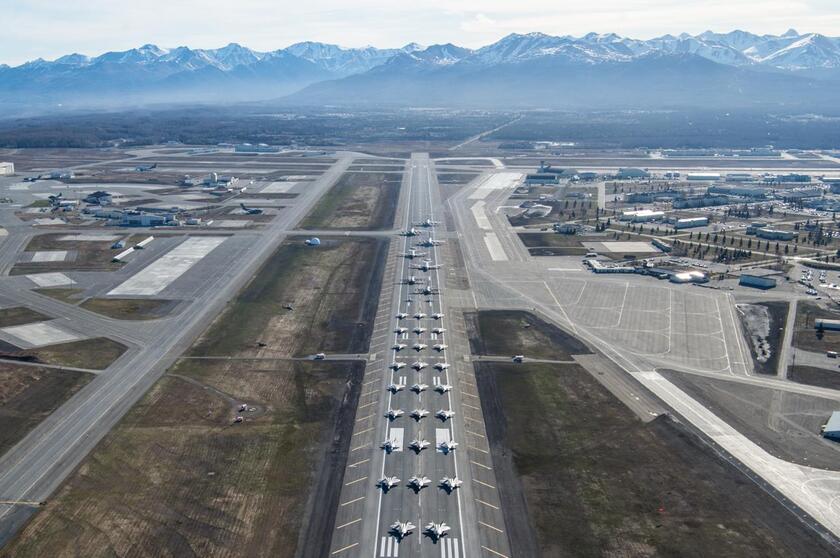
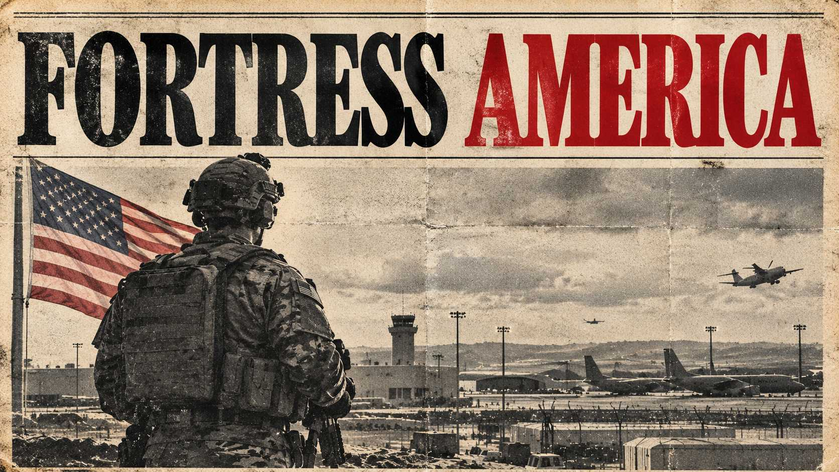
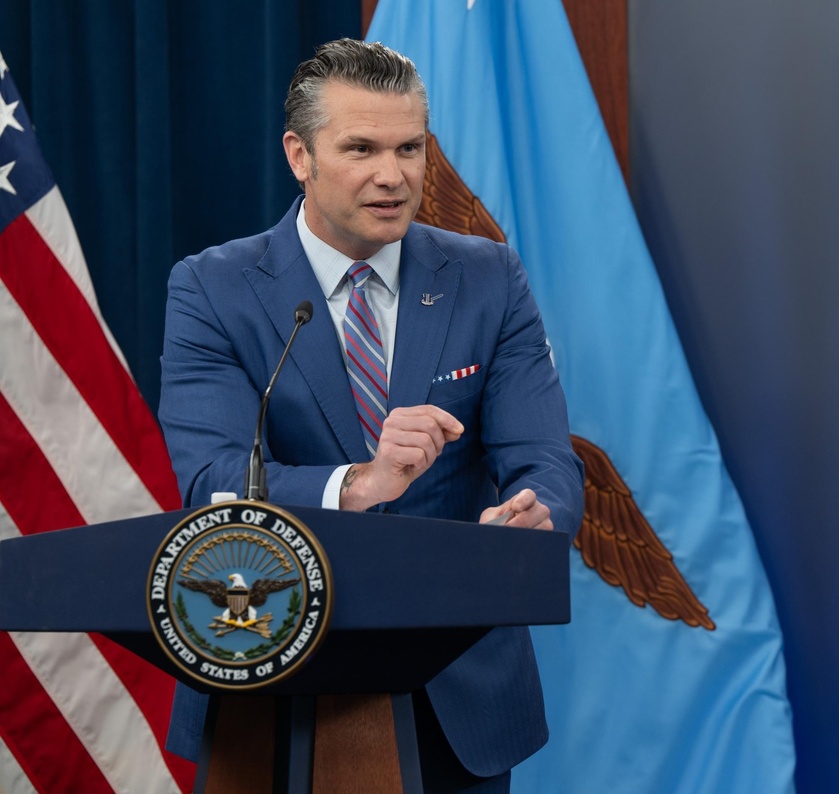
The Pentagon appears to be taking that reality more seriously. On September 30, Defense Secretary Pete Hegseth announced an initiative called Fortress America, an ambitious effort to strengthen the resilience of American military installations and reduce their dependence on vulnerable civilian infrastructure and foreign suppliers.
The announcement has prompted understandable questions about what the administration might know concerning future threats. With tensions involving Iran, Russia and China continuing to rise, some Americans are wondering whether the Pentagon is preparing for an imminent attack.
Having spent years reporting from conflict zones and investigating the vulnerabilities of America's electrical grid, I believe there is a more practical explanation. The military is finally addressing weaknesses that have been apparent for years, and the lessons emerging from Ukraine have made those vulnerabilities impossible to ignore.
The Pentagon's New Insurance Policy
Hegseth described Fortress America as a national insurance policy intended to ensure that American military forces can continue operating even when the infrastructure surrounding them fails.
The initiative takes its name from an acronym representing Federal Operations for Resilience, Troop Resources, Energy, Supply and Survivability. Its objectives include making military installations energy-independent, rebuilding critical domestic supply chains, expanding strategic reserves, protecting bases against physical and cyber threats, and securing military communications and satellite capabilities.
"Every major military installation in America is going to generate its own power independent of the civilian grid," Hegseth declared during the announcement.
He explained that military bases must be capable of continuing operations even if an adversary disables the civilian electrical network through sabotage or cyberattack. Aircraft must remain operational, command centers must maintain communications, and essential systems must continue functioning regardless of what happens beyond the perimeter fence.
The initiative also calls for expanding domestic production of rare-earth minerals, semiconductors, specialty metals and other materials essential to modern weapons systems.
For years, the United States has relied on foreign suppliers for materials that are indispensable to its national defense. That arrangement may reduce costs during peacetime, but it creates an enormous strategic vulnerability if those suppliers become adversaries or international shipping routes are disrupted.
This is where globalization has demonstrated one of its greatest weaknesses. A supply chain designed primarily around efficiency and cost can become a liability when national survival depends on maintaining access to essential resources.
If America finds itself in a military confrontation with China, for example, it would be extraordinarily dangerous to discover that critical components needed to sustain American military operations are unavailable because their production depends on Chinese facilities.
Fortress America is intended to reduce that dependence before a crisis occurs.
The Hidden Vulnerability of America's Power Grid
One of the most important aspects of the initiative concerns electricity.
I previously produced a documentary examining the condition of the American power grid, and what I learned during that investigation was deeply concerning. Much of the country's electrical infrastructure was designed decades ago, and some of its most important components are aging, difficult to replace and vulnerable to deliberate attack.
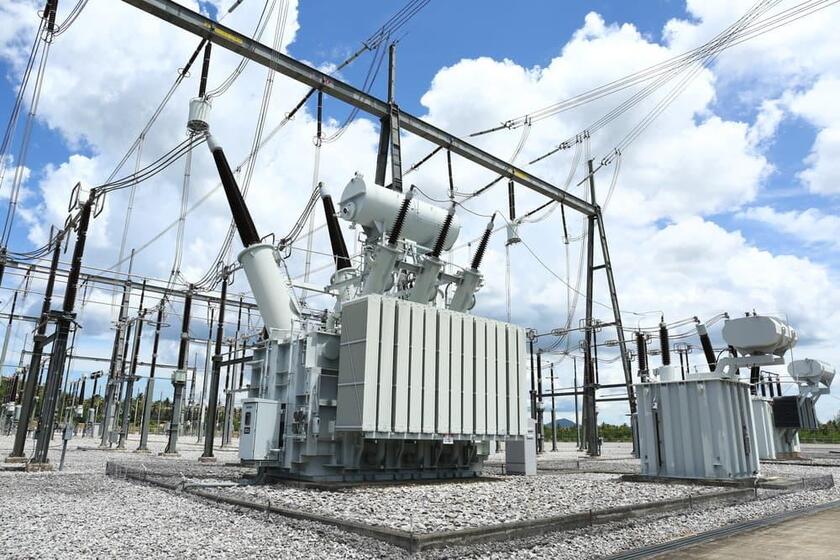
Large high-voltage transformers are particularly important because they are essential to transmitting electricity across long distances. These machines are expensive, specialized and often built to meet the requirements of individual installations.
Replacing one can take considerable time, particularly when manufacturers face limited production capacity or shortages of specialized materials.
During my earlier investigation, experts warned that coordinated attacks against a relatively small number of critical components could produce widespread and prolonged disruptions. The precise scale of such a scenario is difficult to predict, and catastrophic estimates should not be treated as inevitable outcomes. Nevertheless, the underlying vulnerability is real.
Electricity supports nearly every function of modern society. Water treatment facilities, hospitals, communications networks, fuel distribution systems, food storage and transportation infrastructure all depend on reliable power.
A prolonged blackout would therefore create problems extending far beyond the inconvenience of losing lighting or internet access.
For the military, the consequences could be even more serious. An installation might possess advanced aircraft, sophisticated weapons and highly trained personnel, but those capabilities become far less useful if the base loses access to power, communications, fuel or maintenance facilities.
The Pentagon's decision to reduce its dependence on the civilian grid is not evidence that officials know a catastrophic blackout is imminent. It is recognition that a modern military should never rely entirely on infrastructure it does not control.
Nuclear Microreactors and a New Approach to Military Energy
One of the technologies being considered for military energy resilience is the nuclear microreactor.
Unlike traditional nuclear power plants, which require enormous facilities and extensive infrastructure, microreactors are designed to provide electricity from comparatively compact installations. Some proposed designs are transportable, allowing them to be deployed where reliable power is needed.
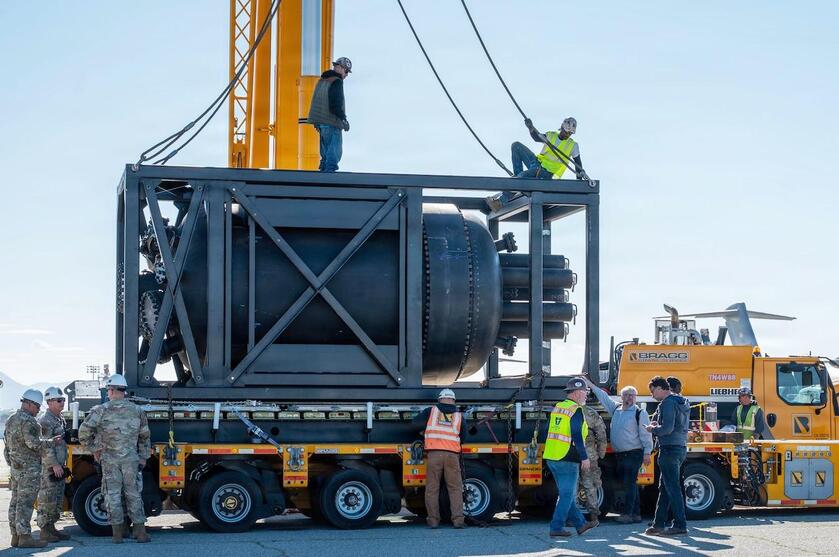
During the broadcast, I discussed the Army's Janus program, which has been associated with plans to develop nuclear power capabilities for military installations. The facilities mentioned include Fort Bragg, Fort Campbell, Fort Hood, Fort Benning and Fort Drum, with an ambitious timeline extending toward 2028.
The specific funding, construction schedules and operational milestones will depend on regulatory approvals, engineering requirements and the progress of individual projects.
Nuclear microreactors are only part of the proposed solution. The military is also examining large battery-storage systems, solar installations, microgrids and other technologies capable of maintaining electricity during a disruption.
Microgrids are particularly valuable because they can operate independently of the larger electrical network. If a regional power system fails, an installation with sufficient local generation and storage can isolate itself and continue supplying electricity to essential facilities.
Another technology I discussed involves microturbine generators, which can provide decentralized power using various fuels. These systems are especially interesting because of what we are seeing in Ukraine. Rather than depending exclusively on large power plants that present obvious targets for Russian missiles, Ukraine has increasingly pursued smaller and more distributed sources of electricity. The objective is to make the national energy system more difficult to disable through attacks against a limited number of major facilities.
That approach offers an important lesson for American military planners. A network of smaller, independent energy systems can provide greater resilience than a single centralized source of electricity.
The United States is learning from Ukraine's experience, and those lessons may prove invaluable in a future conflict.
China Has Already Demonstrated the Cyber Threat
The possibility of attacks against American infrastructure is not merely theoretical.
In 2024, American intelligence and cybersecurity agencies issued warnings concerning a Chinese state-sponsored hacking operation known as Volt Typhoon. The operation involved efforts to gain access to critical infrastructure networks, including systems associated with communications, energy, transportation and water services. American officials warned that the activity could allow Chinese operators to disrupt essential services during a future crisis.
Consider what that could mean during a confrontation over Taiwan.
If China launched a military operation in the Pacific, Beijing might attempt to interfere with American ports, railroads, communications networks and electrical systems at the same time. Even temporary disruptions could complicate the movement of military personnel, equipment and supplies.
A cyberattack would not necessarily need to destroy infrastructure permanently to have a significant military effect. Delaying American mobilization during the opening stages of a conflict could provide an adversary with a valuable operational advantage. This is one of the principal threats Fortress America is designed to address. The Pentagon cannot assume that American military installations will remain secure simply because they are located thousands of miles from the battlefield.
Ukraine Has Changed the Meaning of a Front Line
The war in Ukraine has demonstrated another reality that Western military planners can no longer ignore: modern warfare does not always have a clearly defined rear area.
For generations, armies organized their operations around the distinction between the front line, where combat occurred, and the rear, where supplies, maintenance facilities and command centers could operate with relative security. Long-range drones and precision weapons have weakened that distinction.
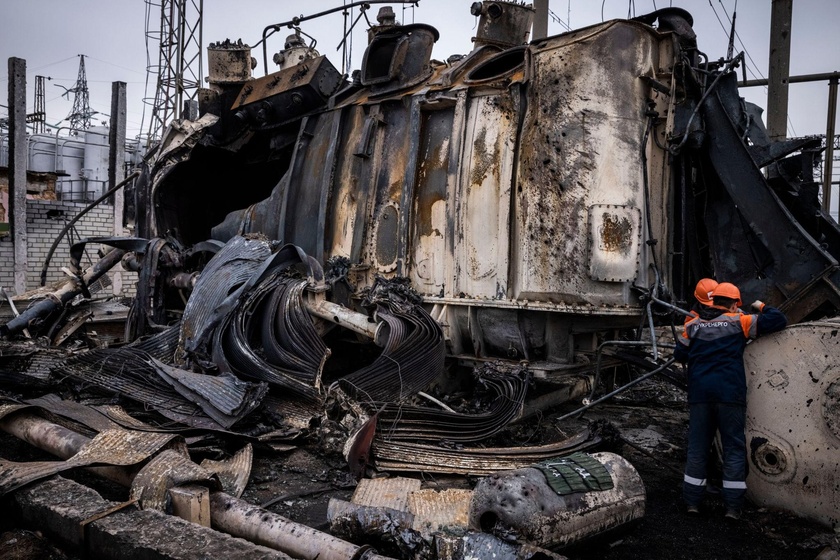
Both Russia and Ukraine have demonstrated the ability to strike infrastructure far beyond the immediate battlefield. Fuel facilities, ammunition storage sites, airfields and electrical installations can all become targets. Relatively inexpensive drones have also created threats to military installations that would once have required sophisticated aircraft or missile systems. That has enormous implications for American bases, including those located inside the United States.
An installation does not need to be within range of an enemy's conventional artillery to face the possibility of attack. Sabotage, cyber intrusions and small unmanned aircraft can threaten facilities that were never designed with those dangers in mind.
Fortress America therefore includes plans to strengthen protection against drones, physical sabotage and electronic interference.
It also recognizes the growing importance of space-based systems. Satellites provide navigation, intelligence, communications and other capabilities essential to modern military operations. If an adversary interferes with those systems, the consequences could extend across multiple theaters of conflict. The battlefield is no longer confined to the territory where soldiers are fighting. It increasingly includes communications networks, industrial facilities, power systems and space.
The California Attack That Should Have Been a Warning
One of the clearest examples of America's infrastructure vulnerabilities occurred in California in 2013.
The Metcalf electrical substation, near San Jose, was attacked by unidentified individuals who damaged transformers after communications lines in the area had been disrupted.
The attackers fired numerous rounds into equipment at the facility, causing extensive damage. The incident attracted significant attention because of the apparent coordination involved and the possibility that the perpetrators possessed detailed knowledge of the infrastructure they were targeting.
The people responsible were not publicly identified, and their motives remain uncertain. Although some observers suggested that the attack displayed characteristics of a professionally organized operation, there is no established public evidence proving that a foreign government directed it.
That uncertainty does not diminish the importance of what happened.
The incident demonstrated that critical infrastructure could be damaged through relatively simple physical attacks, without sophisticated missiles or advanced military equipment. It also exposed the importance of rapid decision-making by utility personnel and the need for effective emergency procedures. The Metcalf attack should have prompted a broader national conversation about infrastructure protection. More than a decade later, many of the underlying concerns remain relevant. When we consider the possibility of coordinated cyberattacks, physical sabotage and disruptions to electricity or communications, the importance of building independent military capabilities becomes obvious.
Preparing for a War on Multiple Fronts
The strategic environment facing the United States is becoming increasingly complicated.
Washington is confronting tensions with Iran while attempting to deter Chinese military action against Taiwan and responding to Russia's continuing war in Ukraine. Each of those situations presents different challenges, but the possibility of overlapping crises creates enormous pressure on American military resources. A major conflict could interrupt global shipping, restrict access to critical minerals, disrupt semiconductor production and place extraordinary demands on ammunition and fuel supplies.
Fortress America is intended to prepare for precisely that kind of disruption.
Hegseth has called for strategic reserves containing sufficient munitions, fuel, medical supplies, blood, spare parts and other essential materials to sustain operations even when normal supply chains are interrupted.
During the broadcast, I discussed reporting suggesting that some installations could eventually be expected to sustain operations for as long as 90 days without outside resupply. That figure has not been confirmed as a universal Pentagon requirement, but it illustrates the level of independence military planners are considering.
The important distinction is between maintaining enough supplies for ordinary peacetime operations and maintaining enough to survive the demands of a prolonged conflict.
Those are very different requirements.
An installation that operates efficiently under normal conditions may become dangerously vulnerable when transportation routes close, commercial suppliers cannot deliver and the surrounding civilian infrastructure begins to fail.
Building reserves is expensive, but discovering that those reserves are missing after a war begins would be considerably more costly.
What This Means for American Families
There is another lesson here that extends beyond the military.
If the Pentagon believes its installations should be capable of operating independently during a prolonged emergency, American families should also consider how they would manage if essential services were interrupted.
During my broadcast, I played remarks from a British official encouraging households to maintain basic emergency supplies, including drinking water, nonperishable food, medications, flashlights and backup charging equipment. The advice was straightforward, but it reflects something that previous generations understood much better than many Americans do today. There was a time when maintaining extra food, preserving produce and knowing how to provide for one's family were ordinary parts of life.
Years ago, I founded an online community called Homesteading Today because I was concerned that many of those practical skills were disappearing. The community brought together people interested in gardening, raising livestock, food preservation and the kind of self-reliance that was once common across much of rural America.
Those skills remain valuable, particularly when modern supply systems are disrupted. I am not suggesting that everyone should build a bunker or prepare for the collapse of civilization. Nor do I believe the announcement of Fortress America means a catastrophic event is about to occur.
But keeping a reasonable supply of food and drinking water, maintaining essential medications, having emergency lighting and preserving some access to cash are sensible precautions.
Families should also understand their local emergency arrangements and consider how they would communicate if cellular networks or internet services became unavailable.
Preparedness is not about living in fear. It is about reducing the consequences of emergencies that may never happen but are entirely possible.
A Necessary Investment, Not a Prediction of Disaster
The announcement of Fortress America comes at a time when the United States faces serious international threats.
During the broadcast, I also discussed reports of renewed tensions involving Iran, including concerns about possible attacks against civilian infrastructure in the Persian Gulf if another military confrontation occurs.
Water desalination facilities, electrical networks, ports and energy installations are especially important in a region where large populations depend on complex infrastructure to maintain everyday life.
Any deliberate attack against civilian systems essential to survival would raise grave humanitarian and legal concerns.
Meanwhile, Russia's continued attacks on Ukrainian infrastructure have provided a stark demonstration of how electricity and other essential services can become central elements of modern warfare.
These developments explain why the Pentagon is increasingly focused on resilience.
They do not, however, establish that American officials possess secret information about an imminent attack on the homeland.
The military has been studying energy security, supply-chain vulnerabilities and installation protection for years. Fortress America appears to represent an effort to bring those priorities together and accelerate their implementation.
I believe that is the correct approach, although the initiative's ultimate success will depend on whether its ambitious promises translate into functioning systems, reliable domestic production and measurable improvements in military readiness.
There is a difference between announcing a strategy and building the capabilities required to carry it out.
The Most Important Lesson From Ukraine
One of the reasons I continue to emphasize the importance of Ukraine is that the war has become an extraordinary demonstration of how military technology and strategy are changing.
American planners are learning valuable lessons about drones, electronic warfare, decentralized energy systems, battlefield communications and the vulnerability of conventional military infrastructure.
Those lessons have direct implications for the defense of the United States.
At the same time, I remain concerned about delays in approving the transfer of certain American-made air defense systems that European countries want to provide to Ukraine.
During the broadcast, I discussed reports that European allies had requested permission to transfer equipment they had already purchased, but that American approval had not yet been granted.
The details of those requests require confirmation, but the principle is important. Ukraine continues to face Russian missile and drone attacks, and delays in providing defensive capabilities can carry serious human consequences.
I support the administration's effort to strengthen America's military resilience, but I also believe we must recognize the strategic value of helping Ukraine defend itself.
The United States is benefiting from lessons learned at an enormous cost to the Ukrainian people. We should not overlook that reality.
Strength Comes From Resilience
The central lesson of Fortress America is that military superiority means very little if the systems supporting it cannot survive an attack.
America possesses some of the most advanced aircraft, weapons and military technology in the world, but those capabilities depend on electricity, fuel, communications, industrial production and reliable logistics.
For too long, we have assumed that those supporting systems would remain available because they always had been.
The experience of Ukraine, the discovery of Chinese cyber intrusions and the vulnerabilities exposed by past attacks on American infrastructure demonstrate why that assumption is no longer sufficient.
Fortress America is an acknowledgment that the United States must prepare not only to fight a war but also to sustain its military operations when the normal systems of modern life are disrupted.
That preparation should have begun much earlier, but I am encouraged to see it receiving greater attention now.
And there is a lesson here for every American household as well. We cannot eliminate every danger, and we should not spend our lives worrying about disasters that may never occur. But we can take reasonable steps to ensure that an interruption in electricity, communications or essential supplies does not immediately become a personal catastrophe.
The purpose of preparedness is not to predict the next crisis. It is to make sure that when something goes wrong, we are capable of continuing forward.
That is what Fortress America is supposed to accomplish for the military, and it is a principle worth applying to our own lives.