Chuck Holton
Politics • Culture • News
America’s Hostages: Strength Is the Only Solution
February 02, 2025
post photo preview


Thousands of American citizens are held in foreign prisons, but only a small number are political hostages—used as bargaining chips by hostile regimes and terrorist organizations. According to the Foley Foundation, which tracks wrongful detentions, there are 46 American nationals currently unjustly imprisoned across 16 countries, with most held for over five years. The key to bringing them home lies in decisive leadership and a foreign policy that projects strength.

The Reality in Gaza

Recent hostage releases in Gaza highlight the stakes. Keith Siegel, a 65-year-old American-Israeli occupational therapist, was freed after 484 days in captivity. Hamas abducted him and his wife during the October 7, 2023, attack on Israel. His wife was released earlier, but Keith remained in captivity for over a year. Meanwhile, several other American citizens remain missing or confirmed dead, including Adon Alexander (21) and Nam Sagui Deen (35). Reports indicate at least seven American hostages have died in Hamas custody, further emphasizing the urgency of strong leadership.

Trump’s Diplomacy in Action: Venezuela Hostage Release

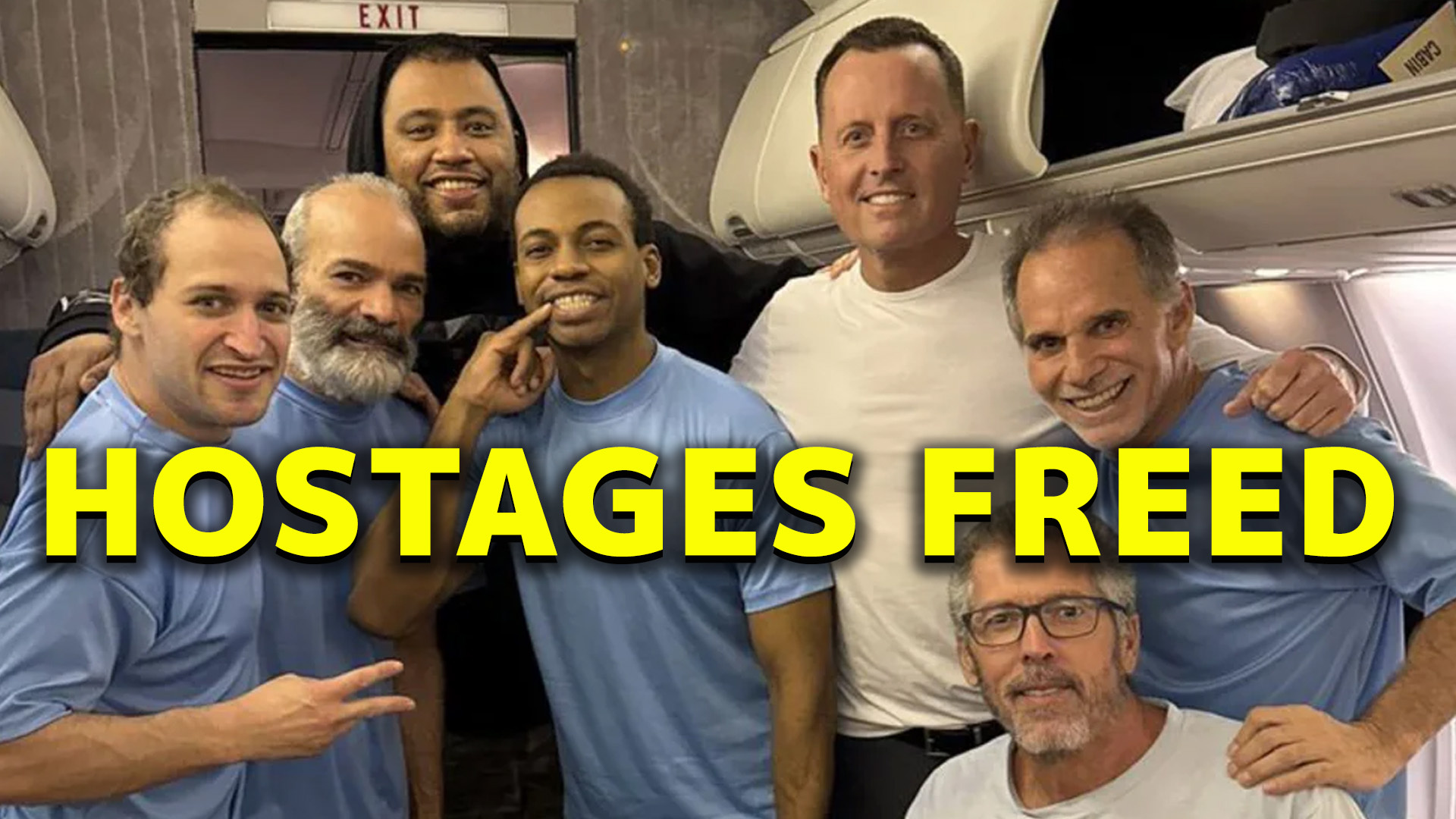
President Trump’s no-nonsense approach to hostage situations has already yielded results. His envoy was recently sent to Venezuela to secure the release of six American hostages held by the Maduro regime. These individuals had been detained under the Biden administration with little progress toward their release. However, Trump’s firm stance and direct diplomatic intervention led to a breakthrough, once again proving that adversaries only respond to strength.

Speaking the Only Language Hostile Actors Understand

History has shown that hostile governments and terrorist groups only respect force, not diplomacy filled with empty promises. A story from Iraq illustrates this well: when U.S. Army Rangers faced resistance in a hostile city, their commander warned the locals that any attack would be met with overwhelming force. The first time they were fired upon, they leveled the area, sending a clear message. From that point on, the Rangers patrolled without incident.

This is the exact approach America must take regarding hostage situations. The U.S. government should immediately and aggressively respond whenever an American is taken.

The Path Forward: Strength, Not Weakness

President Trump’s recent actions in Venezuela send a powerful message—hostage-taking will not be tolerated. This kind of deterrence is the only way to protect American citizens abroad. The U.S. must adopt an ironclad stance:

  • Immediate retaliation for wrongful detentions
  • Strong diplomatic pressure backed by military might
  • No appeasement, only action

Trump’s decisive moves contrast sharply with the Biden administration’s passive approach, which left many American hostages forgotten. The world’s bad actors are taking notice—when America speaks with strength and conviction, hostages come home.

The lesson is clear: if America wants to prevent future hostage crises, it must ensure that taking an American is a costly mistake for any regime or terrorist group.

community logo
Join the Chuck Holton Community
To read more articles like this, sign up and join my community today
7
What else you may like…
Videos
Podcasts
Posts
Articles
Want to See What Combat is Like?

Several infantrymen from the Azov battalion clearing houses near Toretsk. Witness the utter destruction, and the horrific conditions created by this war. Warning: Foul language is used (in Ukrainian with subtitles)

00:12:51
September 18, 2025
Benjamin Netanyahu Explains the Israeli Economy

Netanyahu was once Israeli Finance Minister - and it shows. He understands a lot about economics, and is worth listening to in order to get a sense for where Israel's economy is headed.

00:08:49
September 12, 2025
Video of Kirk’s Killer

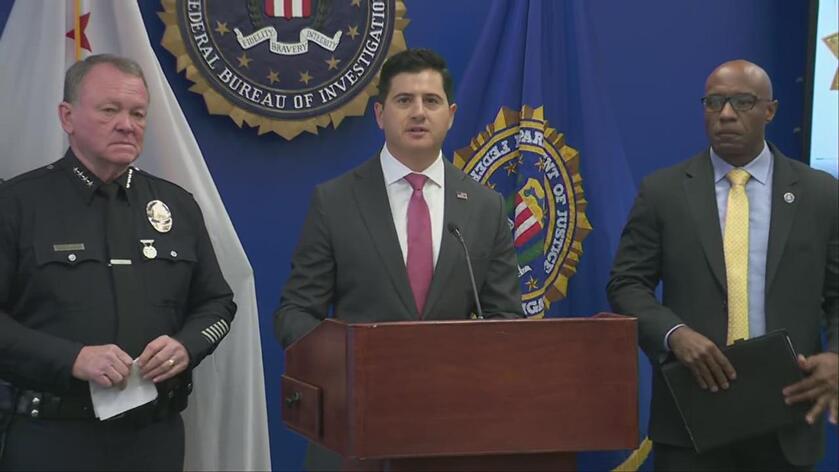
BREAKING: The FBI and state of Utah have just released video of the Charlie Kirk kiIIer escaping from the scene following the shooting

He jumped off the rooftop, moved quickly through the parking lot, and then began walking casually to blend in before entering a wooded area.

He was wearing converse tennis shoes, a shirt with an eagle, and a baseball cap with a triangle.

00:00:43
Episode 622 - Field Producer Dennis Azato and Chuck Reminisce

My erstwhile field producer and cameraman Dennis Azato has accompanied me on ten years of adventures across the globe. Today he joins me in Ukraine and we spend some time remembering our many trips together.

Episode 622 - Field Producer Dennis Azato and Chuck Reminisce
A few spots are still open for Chuck Holton’s private Panama retreat this April 9–14 — but not for long.

This isn’t a mission trip or a news assignment. It’s a rare, small-group getaway with Chuck in one of the most beautiful and fascinating places on earth.
No packed schedule. No chaos. Just meaningful connection, time to recharge, and unforgettable experiences, from the Panama Canal to the peaceful mountains of El Valle.

Trip Highlights:
– One-on-one time with Chuck in a relaxed setting
– Top-tier accommodations in Panama City and El Valle
– Scenic hikes, local markets, beach day, and more
– Time to reflect, explore, and connect

This is a rare chance to go deeper, unplug from the noise, and spend quality time with like-minded people and with Chuck.

Details & signup: https://www.holtonnews.com/panama-tour/
Space is extremely limited — grab your spot now.

post photo preview

We've all fallen short of God's glory, but through the redemption that's in Christ Jesus, we will share in it eternally (Romans 3:23-24)! This is our hope and boast in Him (Romans 5:2)!

"For you died, and your life has been hidden with Christ in God. When Christ our life is revealed, then you also will be revealed with Him in glory." (Colossians 3:3:4)

"As for me, I will see Your face in righteousness; I shall be satisfied when I awake in Your likeness." (Psalms 17:15)

Hallelujah, we have a glorious future; and He who has promised is faithful!

"May the God of hope fill you with all joy and peace in believing, that you may abound in hope through the power of the Holy Spirit."
(Romans 15:13)

This is real ✝️🛐🕊️

post photo preview
Three Americans Killed in Syria — and the Question Washington Doesn’t Want to Answer

Breaking news this Saturday: three Americans are dead in Syria tonight, three more are wounded, and the attack—described by U.S. Central Command as an ambush carried out by a lone ISIS gunman—has once again dragged the Syrian war back into the American consciousness for a few brief hours, which is usually all the time the public gives it before the news cycle moves on and the families are left to carry the weight alone.


CENTCOM says two of the dead were U.S. service members and one was an American civilian contractor, and that the attacker was engaged and killed as well, with names being withheld until next of kin are notified, which is the right thing to do; but even with those official facts in hand, I want to slow the pace down a little bit and do what I always try to do here—put this in context—because in a place like Syria, the story you get in the headline is almost never the story that explains why this happened.

I’m not interested in reporting tragedy like it’s a scoreboard, and I’m not interested in repeating a paragraph of breaking news without the background that makes it intelligible; I spent eight years in the military, and I’ve spent more than twenty years following the U.S. military across the globe—Afghanistan, Iraq, and Syria included, with more than a dozen trips into Afghanistan, roughly fifteen into Iraq, and seven or so into Syria—so when Americans die in a place most people couldn’t find on a map, I feel a responsibility to show you what the map actually means.

The desert isn’t empty—ISIS hides in the “nothing”

The reported location of the attack is Palmyra—Palmira on some maps—an ancient city in central Syria that sits on the edge of a brutal expanse of desert, the kind of wide open, sun-blasted country where outsiders assume nothing lives and nothing happens, when in reality it’s exactly the kind of terrain insurgents love because “nothing” is a perfect disguise, a perfect place to move, cache weapons, blend into small villages, disappear into wadis, and wait for opportunities.

Palmyra also sits inside territory controlled by Syria’s new administration under Ahmed al-Sharaa, and if that name makes you pause, it should, because this is where Syrian politics gets complicated in the way only Syria can do: al-Sharaa rose through jihadist ranks, he has a history tied to insurgent warfare against Americans in Iraq, he was captured and held for years, and he later returned to Syria and consolidated power with strong Turkish backing—so when you hear phrases like “new Syrian administration” or “transitional government,” don’t imagine a Western-style democracy that suddenly appeared out of the sand; imagine a patchwork of militias, alliances of convenience, old enemies wearing new uniforms, and a leadership class that wants international legitimacy while carrying a past that cannot be scrubbed clean with a new suit and a new flag.

Now layer on top of that the reality that ISIS is not gone from Syria, not even close.

U.S. estimates have long suggested there are still roughly 2,000 to 3,000 ISIS fighters operating in and around the central Syrian desert, and there are far more than that if you include facilitators, family networks, financiers, and the enormous number of ISIS-linked detainees and relatives held in camps and makeshift prisons; and while that fight has mostly slipped out of the American public’s view, it continues quietly, relentlessly, week after week, because the moment pressure is relieved in a place like this, the violence doesn’t fade—it regroups.

Why American troops are still there—despite everything

The United States currently has about 900 troops in Syria, a number that matters because it tells you how thin the margin is between “containment” and “collapse,” especially when the enemy has deep local roots and decades of practice living off the land and off the grievances of the people around them; and those American troops are there for one primary purpose: to keep a lid on ISIS so we don’t wake up one day to another wave of mass executions, terror-state governance, and regional destabilization that forces the world back into a far more expensive war.

That’s the mission, and it’s not abstract; when ISIS surged the last time, the human cost was staggering, and it wasn’t paid by politicians or pundits—it was paid by Iraqi soldiers, Kurdish fighters, civilians, and yes, Americans too—and the reason our presence in Syria still functions as a deterrent is that in a powder keg region, a small, capable American footprint has a way of discouraging ambitious actors from taking the final step that turns instability into open war.

But here is the part that doesn’t get said out loud very often: the mission in Syria is increasingly tangled up in partnerships that are, at best, uneasy and, at worst, morally and strategically risky.

Only for Supporters
To read the rest of this article and access other paid content, you must be a supporter
Read full Article
post photo preview
The Dark Fleet Is Fueling the World’s Dictators — And the U.S. Might Finally Be Ready to Do Something About It

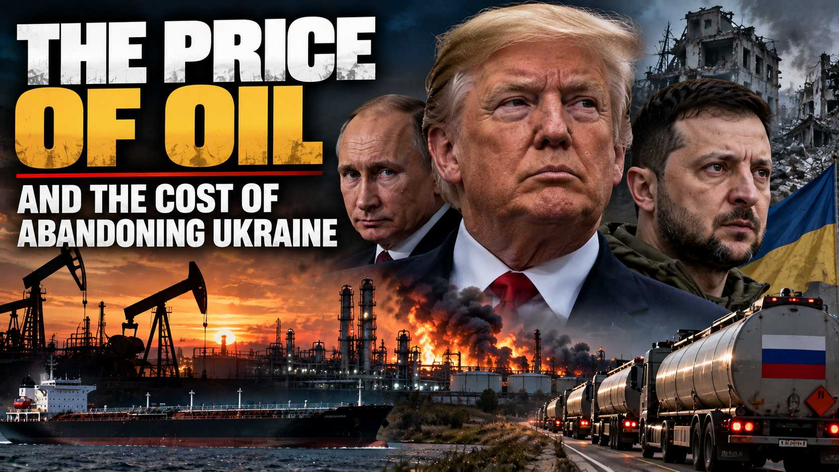
I’m coming to you today from Panama, where I’ve been digging into a story that’s far bigger than most people realize. It involves a shadowy network of ships—1,423 of them at last count—that roam the world’s oceans moving sanctioned oil for regimes like Russia, Iran, and Venezuela. Some call it the dark fleet, others the ghost fleet, but whatever the name, it’s become a lifeline for the world’s worst dictators.

Out of those 1,423 vessels, roughly 920 are sanctioned themselves. These aren’t just ships doing business in a gray area—they are part of a global ecosystem of deception, fraud, and corruption that props up authoritarian governments and undermines the international rules that keep maritime trade safe. They spoof GPS signals, turn off their transponders, swap oil with “cleaner” tankers in the dead of night, operate under shell-company ownership, and sail uninsured—floating environmental disasters just waiting to happen.

And for years, not much was done about it. But that may be changing.

Just days ago, the United States seized a massive VLCC tanker—the Skipper—carrying 1.8 million barrels of Venezuelan crude bound for Cuba. It’s a move that seems small on its own, but it hints at something larger: Washington may finally be realizing that targeting the dark fleet isn’t just desirable—it’s strategically powerful.

That raises a fascinating question: What would happen if the U.S. and its allies cracked down hard on these ghost ships—everywhere, all at once? Could it reshape global power? Could it even topple Maduro?

Let’s dig into that.


A Sanctions Loophole Big Enough to Sail a Tanker Through

These ghost ships function by exploiting cracks in the global maritime system. They manipulate AIS beacons, swap oil mid-ocean, hide ownership behind layers of shell companies, fly false flags, and operate without legitimate insurance. The UN’s maritime regulator has warned that these rusted, poorly maintained hulks are ticking time bombs—and we’ve already seen “Ukrainian sanctions” in action when Ukrainian sea drones blew up several shadow-fleet tankers in the Black Sea.

Imagine what happens if one of these decrepit tankers explodes in a global choke point like the Strait of Hormuz. You’d see a shock to oil markets overnight.

And yet, that’s the system that keeps Venezuela, Iran, and Russia afloat.


The U.S. Begins to Apply Pressure

The seizure of the Skipper wasn’t random. It’s part of a broader pressure campaign—one that former Secretary of State Mike Pompeo has openly supported. He said plainly that going after these vessels is a direct way to choke off the revenue Maduro depends on to stay in power.

Pompeo also noted something key: Maduro’s regime probably has “weeks, not months” of financial runway without this illicit revenue stream. And Cuba—already experiencing rolling blackouts—relies on Venezuela for about a quarter of its total energy supply. This single tanker seizure hurts Havana even more than Caracas.

But perhaps the most important variable is geography. Satellite data reveals dozens of sanctioned tankers parked just off Venezuela’s northern coast. In theory, if the U.S. waits for them to exit Venezuela’s 200-mile EEZ, it could legally seize many of them—especially the stateless ones.

Imagine the U.S. grabbing one tanker per day.

The ripple effects would be enormous.

Only for Supporters
To read the rest of this article and access other paid content, you must be a supporter
Read full Article
post photo preview
Russia's Psychological Warfare Against Ukraine Escalates in 2025

I went to Ukraine to see if Ukraine is crumbling under the pressure from Russia or if they are holding their own. The people on the frontline suffer from drones attacking civilians and missiles striking every day, and the people want an end to the war that won't end with them under the rule of Russia. Because if that happens, the Ukrainians will be wiped out completely. 

Only for Supporters
To read the rest of this article and access other paid content, you must be a supporter
Read full Article
See More
Available on mobile and TV devices
google store google store app store app store
google store google store app tv store app tv store amazon store amazon store roku store roku store
Powered by Locals