Chuck Holton
Politics • Culture • News
The USAID-Terror Connection
This isn't a scandal--it's a feature
March 13, 2025
post photo preview
Hamas official Abdul Salam Haniyeh (second from left), son of terror leader Ismail Haniyeh, at the launch of a project in Gaza in 2023, organized by Islamic Relief and the Bayader Association. USAID has funded both organizations.

For years, we’ve exposed how the U.S. government has been funneling taxpayer dollars to organizations with ties to terrorism. The patterns were obvious. The red flags were everywhere. And yet, Washington kept writing the checks, ignoring the warnings from watchdogs and intelligence experts.

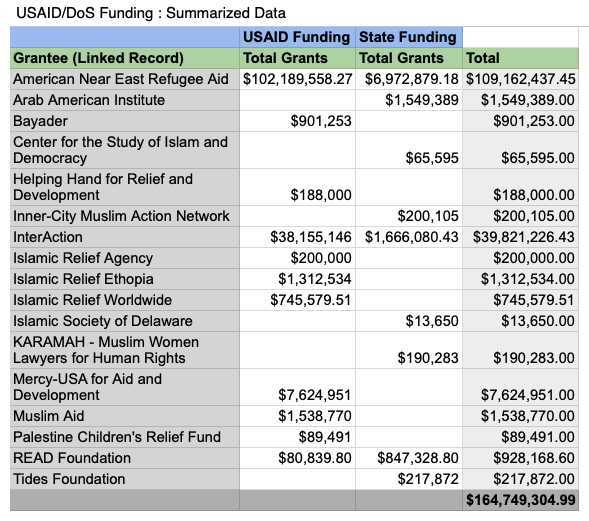
Now, the Middle East Forum has provided undeniable proof of what we’ve known all along. Their multi-year investigation has uncovered at least $164 million in approved grants to radical organizations, with $122 million going directly to groups aligned with designated terrorist entities. This isn’t some bureaucratic oversight—it’s a deliberate, systemic problem that’s been allowed to fester for decades.

The good news? The pipeline is finally being shut down.


USAID: A Global ATM for Terrorists

USAID—the agency that claims to provide humanitarian aid—has in reality served as a slush fund for terrorist-adjacent groups for years. This investigation uncovered millions of taxpayer dollars being handed directly to organizations operating in Hamas-controlled Gaza—and not by accident.

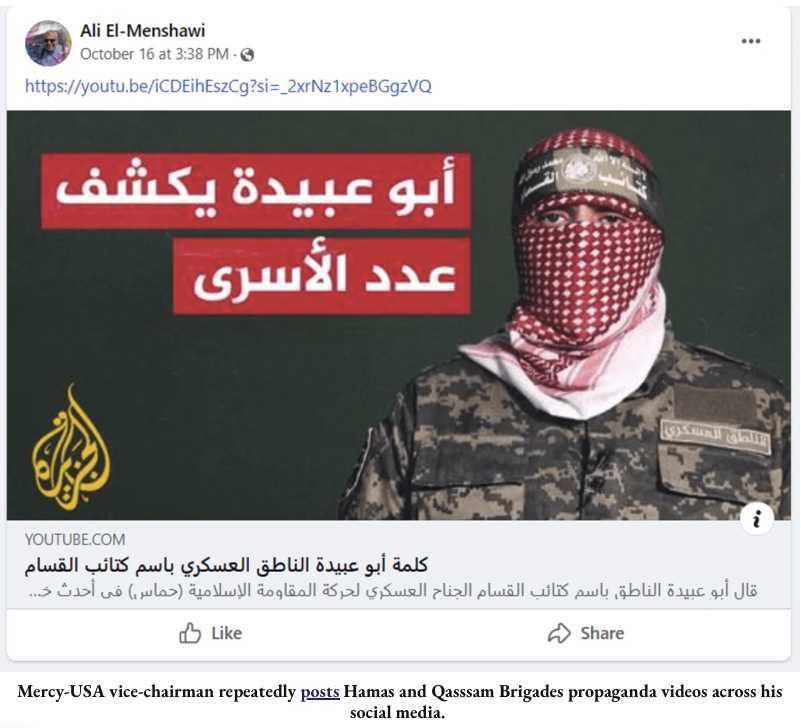
  • USAID officials have visited the offices of Hamas-linked groups and launched joint programs with them.
  • USAID funding has gone to organizations whose leaders have called for their land to be “cleansed from the impurity of the Jews.”
  • USAID beneficiaries openly glorify violence and celebrate terrorist attacks.

The worst part? The federal government knew all of this. And still, the money kept flowing.


State Department Complicity in Domestic Terror Funding

It’s not just foreign terrorist groups benefitting from U.S. taxpayer dollars. This report also confirms that the State Department has been funneling money to radical domestic organizations that fuel extremism right here in the U.S.

Take the Tides Foundation, which members of Congress have accused of funding pro-Hamas, anti-Jewish violence on college campuses across America. The very same mob that harasses Jewish students and disrupts universities? Subsidized with your tax dollars.

Then there are the major aid organizations like World Vision and Catholic Relief Services, which receive billions in federal funding but partner with terror-linked groups over and over again. These are organizations that, at best, don’t bother to vet their recipients—and at worst, know exactly where the money is going and do it anyway.


Systemic Corruption, Zero Oversight

The MEF report also confirms how deeply broken the system is when it comes to transparency and accountability.

  • USAID records are incomplete, missing, or outright deleted.
  • Millions in grants go to “anonymous beneficiaries” in terrorism hotbeds.
  • No real vetting process exists to ensure U.S. money isn’t funding radicals.

USAID’s own Office of Inspector General (OIG) has repeatedly warned about the failures in the system—stating outright that armed groups are taking advantage of U.S. funding, and that USAID’s grant process fails to catch extremist ties.

But for years, no one in charge cared enough to fix it.

Now, It’s Finally Being Shut Down

For those of us who have been calling this out for years, the revelations in this report are no surprise. What is different now is that, for the first time, something is actually being done about it.

The Trump administration is dismantling USAID as we know it, freezing most of its operations, and gutting the bloated bureaucracy that has kept this corruption alive. The decision to roll much of USAID’s functions into the State Department is a direct response to this kind of waste, fraud, and terror funding.

For years, the establishment resisted shutting down USAID’s corrupt pipeline, even as proof of its failures piled up. Now, the money is finally drying up.

Of course, there are critics—those who claim that cutting off funding will hurt genuine humanitarian efforts. But let’s be clear: there was nothing “humanitarian” about subsidizing organizations tied to Hamas. The same bureaucrats and NGO leaders who enabled this fraud are the ones crying the loudest now that their gravy train is ending.


This is Vindication—But the Fight Isn’t Over

This MEF report is the final nail in the coffin of any argument that USAID was just making mistakes or that these grants were slipping through the cracks. This was deliberate. This was systemic. And we’ve been right about it all along.
But even with USAID being dismantled, the fight isn’t over.

  • How much of this funding has already fallen into the wrong hands?
  • What other agencies are still enabling this corruption?
  • Will the same bad actors just find new ways to funnel money to extremists?

USAID may be going away, but the people who allowed this to happen are still in Washington, and they will try to keep the money flowing any way they can.

This is why full transparency and accountability must be the next step.

  • Every single grant tied to terrorism must be exposed.
  • Every bureaucrat who enabled this must be held accountable.
  • Every agency that funds NGOs must be forced to show exactly where the money is going.

Shutting down USAID’s corruption is a major victory, but if we don’t stay on top of this, the same criminals will just find a new way to keep the scam going.

The truth is finally out. The pipeline is shutting down. Now, it’s time to make sure it stays that way.

community logo
Join the Chuck Holton Community
To read more articles like this, sign up and join my community today
5
What else you may like…
Videos
Podcasts
Posts
Articles
More Fraud - This Time in Ohio
00:01:39
Do American Students Know Anything?

Another powerful ad for home schooling.

00:01:30
Powerful

No one in Ukraine asked for this.

00:02:32
Episode 622 - Field Producer Dennis Azato and Chuck Reminisce

My erstwhile field producer and cameraman Dennis Azato has accompanied me on ten years of adventures across the globe. Today he joins me in Ukraine and we spend some time remembering our many trips together.

Episode 622 - Field Producer Dennis Azato and Chuck Reminisce
Get a Signed Book from Chuck Holton with Your Annual Locals Membership – Limited Time Offer Ends Jan 1

Sign up for an annual Locals membership now through January 1st and Chuck will personally send you a signed book as a thank-you. The annual plan is currently discounted to only $5 a month, saving you $48 for the year.

To receive your book, you must join with an annual membership, then email [email protected] with your mailing address and your book choice.

Supplies are limited to what we have in stock.

https://chuckholton.locals.com/support/promo/CHRISTMAS2026

post photo preview
December 29, 2025

Be careful about these Victor Davis Hanson videos. They are AI fakes. He has been pointing them out on his real show VICTOR DAVIS HANSON, IN HIS OWN WORDS on the Daily Signal.

Did Iran really declare war on the US and Europe officially? Hmmm…

Christmas Special Live Call Link

Reminder: Live Call with Chuck Tomorrow at 12PM

Join Chuck Holton and the Hot Zone crew tomorrow, December 20th at 12PM for a special live call!

We’ll be announcing the winners of the Christmas giveaway and giving you an inside look at what’s coming next for The Hot Zone.


Only for Supporters
To read the rest of this article and access other paid content, you must be a supporter
Read full Article
post photo preview
Three Americans Killed in Syria — and the Question Washington Doesn’t Want to Answer

Breaking news this Saturday: three Americans are dead in Syria tonight, three more are wounded, and the attack—described by U.S. Central Command as an ambush carried out by a lone ISIS gunman—has once again dragged the Syrian war back into the American consciousness for a few brief hours, which is usually all the time the public gives it before the news cycle moves on and the families are left to carry the weight alone.


CENTCOM says two of the dead were U.S. service members and one was an American civilian contractor, and that the attacker was engaged and killed as well, with names being withheld until next of kin are notified, which is the right thing to do; but even with those official facts in hand, I want to slow the pace down a little bit and do what I always try to do here—put this in context—because in a place like Syria, the story you get in the headline is almost never the story that explains why this happened.

I’m not interested in reporting tragedy like it’s a scoreboard, and I’m not interested in repeating a paragraph of breaking news without the background that makes it intelligible; I spent eight years in the military, and I’ve spent more than twenty years following the U.S. military across the globe—Afghanistan, Iraq, and Syria included, with more than a dozen trips into Afghanistan, roughly fifteen into Iraq, and seven or so into Syria—so when Americans die in a place most people couldn’t find on a map, I feel a responsibility to show you what the map actually means.

The desert isn’t empty—ISIS hides in the “nothing”

The reported location of the attack is Palmyra—Palmira on some maps—an ancient city in central Syria that sits on the edge of a brutal expanse of desert, the kind of wide open, sun-blasted country where outsiders assume nothing lives and nothing happens, when in reality it’s exactly the kind of terrain insurgents love because “nothing” is a perfect disguise, a perfect place to move, cache weapons, blend into small villages, disappear into wadis, and wait for opportunities.

Palmyra also sits inside territory controlled by Syria’s new administration under Ahmed al-Sharaa, and if that name makes you pause, it should, because this is where Syrian politics gets complicated in the way only Syria can do: al-Sharaa rose through jihadist ranks, he has a history tied to insurgent warfare against Americans in Iraq, he was captured and held for years, and he later returned to Syria and consolidated power with strong Turkish backing—so when you hear phrases like “new Syrian administration” or “transitional government,” don’t imagine a Western-style democracy that suddenly appeared out of the sand; imagine a patchwork of militias, alliances of convenience, old enemies wearing new uniforms, and a leadership class that wants international legitimacy while carrying a past that cannot be scrubbed clean with a new suit and a new flag.

Now layer on top of that the reality that ISIS is not gone from Syria, not even close.

U.S. estimates have long suggested there are still roughly 2,000 to 3,000 ISIS fighters operating in and around the central Syrian desert, and there are far more than that if you include facilitators, family networks, financiers, and the enormous number of ISIS-linked detainees and relatives held in camps and makeshift prisons; and while that fight has mostly slipped out of the American public’s view, it continues quietly, relentlessly, week after week, because the moment pressure is relieved in a place like this, the violence doesn’t fade—it regroups.

Why American troops are still there—despite everything

The United States currently has about 900 troops in Syria, a number that matters because it tells you how thin the margin is between “containment” and “collapse,” especially when the enemy has deep local roots and decades of practice living off the land and off the grievances of the people around them; and those American troops are there for one primary purpose: to keep a lid on ISIS so we don’t wake up one day to another wave of mass executions, terror-state governance, and regional destabilization that forces the world back into a far more expensive war.

That’s the mission, and it’s not abstract; when ISIS surged the last time, the human cost was staggering, and it wasn’t paid by politicians or pundits—it was paid by Iraqi soldiers, Kurdish fighters, civilians, and yes, Americans too—and the reason our presence in Syria still functions as a deterrent is that in a powder keg region, a small, capable American footprint has a way of discouraging ambitious actors from taking the final step that turns instability into open war.

But here is the part that doesn’t get said out loud very often: the mission in Syria is increasingly tangled up in partnerships that are, at best, uneasy and, at worst, morally and strategically risky.

Only for Supporters
To read the rest of this article and access other paid content, you must be a supporter
Read full Article
post photo preview
The Dark Fleet Is Fueling the World’s Dictators — And the U.S. Might Finally Be Ready to Do Something About It

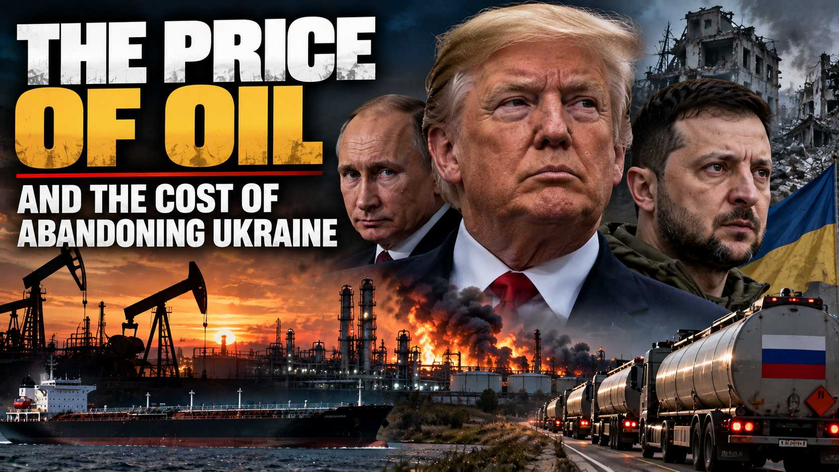
I’m coming to you today from Panama, where I’ve been digging into a story that’s far bigger than most people realize. It involves a shadowy network of ships—1,423 of them at last count—that roam the world’s oceans moving sanctioned oil for regimes like Russia, Iran, and Venezuela. Some call it the dark fleet, others the ghost fleet, but whatever the name, it’s become a lifeline for the world’s worst dictators.

Out of those 1,423 vessels, roughly 920 are sanctioned themselves. These aren’t just ships doing business in a gray area—they are part of a global ecosystem of deception, fraud, and corruption that props up authoritarian governments and undermines the international rules that keep maritime trade safe. They spoof GPS signals, turn off their transponders, swap oil with “cleaner” tankers in the dead of night, operate under shell-company ownership, and sail uninsured—floating environmental disasters just waiting to happen.

And for years, not much was done about it. But that may be changing.

Just days ago, the United States seized a massive VLCC tanker—the Skipper—carrying 1.8 million barrels of Venezuelan crude bound for Cuba. It’s a move that seems small on its own, but it hints at something larger: Washington may finally be realizing that targeting the dark fleet isn’t just desirable—it’s strategically powerful.

That raises a fascinating question: What would happen if the U.S. and its allies cracked down hard on these ghost ships—everywhere, all at once? Could it reshape global power? Could it even topple Maduro?

Let’s dig into that.


A Sanctions Loophole Big Enough to Sail a Tanker Through

These ghost ships function by exploiting cracks in the global maritime system. They manipulate AIS beacons, swap oil mid-ocean, hide ownership behind layers of shell companies, fly false flags, and operate without legitimate insurance. The UN’s maritime regulator has warned that these rusted, poorly maintained hulks are ticking time bombs—and we’ve already seen “Ukrainian sanctions” in action when Ukrainian sea drones blew up several shadow-fleet tankers in the Black Sea.

Imagine what happens if one of these decrepit tankers explodes in a global choke point like the Strait of Hormuz. You’d see a shock to oil markets overnight.

And yet, that’s the system that keeps Venezuela, Iran, and Russia afloat.


The U.S. Begins to Apply Pressure

The seizure of the Skipper wasn’t random. It’s part of a broader pressure campaign—one that former Secretary of State Mike Pompeo has openly supported. He said plainly that going after these vessels is a direct way to choke off the revenue Maduro depends on to stay in power.

Pompeo also noted something key: Maduro’s regime probably has “weeks, not months” of financial runway without this illicit revenue stream. And Cuba—already experiencing rolling blackouts—relies on Venezuela for about a quarter of its total energy supply. This single tanker seizure hurts Havana even more than Caracas.

But perhaps the most important variable is geography. Satellite data reveals dozens of sanctioned tankers parked just off Venezuela’s northern coast. In theory, if the U.S. waits for them to exit Venezuela’s 200-mile EEZ, it could legally seize many of them—especially the stateless ones.

Imagine the U.S. grabbing one tanker per day.

The ripple effects would be enormous.

Only for Supporters
To read the rest of this article and access other paid content, you must be a supporter
Read full Article
See More
Available on mobile and TV devices
google store google store app store app store
google store google store app tv store app tv store amazon store amazon store roku store roku store
Powered by Locals