Chuck Holton
Politics • Culture • News
Are We Really “Going to War” with Venezuela? What the Headlines Get Wrong
October 04, 2025
post photo preview

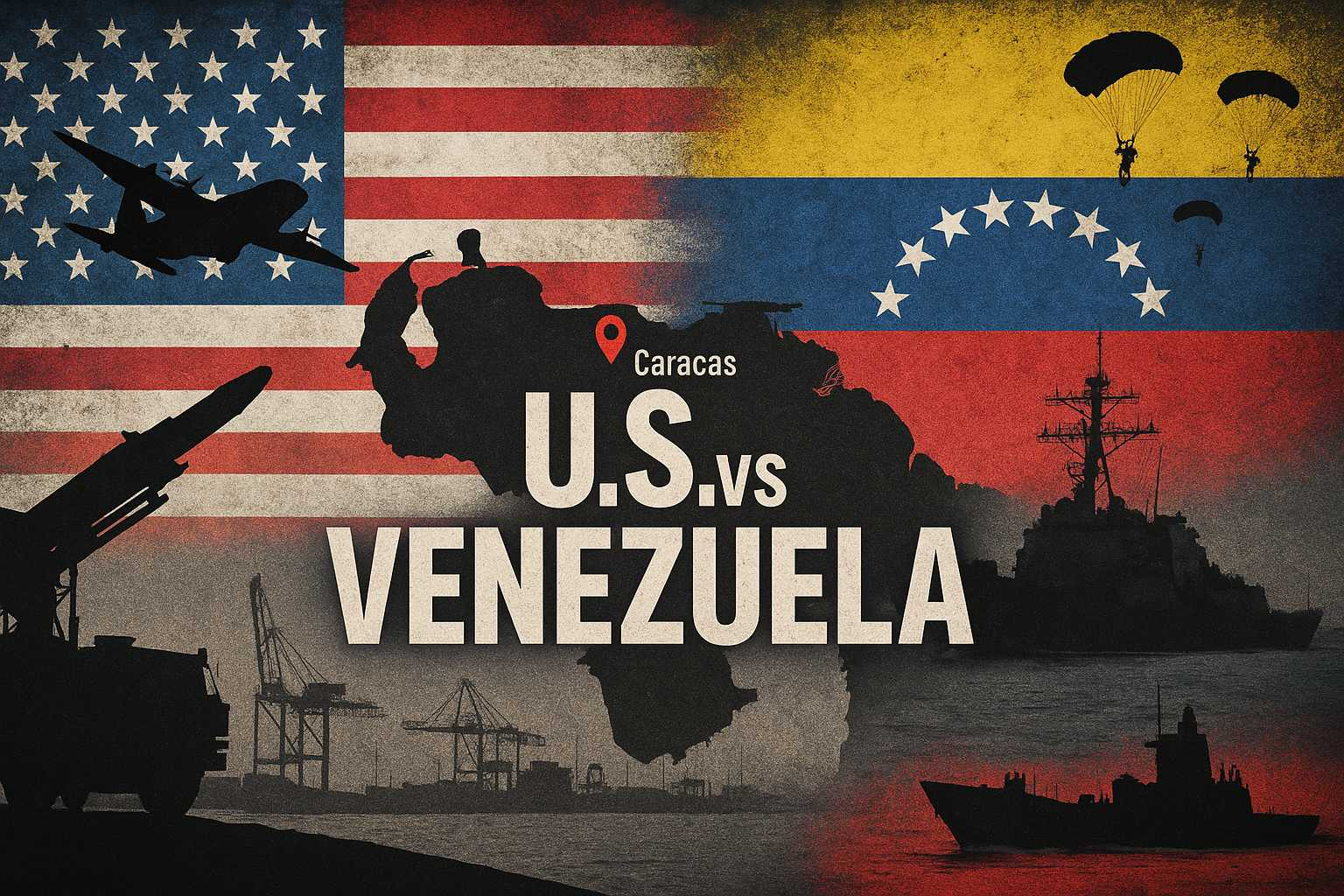
 A British tabloid blared that the U.S. is gearing up to seize ports and airfields in Venezuela. That makes for spicy clicks—but it doesn’t match the legal language, the logistics, or the real-world indicators. I’ve trained and served on teams that actually seize airfields. If that were in the works, we’d see unmistakable prep. We’re not seeing it. The bigger near-term risk? Continued strikes on drug-running assets—and a much higher likelihood of U.S.-Israeli coordination against Iran.


Trump’s Ultimatum to Hamas: Same Script, New Deadline

On Truth Social, President Trump warned Hamas to accept a peace deal by Sunday 6:00 p.m. (Washington, DC) or “all hell… will break out.” I’d love a deal, but I’m skeptical. The decision-makers in Hamas profit from perpetual war. We’ve heard “hell will break loose” before—with little U.S. follow-through beyond letting Israel keep doing what it’s been doing.


Greta’s “Selfie Flotilla” Wasn’t Humanitarian (Because There Was No Aid)

The IDF intercepted the flotilla that tried to enter Gazan waters handed out sandwiches, detained folks—including Greta Thunberg—and prepared deportations. The boats reportedly carried party drugs but no relief supplies. If you’ve seen real abductions from October 7th, you know the difference. This was performance activism that burned ~$500,000—money that could have fed tens of thousands for a month—on a PR stunt.

Activism that helps cameras instead of people is vanity, not virtue.


“Going to War” with Venezuela? Let’s Bayonet the Balloon

A tabloid headline shouted: “US military preparing to seize ports and airfields in Venezuela.” Here’s the sober cut:

  • Legal framing ≠ full war. The administration’s memo to Congress described a “non-international armed conflict” with cartels. That’s a legal term of art, not a declaration of war.

  • Seizing ports/airfields is loud. I served in the 75th Ranger Regiment (’87–’91) and jumped onto airfields. If we were truly prepping that, you’d see pre-positioned logistics, NOTAMs/NAVWARNs, air tasking changes, and a big footprint that’s hard to hide. We don’t see it.

  • Panama 1989 vs. Venezuela today. In Operation Just Cause, we invaded a country of ~2.5M with tens of thousands of troops, serious air and armor, and weeks of dedicated training. Venezuela is ~40M. Taking and holding ground there would be exponentially more complex.

What Venezuela does have

Open-source clips show Soviet-era anti-ship missiles (likely P-15 Termit/“Styx” class) moving around. They’re old, loud on radar, and easier to jam/decoy than modern systems—but in mass they can task-saturate defenses. U.S. carrier groups layer Aegis/SM-2/ESSM/CIWS and countermeasures for precisely this threat. It’s manageable—but not trivial.

The realistic playbook

  • High: More maritime interdictions of cartel “fishing boats” and smugglers off Venezuela.

  • Medium: Limited strikes on drug labs/trans-shipment sites ashore if intelligence is solid.

  • Low: A ground invasion to seize ports/airfields. That would also nuke any dreams of a Nobel and hand Moscow/Tehran a propaganda win.


Why This Matters Beyond Caracas

Russia, Iran, and China would love to see America bogged down in South America—anything to dilute our attention from Ukraine and the Middle East. My read: A U.S.-Israeli strike package against Iran is more likely in the near term than Marines storming Venezuelan ports. Also notable: a sizable cluster of aerial refueling assets has been spotted in the Mediterranean—fuel follows intent.


Mailbag Highlights (from the live Q&A)

  • “Is Venezuela as bad as Panama in ’89?” In several ways, worse—economically and institutionally.

  • “Would Brazil get involved?” Brazil’s posture is about blocking Venezuelan access to Guyana, not joining a U.S.-Venezuela fight.

  • “Could spec ops take out Maduro?” Possible in theory; risky in practice. He’s ring-fenced by Cuban and Wagner security. Risk of Russian casualties = geopolitical blowback.

  • “Cyberattacks if Europe ‘kicks off’?” Already happening daily; they’d intensify.

  • “Government shutdown hurting troops?” Politicians won’t tolerate troops missing pay; “essential services” keep running. The bigger question is what bloated government shouldn’t be doing in the first place.


The Rangers taught us to become extremely good at one thing: violence on command—under control. Seizing airfields meant learning everything from hot-wiring bulldozers to clearing runways to keeping a tight grip on self-discipline off-duty. That discipline still frames how I assess headlines today: verify the logistics, not the rhetoric.


What to Watch Next

  • Maritime interdictions off Venezuela (numbers, frequency, and targets)

  • Movement and basing of U.S. tankers/long-range strike aircraft

  • Israeli readiness indicators; U.S.-Israel joint signaling toward Iran

  • Venezuelan regime messaging and missile dispersal along the coast

If you missed the LIVE, you can watch it HERE

community logo
Join the Chuck Holton Community
To read more articles like this, sign up and join my community today
0
What else you may like…
Videos
Podcasts
Posts
Articles
More Fraud - This Time in Ohio
00:01:39
Do American Students Know Anything?

Another powerful ad for home schooling.

00:01:30
Powerful

No one in Ukraine asked for this.

00:02:32
Episode 622 - Field Producer Dennis Azato and Chuck Reminisce

My erstwhile field producer and cameraman Dennis Azato has accompanied me on ten years of adventures across the globe. Today he joins me in Ukraine and we spend some time remembering our many trips together.

Episode 622 - Field Producer Dennis Azato and Chuck Reminisce

Chuck,

Been listening to you for a while now. Already was a member but wanted to get your offer of a signed book for another annual membership.

Please ship me Death of Civilization.

Thanks,

Stephen R Edwards

SFC USA (RET)

1171 E Bell Castle Circle

Sandy, UT 84094

December 31, 2025

Hey @ChuckHolton - Do you watch Tousi TV ? This was a little over an hour ago.

post photo preview
2026: What I’m Watching, and Why I Think It Matters

As the year winds down, I’ve been thinking a lot about where we’re headed next — not in a sensational way, but in a practical one. People ask me all the time, “What do you think 2026 is going to look like?”
And my answer usually disappoints them. Because I don’t think it’s going to be defined by one big event. I think it’s going to be defined by pressure. Pressure on systems. Pressure on governments. Pressure on families. Pressure on people who are already stretched thin. And when enough pressure builds up in enough places at the same time, things start to move — sometimes in ways no one intended.


The World Feels Unsettled Because It Is

One thing that’s hard to ignore right now is how much unrest there is everywhere you look. More than half the countries on Earth are dealing with some form of conflict — not always open war, but violence, insurgency, civil disorder, or proxy fighting. That’s not normal, and it’s not sustainable. What’s different now is that most of these conflicts aren’t clean or contained. They overlap. They spill. They bleed into other regions and other systems — economics, energy, migration, politics. It creates a sense that nothing is fully stable anymore, even if daily life looks mostly normal.

Ukraine 

I keep coming back to Ukraine, not because it’s the only war that matters, but because it shows us how modern conflict actually works. I’ve been there. I’ve talked to people who are living through it, not watching it on a screen. What strikes you immediately is how normal life continues even under extraordinary strain. Russia has taken ground. That’s true. But it has paid an astonishing price to do it. Hundreds of thousands of casualties. Massive equipment losses. A constant drain on manpower and money. And increasingly, a war economy that’s cannibalizing the rest of the country. At the same time, Ukraine has focused on something far less visible than territory: Russia’s ability to sustain the fight. Oil facilities. Logistics. Supply chains. These are slow, unglamorous targets — but they matter. The lesson here isn’t who’s winning today. The lesson is that wars are no longer decided quickly, and they’re rarely decided cleanly. They grind. They exhaust. And they punish countries that mistake endurance for strength.


Iran

Iran is another place where pressure is building. Economically, things are very bad. Prices have skyrocketed. Infrastructure is failing. Water shortages alone would destabilize any country, let alone one already struggling under sanctions and mismanagement. Socially, the protests are telling. They aren’t just symbolic. They’re persistent, and they’re widespread. When people chant that they can’t all be arrested, that tells you something important has shifted. History suggests that governments under that kind of internal strain don’t usually become more restrained abroad. They become more unpredictable. That’s why I don’t think the tension between Iran and Israel is finished — regardless of what gets said publicly.


Israel

Only for Supporters
To read the rest of this article and access other paid content, you must be a supporter
Read full Article
Christmas Special Live Call Link

Reminder: Live Call with Chuck Tomorrow at 12PM

Join Chuck Holton and the Hot Zone crew tomorrow, December 20th at 12PM for a special live call!

We’ll be announcing the winners of the Christmas giveaway and giving you an inside look at what’s coming next for The Hot Zone.


Only for Supporters
To read the rest of this article and access other paid content, you must be a supporter
Read full Article
post photo preview
Three Americans Killed in Syria — and the Question Washington Doesn’t Want to Answer

Breaking news this Saturday: three Americans are dead in Syria tonight, three more are wounded, and the attack—described by U.S. Central Command as an ambush carried out by a lone ISIS gunman—has once again dragged the Syrian war back into the American consciousness for a few brief hours, which is usually all the time the public gives it before the news cycle moves on and the families are left to carry the weight alone.


CENTCOM says two of the dead were U.S. service members and one was an American civilian contractor, and that the attacker was engaged and killed as well, with names being withheld until next of kin are notified, which is the right thing to do; but even with those official facts in hand, I want to slow the pace down a little bit and do what I always try to do here—put this in context—because in a place like Syria, the story you get in the headline is almost never the story that explains why this happened.

I’m not interested in reporting tragedy like it’s a scoreboard, and I’m not interested in repeating a paragraph of breaking news without the background that makes it intelligible; I spent eight years in the military, and I’ve spent more than twenty years following the U.S. military across the globe—Afghanistan, Iraq, and Syria included, with more than a dozen trips into Afghanistan, roughly fifteen into Iraq, and seven or so into Syria—so when Americans die in a place most people couldn’t find on a map, I feel a responsibility to show you what the map actually means.

The desert isn’t empty—ISIS hides in the “nothing”

The reported location of the attack is Palmyra—Palmira on some maps—an ancient city in central Syria that sits on the edge of a brutal expanse of desert, the kind of wide open, sun-blasted country where outsiders assume nothing lives and nothing happens, when in reality it’s exactly the kind of terrain insurgents love because “nothing” is a perfect disguise, a perfect place to move, cache weapons, blend into small villages, disappear into wadis, and wait for opportunities.

Palmyra also sits inside territory controlled by Syria’s new administration under Ahmed al-Sharaa, and if that name makes you pause, it should, because this is where Syrian politics gets complicated in the way only Syria can do: al-Sharaa rose through jihadist ranks, he has a history tied to insurgent warfare against Americans in Iraq, he was captured and held for years, and he later returned to Syria and consolidated power with strong Turkish backing—so when you hear phrases like “new Syrian administration” or “transitional government,” don’t imagine a Western-style democracy that suddenly appeared out of the sand; imagine a patchwork of militias, alliances of convenience, old enemies wearing new uniforms, and a leadership class that wants international legitimacy while carrying a past that cannot be scrubbed clean with a new suit and a new flag.

Now layer on top of that the reality that ISIS is not gone from Syria, not even close.

U.S. estimates have long suggested there are still roughly 2,000 to 3,000 ISIS fighters operating in and around the central Syrian desert, and there are far more than that if you include facilitators, family networks, financiers, and the enormous number of ISIS-linked detainees and relatives held in camps and makeshift prisons; and while that fight has mostly slipped out of the American public’s view, it continues quietly, relentlessly, week after week, because the moment pressure is relieved in a place like this, the violence doesn’t fade—it regroups.

Why American troops are still there—despite everything

The United States currently has about 900 troops in Syria, a number that matters because it tells you how thin the margin is between “containment” and “collapse,” especially when the enemy has deep local roots and decades of practice living off the land and off the grievances of the people around them; and those American troops are there for one primary purpose: to keep a lid on ISIS so we don’t wake up one day to another wave of mass executions, terror-state governance, and regional destabilization that forces the world back into a far more expensive war.

That’s the mission, and it’s not abstract; when ISIS surged the last time, the human cost was staggering, and it wasn’t paid by politicians or pundits—it was paid by Iraqi soldiers, Kurdish fighters, civilians, and yes, Americans too—and the reason our presence in Syria still functions as a deterrent is that in a powder keg region, a small, capable American footprint has a way of discouraging ambitious actors from taking the final step that turns instability into open war.

But here is the part that doesn’t get said out loud very often: the mission in Syria is increasingly tangled up in partnerships that are, at best, uneasy and, at worst, morally and strategically risky.

Only for Supporters
To read the rest of this article and access other paid content, you must be a supporter
Read full Article
See More
Available on mobile and TV devices
google store google store app store app store
google store google store app tv store app tv store amazon store amazon store roku store roku store
Powered by Locals