Chuck Holton
Politics • Culture • News
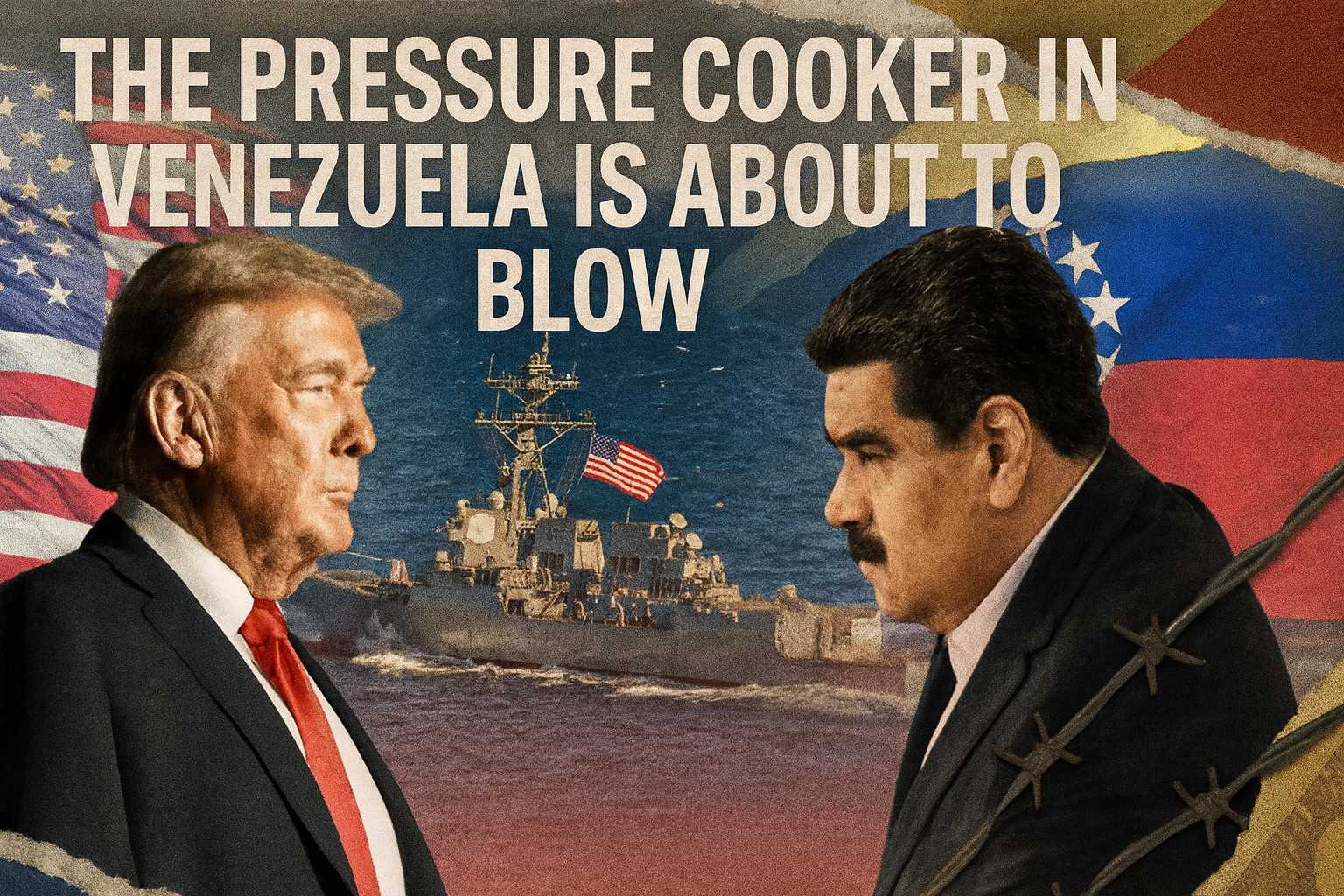
The Pressure Cooker in Venezuela Is About to Blow
November 30, 2025
post photo preview

The world keeps talking about this standoff between Washington and Caracas as if it were just another round of political posturing. On paper it sounds like noise, the usual chest-thumping and podium theatrics. But if you watch the details instead of the headlines, you can feel something heavier settling over the region. Airspace over Venezuela has effectively closed. Drug boats that used to race through the Caribbean now vanish in balls of fire. Donald Trump is on the phone with Nicolás Maduro—words nobody expected to say out loud a few months ago.

At the same time, Venezuela’s currency continues to unravel, the economy staggers forward on remittances and side hustles, and everyday people try to hold families together inside a system that is clearly failing. That combination—external pressure and internal collapse—turns a fragile state into a pressure cooker. And history says pressure cookers eventually blow.

The politicians will survive whatever happens. They always do. It’s the ordinary Venezuelans, the ones trying to feed their kids and keep the lights on, who are staring down the very real possibility of a conflict they never asked for.


A Sky That’s Quiet for the Wrong Reasons


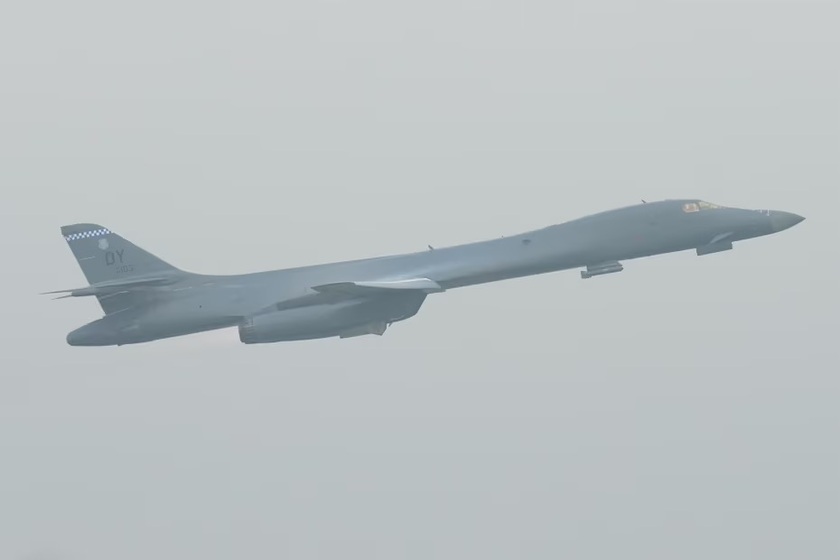
When Trump announced that Venezuelan airspace was “closed,” it sounded like a dramatic new move. In reality, the skies had already gone quiet. For more than a week, commercial flights in and out of the country had been canceled. Airlines that normally connect Panama and Caracas simply stopped flying those routes, not wanting to risk getting caught in the middle of a shooting war.

The Venezuelan regime responded the way fragile regimes often do: by lashing out at the wrong targets. They threatened to revoke airline licenses permanently—essentially telling companies, “If you don’t fly into our potential war zone now, you can never come back.” That’s the geopolitical equivalent of stabbing yourself in the face to prove you’re not afraid of knives.

Meanwhile, on the ground, Venezuelan forces have been staging air-defense drills. Some of the footage is almost darkly comic: missile crews practicing launches over downtown Caracas with rockets that look suspiciously like backyard fireworks. It’s hard to tell where the training ends and the propaganda begins, but the message is clear enough. The regime is nervous.


The Migrant Stream That Turned Around

For years, the story of Venezuela has been written in footprints heading north. Under the Biden administration, more than a million people crossed the Darién Gap in 2024 alone—a 40- to 50-mile stretch of jungle between Colombia and Panama that used to be considered nearly impassable. Venezuelans made up a huge share of that flow, driven by hyperinflation, food shortages, and a government that had long since stopped pretending to serve its citizens.

That changed almost overnight when Trump took office again. Marines went to the border. Policy flipped. Suddenly, people who had sold everything, walked across continents, and made it as far as Mexico found themselves staring at a closed door.

Now we’re seeing something we haven’t really watched in real time before: the migrant pipeline reversing. Venezuelans who reached the U.S. border and got stuck are drifting back south, trying to scrape together enough money to return to Chile, Colombia, or even to Venezuela itself. Those who had built new lives in Chile are hearing that a Trump-like candidate, favored to win the next election there, is talking openly about clearing out illegal migrants. Peru has already declared a state of emergency at its border because so many Venezuelans are trying to cross.

You have an entire people caught between a country they fled and a world that doesn’t quite know what to do with them. That kind of displacement doesn’t stay politically invisible forever.

Only for Supporters
To read the rest of this article and access other paid content, you must be a supporter
4
What else you may like…
Videos
Podcasts
Posts
Articles
Bondi Beach Massacre

Here's a longer version of the videio I showed on today's live:

00:10:42
Want to See What Combat is Like?

Several infantrymen from the Azov battalion clearing houses near Toretsk. Witness the utter destruction, and the horrific conditions created by this war. Warning: Foul language is used (in Ukrainian with subtitles)

00:12:51
September 18, 2025
Benjamin Netanyahu Explains the Israeli Economy

Netanyahu was once Israeli Finance Minister - and it shows. He understands a lot about economics, and is worth listening to in order to get a sense for where Israel's economy is headed.

00:08:49
Episode 622 - Field Producer Dennis Azato and Chuck Reminisce

My erstwhile field producer and cameraman Dennis Azato has accompanied me on ten years of adventures across the globe. Today he joins me in Ukraine and we spend some time remembering our many trips together.

Episode 622 - Field Producer Dennis Azato and Chuck Reminisce

How much are your puppies? Do you have any males left. I am a new supporter and live in Maine. May be interested depending on the cost.
Ginny Rickards
So. Thomaston, Maine

There is nothing wrong with fellowshipping on Sundays, for Resurrection Day is a most glorious Day, but Scripturally speaking, there is only one Day that is sanctified by God Himself (Exodus 20:11) - the Sabbath Day (Friday evening, at sun down, and ends Saturday evening, at sun down). And Jesus said that all the law, and the prophets, still have relevance in God's purposes — even though we are under a new and better covenant (Matthew 5:17-18, Isaiah 66:22-23)! Until the time comes for God to do away with the First Creation and make the final/eternal state of His kingdom — where the New Jerusalem will descend from Heaven as a bride upon the New Earth (Revelation 21:1-2). And again, be the capital of His glorious kingdom, and the epicenter of worship for all nations, unto eternity! Praise, honor and glory be to the LORD Almighty, and to the Lamb of God, our Redeemer (Revelation 21:22-27)!

Christmas Special Live Call Link

Reminder: Live Call with Chuck Tomorrow at 12PM

Join Chuck Holton and the Hot Zone crew tomorrow, December 20th at 12PM for a special live call!

We’ll be announcing the winners of the Christmas giveaway and giving you an inside look at what’s coming next for The Hot Zone.


Only for Supporters
To read the rest of this article and access other paid content, you must be a supporter
Read full Article
post photo preview
Three Americans Killed in Syria — and the Question Washington Doesn’t Want to Answer

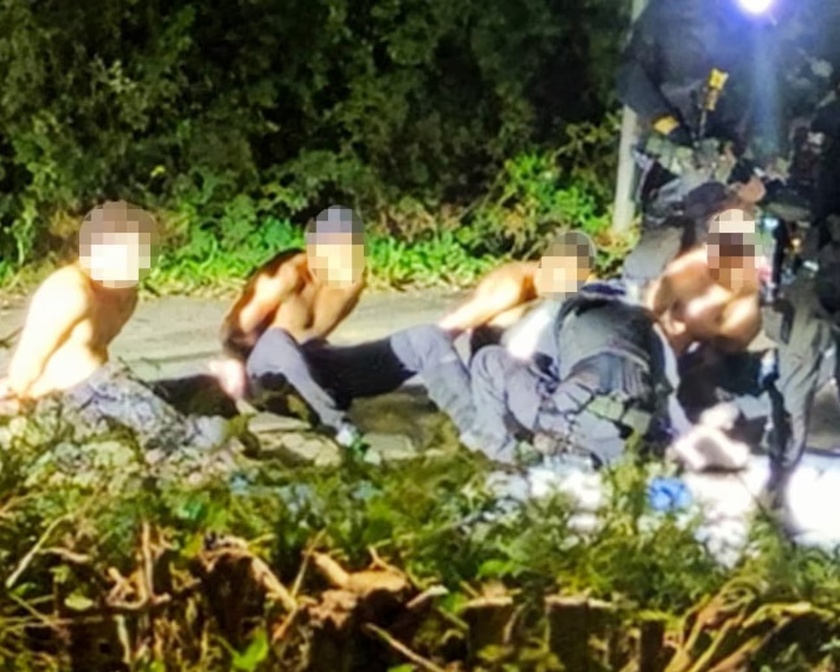
Breaking news this Saturday: three Americans are dead in Syria tonight, three more are wounded, and the attack—described by U.S. Central Command as an ambush carried out by a lone ISIS gunman—has once again dragged the Syrian war back into the American consciousness for a few brief hours, which is usually all the time the public gives it before the news cycle moves on and the families are left to carry the weight alone.


CENTCOM says two of the dead were U.S. service members and one was an American civilian contractor, and that the attacker was engaged and killed as well, with names being withheld until next of kin are notified, which is the right thing to do; but even with those official facts in hand, I want to slow the pace down a little bit and do what I always try to do here—put this in context—because in a place like Syria, the story you get in the headline is almost never the story that explains why this happened.

I’m not interested in reporting tragedy like it’s a scoreboard, and I’m not interested in repeating a paragraph of breaking news without the background that makes it intelligible; I spent eight years in the military, and I’ve spent more than twenty years following the U.S. military across the globe—Afghanistan, Iraq, and Syria included, with more than a dozen trips into Afghanistan, roughly fifteen into Iraq, and seven or so into Syria—so when Americans die in a place most people couldn’t find on a map, I feel a responsibility to show you what the map actually means.

The desert isn’t empty—ISIS hides in the “nothing”

The reported location of the attack is Palmyra—Palmira on some maps—an ancient city in central Syria that sits on the edge of a brutal expanse of desert, the kind of wide open, sun-blasted country where outsiders assume nothing lives and nothing happens, when in reality it’s exactly the kind of terrain insurgents love because “nothing” is a perfect disguise, a perfect place to move, cache weapons, blend into small villages, disappear into wadis, and wait for opportunities.

Palmyra also sits inside territory controlled by Syria’s new administration under Ahmed al-Sharaa, and if that name makes you pause, it should, because this is where Syrian politics gets complicated in the way only Syria can do: al-Sharaa rose through jihadist ranks, he has a history tied to insurgent warfare against Americans in Iraq, he was captured and held for years, and he later returned to Syria and consolidated power with strong Turkish backing—so when you hear phrases like “new Syrian administration” or “transitional government,” don’t imagine a Western-style democracy that suddenly appeared out of the sand; imagine a patchwork of militias, alliances of convenience, old enemies wearing new uniforms, and a leadership class that wants international legitimacy while carrying a past that cannot be scrubbed clean with a new suit and a new flag.

Now layer on top of that the reality that ISIS is not gone from Syria, not even close.

U.S. estimates have long suggested there are still roughly 2,000 to 3,000 ISIS fighters operating in and around the central Syrian desert, and there are far more than that if you include facilitators, family networks, financiers, and the enormous number of ISIS-linked detainees and relatives held in camps and makeshift prisons; and while that fight has mostly slipped out of the American public’s view, it continues quietly, relentlessly, week after week, because the moment pressure is relieved in a place like this, the violence doesn’t fade—it regroups.

Why American troops are still there—despite everything

The United States currently has about 900 troops in Syria, a number that matters because it tells you how thin the margin is between “containment” and “collapse,” especially when the enemy has deep local roots and decades of practice living off the land and off the grievances of the people around them; and those American troops are there for one primary purpose: to keep a lid on ISIS so we don’t wake up one day to another wave of mass executions, terror-state governance, and regional destabilization that forces the world back into a far more expensive war.

That’s the mission, and it’s not abstract; when ISIS surged the last time, the human cost was staggering, and it wasn’t paid by politicians or pundits—it was paid by Iraqi soldiers, Kurdish fighters, civilians, and yes, Americans too—and the reason our presence in Syria still functions as a deterrent is that in a powder keg region, a small, capable American footprint has a way of discouraging ambitious actors from taking the final step that turns instability into open war.

But here is the part that doesn’t get said out loud very often: the mission in Syria is increasingly tangled up in partnerships that are, at best, uneasy and, at worst, morally and strategically risky.

Only for Supporters
To read the rest of this article and access other paid content, you must be a supporter
Read full Article
post photo preview
The Dark Fleet Is Fueling the World’s Dictators — And the U.S. Might Finally Be Ready to Do Something About It

I’m coming to you today from Panama, where I’ve been digging into a story that’s far bigger than most people realize. It involves a shadowy network of ships—1,423 of them at last count—that roam the world’s oceans moving sanctioned oil for regimes like Russia, Iran, and Venezuela. Some call it the dark fleet, others the ghost fleet, but whatever the name, it’s become a lifeline for the world’s worst dictators.

Out of those 1,423 vessels, roughly 920 are sanctioned themselves. These aren’t just ships doing business in a gray area—they are part of a global ecosystem of deception, fraud, and corruption that props up authoritarian governments and undermines the international rules that keep maritime trade safe. They spoof GPS signals, turn off their transponders, swap oil with “cleaner” tankers in the dead of night, operate under shell-company ownership, and sail uninsured—floating environmental disasters just waiting to happen.

And for years, not much was done about it. But that may be changing.

Just days ago, the United States seized a massive VLCC tanker—the Skipper—carrying 1.8 million barrels of Venezuelan crude bound for Cuba. It’s a move that seems small on its own, but it hints at something larger: Washington may finally be realizing that targeting the dark fleet isn’t just desirable—it’s strategically powerful.

That raises a fascinating question: What would happen if the U.S. and its allies cracked down hard on these ghost ships—everywhere, all at once? Could it reshape global power? Could it even topple Maduro?

Let’s dig into that.


A Sanctions Loophole Big Enough to Sail a Tanker Through

These ghost ships function by exploiting cracks in the global maritime system. They manipulate AIS beacons, swap oil mid-ocean, hide ownership behind layers of shell companies, fly false flags, and operate without legitimate insurance. The UN’s maritime regulator has warned that these rusted, poorly maintained hulks are ticking time bombs—and we’ve already seen “Ukrainian sanctions” in action when Ukrainian sea drones blew up several shadow-fleet tankers in the Black Sea.

Imagine what happens if one of these decrepit tankers explodes in a global choke point like the Strait of Hormuz. You’d see a shock to oil markets overnight.

And yet, that’s the system that keeps Venezuela, Iran, and Russia afloat.


The U.S. Begins to Apply Pressure

The seizure of the Skipper wasn’t random. It’s part of a broader pressure campaign—one that former Secretary of State Mike Pompeo has openly supported. He said plainly that going after these vessels is a direct way to choke off the revenue Maduro depends on to stay in power.

Pompeo also noted something key: Maduro’s regime probably has “weeks, not months” of financial runway without this illicit revenue stream. And Cuba—already experiencing rolling blackouts—relies on Venezuela for about a quarter of its total energy supply. This single tanker seizure hurts Havana even more than Caracas.

But perhaps the most important variable is geography. Satellite data reveals dozens of sanctioned tankers parked just off Venezuela’s northern coast. In theory, if the U.S. waits for them to exit Venezuela’s 200-mile EEZ, it could legally seize many of them—especially the stateless ones.

Imagine the U.S. grabbing one tanker per day.

The ripple effects would be enormous.

Only for Supporters
To read the rest of this article and access other paid content, you must be a supporter
Read full Article
See More
Available on mobile and TV devices
google store google store app store app store
google store google store app tv store app tv store amazon store amazon store roku store roku store
Powered by Locals