If you’re watching from Venezuela, Trinidad, Colombia, or anywhere in the region, you don’t need me to tell you that the temperature is rising. Airspace restrictions, warships in the Caribbean, drug boats getting blown out of the water, and now more details about that phone call between President Trump and Nicolás Maduro—all of it points in one direction:
Let’s walk through what’s really happening, why it matters, and what it might mean for the people who are going to pay the highest price if this goes sideways.
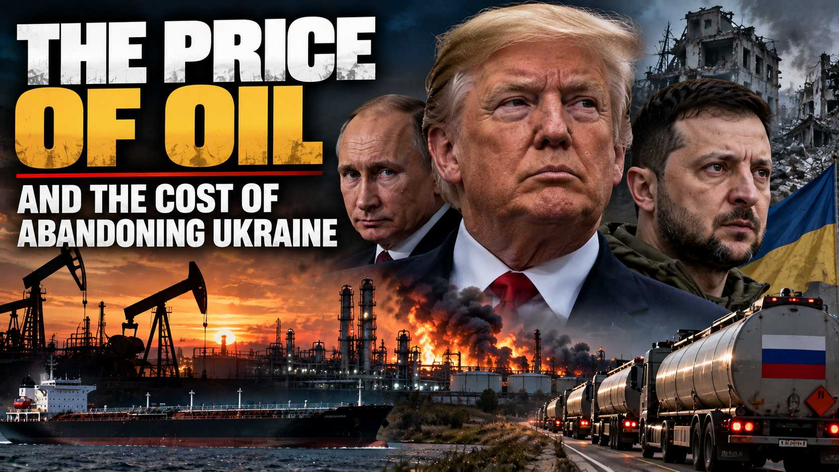
The Trump–Maduro Phone Call: No Deals Left to Make
For several days we only knew that Trump and Maduro had spoken. Now we know a lot more about what was said.
According to Trump, the call was simple and blunt. Maduro wanted a deal: Let me stay in power, let me keep control of the military, and I’ll “help” you fight drugs. In other words: keep the cartel state intact, just rebrand it a bit.
Trump’s answer? No deal.
He essentially told Maduro, You’re out of bargaining chips. You’re not in a position to negotiate. You need to leave.
Whether that was phrased as a formal ultimatum or not, the message was clear: Washington is done pretending Maduro is a normal head of state. He’s a narco-dictator sitting on a collapsing country that has become a forward operating base for Russia, China, Iran, and every Marxist mischief-maker in the hemisphere.
That kind of phone call doesn’t happen unless other pieces are already on the board: intelligence operations, military deployments, diplomatic groundwork. And those pieces are very much in motion.
What Venezuela Looks Like From the Inside
To understand why things feel so volatile, you have to understand what daily life actually looks like inside Venezuela right now.
Hyperinflation has turned the national currency into colorful trash. The nominal minimum wage is about one U.S. dollar a month. Nobody lives on that, of course. People survive on side hustles, multiple family members crammed into one home, whatever odd jobs they can find, and—crucially—remittances from relatives abroad.
It costs roughly $500 a month to feed a family of four decently. The average Venezuelan scrapes together maybe a third to half of that. That gap is hunger. It’s kids fainting at school. It’s medicine you can’t afford and hospitals that demand you buy your own drugs before a nurse will even hang the IV bag.
I’ve been to the border city of Cúcuta, Colombia, many times. At night the streets are lined with Venezuelan women—some as young as 13 or 14—selling the only thing they still have left to sell. Many of them are mothers with husbands back home. They’re not there because they want to be. They’re there because socialism destroyed their economy, shredded the rule of law, and shoved them into a scarcity mindset where survival trumps morality.
That’s what twenty-five years of Chavista “revolution” does. It doesn’t just wreck GDP charts. It corrodes the culture from the inside out.
So when people say, “Hey, if things are so bad, why haven’t Venezuelans overthrown Maduro?”—the short answer is: he kept just enough money flowing to keep people barely alive and too exhausted, too beaten down, and too afraid to rise up.
Which brings us to the money.
Who’s Keeping Maduro Afloat?
At this point, two main lifelines keep the regime from collapsing outright:
Oil revenues, especially via Chevron, which pumps roughly 200,000+ barrels a day out of Venezuela under a special license. Under Trump’s terms, that money is supposed to be used mainly to pay down debt, not prop up the regime—but money is fungible. Any debt paid with Chevron cash is money Maduro doesn’t have to spend himself.
Remittances, mostly from Venezuelans abroad. We’re talking $4–5 billion a year flowing back into the country. That’s a huge chunk of what keeps ordinary families from starving—and indirectly keeps Maduro in place, because it prevents the kind of total collapse that would spark an uprising.
So you have a regime that can’t feed its people, can’t keep the lights on, and still finds billions for Cuban advisers, security forces, and friendly gangs—colectivos—who do the dirty work: intimidation, disappearances, torture, and political killings.
This is the system Trump is now openly threatening.
The Drug War at Sea—and the Double-Tap Controversy
Layered on top of the political drama is a shooting war at sea that most Americans are barely aware of.
U.S. forces have been blowing up narco-boats in the Caribbean and the Pacific—fast craft with four or five outboard motors or semi-submersibles that exist for exactly one purpose: smuggling drugs. These vessels aren’t 10 miles off a beach; they’re 80–90 miles offshore, running dark, and moving way too fast for anyone to pretend they’re fishing boats.
The Pentagon says they know who’s on these boats, where they left from, where they’re headed, and what they’re carrying. The cartels involved have been designated foreign terrorist organizations. So the U.S. has declared this an armed conflict with those groups.
That’s why they’re using missiles instead of Coast Guard boarding parties.
The problem is the last strike, where a Washington Post story—based on anonymous sources—claims Secretary of War Pete Hegseth ordered a second hit on a wrecked boat where two survivors were clinging to the debris. If that’s true, and those men were no longer a threat, then under the laws of armed conflict that would cross the line into an unlawful killing.
Hegseth flatly denies giving that order. Congress has launched investigations. Until the classified intel comes out, anyone claiming to know exactly what happened is guessing.
Here’s the key point: finding out what happened, and prosecuting it if necessary, is exactly what differentiates a flawed but functioning republic from a regime like Maduro’s, where crimes by the state are covered up, not corrected.
Which brings us to the speeches.