



Chuck Holton
Politics • Culture • News
Chuck Holton is an American war correspondent, published author, and motivational speaker.
Interested? Want to learn more about the community?

The Gospel of Christ is simple to grasp, but its effects are complex, far-reaching and eternal by nature. Therefore, may we study the Scriptures carefully, for there are life-changing revelations to discover and benefit from!

Interested? Want to learn more about the community?
What else you may like…
Videos
Podcasts
Posts
Articles
Day 2 Syria
00:01:36
Disney Land for Men in Iraq.
00:00:57
Pray for the Kurdish people in Syria

A great evil is unfolding across Syria as forces loyal to Ahmed Al Sharaa attack the Kurdish people in eastern Syria. Jihadi fighters are now unarmed and are allying themselves with ISIS once again, killing and beheading civilians in the streets. They also released thousands of ISIS fighters from prisons that were being guarded by the Kurds.

00:02:28
Episode 622 - Field Producer Dennis Azato and Chuck Reminisce

My erstwhile field producer and cameraman Dennis Azato has accompanied me on ten years of adventures across the globe. Today he joins me in Ukraine and we spend some time remembering our many trips together.

Episode 622 - Field Producer Dennis Azato and Chuck Reminisce
Highly Recommend Subscribing to Alana Moor's New Podcast

Want to hear a shocking, horrifying and amazing story of a Canadian girl who found herself in a Panamanian prison for four years? Check out my friend Alana Moor's new podcast. Seriously, this girl has an incredible story. Go subscribe and give her some love.

https://www.youtube.com/@FromScratchWithAlanaMoor

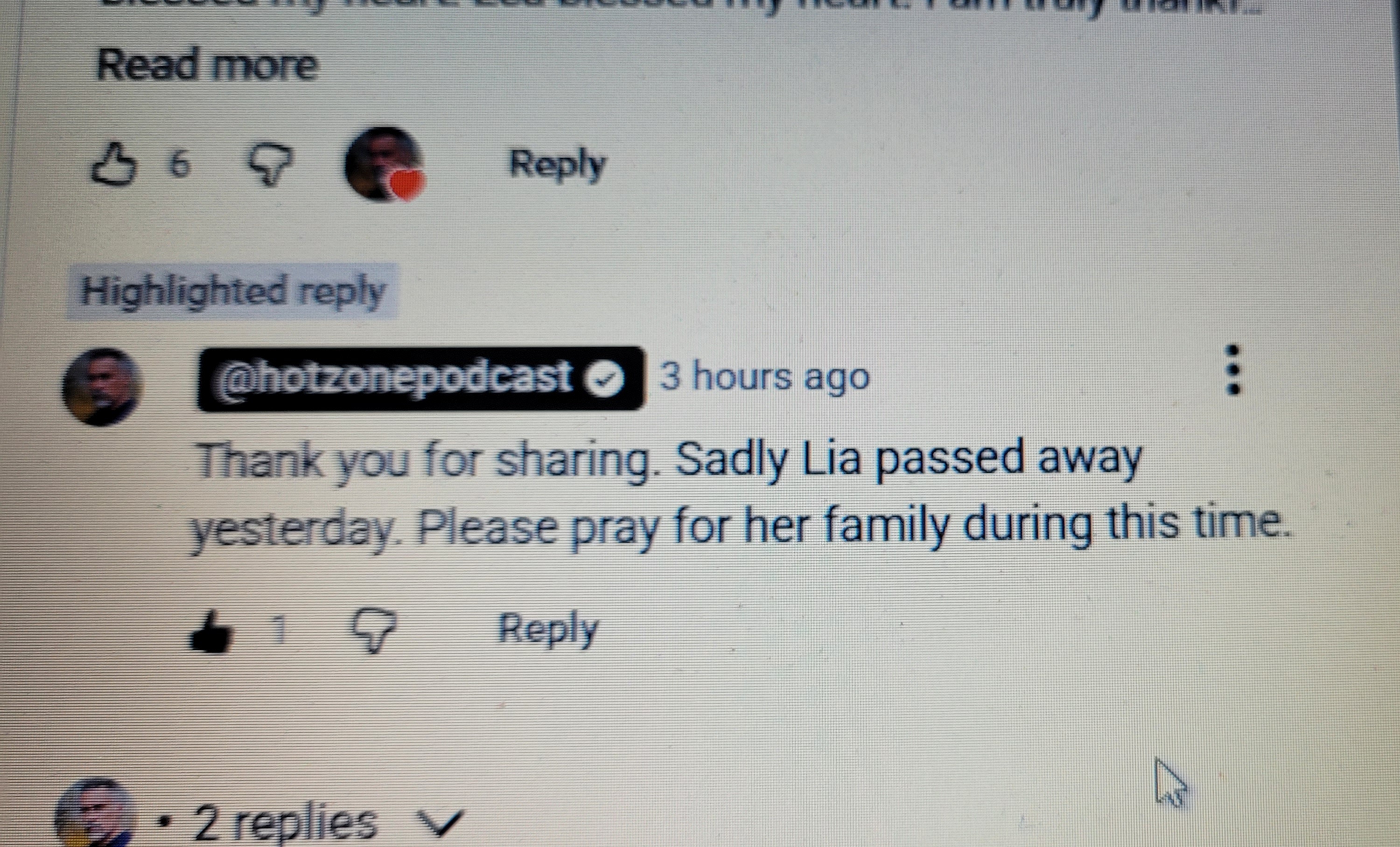
@ChuckHolton Our little Lea has been on my heart for days. I have been praying for her parents and sister. WHAT else can we do to help? It's almost like I can FEEL their heaviness all the way up here.

Thanks.

We know Chuck is in a Hotzone right now, and because he replied to my comment, I am adding this note to this post. 😣

post photo preview

Brillant short explanation!

post photo preview
Reporting From Syria, But The Bigger Story is Back Home

I’m coming to you from northeastern Syria—out here in a town called Kamishi—where the last couple of days have been… eventful. The kind of “eventful” you feel in your chest before you can put it into words. There are things shifting on the ground, and when you’re standing in the middle of it, you can tell when the air changes.

But the truth is, what I’m watching overseas isn’t the biggest immediate threat to Americans right now.

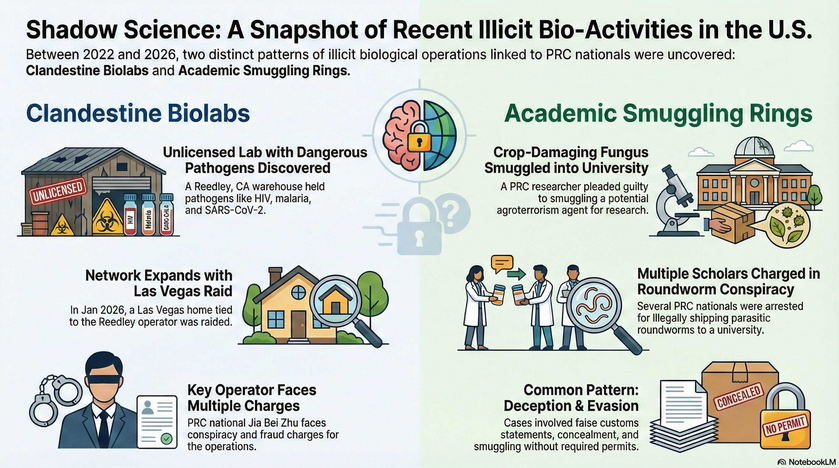
The bigger story is back home—quiet, underreported, and sitting right inside the United States: illegal biolabs being discovered in residential neighborhoods, linked again and again to Chinese nationals and networks tied back—directly or indirectly—to the PRC.

If you’ve missed the headlines (or noticed how quickly they disappeared), you’re not alone. That’s exactly the problem.


“Biolab” shouldn’t be a scary word… until it is

Let’s lower the temperature for a second, because “biolab” has become a loaded term. A “biolab” can be a veterinary clinic lab. It can be a hospital lab. It can be a university lab doing legitimate work.

But here’s where it becomes a serious problem:

When authorities find unlicensed, clandestine labs in houses or warehouses—stocked with unlabeled vials, unknown agents, and unsafe storage—then we are no longer talking about normal science. We’re talking about a public safety threat.

And when those operations keep showing ties to PRC-linked individuals and funding streams, we’re talking about something bigger than “some guy doing weird experiments in his garage.”


The Las Vegas bust: what we know so far

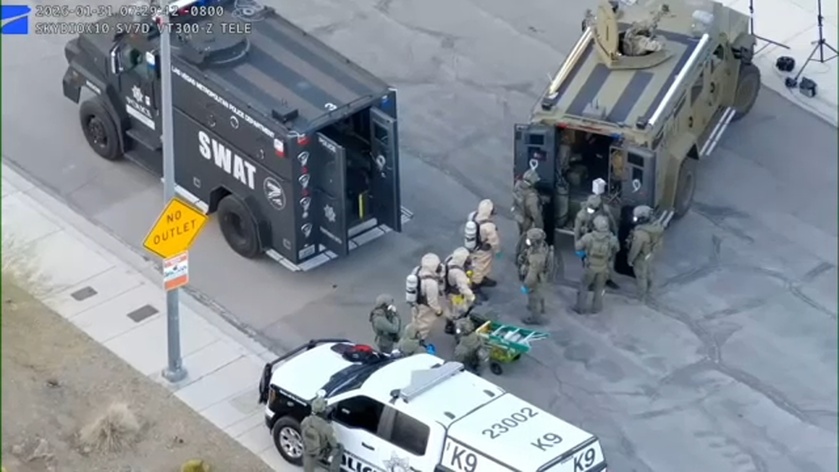
The newest case—just days ago—was in the Las Vegas area. A SWAT team and the FBI executed search warrants after reports of a possible biological laboratory. Investigators found refrigerators containing vials of unknown liquids, unmarked and unidentified, and hazmat teams were brought in. At least one person on scene was detained, apparently a caretaker, and investigators traced links to an LLC associated with a Chinese national using an alias.

Here’s the key point:

Even before we know exactly what’s in those vials, we already know this is serious—because unlabeled biological materials in a residential setting force responders into a worst-case posture. Testing becomes slower, more dangerous, and more complicated, because you can’t assume anything.

And Las Vegas isn’t isolated.
 

Smuggling biological materials into U.S. research ecosystems

When you back up and look over the last couple of years, the same themes repeat:

  • Biological materials brought in illegally

  • False statements to Customs and Border Protection

  • Shipments concealed to evade inspection

  • Connections to PRC institutions, or individuals with CCP/PLA ties

  • Work funneling toward U.S. lab capacity—because our labs are often more advanced

Some of the cases discussed involve smuggling parasite samples (including roundworm-related materials) and a dangerous crop fungus. Even if you strip away speculation, one fact remains:

Smuggling biological agents into the United States is not a paperwork mistake. It’s a red-flag behavior.

And the agricultural angle matters more than most people realize. If someone wanted to cause chaos and suffering without firing a single shot, they wouldn’t start with tanks. They’d start with food supply disruption—crops, livestock, transport, processing.

That’s not sensationalism. That’s simply understanding how fragile modern systems can be when a single link breaks.

Reedley, California: the case that should have changed everything

The most chilling example brought up in the discussion is the earlier discovery of an unlicensed lab in Reedley, California—uncovered in late 2022 and publicly discussed later as investigators tested and expanded the case.

What was found there was the kind of thing that should make every American ask: How did this exist on U.S. soil at all?
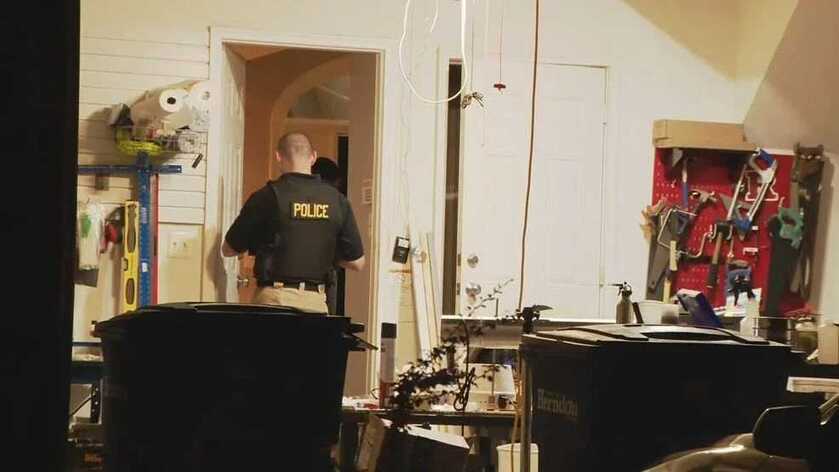
Reports discussed:

  • Large numbers of unmarked vials

  • A range of pathogens identified in testing

  • Hazardous chemicals improperly stored

  • Medical waste

  • Improvised, unsafe lab conditions

  • A significant number of genetically altered mice used for research purposes

Whether the operation was profit-driven, espionage-driven, or both, you don’t end up with that kind of setup by accident.

Only for Supporters
To read the rest of this article and access other paid content, you must be a supporter
Read full Article
post photo preview
When the Night Gets Quiet in Syria

It’s about eight o’clock at night in northeast Syria when I go live.

Outside, the darkness is thick and the cold has teeth. Inside, the concrete walls hold the day’s chill like a grudge. I stay indoors—not for comfort, but because this is what nights in conflict zones tend to do: they sharpen everything. Sounds carry. Thoughts linger. And you learn to pay attention.

Before I talk about Iran, Syria, or the wars that may or may not start in the coming days, I stop and ask people to pray.

Because none of this matters if we forget the human cost.

There’s a nine-year-old girl named Leah. She has cystic fibrosis. Many of you helped raise money so she could receive stem cell therapy—hope, in a syringe. But tonight she’s in a hospital bed instead, fighting a lung infection, hooked to high-dose oxygen. If she can’t stabilize, she may lose her chance at treatment altogether.

So we pray. For healing. For wisdom for the doctors. For strength for her family. For a miracle.


A Regime That Looks Strong—Until You Look Closer

Iran is on the edge of something big.

From where I’m sitting, it looks less like a sudden crisis and more like a long-delayed reckoning. The United States is clearly positioning itself for a major military operation, and Israel would almost certainly be involved. Regional players—Jordan, the UAE—are lining up. Western European aircraft are moving. Carrier strike groups are already in theater, with more on the way.

On paper, Iran is preparing for war. In reality, the regime is barely holding itself together. Its economy is in freefall. Inflation is crushing ordinary people. Savings are evaporating. Paychecks don’t stretch far enough to cover food, transportation, or schooling. Water insecurity—unpredictable schedules, low pressure, rationing—adds another layer of daily anxiety.

People are in the streets not because they want chaos, but because the math of survival no longer works. And instead of fixing any of this, the regime keeps doing what it has always done: funding proxies, posturing against Israel, and murdering its own people when they dare to protest. From the outside, authoritarian states often look solid. Fear does that. Propaganda does that. But when people keep marching even after you try to kill them, that’s not strength anymore. That’s desperation.


Water Teaches You Things in the Middle East

Here in Syria, water doesn’t come from a faucet you trust. You don’t build a house and assume the city will provide. You build a cistern—usually on the roof—and make it as large as you can afford. When electricity flickers on, you pump water upward. When the city supply isn’t enough, you pay a truck to bring water from somewhere else, no questions asked, at a price that hurts. That’s normal here. It’s becoming normal in parts of Iran too. And every workaround—every truck delivery, every rationing schedule—is another quiet stressor that erodes patience and trust. Revolutions don’t always start with slogans. Sometimes they start with empty buckets.


Oil, China, and a Narrow Lifeline

Iran still exports oil. That fact gets repeated a lot, usually as proof that sanctions “don’t work.” But context matters. Those exports are increasingly concentrated. Most of that oil goes to one customer: China. And China buys it cheap, because Iran has no leverage. That relationship keeps the regime afloat—but it also makes it fragile. People keep saying that if war breaks out, Iran will close the Strait of Hormuz. It sounds dramatic. It makes headlines. But it ignores a basic reality: China’s oil supply depends on that route. Shut it down, and Iran strangles its best customer. And in a real shooting war, Iran’s navy—while capable of harassment—would not survive long against what the U.S. can bring to bear. Threats are easy. Sustained control is another matter entirely.

Only for Supporters
To read the rest of this article and access other paid content, you must be a supporter
Read full Article
post photo preview
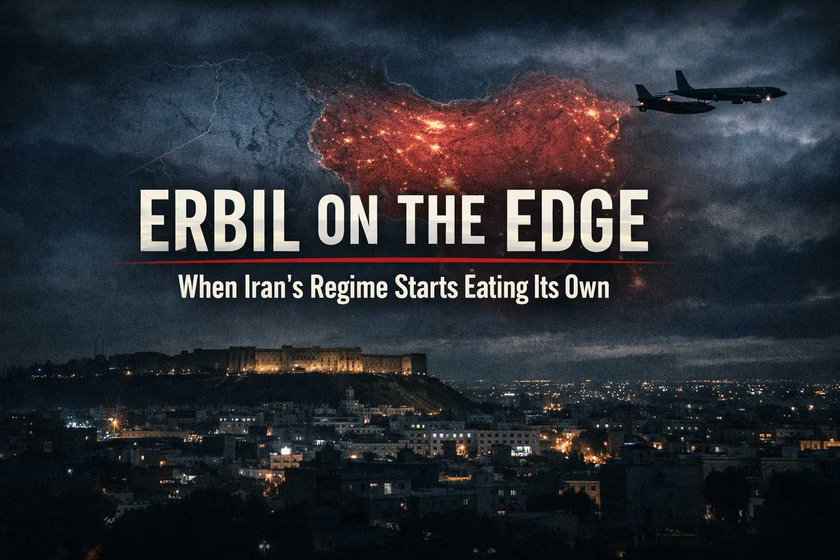
Erbil on the Edge: When Iran’s Regime Starts Eating Its Own

I was sitting in Erbil—northern Iraqi Kurdistan—trying to go live with Ibrahim beside me, and for a few minutes the only thing I could think about was the Starlink. The signal kept stuttering, freezing, coming back, dropping again. If you’ve ever done live reporting from the Middle East, you know how that goes. But this time it felt different, because the connection problems weren’t just “welcome to the region.” It sounded like Iran’s shutdown was starting to ripple outward—like the whole neighborhood was feeling the strain.

And that’s the mood here right now: strain. Everybody senses we’re close to the edge of something.

The conversation we keep circling back to is Iran—what’s likely to happen tonight or tomorrow night, and what the regime is doing to its own people in the meantime. The numbers coming out of Iran are hard to verify, but they’re also too consistent across too many channels to shrug off. I’m hearing claims that the regime has killed tens of thousands—some reports pushing as high as 80,000 dead. Two weeks ago the number being floated was 20,000. Now people are saying it has multiplied. I can’t independently corroborate that figure, and neither can anyone else right now, because the regime has every reason to hide the truth and the internet inside Iran is being choked down. But even if those reports are exaggerated, the direction of the story is unmistakable: the regime is using mass violence to keep control, and it’s doing it at a pace that suggests fear inside the leadership.

When a government starts killing like that, it’s not because it feels secure. It’s because it doesn’t.

At the same time, you’ve got this other thing happening—something you can measure without rumors or emotion. You can look at maps, ship movements, aircraft staging, and refueling capacity and see a pattern that doesn’t show up unless a real operation is being built.

The U.S. posture around Iran right now is massive. People throw that word around, but I mean it literally: we’re talking about nearly 500 aircraft in a full-spectrum posture, nonstop surveillance on Iranian airspace and defenses, and the kind of tanker support that exists for one reason—so jets can stay on station, keep flying sorties, and keep coming back. The fuel offload capacity number being discussed is over five million pounds. That’s the kind of logistical “tell” that matters more than speeches, because fuel and tankers are what make sustained air campaigns possible.

Only for Supporters
To read the rest of this article and access other paid content, you must be a supporter
Read full Article
See More
Available on mobile and TV devices
google store google store app store app store
google store google store app tv store app tv store amazon store amazon store roku store roku store
Powered by Locals