






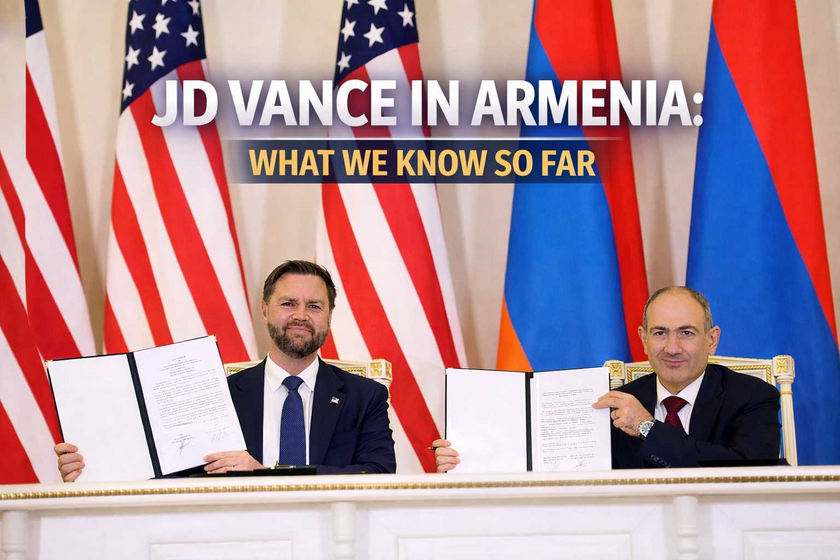
U.S. Vice President J.D. Vance’s February 9–10, 2026 trip to Yerevan marked a first in modern U.S.–Armenia relations: by multiple outlets’ reporting and by Armenia’s own official messaging, he is the first sitting U.S. vice president to visit Armenia. That “first-ever” framing matters, because the visit was not treated as ceremonial; it was structured around deliverables tied to Armenia’s post-2023 security recalibration, the U.S.-brokered Armenia–Azerbaijan track, and a set of economic and defense cooperation announcements that Armenian officials presented as strategic rather than symbolic.
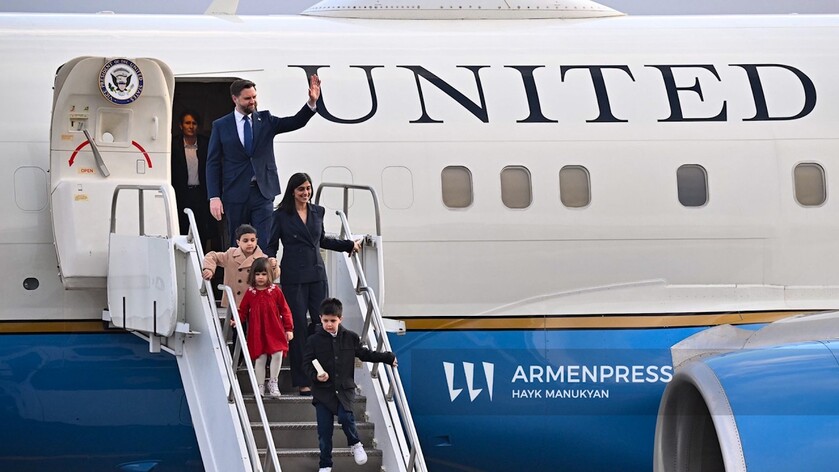
Armenian outlets reported that Vance arrived in Yerevan on February 9 accompanied by his wife, Usha Vance and with their children as well, and that he was received at Zvartnots by senior Armenian officials including National Assembly Speaker Alen Simonyan and other government figures. From there, the core of the visit centered on meetings with Prime Minister Nikol Pashinyan, followed by joint statements for the media that emphasized “institutionalizing peace” and expanding the bilateral “strategic partnership.”
On February 10, Vance and his wife visited the Tsitsernakaberd Armenian Genocide Memorial complex, laid flowers at the eternal flame, and signed the Book of Honored Guests—an appearance covered prominently by Armenian press. Armenian reporting also noted heightened security around the memorial during the visit, underscoring how closely watched the optics were domestically.
The headline deliverable: civil nuclear cooperation and the “123 Agreement” track
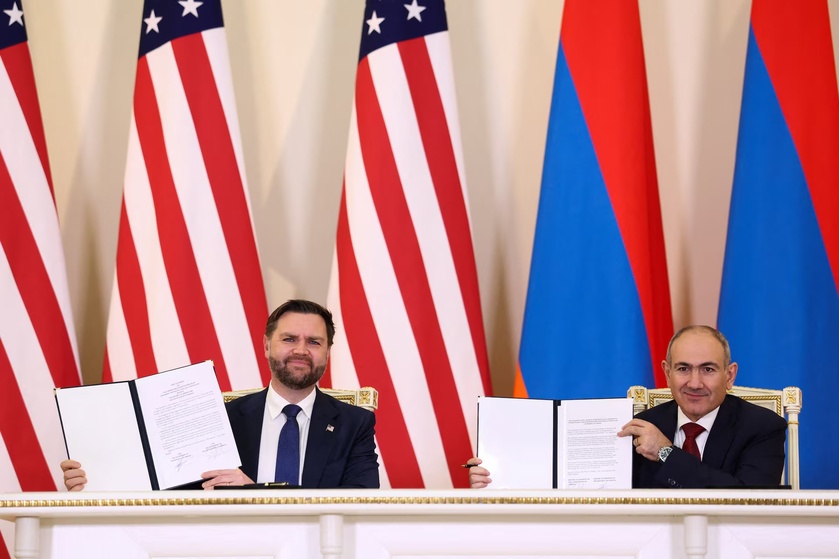
The most consequential announcement was a bilateral statement indicating that Armenia and the United States had completed negotiations on what is widely referred to as a “123 Agreement”—the legal framework required for U.S. civil nuclear cooperation and licensing of nuclear technology exports. Reuters characterized this as a major step that could enable U.S. participation in Armenia’s plan to replace the aging Metsamor nuclear plant, with Vance publicly attaching large export figures to the prospective cooperation (reported as up to $5 billion initially, plus additional longer-term fuel and maintenance arrangements).
Why this matters in Armenian terms is straightforward: energy security is strategic, and Metsamor replacement planning has long been entangled with geopolitics. Reuters explicitly framed the move as part of Armenia’s effort to reduce dependence on Russian and Iranian energy links and as a potential blow to Moscow’s traditional role in the sector—an interpretation reinforced by Russian officials’ public pushback and promotion of Rosatom as an alternative.
That said, Armenian and regional reporting also highlighted ambiguity around some of the figures and framing used during the visit—particularly the scale and timing of the “export” numbers—suggesting that some of what was presented as a near-term “deal” is better understood as a negotiated framework and political commitment that still requires follow-through, project selection, and financing decisions.
Defense and technology: a drone sale framed as a precedent
A second major headline out of Yerevan was Vance’s announcement of a U.S. sale of drone and surveillance technology to Armenia, reported as worth $11 million and described as a significant milestone in U.S.–Armenia defense cooperation. The drone component is represented as a “first-ever major” U.S. military-technology sale to Armenia, pairing it with broader claims about advanced technology exports and investment intent.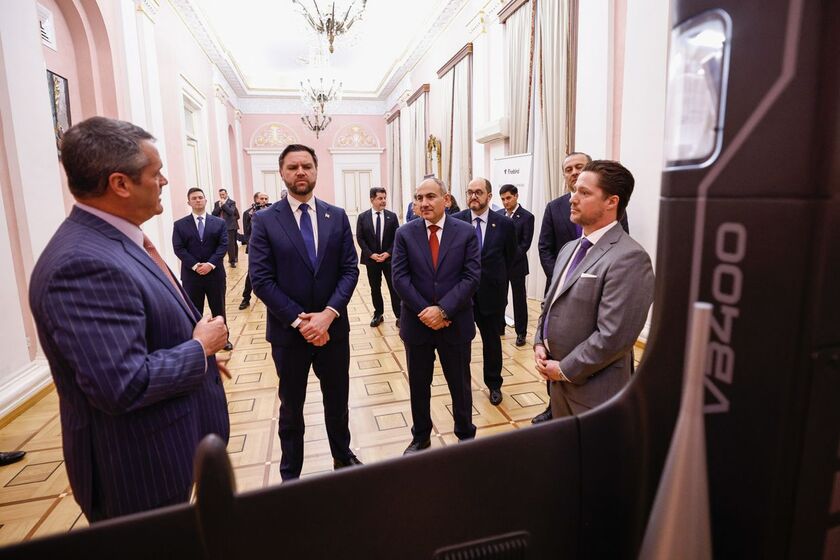
For Armenian audiences, the significance is less about the dollar value than the precedent: it signals a willingness—at least at the level of public political messaging—to deepen practical defense ties at a time when Armenia has been diversifying suppliers and partnerships.