


Chuck Holton
Politics • Culture • News
Chuck Holton is an American war correspondent, published author, and motivational speaker.
Interested? Want to learn more about the community?

đŸ‡ș🇾đŸȘ–đŸ«¶đŸ™âŹ†ïžđŸŒ‡â˜•ïžđŸŽžïžđŸ“°âœ”ïžđŸ•ŠïžđŸŠđŸ‘đŸ“œ
Joe Pags with Rock Legend about NFL To John Ramirez about demons/pimps of halftime show To demon olympics To canada gone antichrist/woke all around confirmed..as canada law folks have mindkauf/cover up truth vocabulary to describe trans killer To even seculars wouldn’t think of add truth to evil black bunny, demonic halftime hate on USA:

https://m.youtube.com/watch?v=LS6SjqqW__k
https://m.youtube.com/watch?v=UuLUNetHaC4
https://m.youtube.com/watch?v=vd5T_QKK1jI
https://m.youtube.com/watch?v=_W_ped_VEfo
https://m.youtube.com/watch?v=CfWJDW9oFLE&pp=ugUEEgJlbg%3D%3D

Interested? Want to learn more about the community?
What else you may like

Videos
Podcasts
Posts
Articles
Day 2 Syria
00:01:36
Disney Land for Men in Iraq.
00:00:57
Pray for the Kurdish people in Syria

A great evil is unfolding across Syria as forces loyal to Ahmed Al Sharaa attack the Kurdish people in eastern Syria. Jihadi fighters are now unarmed and are allying themselves with ISIS once again, killing and beheading civilians in the streets. They also released thousands of ISIS fighters from prisons that were being guarded by the Kurds.

00:02:28
Episode 622 - Field Producer Dennis Azato and Chuck Reminisce

My erstwhile field producer and cameraman Dennis Azato has accompanied me on ten years of adventures across the globe. Today he joins me in Ukraine and we spend some time remembering our many trips together.

Episode 622 - Field Producer Dennis Azato and Chuck Reminisce
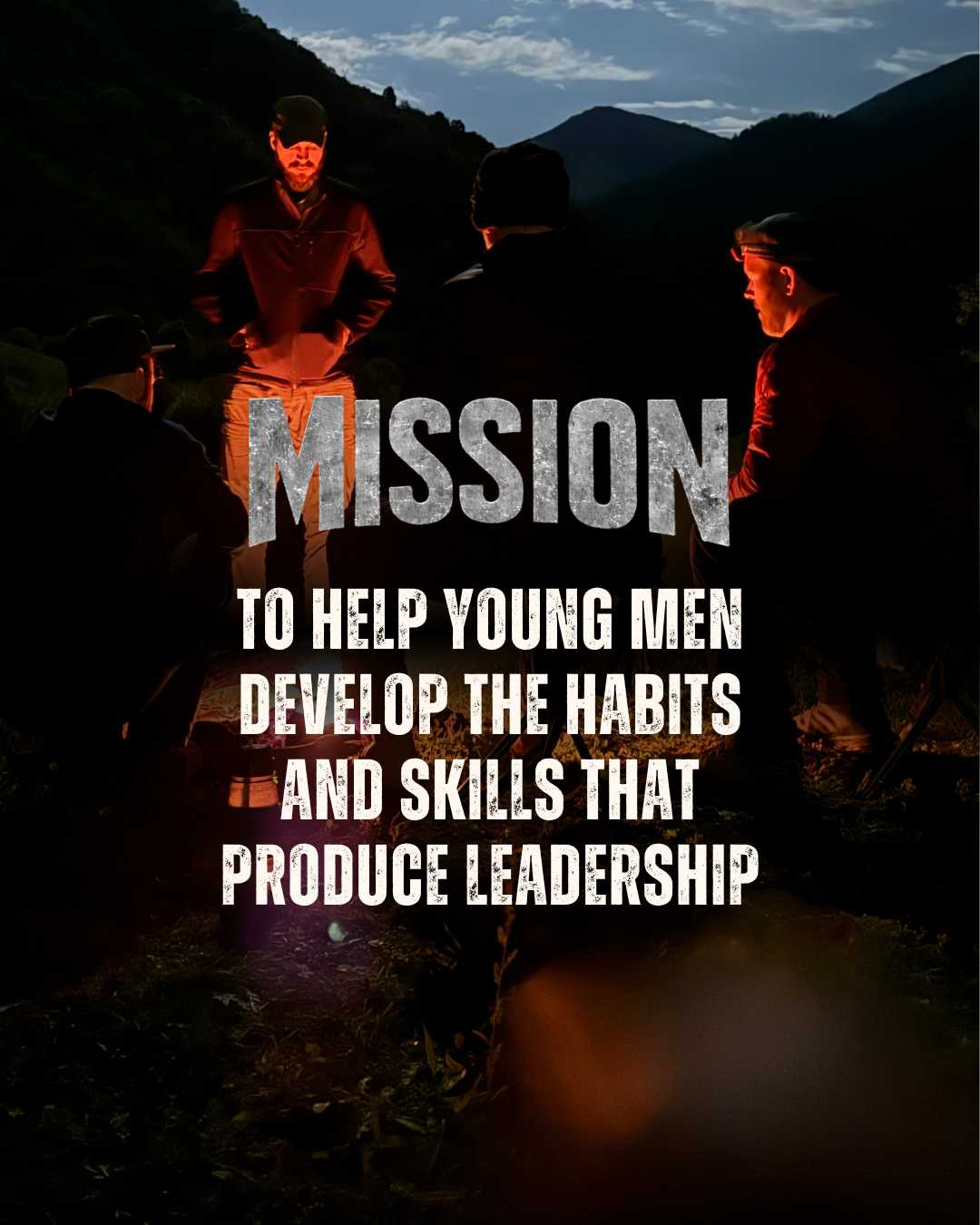
Calling Young Men to Lead: Join The Forge This Summer

We’re launching our very first Forge Field Leadership Camp this summer!

The Forge is a one-week, field-based camp for young men (ages 13–17), built on a biblical foundation. It’s designed to train real-world skills—navigation, survival, building, leadership—while shaping character, discipline, and faith.

This is more than a summer camp. It’s a call to rise.

Led by veterans and experienced mentors, these young men will be challenged to grow stronger in every way—physically, mentally, and spiritually.

Dates: August 2–9
Ages: 13–17
Apply now: https://www.frontierforge.org/

post photo preview

When the kingdom of God is the sole authority of our lives - righteousness, peace and joy in the Spirit will be realized (Romans 14:20). For the very life of Jesus Christ, the King of kings, will be manifested through us. For it will not be we who live (in our fleshly nature), but Him who lives inside us, to the glory of God the Father.

May we allow His reign to be perfected in us, by trusting in Him and submitting to His authority, that those around us might experience His goodness through us, and place all of their faith and hope in Him (Psalm 34:8)!

"For the kingdom of God is not in word, but in power." (1 Corinthians 4:20)

Chuck on CBN’s Jerusalem Dateline (16:00-20:12)

post photo preview
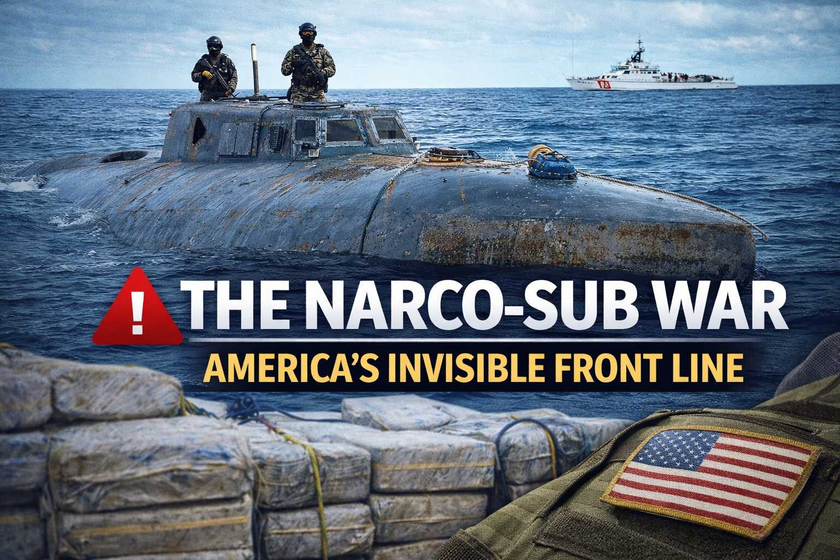
US Coast Guard Seizes 10-Ton Narco Sub - $500M Cartel Bust

There is an incredible war being waged against the United States, and it isn’t being fought with tanks rolling across borders or missiles lighting up the sky. It’s being fought with narcotics, with logistics networks, with corruption, and with foreign actors who know exactly what they’re doing. And they’re winning far more often than most Americans want to admit.
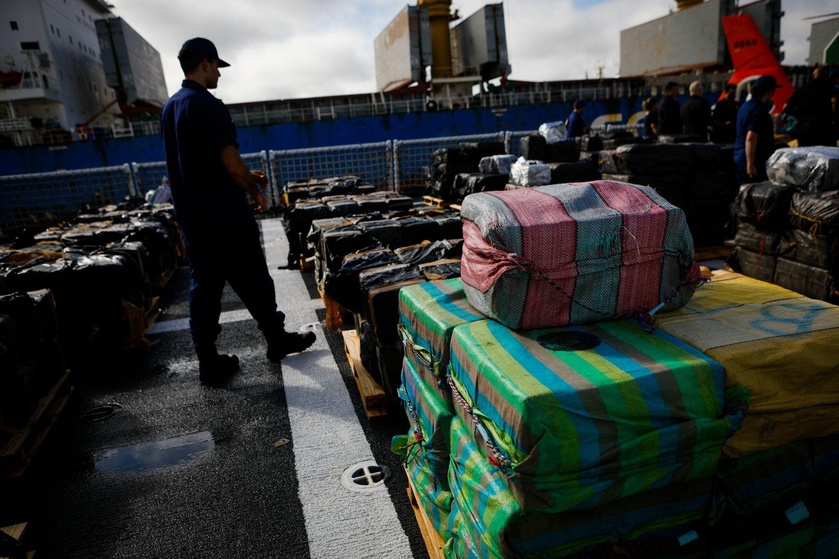
The narco-sub that carried half a billion dollars

On February 9th and 10th, U.S. and Colombian forces intercepted a semi-submersible “narco-sub” in the Pacific, just off Colombia. If you’ve never seen one of these things, picture a low-slung, barely-above-the-waterline boat designed for one job: move massive loads of cocaine and disappear. They are built to be disposable, and there’s so much money involved that cartels can afford to lose a few and still keep the machine running.

This particular one was carrying 10 tons of cocaine—about 22,000 pounds—with an estimated street value around $441 million.

That is one boat.

And yes, it’s good news that it got pulled off the board. Four people were arrested, and the drugs were destroyed. But don’t let a headline like that lull you into thinking the problem is being solved, because what you’re looking at is a snapshot of a much larger industrial pipeline—one that exists because there is a market here at home, and because there are enemies abroad who see our addiction as a weapon.

A joint operation—and a quiet geopolitical shift

What made this interdiction particularly notable wasn’t just the amount, but the cooperation. It was a joint U.S.-Colombian operation, and that matters because it shows how fast geopolitics can shift when the right leverage gets applied.

At the beginning of the year, the U.S. and Colombia were not exactly sharing warm hugs and handwritten valentines. I was in BogotĂĄ. I was up near CĂșcuta. I heard plenty of “Yankee go home.” President Trump and Colombia’s President Gustavo Petro were at odds, and tensions were real.

Then, like Trump often does, he blew it up publicly, forced the conversation, and later smoothed it over behind closed doors. Petro came to the White House on February 3rd, they talked immigration and drugs, and apparently they left as friends.

I’ll be the first to tell you: it’s not classy. It’s not tactful. It’s not how diplomats would do it. But it can be effective—because suddenly you’ve got more Latin American countries looking at the United States and thinking, “He’s serious. We’d better get on the right side of this.”
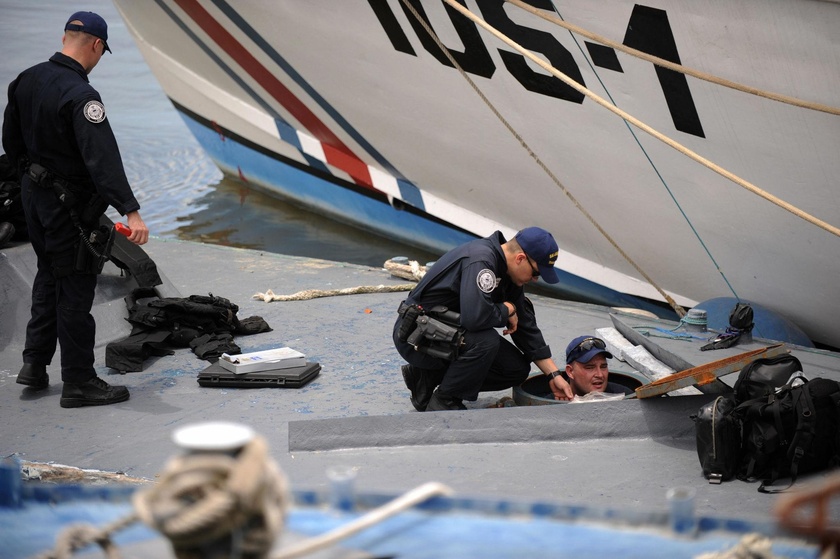
The scale is what should scare you

Here’s the part that should make your stomach drop.

In the last year, U.S. agencies have seized almost $20 billion in street value of drugs. Hundreds of metric tons. A mind-boggling amount of narcotics stopped before they hit American neighborhoods.
Only for Supporters
To read the rest of this article and access other paid content, you must be a supporter
Read full Article
post photo preview
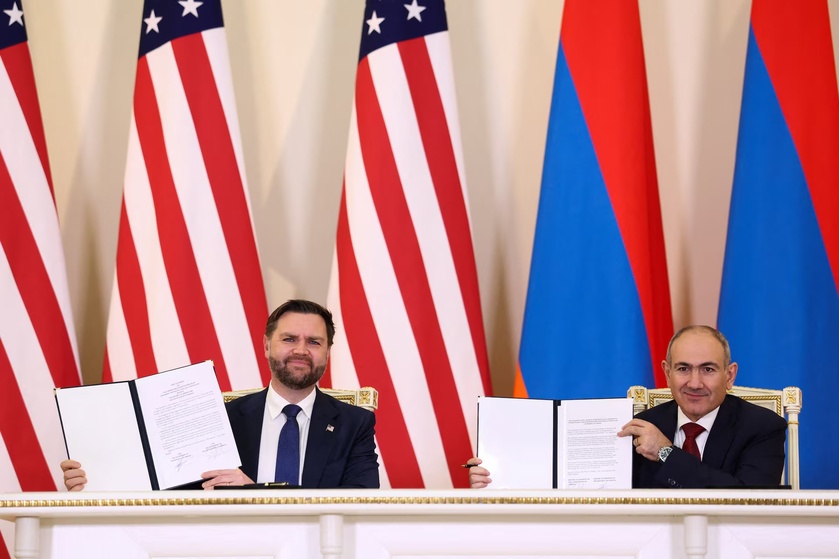
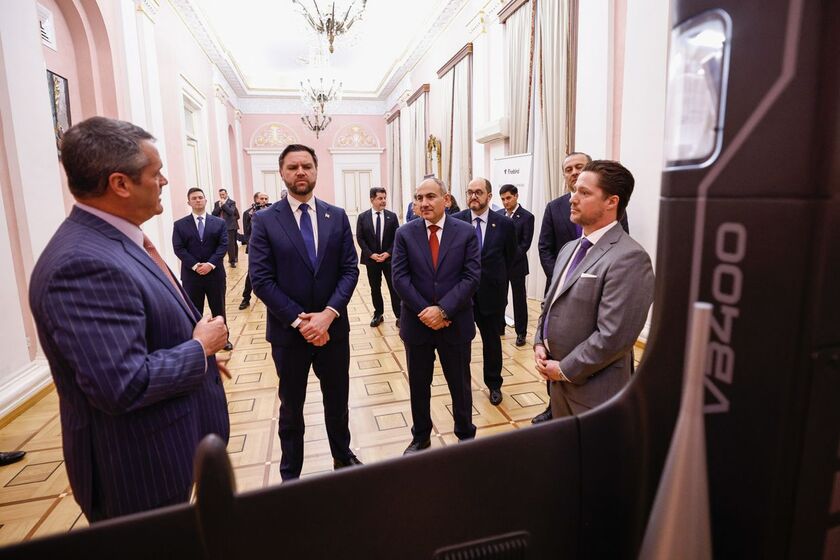
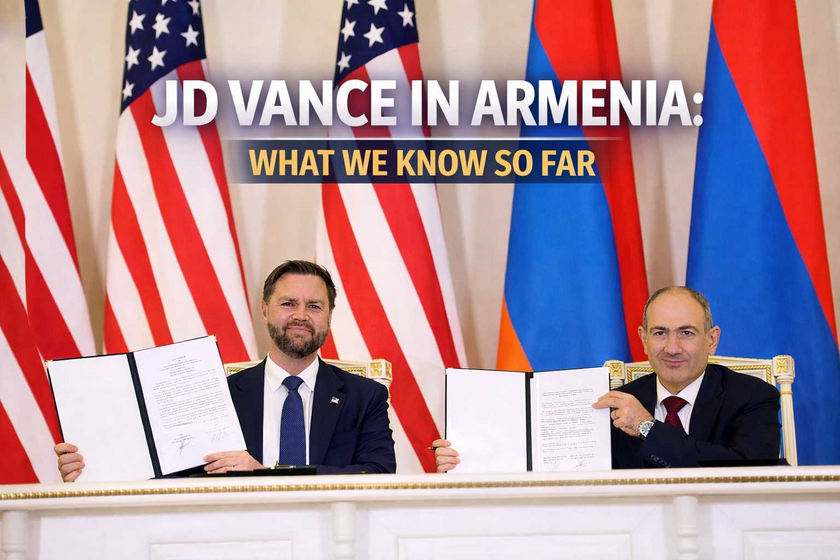
JD Vance in Armenia: What we know so far


U.S. Vice President J.D. Vance’s February 9–10, 2026 trip to Yerevan marked a first in modern U.S.–Armenia relations: by multiple outlets’ reporting and by Armenia’s own official messaging, he is the first sitting U.S. vice president to visit Armenia. That “first-ever” framing matters, because the visit was not treated as ceremonial; it was structured around deliverables tied to Armenia’s post-2023 security recalibration, the U.S.-brokered Armenia–Azerbaijan track, and a set of economic and defense cooperation announcements that Armenian officials presented as strategic rather than symbolic.

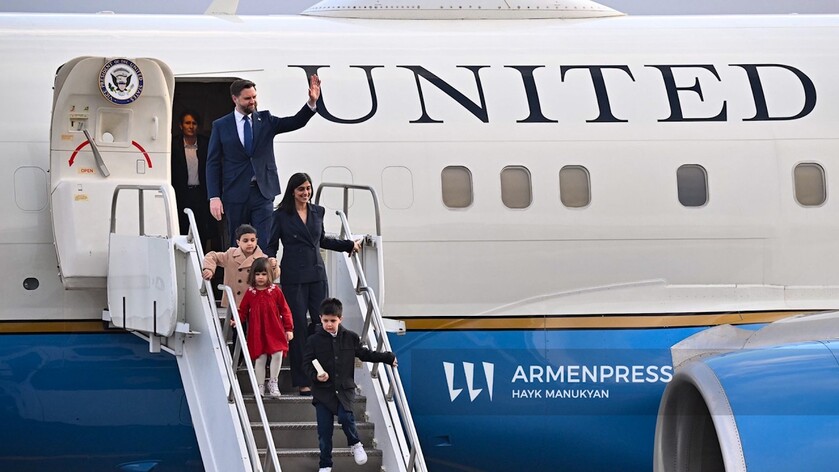
Armenian outlets reported that Vance arrived in Yerevan on February 9 accompanied by his wife, Usha Vance and with their children as well, and that he was received at Zvartnots by senior Armenian officials including National Assembly Speaker Alen Simonyan and other government figures. From there, the core of the visit centered on meetings with Prime Minister Nikol Pashinyan, followed by joint statements for the media that emphasized “institutionalizing peace” and expanding the bilateral “strategic partnership.”

On February 10, Vance and his wife visited the Tsitsernakaberd Armenian Genocide Memorial complex, laid flowers at the eternal flame, and signed the Book of Honored Guests—an appearance covered prominently by Armenian press. Armenian reporting also noted heightened security around the memorial during the visit, underscoring how closely watched the optics were domestically.


The headline deliverable: civil nuclear cooperation and the “123 Agreement” track

The most consequential announcement was a bilateral statement indicating that Armenia and the United States had completed negotiations on what is widely referred to as a “123 Agreement”—the legal framework required for U.S. civil nuclear cooperation and licensing of nuclear technology exports. Reuters characterized this as a major step that could enable U.S. participation in Armenia’s plan to replace the aging Metsamor nuclear plant, with Vance publicly attaching large export figures to the prospective cooperation (reported as up to $5 billion initially, plus additional longer-term fuel and maintenance arrangements).

Why this matters in Armenian terms is straightforward: energy security is strategic, and Metsamor replacement planning has long been entangled with geopolitics. Reuters explicitly framed the move as part of Armenia’s effort to reduce dependence on Russian and Iranian energy links and as a potential blow to Moscow’s traditional role in the sector—an interpretation reinforced by Russian officials’ public pushback and promotion of Rosatom as an alternative.

That said, Armenian and regional reporting also highlighted ambiguity around some of the figures and framing used during the visit—particularly the scale and timing of the “export” numbers—suggesting that some of what was presented as a near-term “deal” is better understood as a negotiated framework and political commitment that still requires follow-through, project selection, and financing decisions.

Defense and technology: a drone sale framed as a precedent

A second major headline out of Yerevan was Vance’s announcement of a U.S. sale of drone and surveillance technology to Armenia, reported as worth $11 million and described as a significant milestone in U.S.–Armenia defense cooperation. The drone component is represented as a “first-ever major” U.S. military-technology sale to Armenia, pairing it with broader claims about advanced technology exports and investment intent.

For Armenian audiences, the significance is less about the dollar value than the precedent: it signals a willingness—at least at the level of public political messaging—to deepen practical defense ties at a time when Armenia has been diversifying suppliers and partnerships.

TRIPP and the peace/economics linkage: what the U.S. is trying to lock in

Only for Supporters
To read the rest of this article and access other paid content, you must be a supporter
Read full Article
post photo preview
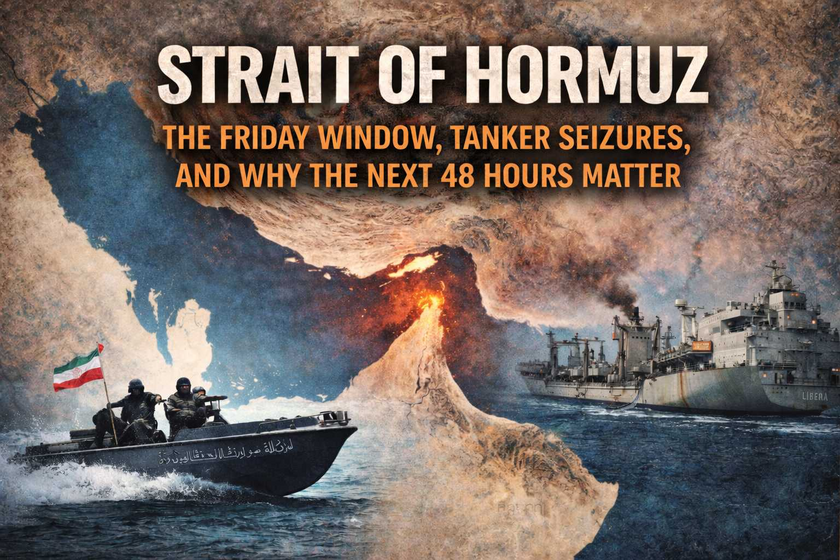
Strait of Hormuz: The Friday Window, Tanker Seizures, and Why the Next 48 Hours Matter

As of today, the Persian Gulf and the Strait of Hormuz are the focal point for both tactical maritime friction and strategic decision-making between the United States and the Islamic Republic of Iran.

Between February 3rd and today, we’ve had two major incidents involving tankers in that region:

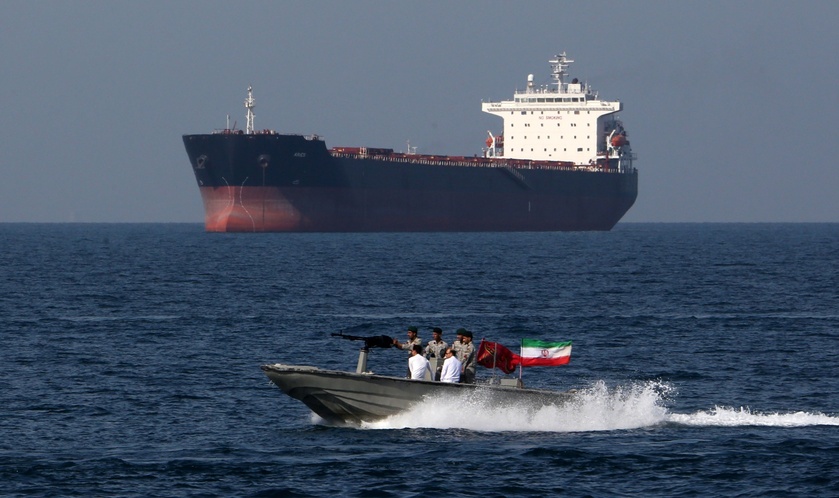
  • Feb 3: Iran attempted to stop and board an American-flagged tanker using fast boats and a drone.

  • Today: Iran seized two tankers near Farsi Island, north of the Strait of Hormuz.

That’s not business as usual. That’s escalation behavior—especially while they’re pretending to negotiate.

The ship they tried to stop on February 3rd wasn’t just “some American-flagged commercial vessel.” It was the MV Stena Impero—part of a U.S. government program called the Tanker Security Program (TSP).

TSP ships are essentially mobile fuel lifelines for the U.S. Navy—specially certified for refueling warships underway. That’s not a small capability. That is how you keep destroyers and carrier groups operating without coming home.

So when Iran sends fast boats with machine guns and launches a drone toward a tanker like that, it isn’t just piracy or harassment. It’s potentially an attempt to cripple U.S. naval sustainment right before a strike window.

And if Iran had successfully taken that tanker? That could’ve kicked off a shooting war on the spot.

The two ships seized today—and why Iran did it now

Now, the two tankers seized today near Farsi Island were different. These were illegally flagged “ghost fleet” style ships, and based on what’s being overlooked in mainstream reporting, they were involved in subsidy arbitrage—buying heavily subsidized Iranian diesel and selling it in neighboring markets for massive profit.

Iran subsidizes fuel so heavily that it can be purchased inside the country for pennies. Across the water, diesel sells at market rates. That markup is insane—more than most illegal drug operations.

So yes—Iran has every right to stop fuel theft.

But here’s the real question: Why do it now?

Only for Supporters
To read the rest of this article and access other paid content, you must be a supporter
Read full Article
See More
Available on mobile and TV devices
google store google store app store app store
google store google store app tv store app tv store amazon store amazon store roku store roku store
Powered by Locals