We’re now seventeen days into this regional war, and if you’ve been listening to the usual chorus of professional pessimists, you’d think the United States and Israel were on the verge of collapse, Iran was ten feet tall, and the whole Middle East was about to swallow the world in one giant fireball. That has been the narrative from the beginning. Before the first shots were fired, the doom-and-gloom crowd was already out in force, warning that America would lose its ships, its bases, its leverage, and its nerve.
That hasn’t happened.
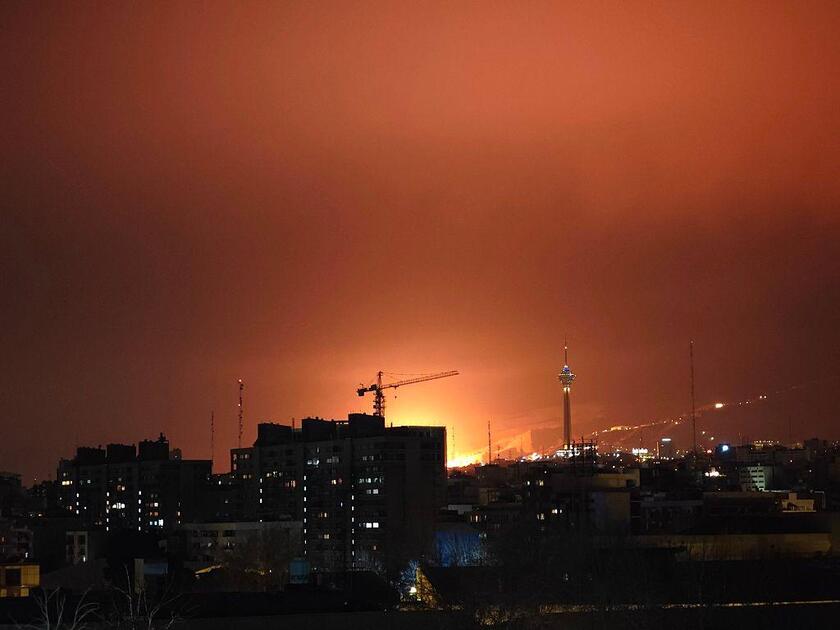
In fact, what has actually happened is much more significant than the panic merchants want to admit: Iran’s regime is being systematically dismantled. Its command structure is being degraded. Its regional coordination is breaking down. Its missile capabilities have been severely reduced. Its proxies are fragmenting. And for the first time in a very long time, the men who have terrorized their own people and funded terror abroad are the ones looking over their shoulders.
Overnight, Israel confirmed the elimination of two senior Iranian officials in targeted strikes. One was Ali Larijani, a key power broker behind the scenes and secretary of Iran’s Supreme National Security Council. The other was General Gholam Reza Soleimani, the head of the Basij paramilitary force, the same apparatus responsible for much of the regime’s brutal internal repression. These were not symbolic targets. These were men who helped sustain the machinery of fear inside Iran.
Their removal matters. It matters strategically because it degrades the regime’s ability to command and control. It matters politically because it signals that nobody in the inner circle is untouchable. And it matters morally because the Iranian people are safer without men like that holding power over them. The Basij, in particular, has been a tool of terror against ordinary Iranians seeking freedom. Weakening that force weakens the regime’s grip on the population, and that opens the door for something the regime fears more than any American bomb: its own people rising up.
That appears to be part of the broader strategy here. Benjamin Netanyahu has made it clear that the goal is not simply to hit Iranian assets for the sake of hitting them. The goal is to undermine the regime and give the Iranian people the opportunity to remove it. Reports continue to indicate that ordinary Iranians are helping identify regime-linked sites, checkpoints, headquarters, and key personnel. In other words, this is not merely an outside military campaign. It is increasingly becoming a convergence between external pressure and internal resistance.
That’s why the absence of visible leadership at the top matters so much. Iran’s new supreme leader has reportedly not been seen. Rumors continue to circulate that he is injured, possibly worse. Whether he is in a bunker, in a hospital, or somewhere far from public view, the practical effect is the same: commanders are left fighting blind, communication is fractured, and confidence inside the regime is eroding.
This is what victory looks like in the early stages of a modern conflict. It is not always dramatic. It does not always come with an iconic photo or an aircraft carrier speech. Sometimes it looks like silence from enemy leadership, panic in enemy ranks, and increasingly desperate propaganda from those trying to pretend nothing is wrong.
One of the more ironic moments in all of this came when reports emerged that Iran’s new IRGC spokesman had also been taken out after appearing on television to boast that wars are decided on the battlefield, not on social media. He did not have long to enjoy the sound of his own voice. That kind of turnover tells you something about the state of the regime right now. They are not projecting strength. They are burning through leadership.
Meanwhile, Iran’s missile campaign has shifted from mass salvos to a kind of sustained harassment. That change is being misread in some corners as evidence of restraint or strategic patience. It is neither. It is evidence of reduced capacity. Iran no longer appears able to launch the kinds of massive barrages it once threatened. Instead, it is pacing itself—firing enough to disrupt life, force civilians into shelters, and create political pressure, but not enough to alter the strategic balance on the ground.
That is an important distinction. Iran is no longer fighting to win militarily. It is fighting to avoid losing politically.
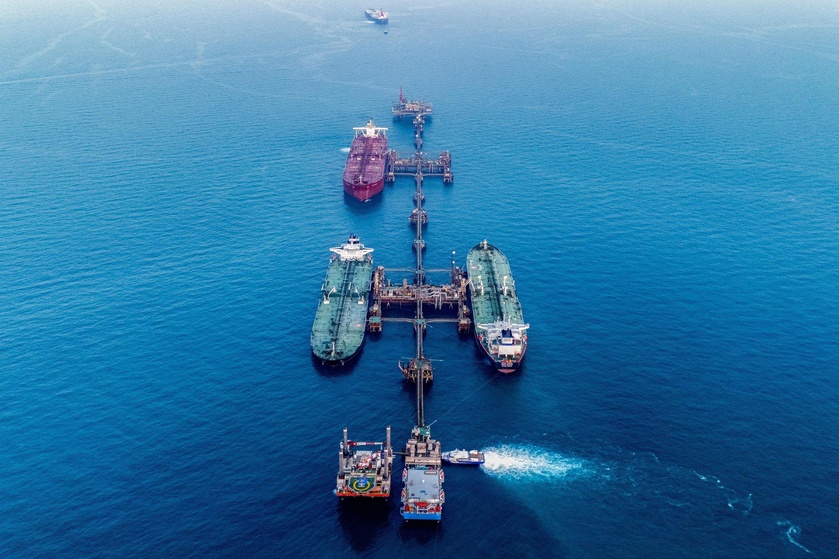
And that brings us to the next big issue: the Strait of Hormuz.
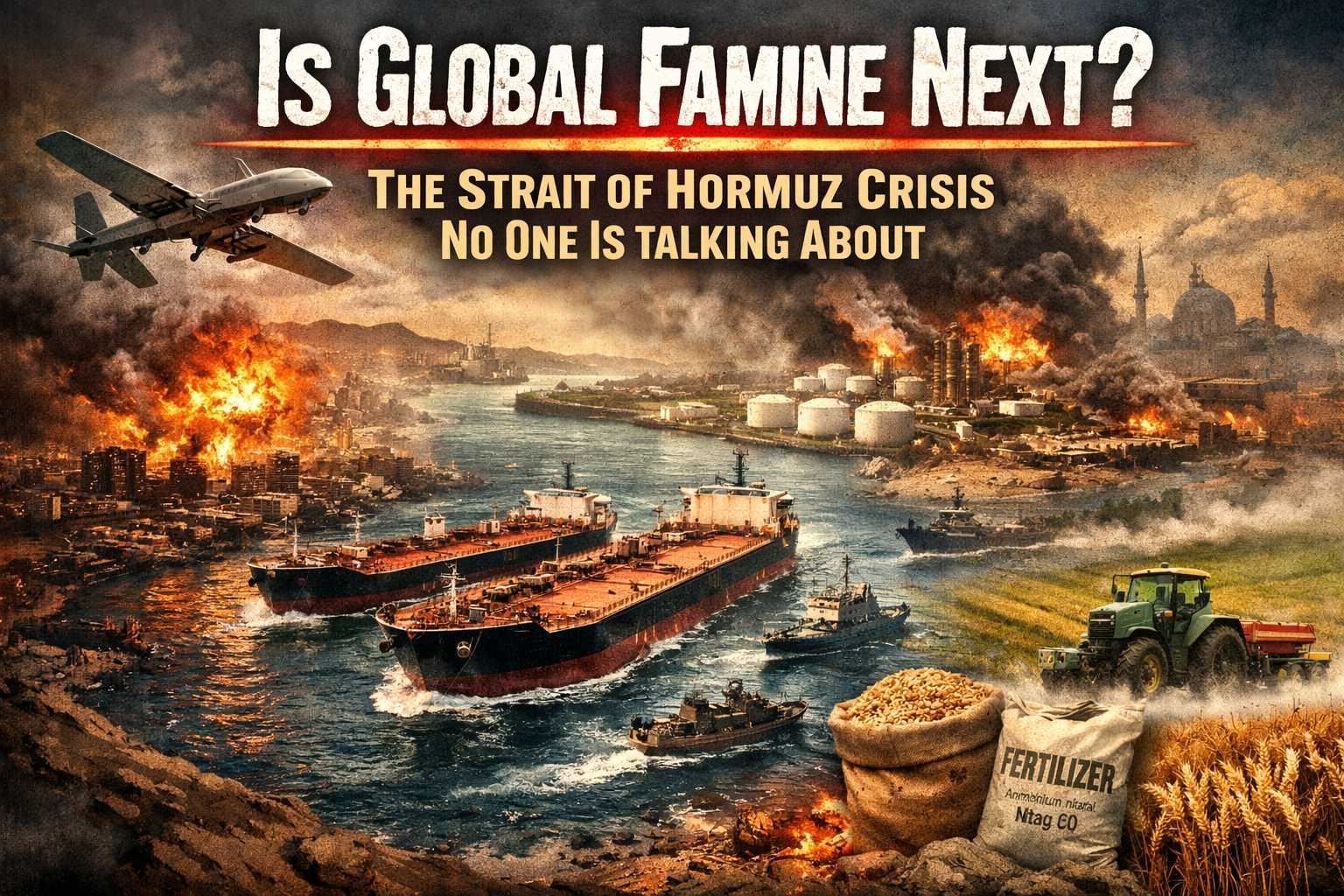
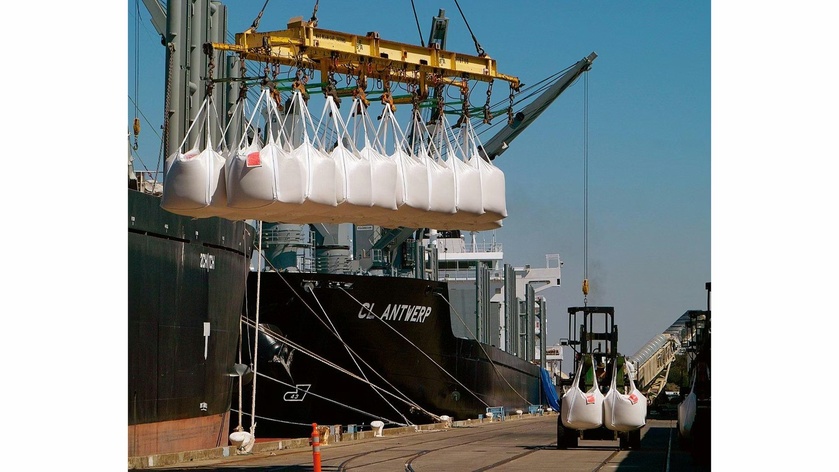
A great deal of coverage has focused on oil, and understandably so. Roughly a fifth of the world’s oil passes through that chokepoint. But the bigger issue may not be oil at all. The bigger issue may be fertilizer. A huge portion of the world’s urea and other nitrogen-based fertilizer inputs move through that same corridor, and disruptions there can reverberate through global food systems in a hurry.
This is where the latest wave of alarmism has shifted. Since the “America is losing” narrative isn’t matching the facts on the ground, some of the conversation has moved to “global famine is imminent.” Once again, that overstates the case.
There is no question this conflict is creating serious economic pressure. Fertilizer markets are tightening. Food prices are likely to rise. Some countries—especially India, parts of Africa, and others heavily dependent on Gulf fertilizer—could face real hardship if the Strait remains restricted for an extended period. That matters, and it should not be minimized. The World Food Program was already warning about severe hunger conditions before this war, and prolonged disruption will make things worse for millions of vulnerable people.
But worse is not the same thing as apocalyptic.
What the data points toward is a painful price shock, not a civilization-ending famine. In the United States and Europe, people are likely to feel this as inflation in food, fuel, and agricultural products later in the year. Meat could get more expensive. Bread could get more expensive. Processed foods could get more expensive. That is real. But it is not mass starvation. In poorer regions, particularly in parts of Africa and Asia, the consequences could be more severe, which is why humanitarian support will matter. The right response is sober concern and practical preparation, not theatrical hysteria.
Farmers are not helpless in the face of this. Markets are not static. Human beings adapt. Precision fertilizer application is already improving. Some producers can switch crops. Soybeans, for example, require less external nitrogen than corn. Supply chains adjust. Governments respond. Charities mobilize. Necessity really is the mother of invention, and high input costs have a way of making people innovate quickly.
That doesn’t mean everything will be fine. It means the sky is not falling.
And while the world fixates on prices, too many commentators are missing the larger strategic picture. Iran’s military-industrial capacity is being dismantled. Its missile production has reportedly been driven effectively to zero for the time being. Its proxies are less coordinated. Hezbollah is diminished. Iraqi militias are acting more independently. Even the Houthis appear less effective, likely because the targeting and coordination they relied on from Iran have been disrupted.
That matters beyond this war.
A weakened Iran means less terrorism funding. It means fewer missiles aimed at civilians. It means fewer drones in the hands of proxy militias. It means less leverage over one of the most vital maritime chokepoints on the planet. If the Iranian regime loses its ability to menace the region, the long-term result could be more stable energy markets, more secure shipping lanes, and a Middle East less vulnerable to blackmail by a revolutionary regime that has spent decades exporting violence.
That is why this is so consequential.
Ted Cruz said this may be the most important decision of the Trump presidency, and he may be right. For forty-seven years, the Iranian regime has been at war with the United States in one form or another. It has funded the groups that kill Americans. It has armed the terrorists who destabilize allies. It has plotted against American officials. It has financed Hamas, Hezbollah, the Houthis, and militias across the region. It has treated terror as statecraft and murder as diplomacy.
Taking that threat apart is not a distraction from American interests. It is the defense of American interests.
Now, that does not mean every aspect of the current situation is being handled perfectly. There are real questions about burden-sharing, especially when it comes to maritime security. President Trump has not exactly spent the last year building goodwill with NATO partners, so it should not surprise anyone that they are not rushing to jump into a war he chose to start. Whether that was good policy or bad policy, actions have consequences. At the same time, India’s decision to escort its own tankers shows that nations will act when their direct interests are threatened, even if they are not acting on behalf of Washington.
There are also serious concerns about the drone threat. A cheap drone flying over the U.S. embassy in Baghdad without being brought down is a flashing warning light. America remains the most powerful military force on earth, but our enemies are adapting. They are looking for low-cost ways to impose friction, fear, and disruption. We saw this in Afghanistan. Tactical dominance does not automatically solve strategic patience. If Iran’s remaining play is to become an enduring nuisance rather than a dominant regional power, that is still a problem that has to be addressed.
Even so, nuisance is not the same thing as victory.
That is the key point too many people are missing. Iran does not have to win militarily to make noise. It does not have to dominate the battlefield to create headlines. It only has to survive long enough to feed a narrative of stalemate. But survival under pressure, while losing commanders, losing production, losing freedom of movement, and losing the confidence of your own people, is not strength. It is decay.
So where does this go from here?
One of the biggest questions is whether the United States will move on Kharg Island. About 90 percent of Iran’s oil exports flow through that island, and if U.S. Marines were used to seize it, the regime would face a brutal choice: strike its own infrastructure to dislodge American forces, or lose its most important oil export hub without a fight. The forces reportedly moving into the region could make that possible, though a lot can change before they arrive and no one should pretend that option is already decided.
Still, the logic is obvious. If Iran is still moving oil to China while trying to squeeze the rest of the world, then shutting down that source directly would hit the regime where it hurts without permanently destroying infrastructure the Iranian people may need after the war. That kind of move would not just be militarily significant. It would be politically devastating for Tehran.
And that, ultimately, is what this war is becoming: a struggle not only over territory and shipping lanes, but over the future of Iran itself.
The bottom line is simple. Yes, this war is causing pain. Yes, prices are going to feel pressure. Yes, vulnerable parts of the world could suffer more if the Strait of Hormuz stays disrupted. But no, this is not evidence that the United States is losing. No, it is not proof that Israel has failed. And no, it is not the beginning of some unavoidable global famine that will wipe out half the planet.
What it is, instead, is the methodical dismantling of a regime that has spent decades funding terror, repressing its own people, threatening its neighbors, and destabilizing the world.
That process is messy. It is costly. It is dangerous. But it is working.
And that’s exactly why the doom merchants are so desperate to change the subject.
God bless you