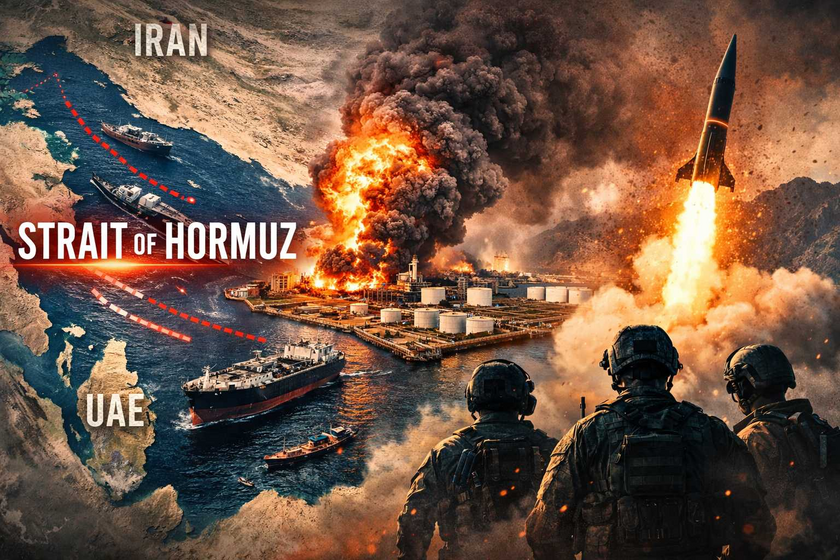




A massive oil tanker, the Al-Salmi, had been struck just off Dubai.
Now, that alone would be enough to raise eyebrows. But this wasn’t some empty vessel drifting through contested waters. This ship was fully loaded—over two million barrels of crude—and quietly making its way toward China under what was supposed to be a kind of uneasy understanding with Iran. The rules, as they had been laid out, were simple enough: if you were friendly, or if your cargo was headed to someone Iran considered friendly, you’d be allowed through the Strait of Hormuz.
Except this time, that understanding didn’t hold. The drone hit anyway. And just like that, the illusion of control—whatever fragile version of it existed—started to crack.
When the Rules Stop Meaning Anything
What you’re watching unfold right now isn’t just another escalation in a long-running conflict. It’s something more subtle and, in many ways, more dangerous. It’s the moment when the rules that everyone pretends to follow suddenly stop being reliable.
For weeks, Iran has been signaling that it could manage the flow of traffic through the Strait—tightening it, regulating it, even monetizing it by charging massive tolls for passage. It was a bold move, but it came with an implicit promise: play by our rules, and you’ll get through. But when a ship that meets those conditions gets hit anyway, that promise evaporates. And when that happens, markets don’t wait around for explanations. They react.
Oil prices have been climbing steadily, inching their way past thresholds that start to make governments nervous and consumers uneasy. We’re now looking at crude pushing well past $100 a barrel, with some grades climbing even higher, and that upward pressure isn’t coming from speculation alone—it’s coming from uncertainty.
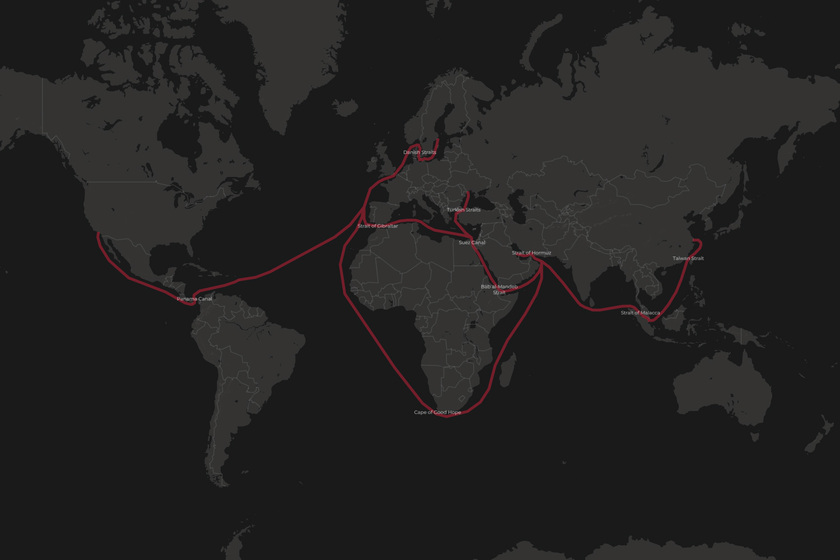
Because once trust disappears from a critical chokepoint like the Strait of Hormuz, everything that depends on it becomes unstable.
And that’s where the real story begins.
This Was Never Just About Oil
Most people hear “Strait of Hormuz” and think oil—and yes, that’s a big part of it. But if that’s all you’re seeing, you’re missing the bigger picture.
What moves through that narrow stretch of water isn’t just fuel for your car or heating for your home. It’s also the backbone of global agriculture. A significant portion of the world’s nitrogen-based fertilizer passes through that same corridor, and without it, entire planting seasons can collapse.
And here’s the problem: timing.
Farmers in large parts of the world don’t have the luxury of waiting. There’s a window—a narrow one—when crops have to be planted. If fertilizer doesn’t arrive in time, yields drop. And when yields drop across multiple regions at once, you don’t just get higher prices. You get shortages. In places like Africa and parts of Asia, that’s not an inconvenience—it’s a crisis.
So when you see a tanker burning off the coast of Dubai, you’re not just looking at a military incident. You’re looking at the first tremors of something that could ripple through global food systems months from now.
That’s the part nobody’s putting in the headlines yet.
Winning the Fight—and Still Losing the War
Now here’s where things get complicated, because if you’re looking strictly at the battlefield, the United States is doing exactly what it set out to do.
According to Brad Cooper, U.S. forces have struck more than 11,000 targets inside Iran, dismantling key elements of their military infrastructure and steadily eroding their ability to project power beyond their borders.
You’re seeing it in the numbers, but you’re also seeing it in the pattern of attacks.
Missile launches are down. Drone activity is decreasing. Naval capabilities are being chipped away piece by piece. There was even a moment recently when Israel experienced a full night without incoming missile alerts—something that would have seemed unthinkable just weeks ago.
From a tactical standpoint, it’s hard to argue with the results.
But wars aren’t won on spreadsheets, and they’re not decided by how many targets you can check off a list.
Because the deeper you look into Iran, the more you start to understand just how vast and layered the problem really is.
The Problem You Can’t Bomb Away
There’s a moment in every conflict where you realize that destruction alone isn’t going to get you where you need to go, and we may be approaching that moment here. Iran isn’t a single target. It’s not even a collection of targets. It’s a system.
You have the clerical leadership at the top—thousands of religious figures who shape ideology and influence. You have the civilian government, which on paper runs the country but in practice often struggles to assert control. And then you have the real power center: the Islamic Revolutionary Guard Corps.
The IRGC isn’t just a military force. It’s an economic empire, a political machine, and a shadow government all rolled into one. Estimates put their numbers somewhere between 250,000 and 500,000 personnel, embedded across every sector that matters. You can degrade that system. You can disrupt it. You can hit its infrastructure again and again. But you can’t simply erase it from the air.
And if the objective is lasting change, that creates a dilemma. Because the alternative—boots on the ground—comes with its own set of realities that are far harder to ignore.
The Reality of Ground War
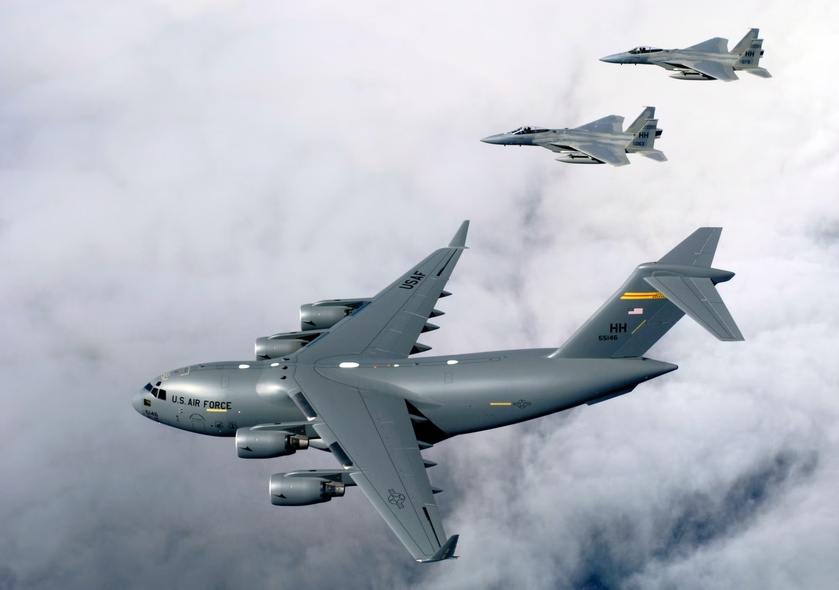
At one point in the briefing, the question came up: what could we actually do with the forces currently in the region?
On paper, the numbers sound substantial. But when you break them down, the number of actual combat troops—what you might call “trigger pullers”—is much smaller.
And when you start mapping out potential objectives—nuclear facilities, missile farms, hardened underground complexes—you quickly realize how limited those numbers really are.
Take something like a deeply buried facility hidden beneath a mountain, with multiple entrances, reinforced tunnels, and defensive positions spread across the surrounding terrain. Securing a site like that wouldn’t be a quick raid. It would require layered operations, perimeter control, logistics, and sustained presence. Not hours. Days, maybe weeks. And all of it taking place hundreds of miles from friendly territory, with supply lines stretched thin and the constant threat of counterattack. This isn’t Iraq in 2003. It’s not Afghanistan in 2001.
This is something else.
The Only Way Out Might Be the One Nobody Trusts
So where does that leave us?
According to Pete Hegseth and others inside the administration, there are signs—quiet ones—that elements within Iran are looking for a way out. Not publicly, of course. Publicly, the message is defiance. But behind the scenes, there are indications that conversations may be happening. If that’s true, it presents an opportunity. But it also raises a question.
Can you negotiate with a system that isn’t unified? Can you strike a deal with people who might not survive long enough to honor it?
And even if you could, the conditions being demanded—complete dismantling of missile programs, nuclear capabilities, and proxy networks—aren’t small concessions. They’re surrender terms. Which means any offramp, if it exists at all, is going to be narrow.
What Happens Next
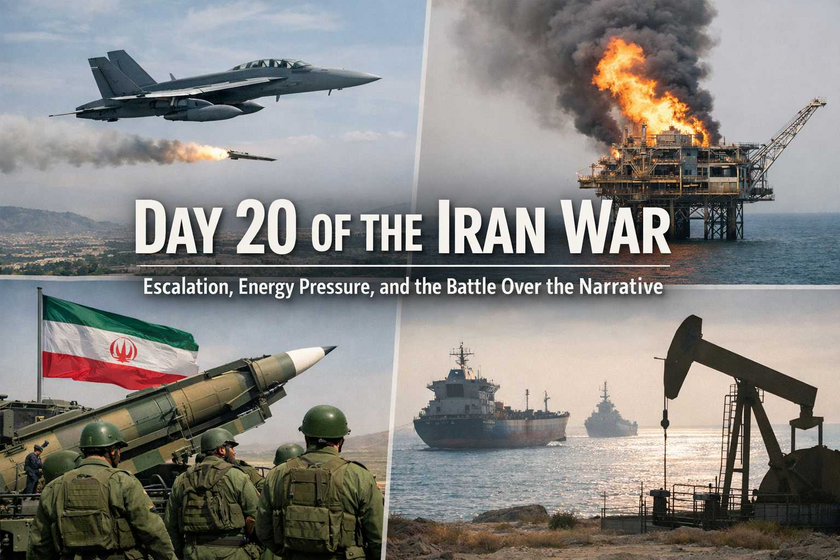
If you zoom out far enough, what you see right now is a conflict that’s only a month old, but already stretching into territory that usually takes years to reach.
The average war lasts about three years. We’re just getting started. And yet, in that short time, the stakes have already expanded beyond the battlefield—into energy markets, into food supply chains, into alliances that are starting to show strain under pressure. The Strait of Hormuz is still open, technically. Ships are still moving. But something fundamental has changed. Because once a system starts to lose predictability, once the rules become optional, every decision—from shipping routes to military strategy—has to account for the possibility that tomorrow won’t look anything like today. And that’s when things tend to escalate. Not all at once. But step by step, until one day you look up and realize you’re somewhere you never planned to be.