Five British men were arrested near a U.S.-operated bomber base after being found with three suspicious vans in the middle of the night. No explosives were ultimately discovered, but petrol was recovered, investigators are examining possible foreign involvement, and Washington says the incident was far more serious than it may first appear.
The more information that comes out about what happened outside RAF Fairford over the weekend, the stranger this story becomes.
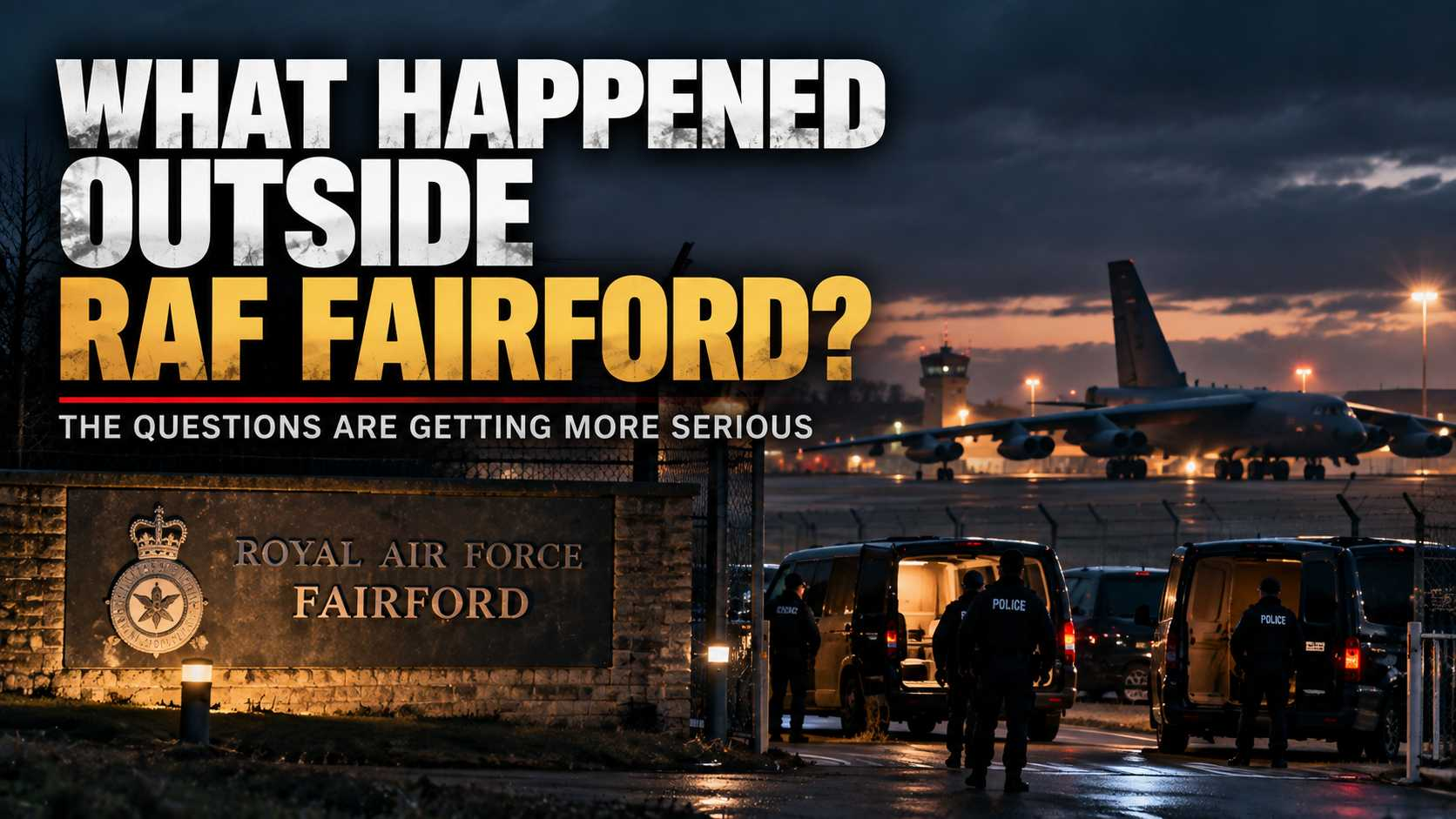
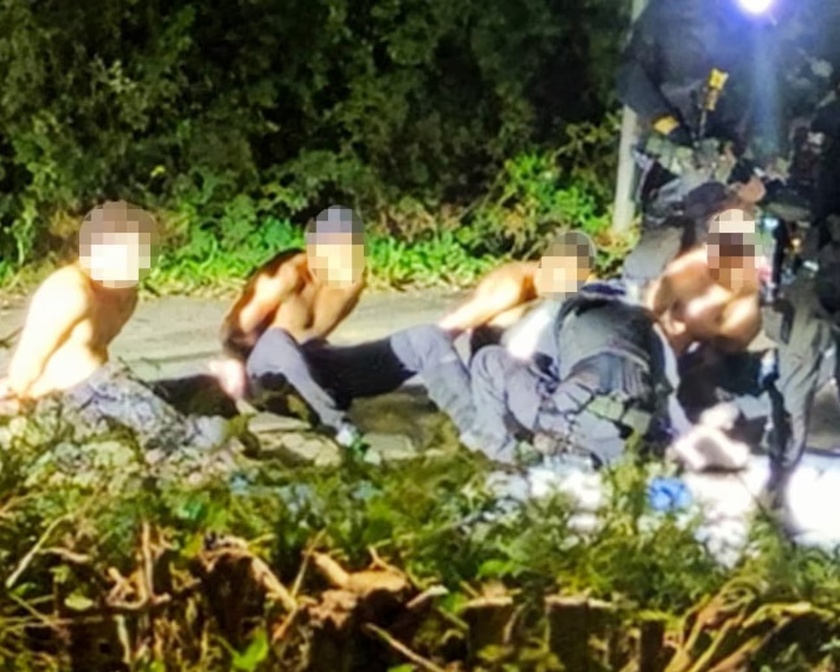
Shortly after midnight Sunday, three vans were spotted near the Gloucestershire air base, which has become an important operating location for American bombers during the war with Iran. A local resident reported seeing a group of masked men near the vehicles and alerted police. Armed officers responded, five men were arrested, homes were evacuated and bomb-disposal specialists spent hours examining the vans.
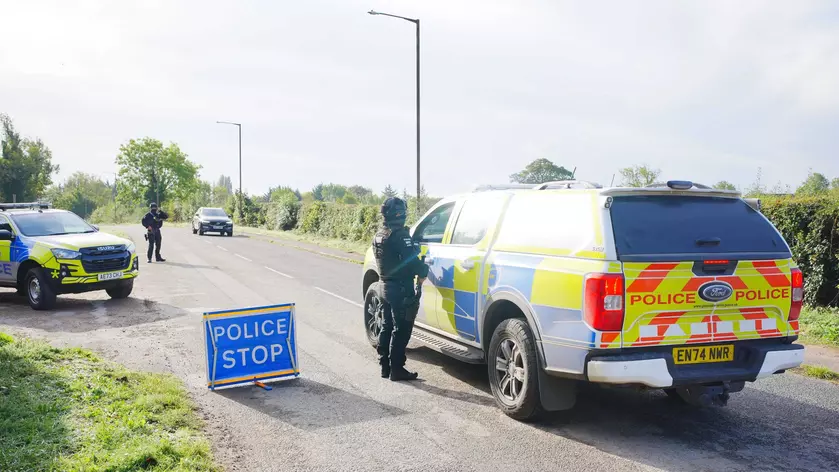
British counterterrorism police initially arrested the five men under the Explosives Act and later on suspicion of preparing an act of terrorism. All five are British nationals in their 20s from London. They have since been released on police bail under what authorities describe as stringent restrictions while the investigation continues.
Then came an important development.
Police announced that they had found no explosive devices in the vehicles. They did, however, recover a quantity of petrol.
That changes part of the story. It does not explain it.
Three Vans in the Middle of the Night
There is still a very basic question investigators need to answer: What were these men doing there?
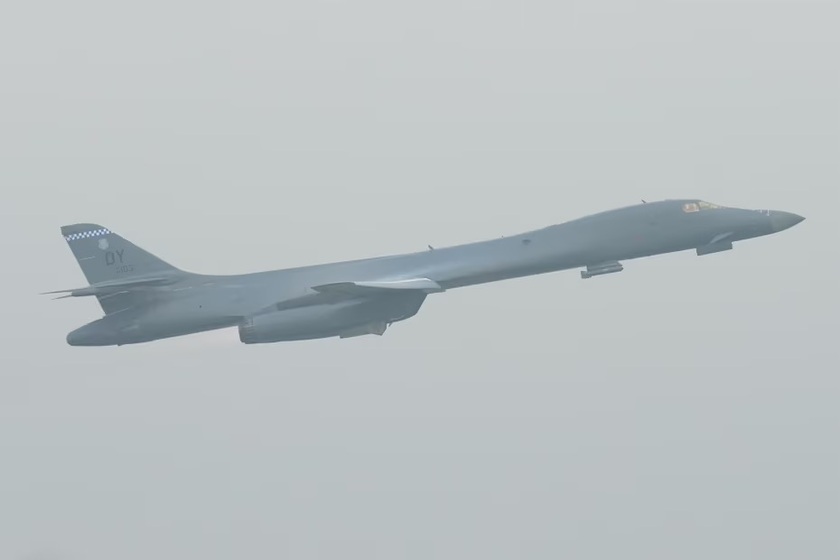
RAF Fairford is not an ordinary airport. It is a strategically important British installation used extensively by the United States Air Force. Its unusually long runway makes it suitable for America's heavy bomber fleet, and B-1 and B-52 bombers have operated from Fairford during the conflict with Iran.
Iran's Revolutionary Guard has previously identified Fairford as a potential target because of its role in American military operations against Iran.
So when several masked men turn up near that particular installation in three vans shortly after midnight, authorities have little choice but to treat it seriously.
That is exactly what they did.
The original account from the scene described men wearing face coverings who fled after being spotted by a local resident. Bomb-disposal teams were brought in, a security cordon was established and nearby homes were evacuated while investigators worked through the vehicles.
Police now say there were no explosives inside those vans. That is an important fact, and it means some of the early reporting suggesting investigators had discovered a ready-made bomb was wrong.
But the absence of explosives does not answer the question of intent.
Police recovered petrol. The men were close to a military installation housing extremely valuable American aircraft. And British counterterrorism investigators have not closed the case. They are continuing to investigate whether the men may have been acting, knowingly or unknowingly, on behalf of a foreign state.
That last possibility is where this story becomes much more consequential.
Was a Foreign Government Involved?
British authorities have been deliberately cautious.
Assistant Commissioner Laurence Taylor, the head of Britain's counterterrorism policing, has said investigators are keeping an open mind and examining multiple possibilities, including whether proxies or individuals working for a foreign state could have been involved.
They have not publicly concluded that Iran directed these men.
Iran has denied involvement, and at this point there is not enough publicly available evidence for me—or anyone outside the investigation—to state definitively that Tehran ordered an operation against RAF Fairford.
The American government, however, is talking about this somewhat differently.
Secretary of State Marco Rubio told Fox News that there were details he could not discuss publicly, but described what happened as an extremely serious situation.
“What happened, what almost happened, what could have happened in the UK over the weekend is a very serious situation.”
Rubio went further, saying the incident “clearly involves the hands of a foreign actor,” although he stopped short of publicly identifying which country he believed was responsible.
He also connected the episode to Iran's public threats against American interests around the world.
That tells me something important.
The U.S. government apparently knows considerably more about this incident than has been released publicly.
That does not prove Iran was responsible. But when the U.S. secretary of state publicly says a foreign actor was involved while British counterterrorism police simultaneously investigate possible state sponsorship, it deserves attention.
The Iran Connection Cannot Be Dismissed
One of the mistakes people make when they imagine state-sponsored terrorism is assuming that a foreign government has to send its own intelligence officers into another country carrying explosives.
That is not necessarily how these operations work.
Iran has previously been accused by Western governments and security agencies of using criminal intermediaries and locally recruited proxies in plots abroad. That structure offers obvious advantages: distance from the operation, reduced exposure for Iranian personnel and a degree of plausible deniability if the people carrying out the act are arrested.
That is one reason the nationality of the Fairford suspects does not resolve the question of foreign involvement. All five men are British citizens. That tells us who they are; it does not necessarily tell us whether someone else directed or financed whatever they were doing.
During the live broadcast, I said the incident had characteristics that made me suspicious of an Iranian connection. But suspicion is not proof, and there are still enormous holes in the publicly available story.
We do not know precisely why the men were there.
We do not know what they intended to do with the petrol.
We do not know whether other individuals were involved.
And most importantly, we do not yet know who—if anyone—sent them.
Until investigators answer those questions, this remains an unresolved counterterrorism investigation rather than a proven Iranian attack.
Why Fairford Matters
The location is what makes the possibility so serious.
RAF Fairford has played a direct role in American operations against Iran. Earlier this year, the base hosted a major concentration of U.S. bombers as the air campaign intensified. At one point, roughly 15 B-1 and B-52 bombers were reportedly stationed there, and B-52s operating from Fairford flew missions over Iran.
These are enormously valuable aircraft, but their strategic importance goes well beyond their price tag.
A modern bomber sitting on the ground is fundamentally different from one flying at altitude surrounded by sophisticated defensive systems. Aircraft on an airfield are stationary targets, which is precisely why military bases have layered security.
An attacker would not necessarily need some spectacular truck bomb to create a serious problem. Fire alone can damage aircraft, fuel systems, maintenance equipment and other infrastructure.
That is why I am reluctant to dismiss this incident simply because police did not discover a completed explosive device.
The important question is not merely what was inside those vans when police opened them.
The important question is what the men intended to do once they reached their destination.
The Decision to Release the Suspects
The other part of this case attracting attention is Britain's decision to release all five suspects on bail.
President Donald Trump publicly questioned the decision, saying he would not have released them. Rubio acknowledged that many people were disturbed by it as well.
British counterterrorism officials have defended the move.
Taylor emphasized that release on bail does not mean the men have been cleared. They remain under investigation and face restrictions on their movement and contact with other people.
There may be investigative reasons for that decision that the public does not know. There may also be evidence that significantly changes our understanding of what happened.
That is why I am not prepared to tell you that releasing them proves British authorities are ignoring the threat. We simply do not have enough information to know what investigators know.
But I do think the public deserves answers.
When five men are arrested under terrorism and explosives laws near a military base actively supporting combat operations, when a major counterterrorism response follows, when the U.S. secretary of state says a foreign actor was involved, and when the suspects are subsequently released on bail, people are naturally going to ask what happened.
A Warning Beyond One British Air Base
There is a bigger lesson here, regardless of what investigators ultimately determine.
The conflict with Iran does not necessarily remain confined to Iranian territory, the Persian Gulf or the Strait of Hormuz.
American forces operate from installations around the world. Those bases, the people serving on them and the infrastructure supporting them become potential targets when the United States enters a sustained military confrontation.
Iran does not need to defeat the United States conventionally to create problems. A state facing overwhelming American military power has every incentive to look for asymmetric methods—proxies, sabotage, cyberattacks and other operations that are cheaper, harder to attribute and capable of creating political effects far beyond the physical damage they cause.
Whether RAF Fairford turns out to be an example of that strategy remains an open question.
British investigators have not attributed the incident to Iran. Tehran denies involvement. No explosives were found in the vans. Those facts should not be buried simply because they complicate the story.
But neither should we ignore the facts pointing in the other direction: masked men, three vans, petrol, a strategically important American bomber base, previous Iranian threats against that installation and a statement from America's secretary of state that a foreign actor was involved.
Those pieces do not yet give us the entire picture.
They give us enough to keep asking questions.
And until British and American authorities explain exactly what those men were doing outside RAF Fairford in the middle of the night, this is one story I would not dismiss.