






Chuck Holton
Politics • Culture • News
Chuck Holton is an American war correspondent, published author, and motivational speaker.
Interested? Want to learn more about the community?

“🚨 LIVE: Pahlavi Announces Iran Government - Iranians Prepare Uprising To Topple IRGC”
“The World Is Shaking… But Heaven Is Steady🎵…”
“Prophecy is Happening”

https://m.youtube.com/watch?v=72CT8-4sRPE
https://share.google/TZk8hzzRLMcV6cpiO

Interested? Want to learn more about the community?
What else you may like…
Videos
Podcasts
Posts
Articles
Shabbat Shalom from Israel

If this is what we're fighting for, I'm good with that.

00:02:20
Tim Miller on Cultural Decay in America

Check out this great interview Tim Miller did on FOX the other day.

00:04:10
Bringing dignity to imprisoned women

I’m in Cartagena and yesterday we went to the women’s prison here to bring some much-needed necessities to the ladies and give them the gospel of the good news of Jesus Christ. It was a powerful time. I’m very glad I got a chance to do this. Thank you to all of you who donated to help these women. They are truly “the least of these “.

00:00:19
Episode 622 - Field Producer Dennis Azato and Chuck Reminisce

My erstwhile field producer and cameraman Dennis Azato has accompanied me on ten years of adventures across the globe. Today he joins me in Ukraine and we spend some time remembering our many trips together.

Episode 622 - Field Producer Dennis Azato and Chuck Reminisce
Will the Hormuz Slowdown Double Your Food Bill?

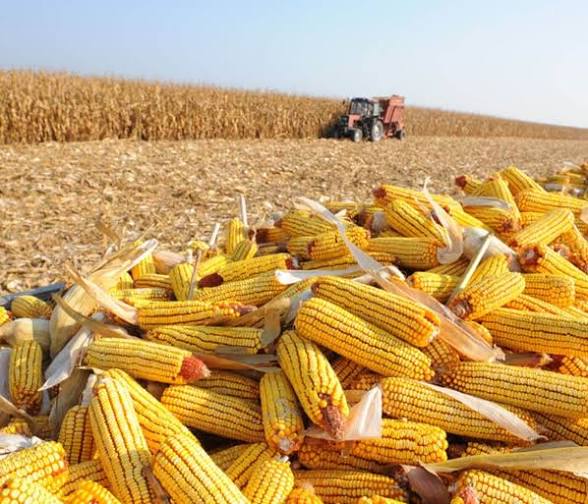
Oh, sweet summer cookouts. Will they be only a dream this year?—double the price of corn? Short answer: No. That’s the kind of apocalyptic fanfic that keeps doomsday YouTubers in crypto and tinfoil. We’re talking fertilizer sticker shock, not the apocalypse. Corn futures aren’t magically teleporting to $8–10 a bushel while you watch your grocery bill spontaneously combust. Let’s cut through the panic with actual numbers floating around right now (mid-March 2026, Strait still jammed).
Urea (the main nitrogen hit) has spiked 25–35% since late February—New Orleans barge prices jumped from ~$516/ton to $683 in a week, with some spots claiming 50% pops. US farmers are staring down a 25% shortfall for spring applications because we import a chunk even with domestic plants humming on cheap US gas. Corn eats nitrogen like a teenager eats pizza, so yeah, costs per acre are climbing fast.2
What that means for corn prices themselves? Not doubling. Not even close.
• September 2026 corn ...

For God so loved the world, that He gave His only begotten Son, that whosoever believeth in Him should not perish, but have everlasting life. -John 3:16

"But the Law of the Spirit of life in Christ Jesus has made me free from the law of sin and death." (Romans 8:2)

The first part or fruit of our salvation is spiritual liberation. For if Christ is in anyone, their body is dead because of sin, but their spirit is alive because of the very righteousness of Christ (Romans 8:10), which was given to us via the Spirit in our new birth (John 3:6), when we first believed the Gospel message. And our bodily liberation is the completion of our salvation, which takes place on the glorious day of redemption (Ephesians 4:30); this is the blessed hope we long for.
Come Lord Jesus!

"And not only so, but ourselves also, who have the firstfruit of the Spirit, even we ourselves groan within ourselves, awaiting adoption, the redemption of our body. For in this hope we were saved."(Romans 8:23-24a)

post photo preview
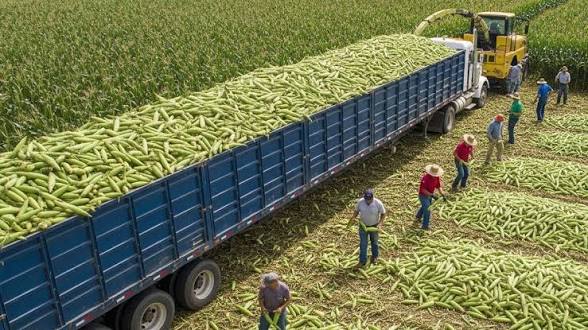
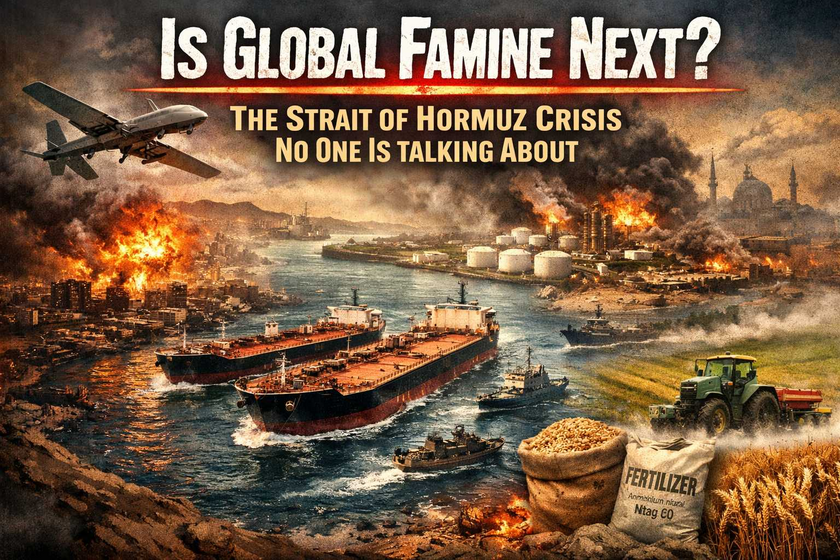
Is Global Famine Next? The Strait of Hormuz Crisis No One Is Talking About

We’re now seventeen days into this regional war, and if you’ve been listening to the usual chorus of professional pessimists, you’d think the United States and Israel were on the verge of collapse, Iran was ten feet tall, and the whole Middle East was about to swallow the world in one giant fireball. That has been the narrative from the beginning. Before the first shots were fired, the doom-and-gloom crowd was already out in force, warning that America would lose its ships, its bases, its leverage, and its nerve.

That hasn’t happened.
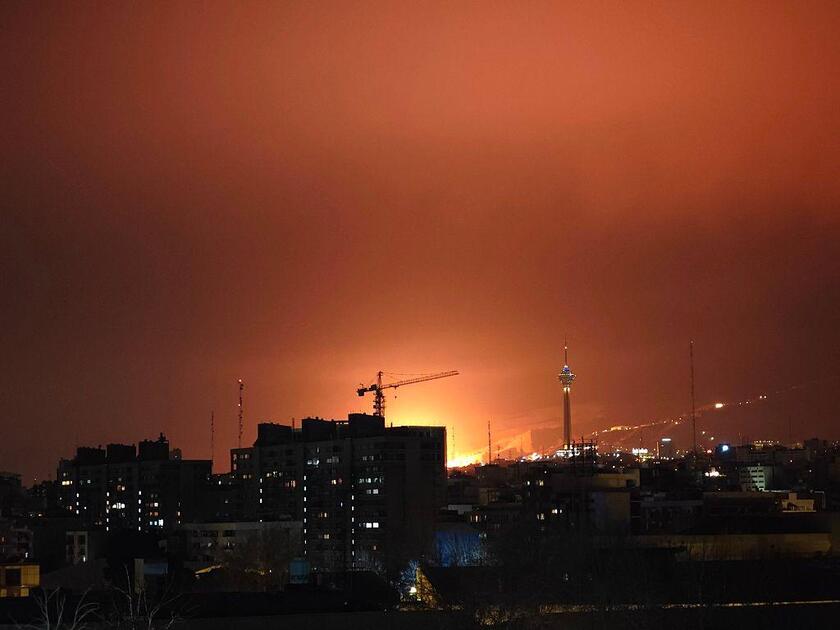
In fact, what has actually happened is much more significant than the panic merchants want to admit: Iran’s regime is being systematically dismantled. Its command structure is being degraded. Its regional coordination is breaking down. Its missile capabilities have been severely reduced. Its proxies are fragmenting. And for the first time in a very long time, the men who have terrorized their own people and funded terror abroad are the ones looking over their shoulders.

Overnight, Israel confirmed the elimination of two senior Iranian officials in targeted strikes. One was Ali Larijani, a key power broker behind the scenes and secretary of Iran’s Supreme National Security Council. The other was General Gholam Reza Soleimani, the head of the Basij paramilitary force, the same apparatus responsible for much of the regime’s brutal internal repression. These were not symbolic targets. These were men who helped sustain the machinery of fear inside Iran.

Their removal matters. It matters strategically because it degrades the regime’s ability to command and control. It matters politically because it signals that nobody in the inner circle is untouchable. And it matters morally because the Iranian people are safer without men like that holding power over them. The Basij, in particular, has been a tool of terror against ordinary Iranians seeking freedom. Weakening that force weakens the regime’s grip on the population, and that opens the door for something the regime fears more than any American bomb: its own people rising up.

That appears to be part of the broader strategy here. Benjamin Netanyahu has made it clear that the goal is not simply to hit Iranian assets for the sake of hitting them. The goal is to undermine the regime and give the Iranian people the opportunity to remove it. Reports continue to indicate that ordinary Iranians are helping identify regime-linked sites, checkpoints, headquarters, and key personnel. In other words, this is not merely an outside military campaign. It is increasingly becoming a convergence between external pressure and internal resistance.

That’s why the absence of visible leadership at the top matters so much. Iran’s new supreme leader has reportedly not been seen. Rumors continue to circulate that he is injured, possibly worse. Whether he is in a bunker, in a hospital, or somewhere far from public view, the practical effect is the same: commanders are left fighting blind, communication is fractured, and confidence inside the regime is eroding.
This is what victory looks like in the early stages of a modern conflict. It is not always dramatic. It does not always come with an iconic photo or an aircraft carrier speech. Sometimes it looks like silence from enemy leadership, panic in enemy ranks, and increasingly desperate propaganda from those trying to pretend nothing is wrong.

One of the more ironic moments in all of this came when reports emerged that Iran’s new IRGC spokesman had also been taken out after appearing on television to boast that wars are decided on the battlefield, not on social media. He did not have long to enjoy the sound of his own voice. That kind of turnover tells you something about the state of the regime right now. They are not projecting strength. They are burning through leadership.

Meanwhile, Iran’s missile campaign has shifted from mass salvos to a kind of sustained harassment. That change is being misread in some corners as evidence of restraint or strategic patience. It is neither. It is evidence of reduced capacity. Iran no longer appears able to launch the kinds of massive barrages it once threatened. Instead, it is pacing itself—firing enough to disrupt life, force civilians into shelters, and create political pressure, but not enough to alter the strategic balance on the ground.

That is an important distinction. Iran is no longer fighting to win militarily. It is fighting to avoid losing politically.

And that brings us to the next big issue: the Strait of Hormuz.

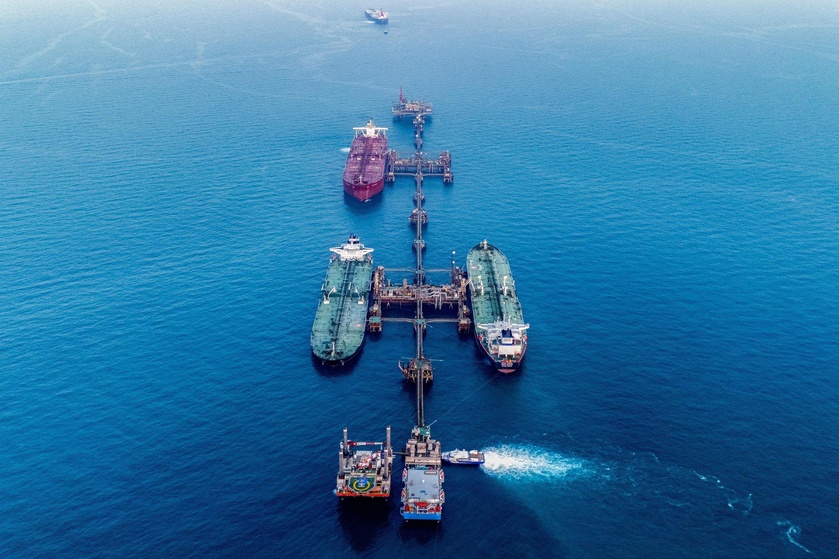
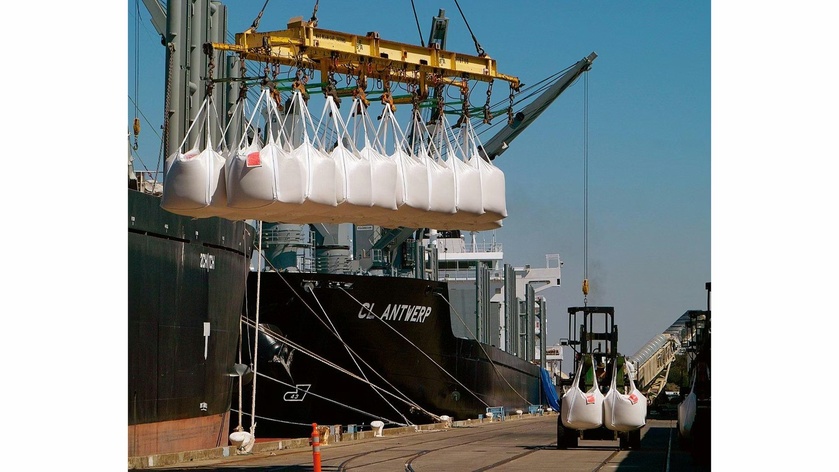
A great deal of coverage has focused on oil, and understandably so. Roughly a fifth of the world’s oil passes through that chokepoint. But the bigger issue may not be oil at all. The bigger issue may be fertilizer. A huge portion of the world’s urea and other nitrogen-based fertilizer inputs move through that same corridor, and disruptions there can reverberate through global food systems in a hurry.

This is where the latest wave of alarmism has shifted. Since the “America is losing” narrative isn’t matching the facts on the ground, some of the conversation has moved to “global famine is imminent.” Once again, that overstates the case.

There is no question this conflict is creating serious economic pressure. Fertilizer markets are tightening. Food prices are likely to rise. Some countries—especially India, parts of Africa, and others heavily dependent on Gulf fertilizer—could face real hardship if the Strait remains restricted for an extended period. That matters, and it should not be minimized. The World Food Program was already warning about severe hunger conditions before this war, and prolonged disruption will make things worse for millions of vulnerable people.

But worse is not the same thing as apocalyptic.

What the data points toward is a painful price shock, not a civilization-ending famine. In the United States and Europe, people are likely to feel this as inflation in food, fuel, and agricultural products later in the year. Meat could get more expensive. Bread could get more expensive. Processed foods could get more expensive. That is real. But it is not mass starvation. In poorer regions, particularly in parts of Africa and Asia, the consequences could be more severe, which is why humanitarian support will matter. The right response is sober concern and practical preparation, not theatrical hysteria.

Farmers are not helpless in the face of this. Markets are not static. Human beings adapt. Precision fertilizer application is already improving. Some producers can switch crops. Soybeans, for example, require less external nitrogen than corn. Supply chains adjust. Governments respond. Charities mobilize. Necessity really is the mother of invention, and high input costs have a way of making people innovate quickly.

That doesn’t mean everything will be fine. It means the sky is not falling.

And while the world fixates on prices, too many commentators are missing the larger strategic picture. Iran’s military-industrial capacity is being dismantled. Its missile production has reportedly been driven effectively to zero for the time being. Its proxies are less coordinated. Hezbollah is diminished. Iraqi militias are acting more independently. Even the Houthis appear less effective, likely because the targeting and coordination they relied on from Iran have been disrupted.

That matters beyond this war.
A weakened Iran means less terrorism funding. It means fewer missiles aimed at civilians. It means fewer drones in the hands of proxy militias. It means less leverage over one of the most vital maritime chokepoints on the planet. If the Iranian regime loses its ability to menace the region, the long-term result could be more stable energy markets, more secure shipping lanes, and a Middle East less vulnerable to blackmail by a revolutionary regime that has spent decades exporting violence.

That is why this is so consequential.

Ted Cruz said this may be the most important decision of the Trump presidency, and he may be right. For forty-seven years, the Iranian regime has been at war with the United States in one form or another. It has funded the groups that kill Americans. It has armed the terrorists who destabilize allies. It has plotted against American officials. It has financed Hamas, Hezbollah, the Houthis, and militias across the region. It has treated terror as statecraft and murder as diplomacy.

Taking that threat apart is not a distraction from American interests. It is the defense of American interests.

Now, that does not mean every aspect of the current situation is being handled perfectly. There are real questions about burden-sharing, especially when it comes to maritime security. President Trump has not exactly spent the last year building goodwill with NATO partners, so it should not surprise anyone that they are not rushing to jump into a war he chose to start. Whether that was good policy or bad policy, actions have consequences. At the same time, India’s decision to escort its own tankers shows that nations will act when their direct interests are threatened, even if they are not acting on behalf of Washington.

There are also serious concerns about the drone threat. A cheap drone flying over the U.S. embassy in Baghdad without being brought down is a flashing warning light. America remains the most powerful military force on earth, but our enemies are adapting. They are looking for low-cost ways to impose friction, fear, and disruption. We saw this in Afghanistan. Tactical dominance does not automatically solve strategic patience. If Iran’s remaining play is to become an enduring nuisance rather than a dominant regional power, that is still a problem that has to be addressed.

Even so, nuisance is not the same thing as victory.

That is the key point too many people are missing. Iran does not have to win militarily to make noise. It does not have to dominate the battlefield to create headlines. It only has to survive long enough to feed a narrative of stalemate. But survival under pressure, while losing commanders, losing production, losing freedom of movement, and losing the confidence of your own people, is not strength. It is decay.

So where does this go from here?

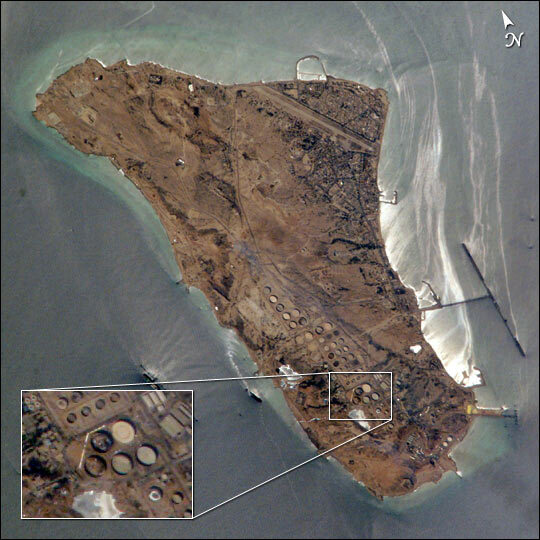
One of the biggest questions is whether the United States will move on Kharg Island. About 90 percent of Iran’s oil exports flow through that island, and if U.S. Marines were used to seize it, the regime would face a brutal choice: strike its own infrastructure to dislodge American forces, or lose its most important oil export hub without a fight. The forces reportedly moving into the region could make that possible, though a lot can change before they arrive and no one should pretend that option is already decided.

Still, the logic is obvious. If Iran is still moving oil to China while trying to squeeze the rest of the world, then shutting down that source directly would hit the regime where it hurts without permanently destroying infrastructure the Iranian people may need after the war. That kind of move would not just be militarily significant. It would be politically devastating for Tehran.

And that, ultimately, is what this war is becoming: a struggle not only over territory and shipping lanes, but over the future of Iran itself.

The bottom line is simple. Yes, this war is causing pain. Yes, prices are going to feel pressure. Yes, vulnerable parts of the world could suffer more if the Strait of Hormuz stays disrupted. But no, this is not evidence that the United States is losing. No, it is not proof that Israel has failed. And no, it is not the beginning of some unavoidable global famine that will wipe out half the planet.

What it is, instead, is the methodical dismantling of a regime that has spent decades funding terror, repressing its own people, threatening its neighbors, and destabilizing the world.

That process is messy. It is costly. It is dangerous. But it is working.

And that’s exactly why the doom merchants are so desperate to change the subject.

God bless you
Read full Article
The Iran War Has Reached an Inflection Point
The battlefield is shifting, the pressure on Tehran is intensifying, and the real fight now may be over oil, internal collapse, and what comes after the regime.

Over the last two weeks, we have seen the war expand far beyond a limited exchange of strikes and counterstrikes. What we are witnessing now is not simply a campaign to degrade Iranian military capability. It is becoming, in very real terms, a campaign designed to push the regime toward collapse and replacement. That does not mean the outcome is guaranteed, and it certainly does not mean the road ahead will be simple, but the center of gravity in this war is clearly changing.

For days now, I have been listening to what I call the black-pill conservatives, the people who always seem to predict disaster, who have spent this conflict insisting that Israel is on the verge of destruction, that the United States is walking blindly into catastrophe, and that any effort to break the back of the Iranian regime will end in humiliation. I have very little patience for that kind of fatalism, especially when it is delivered from a safe distance by men who have no skin in the game and no real feel for what is happening on the ground. That is why I wanted to hear directly from somebody who is actually there, so I reached out to Chris Mitchell, the Jerusalem bureau chief for CBN, and asked him to give me a quick, straightforward assessment of what life looks like in Israel right now.

What Chris described was not an image of a country collapsing under unbearable pressure. He described a nation that is still taking fire, still hearing sirens, still seeing interceptions overhead, and still dealing with shrapnel falling dangerously close to homes and historic neighborhoods, but he also described a society that remains remarkably resilient. The missile volume is down from where it was at the outset of the war, even though the attacks have not stopped. Interceptions continue over Jerusalem, debris still lands in populated areas, and cluster munitions remain a very real danger, but the spirit of the Israeli people has not broken. In fact, the mood he described was exactly what you would expect from a country that understands the stakes. Israelis do not want this war ended prematurely. They want it prosecuted to a real conclusion, one in which the regime in Tehran is either removed or reduced to the point that it no longer poses a threat to Israel or to its neighbors.

That matters, because there are a great many people online trying to sell the fantasy that Israel is secretly being devastated, that casualty numbers are being hidden, and that the public is on the verge of demanding surrender. Chris dismissed that outright, and from everything else I’m seeing, he is right to do so. Israel has taken some damage, and every death is a tragedy, but this idea that the country is being brought to its knees is nonsense. He pointed out something else that is worth paying attention to as well: the Israeli stock market is doing extremely well. That may sound like a side note, but it is not. Markets are not perfect moral indicators, but they do tell you something about confidence, and right now confidence inside Israel is not collapsing. It is growing.

The reason for that confidence is straightforward. Israel and the United States are not merely reacting anymore. They are shaping the battlefield, and President Trump in particular has spent the last twenty-four hours sending a very clear message to Tehran that the war can still get far worse for them. Up until now, the overwhelming majority of the strikes have been focused on military targets, command nodes, launch sites, production capacity, and the infrastructure of repression. But Trump has made it clear that if Iran continues trying to choke off the Strait of Hormuz and weaponize the global energy market, the next phase of pressure may extend to critical infrastructure that the regime desperately needs in order to function.

Only for Supporters
To read the rest of this article and access other paid content, you must be a supporter
Read full Article
The Iran War Has Come Home
Terror attacks on American soil, new Iranian proxy activity in Europe, and a widening battlefield are changing the shape of this conflict

This conflict has already moved beyond the region where it began. It is no longer just a story about missile launches over Israel, strikes on Iranian military infrastructure, or tension in the Strait of Hormuz. It has now reached into Europe, and it has reached into the United States. In other words, the war has come home.

Over the last twenty-four hours alone, we saw two terror attacks inside the United States, both tied to jihadi lone-wolf actors. Investigators are still sorting out whether those incidents were coordinated in any meaningful operational sense, and my own suspicion is that they probably were not, but they occurred close enough together in time to create understandable concern. The larger point is not whether those two attacks were centrally directed from some bunker halfway around the world. The larger point is that the ideological fire has already spread, and we should expect more sparks before this is over.

One of those attacks took place at Old Dominion University, where a man entered an ROTC class, confirmed that it was indeed the ROTC class, and then opened fire on the instructor, Lieutenant Colonel Brandon Shaw. I do not name mass shooters, because I refuse to give evil free publicity, but I will absolutely name the victims, because they are the ones whose memory deserves honor. Lieutenant Colonel Shaw was a combat veteran who had served with the 82nd Airborne, and he was murdered in that classroom.

What happened next says a great deal about the kind of courage America desperately needs to recover. Rather than scatter, hide, and pray the violence would pass them by, the students in that room converged on the shooter. They tackled him, subdued him, and, in the words of the police chief, rendered him “no longer alive.” Additional reporting later indicated that one of the students had a pocketknife and used it repeatedly until the threat was over. It was brutal, and it was tragic, but it was also the kind of response that actually stops evil instead of cowering in the face of it.

I have said for years that I do not like the way we train people to respond to mass casualty events. We tell them to “run, hide, fight,” as though fighting were some regrettable last resort rather than the morally necessary thing to do when someone is murdering innocent people in front of you. My view is very simple: if a shooter is in a room full of people and he is the only one with a weapon, then every able-bodied man in that room should turn and converge on him. Yes, some people may get hurt in the process. That is awful, but if we make a habit of meeting evil with decisive force, we will eventually see less of it.

I remember once being on a military installation during the Obama years and seeing a poster instructing soldiers that in the event of a mass shooting they should run away, hide, and only fight as a last resort. Underneath all of that was the phrase, “Don’t be a hero.” I remember standing there thinking that if there is one place on earth where we ought to be cultivating heroism, it is on an American military base. The idea that we would tell our soldiers not to be heroes is the kind of moral confusion that only a very soft and very unserious culture could produce. At Old Dominion, those students rejected that message instinctively, and I thank God they did. May the memory of Lieutenant Colonel Brandon Shaw be a blessing.

The second attack took place at what was described as the nation’s largest synagogue, located in Detroit. An assailant rammed his vehicle into the entrance and opened fire through the windows at security personnel. In that case, the outcome was different for one very important reason: the synagogue had prepared. Security had recently conducted active-shooter training, they were already on high alert, and they were equipped to respond. The guards neutralized the threat before the attacker managed to kill anyone inside. That is not luck. That is what preparation looks like, and it is the kind of sober realism more institutions in the West are going to need in the months and years ahead.

According to the information I cited in the live, both of these attackers were American citizens, but both had been radicalized. In the case of the Old Dominion shooter, I noted that he had previously been arrested in 2013 for material support to ISIS, imprisoned, and then released in 2024. Whatever the final public record says about every detail in that case, the broader pattern is not hard to see. The threat is not theoretical, and it is not entirely external. Radicalization is already present inside our own borders, and wartime conditions only make that more dangerous.

Nor were these the only incidents worth noting. There was a thwarted synagogue attack in Norway, additional attacks in Israel including a stabbing and an attempted vehicle ramming, and the grim reality that in Israel these kinds of attacks have become so common they barely make international news anymore. That fact alone ought to tell us something. One side in this broader conflict has normalized violence against civilians to such a degree that the outside world has become numb to it. When attacks pile up in this many countries within such a short period of time, and when the same ideological slogans accompany them over and over again, it becomes absurd to pretend we do not recognize the common denominator.

Only for Supporters
To read the rest of this article and access other paid content, you must be a supporter
Read full Article
See More
Available on mobile and TV devices
google store google store app store app store
google store google store app tv store app tv store amazon store amazon store roku store roku store
Powered by Locals